Energy Outlook: Federal Subsidies Driving U.S. Renewable Growth
Anúncios
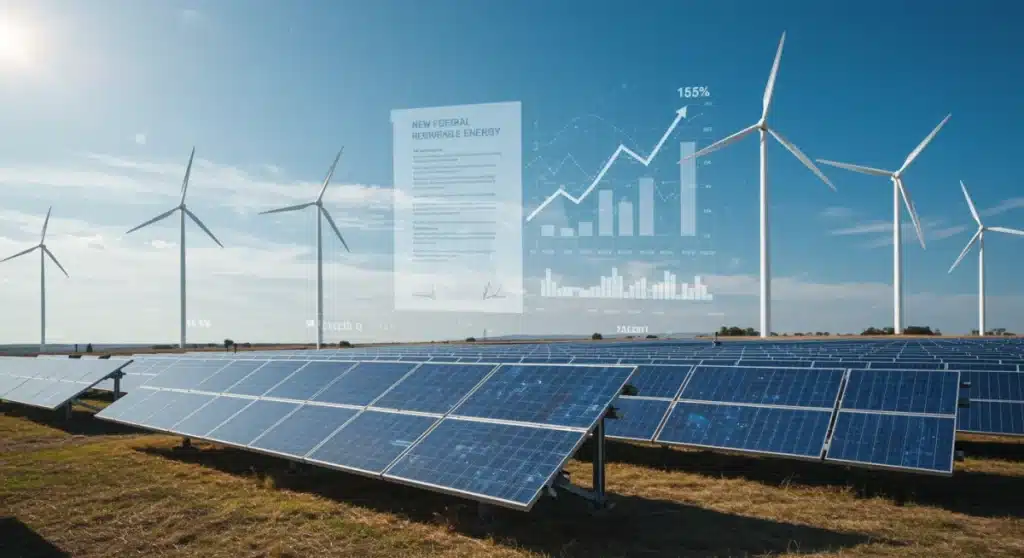
New federal subsidies are poised to significantly transform the U.S. energy outlook, driving a projected 15% growth in solar capacity and accelerating the nation’s transition to renewable energy projects.
The 2025 energy outlook for the United States is poised for a transformative shift, largely driven by a new wave of federal subsidies designed to accelerate the adoption and expansion of renewable energy projects. This pivotal moment promises not only environmental benefits but also significant economic opportunities across the nation.
Understanding the New Federal Subsidies
The landscape of U.S. energy policy has undergone substantial changes, with recent federal legislation introducing a robust framework of incentives. These subsidies are not merely temporary boosts; they represent a long-term commitment to fostering a sustainable energy future.
These new policies are designed to reduce the financial barriers for both large-scale utility projects and smaller, localized renewable installations. The aim is to make clean energy more competitive with traditional fossil fuels, thereby accelerating its deployment across various sectors.
Key Legislative Frameworks
Several key pieces of legislation form the backbone of these new federal subsidies. These acts provide a comprehensive approach, addressing everything from manufacturing to deployment.
- Inflation Reduction Act (IRA): This landmark legislation extends and expands tax credits for renewable energy technologies, including solar and wind, and introduces new credits for emerging technologies like clean hydrogen and carbon capture.
- Bipartisan Infrastructure Law: While not exclusively focused on renewables, this law allocates significant funding for grid modernization and resilience, which is crucial for integrating more intermittent renewable sources.
- Department of Energy Loan Programs: Enhanced loan programs offer substantial financial backing for innovative clean energy projects, helping to de-risk investments in cutting-edge technologies.
The cumulative effect of these policies is expected to create a powerful tailwind for the renewable energy sector. By providing certainty and attractive financial incentives, the federal government is effectively signaling its strong support for a clean energy transition.
Projected Growth in U.S. Renewable Energy Projects
The impact of these federal subsidies is already being felt, with analysts projecting significant growth across various renewable energy segments. Solar energy, in particular, is anticipated to experience a substantial surge in capacity.
This growth is not uniform, however, with different regions of the U.S. poised to benefit in distinct ways. States with abundant solar resources and supportive local policies are likely to see the most rapid expansion.
Solar Capacity: A 15% Growth Expectation
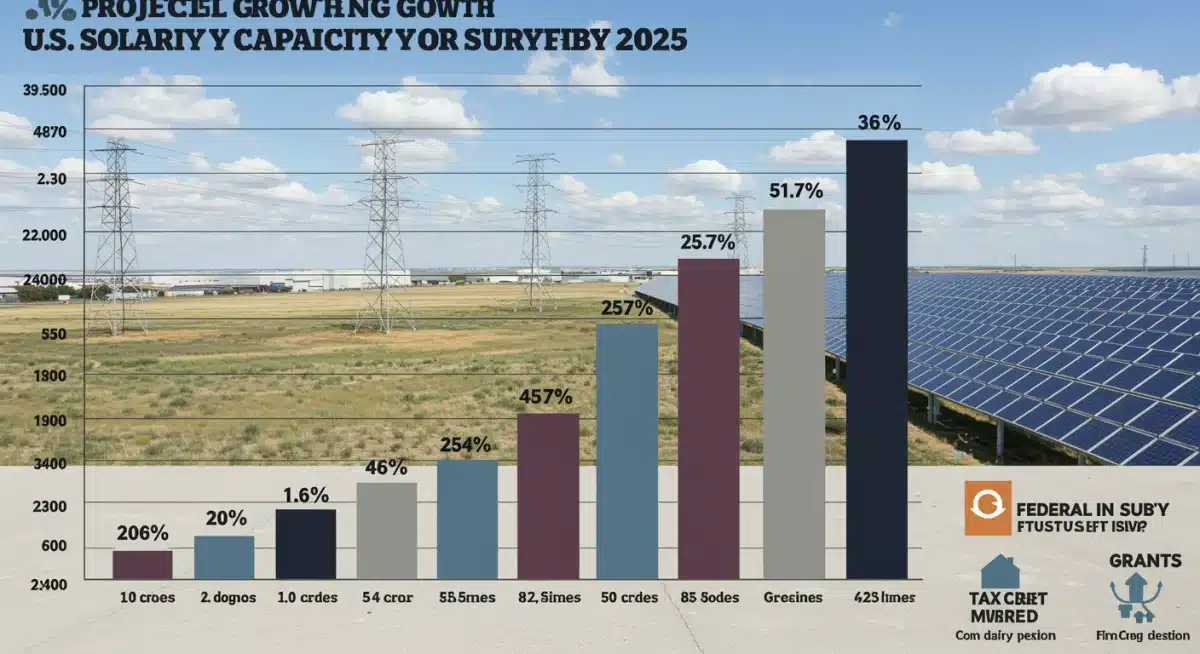
One of the most striking projections for the 2025 energy outlook is the anticipated 15% growth in U.S. solar capacity. This increase would solidify solar’s position as a leading source of new electricity generation.
This growth encompasses both utility-scale solar farms and distributed generation, such as rooftop solar panels on homes and businesses. The accessibility of these subsidies makes solar an attractive investment for a broader range of stakeholders.
- Utility-Scale Solar: Large solar power plants are expected to expand significantly, driven by long-term power purchase agreements and federal tax credits.
- Residential and Commercial Solar: Tax credits and rebates make installing solar more affordable for homeowners and businesses, fostering decentralized energy production.
- Energy Storage Integration: The growth of solar is often coupled with advancements in battery storage, enhancing grid reliability and dispatchability.
The 15% growth figure represents a conservative estimate by some industry experts, with potential for even greater expansion if market conditions remain favorable and technological advancements continue apace. This expansion is crucial for meeting climate goals and ensuring energy independence.
Economic Implications and Job Creation
Beyond environmental benefits, the surge in renewable energy projects fueled by federal subsidies carries significant economic implications. This includes the creation of new jobs, stimulation of local economies, and increased investment in manufacturing.
The renewable energy sector is proving to be a robust job creator, offering diverse opportunities from manufacturing and installation to operations and maintenance. This economic uplift is especially vital in regions transitioning away from traditional energy industries.
New Job Opportunities Across the Sector
The expansion of solar, wind, and other renewable technologies requires a skilled workforce. This demand is leading to new training programs and educational pathways.
- Installation Technicians: A significant demand for skilled technicians to install and maintain solar panels and wind turbines.
- Manufacturing Jobs: Growth in domestic manufacturing of components for renewable energy systems, reducing reliance on foreign supply chains.
- Research and Development: Increased investment in R&D to innovate new technologies and improve efficiency, creating high-skilled positions.
These jobs often offer competitive wages and benefits, providing stable employment in a growing industry. The economic ripple effect extends to local businesses that support these large-scale projects, from construction services to hospitality.
Challenges and Opportunities for 2025
While the 2025 energy outlook is largely positive, the path to a fully renewable energy system is not without its challenges. Addressing these hurdles will be crucial for maximizing the benefits of federal subsidies and achieving ambitious growth targets.
Key challenges include grid modernization, supply chain constraints, and ensuring equitable distribution of benefits. However, each challenge also presents an opportunity for innovation and strategic investment.
Grid Modernization and Intermittency
Integrating a higher percentage of intermittent renewable energy sources, like solar and wind, requires a more flexible and resilient electrical grid. This involves significant investment in infrastructure.
- Smart Grid Technologies: Deployment of advanced sensors and controls to better manage energy flow and respond to demand fluctuations.
- Energy Storage Solutions: Expanding battery storage capacity to store excess renewable energy and release it when needed, mitigating intermittency.
- Transmission Expansion: Building new transmission lines to carry renewable energy from remote generation sites to population centers.
Overcoming these technical challenges will unlock even greater potential for renewable energy expansion. The federal subsidies are already channeling funds into these critical areas, but sustained effort is required.
Environmental Impact and Sustainability Goals
The primary driver behind the push for renewable energy is, of course, the profound environmental impact. Reducing greenhouse gas emissions and combating climate change remain central to federal energy policy.
The anticipated growth in solar and other renewables will play a significant role in helping the U.S. meet its national and international climate commitments. This transition also brings benefits like improved air quality and reduced reliance on finite fossil fuels.
Meeting Climate Targets
The U.S. has set ambitious goals for emissions reductions, and the accelerated deployment of renewable energy is a cornerstone of this strategy. The 15% solar growth by 2025 is a critical step.
This shift away from carbon-intensive energy sources has direct benefits for public health and ecological systems. Cleaner air and water are direct outcomes of a reduced fossil fuel footprint. Furthermore, the development of sustainable energy practices fosters a more circular economy.
The long-term sustainability goals extend beyond just electricity generation, encompassing transportation, industrial processes, and building efficiency. The initial success in the electricity sector, driven by federal support, is expected to inspire similar transformations in other areas.
Future Outlook and Long-Term Trends
Looking beyond 2025, the trajectory for U.S. renewable energy appears to be one of sustained growth and innovation. The federal subsidies are laying a strong foundation for a decarbonized economy, fostering a virtuous cycle of investment and technological advancement.
The long-term trends suggest an increasing diversification of renewable energy sources, greater emphasis on energy efficiency, and the integration of smart technologies across the energy value chain. The initial boost from subsidies is expected to make renewables self-sustaining in the long run.
Emerging Technologies and Policy Evolution
Innovation in energy technology continues at a rapid pace, with new solutions constantly emerging. Federal policy will need to adapt to support these advancements.
- Advanced Geothermal Systems: Technologies that can harness geothermal energy more widely, not just in specific geological hotspots.
- Small Modular Reactors (SMRs): While not strictly renewable, SMRs offer carbon-free baseload power and are receiving federal attention as part of a diversified clean energy portfolio.
- Direct Air Capture: Technologies designed to remove carbon dioxide directly from the atmosphere, complementing emissions reductions.
The evolution of federal subsidies and regulatory frameworks will be critical in guiding these emerging technologies from research to widespread commercial deployment. The emphasis on domestic manufacturing and supply chain resilience will also continue to shape future policy decisions, ensuring that the U.S. remains a leader in the global clean energy transition.
| Key Aspect | Brief Description |
|---|---|
| Federal Subsidies | New legislative frameworks like the IRA are providing substantial financial incentives for renewable energy projects. |
| Solar Growth | U.S. solar capacity is projected to grow by 15% by 2025, accelerating the clean energy transition. |
| Economic Impact | The renewable sector is creating numerous jobs in installation, manufacturing, and R&D, boosting local economies. |
| Challenges | Grid modernization, supply chain issues, and intermittency require ongoing investment and innovation. |
Frequently Asked Questions About the 2025 Energy Outlook
Key federal subsidies include those from the Inflation Reduction Act (IRA), which provides significant tax credits for solar, wind, and other clean energy technologies. The Bipartisan Infrastructure Law also contributes by funding grid modernization essential for integrating more renewables, alongside enhanced Department of Energy loan programs.
U.S. solar capacity is anticipated to experience a substantial 15% growth by 2025. This projection reflects the positive impact of federal incentives and increasing market demand, covering both large-scale utility projects and distributed rooftop installations across the nation.
The expansion is projected to create numerous jobs across the renewable energy sector, including roles in manufacturing, installation, operations, and research and development. This influx of employment opportunities is expected to stimulate local economies and foster greater investment in domestic clean energy industries.
Potential challenges include the need for extensive grid modernization to handle intermittent renewable sources, supply chain constraints for critical components, and ensuring equitable access to clean energy benefits. Addressing these requires ongoing investment, technological innovation, and strategic policy adjustments.
These federal subsidies are crucial for helping the U.S. meet its climate change mitigation targets by significantly reducing reliance on fossil fuels. The increased deployment of renewables directly lowers greenhouse gas emissions, improves air quality, and supports the nation’s broader commitments to environmental sustainability and a cleaner energy future.
Conclusion
The 2025 energy outlook for the U.S. is undeniably bright, characterized by a powerful momentum towards renewable energy. The strategic implementation of new federal subsidies has created an environment ripe for significant growth, particularly within the solar sector, with a projected 15% increase in capacity. This transformation is not merely an environmental imperative but also an economic engine, fostering job creation and innovation across the nation. While challenges in grid modernization and supply chain resilience remain, the commitment to a sustainable future, backed by robust policy, positions the U.S. at the forefront of the global clean energy transition. The coming years will undoubtedly showcase the profound impact of these foundational investments.