FERC’s 2026 Rulings: Impact on US Large-Scale Energy Storage Projects
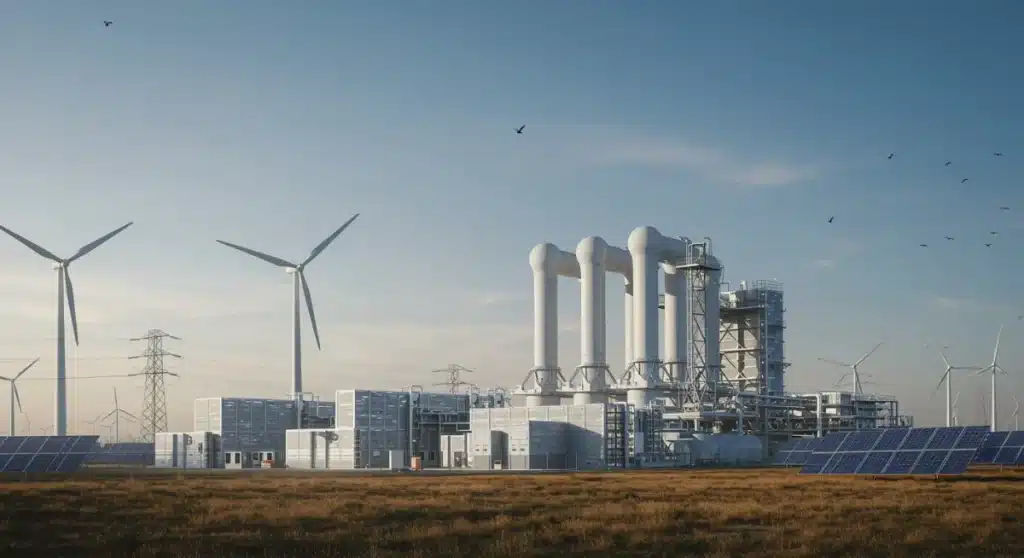
FERC’s 2026 rulings significantly advance the integration of large-scale energy storage into US wholesale markets, promoting grid resilience and accelerating the transition to a cleaner energy future.
The energy landscape in the United States is undergoing a profound transformation, driven by technological advancements and an increasing imperative for grid modernization. Central to this evolution are large-scale energy storage projects, which are critical for integrating intermittent renewable energy sources and enhancing grid reliability. This evolution is heavily influenced by regulatory frameworks, and specifically, the 2026 Policy Watch: What the Latest FERC Rulings Mean for Large-Scale Energy Storage Projects in the US (RECENT UPDATES) is a crucial area of focus for developers, investors, and policymakers alike. Understanding these recent updates from the Federal Energy Regulatory Commission (FERC) is paramount for navigating the future of energy storage in the nation.
FERC’s Evolving Mandate for Energy Storage Integration
FERC, as the independent agency regulating the interstate transmission of electricity, natural gas, and oil, plays a pivotal role in shaping the energy storage sector. Its pronouncements and orders directly impact how storage resources participate in wholesale markets, how they are compensated, and how they are integrated into the broader grid infrastructure. The commission’s recent actions reflect a growing recognition of energy storage’s essential role, moving beyond traditional generation and transmission paradigms.
The journey towards full recognition of energy storage as a distinct asset class has been ongoing for several years. Early rulings laid the groundwork, but the 2026 updates represent a significant leap forward, addressing some of the more complex, lingering challenges. These challenges include market design, interconnection queues, and the valuation of the diverse services storage can provide. The goal is to create a level playing field, allowing storage to compete fairly with other resources and fully unlock its potential.
Key Regulatory Milestones Leading to 2026
- Order No. 841 Implementation: This foundational order, issued in 2018, directed regional transmission organizations (RTOs) and independent system operators (ISOs) to revise their tariffs to remove barriers to electric storage resources participating in wholesale markets.
- Interconnection Reform Initiatives: FERC has continuously sought to streamline the interconnection process, recognizing that lengthy queues and inconsistent procedures can significantly delay storage project deployment.
- Valuation of Grid Services: Ongoing efforts have focused on developing mechanisms to properly compensate energy storage for its unique capabilities, such as frequency regulation, voltage support, and capacity firming.
The cumulative effect of these prior actions has culminated in the more comprehensive and forward-looking rulings observed in 2026. These latest policies aim to solidify the position of large-scale energy storage as an indispensable component of a resilient, decarbonized grid, addressing both technical and economic hurdles that have historically hindered its widespread adoption.
Market Participation and Compensation Mechanisms
One of the most critical aspects of FERC’s 2026 rulings concerns the refined mechanisms for market participation and compensation for large-scale energy storage. Historically, storage resources struggled to fit into existing market structures designed for traditional generators or load. The recent updates provide clearer pathways and more equitable compensation models, acknowledging the hybrid nature of storage as both a consumer and producer of electricity.
These new frameworks are designed to incentivize investment in storage by ensuring project developers can secure revenue streams commensurate with the value their assets provide. This includes participation in energy, capacity, and ancillary services markets. The rulings emphasize the need for market designs that are technology-neutral, allowing different types of storage technologies – from batteries to pumped hydro – to compete based on their performance characteristics.
Revised Market Models for Storage
- Enhanced Eligibility Criteria: Broader definitions of eligible storage resources, encompassing a wider range of technologies and operational characteristics.
- Dual Participation Capabilities: Explicit provisions allowing storage to act as both supply and demand, participating in multiple markets simultaneously without undue penalties.
- Performance-Based Compensation: Mechanisms that reward storage for its fast response times and precise control capabilities, which are crucial for grid stability.
The aim is to foster a more competitive market where storage can truly demonstrate its economic and operational benefits. By removing artificial barriers and ensuring fair compensation, FERC is signaling a strong commitment to integrating storage as a cornerstone of the future electricity grid. This clarity is expected to unlock significant private investment and accelerate project development across the US.
Transmission Planning and Interconnection Reform
The efficient integration of large-scale energy storage into the existing transmission infrastructure remains a significant challenge. FERC’s 2026 rulings have placed a strong emphasis on overhauling transmission planning processes and streamlining interconnection queues to better accommodate these resources. The sheer volume of proposed renewable and storage projects has overwhelmed current systems, leading to extensive delays and increased costs for developers.
The new policies aim to foster a more proactive approach to transmission planning, one that anticipates the needs of a rapidly evolving generation mix, rather than reacting to individual project proposals. This includes considering the benefits of storage in deferring or avoiding costly transmission upgrades, as well as its role in enhancing grid reliability and resilience. Interconnection reform is another cornerstone, seeking to standardize procedures, improve transparency, and accelerate the processing of interconnection requests.
Key Reforms in Transmission and Interconnection
- Long-Term Regional Transmission Planning: Mandates for RTOs/ISOs to conduct forward-looking transmission planning that explicitly considers the role and value of energy storage.
- Cluster Study Approach: Encouraging a shift from individual interconnection studies to clustered studies, where multiple projects are evaluated together, to improve efficiency.
- Cost Allocation Principles: Clarified guidelines for allocating the costs of transmission upgrades, ensuring that storage projects bear a fair share while recognizing their broader grid benefits.
These reforms are critical for unlocking the full potential of energy storage. Without a robust and efficient path to connect to the grid, even the most innovative projects will struggle to materialize. FERC’s commitment to addressing these systemic issues demonstrates a clear understanding of the bottlenecks hindering the energy transition.
Impact on Grid Reliability and Resilience
Beyond market participation and interconnection, FERC’s 2026 rulings significantly bolster the role of large-scale energy storage in enhancing grid reliability and resilience. As the US electric grid faces increasing threats from extreme weather events and cyberattacks, the ability to rapidly deploy stored energy and maintain stable operations becomes paramount. Energy storage offers unique capabilities in this regard, providing instantaneous response to grid disturbances and acting as a buffer against fluctuations from variable renewable generation.
The new policies recognize these critical attributes, encouraging the deployment of storage in strategic locations to support local grid needs, defer infrastructure upgrades, and provide backup power during outages. This goes beyond simply integrating renewables; it’s about building a more robust and adaptable grid that can withstand future challenges. The rulings promote the development of tools and operational practices that allow grid operators to fully leverage storage’s reliability benefits.
Storage’s Role in a Resilient Grid
- Blackstart Capabilities: Encouraging storage projects with the ability to restart parts of the grid after a widespread outage, without external power.
- Voltage and Frequency Support: Valuing storage’s rapid response to maintain stable voltage and frequency levels, crucial for grid health.
- Congestion Relief: Utilizing storage to alleviate transmission congestion, improving overall system efficiency and reducing curtailment of renewable energy.
The strategic deployment of energy storage, guided by these FERC rulings, will lead to a more reliable and resilient electricity system. This translates directly into fewer outages, more stable power delivery, and a grid better equipped to handle the demands of a modern, electrified society. The emphasis on resilience underscores the forward-thinking nature of these 2026 policy updates.
Promoting Renewable Energy Integration
A primary driver behind FERC’s intensified focus on energy storage is its indispensable role in facilitating the widespread integration of renewable energy sources. Solar and wind power, while clean and abundant, are inherently intermittent. Large-scale energy storage acts as a critical bridge, capturing excess renewable generation when available and discharging it when needed, thereby firming up supply and ensuring grid stability. The 2026 rulings aim to accelerate this synergy.
By making it easier and more economically viable for storage projects to connect to the grid and participate in markets, FERC is directly supporting national and state-level renewable energy targets. The policies encourage co-located projects, where storage is built alongside solar or wind farms, as well as stand-alone storage that can serve multiple purposes. This integrated approach is essential for achieving a high penetration of renewables without compromising grid reliability.
How Storage Boosts Renewables
- Arbitrage Opportunities: Storing low-cost renewable energy during periods of high generation and selling it during peak demand, optimizing resource utilization.
- Capacity Firming: Providing reliable capacity from intermittent resources by guaranteeing delivery over specific periods.
- Curtailment Reduction: Minimizing the waste of renewable energy that occurs when generation exceeds immediate demand or transmission capacity.
The push for renewable energy integration is a cornerstone of the US’s climate goals, and FERC’s 2026 policy updates provide the regulatory scaffolding necessary to make this transition both feasible and economically attractive. Energy storage is not just an add-on; it is an enabling technology that unlocks the full potential of renewable resources.
Challenges and Future Outlook for Storage Projects
While the 2026 FERC rulings represent a monumental step forward for large-scale energy storage, challenges inevitably remain. The rapid pace of technological innovation, coupled with the sheer scale of investment required, means that the regulatory landscape will continue to evolve. One ongoing challenge is ensuring that market designs remain adaptable to new storage technologies and evolving operational capabilities.
Another significant hurdle lies in the implementation of these rulings at the regional and state levels. RTOs and ISOs must translate FERC’s directives into actionable tariff revisions and operational protocols, a process that can be complex and time-consuming. Furthermore, state-level policies and permitting processes also play a crucial role, and harmonization between federal and state regulations will be key to maximizing the effectiveness of these federal directives.
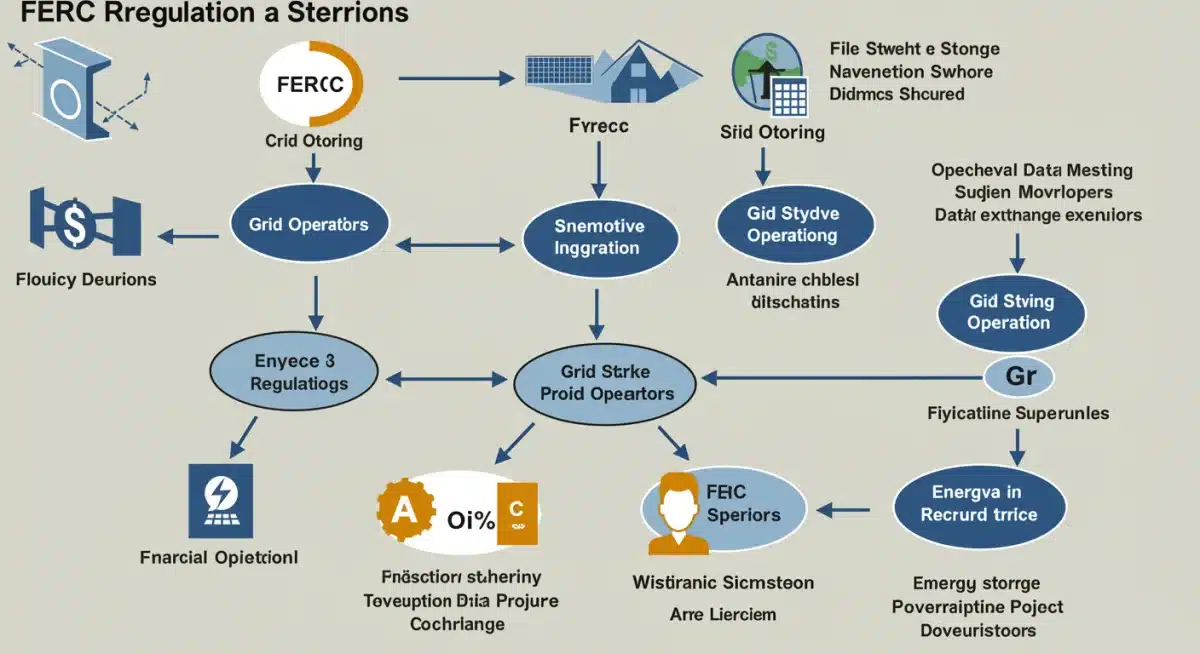
The future outlook for large-scale energy storage projects in the US under these new FERC rulings is overwhelmingly positive. The increased regulatory certainty and clearer pathways for market participation are expected to spur a wave of new development. This will not only contribute to a cleaner energy grid but also create new jobs, stimulate economic growth, and position the US as a leader in advanced grid technologies. Continuous monitoring and adaptation of these policies will be essential to sustain this momentum.
Anticipated Future Developments
- Enhanced Cybersecurity Standards: As storage becomes more critical, expect stricter cybersecurity requirements for operational technology.
- Long-Duration Storage Incentives: Potential for specific programs or market mechanisms to support the deployment of long-duration storage technologies.
- Data Transparency and Reporting: Increased requirements for data collection and reporting to better understand storage performance and grid impacts.
The journey ahead will require ongoing collaboration between regulators, industry stakeholders, and technology providers. By addressing remaining challenges proactively, the US can fully leverage energy storage to build a truly modern, resilient, and sustainable electricity grid for decades to come.
| Key Policy Area | 2026 FERC Ruling Impact |
|---|---|
| Market Participation | Clearer pathways and fairer compensation for storage in wholesale markets. |
| Transmission & Interconnection | Streamlined processes and proactive planning for storage integration. |
| Grid Reliability | Enhanced role for storage in maintaining grid stability and resilience. |
| Renewable Integration | Accelerated deployment of renewables through storage firming and arbitrage. |
Frequently Asked Questions About FERC’s 2026 Energy Storage Rulings
The primary goal is to fully integrate large-scale energy storage into US wholesale electricity markets, ensuring fair compensation and removing regulatory barriers. This aims to enhance grid reliability, support renewable energy growth, and foster a more resilient power system for the future.
By providing clearer market participation rules and more equitable compensation mechanisms, the rulings are expected to significantly improve the financial viability of new storage projects. This regulatory certainty reduces investment risk and encourages capital deployment in the sector.
FERC’s rulings emphasize a more proactive, long-term approach to transmission planning that explicitly considers energy storage benefits. This includes streamlining interconnection queues and adopting cluster study approaches to accelerate the integration of new projects efficiently.
Absolutely. Energy storage is crucial for firming intermittent renewable sources like solar and wind. By facilitating storage deployment, FERC’s policies directly support the increased integration of renewables into the grid, helping achieve clean energy targets.
Regional transmission organizations (RTOs) and independent system operators (ISOs) must now implement FERC’s directives by revising their tariffs and operational procedures. This involves detailed market design adjustments and technical protocol updates to align with the new federal guidelines.
Conclusion
The 2026 FERC rulings mark a pivotal moment for large-scale energy storage projects in the United States. By providing a clearer, more robust regulatory framework, the commission has significantly de-risked investments and opened new avenues for market participation. These policies are not merely technical adjustments; they represent a strategic vision for a modern, resilient, and decarbonized electricity grid. The continued emphasis on fair compensation, streamlined interconnection, and the recognition of storage’s multifaceted benefits will undoubtedly accelerate the deployment of these critical technologies, paving the way for a more sustainable energy future for the nation.