Grid Modernization: US EV Demand Surge 2027 Insight

Anúncios
U.S. grid modernization initiatives are actively preparing for a 25% surge in electric vehicle demand by 2027, focusing on infrastructure upgrades, smart grid technologies, and policy adaptations to ensure a resilient and sustainable energy future.
An Insider Report: How Grid Modernization Initiatives in the U.S. are Preparing for a 25% Increase in Electric Vehicle Demand by 2027. reveals a critical juncture for America’s energy infrastructure. As electric vehicle (EV) adoption accelerates, the existing power grid faces unprecedented pressure, necessitating strategic upgrades and innovative solutions to support this transformative shift in transportation.
Understanding the Looming EV Demand Surge
The projected 25% increase in electric vehicle demand by 2027 is not merely a statistic; it represents a fundamental shift in energy consumption patterns across the United States. This surge will place significant new demands on an electrical grid that, in many areas, was designed for a different era of energy distribution. Utilities and policymakers are keenly aware that proactive measures are essential to prevent strain and ensure reliable service.
This anticipated growth is driven by a combination of factors, including decreasing EV purchase costs, expanding charging infrastructure, and increasing consumer awareness of environmental benefits. The shift from gasoline to electricity for transportation means a substantial portion of daily energy consumption will move from gas stations to homes, workplaces, and public charging hubs, directly impacting local and regional grids.
Key Drivers of EV Adoption
- Technological Advancements: Improved battery range and faster charging speeds make EVs more practical for everyday use.
- Government Incentives: Federal and state tax credits, rebates, and other incentives significantly reduce the upfront cost of EVs.
- Environmental Concerns: Growing public awareness of climate change and air quality issues encourages a switch to zero-emission vehicles.
- Expanding Infrastructure: The proliferation of charging stations, both public and private, alleviates range anxiety for potential buyers.
The implications of this demand surge extend beyond mere power generation. It involves the entire ecosystem, from transmission lines and distribution networks to individual household meters. Without adequate preparation, the increased load could lead to localized outages, voltage fluctuations, and a diminished quality of service for all consumers. Therefore, understanding the scale and nature of this demand is the first critical step in effective grid modernization.
Strategic Investments in Grid Infrastructure
To meet the impending 25% increase in electric vehicle demand, strategic investments in grid infrastructure are paramount. These investments are not just about adding more capacity but about building a smarter, more resilient, and responsive power network capable of handling dynamic loads. The focus is on upgrading aging components, integrating advanced technologies, and future-proofing the system against evolving energy needs.
Many parts of the U.S. grid were constructed decades ago, designed for one-way power flow from large central power plants to consumers. The rise of EVs, coupled with distributed renewable energy sources like rooftop solar, necessitates a bidirectional flow and more sophisticated control mechanisms. This requires substantial capital expenditure in both transmission and distribution infrastructure.
Upgrading Transmission and Distribution
- Reinforcing Lines: Strengthening existing transmission and distribution lines to carry higher electrical loads without overheating or failure.
- New Substations: Constructing new substations and upgrading existing ones to manage increased power flow and improve voltage regulation.
- Undergrounding Cables: In some areas, moving overhead power lines underground to enhance resilience against weather events and improve aesthetics.
These infrastructure enhancements are often complex and time-consuming, involving extensive planning, permitting, and construction. However, they form the backbone of a modernized grid that can reliably deliver power to a growing fleet of EVs. The goal is to ensure that when an EV owner plugs in, the grid can seamlessly deliver the required energy without impacting other users.
Furthermore, these investments are being coupled with efforts to make the grid more adaptable. This includes incorporating modular components and standardized designs that can be quickly deployed or upgraded as demand dictates. The emphasis is on creating a flexible system that can evolve with technological advancements and changing consumer behaviors, ensuring long-term sustainability and reliability.
The Role of Smart Grid Technologies
Smart grid technologies are at the forefront of preparing the U.S. electrical infrastructure for the anticipated surge in electric vehicle demand. These innovations move beyond traditional grid management, offering real-time data, automated control, and enhanced communication capabilities. They are essential for optimizing energy flow, managing peak loads, and integrating diverse energy sources efficiently.
A smart grid leverages digital communication and advanced sensors to monitor and respond to changes in energy consumption and supply across the network. This allows utilities to identify and address potential issues before they escalate, balance loads more effectively, and even encourage consumers to charge their EVs during off-peak hours through demand response programs. The intelligence embedded within the grid helps to mitigate the impact of sudden, high-power charging events.
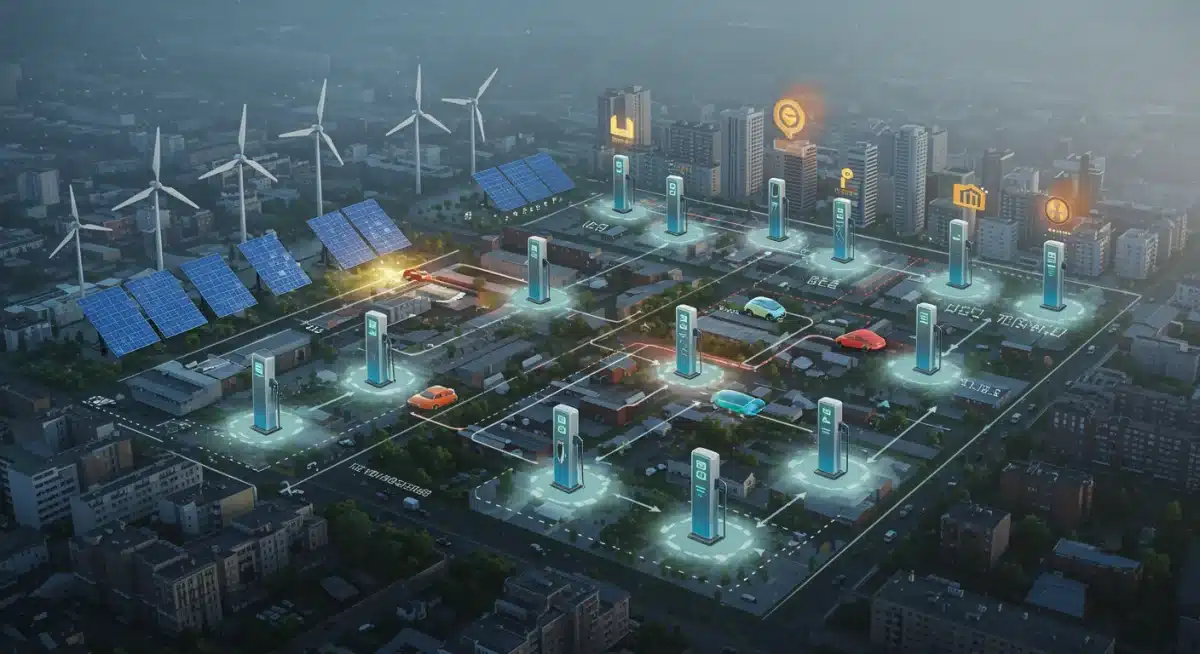
The implementation of smart meters, for instance, provides granular data on energy usage, allowing both utilities and consumers to make more informed decisions. For EV owners, this can translate to lower charging costs by taking advantage of time-of-use rates. For utilities, it means better forecasting capabilities and the ability to dynamically adjust power distribution.
Key Smart Grid Components
- Advanced Metering Infrastructure (AMI): Smart meters that provide real-time data on energy consumption.
- Distribution Automation (DA): Automated control systems that can re-route power and isolate faults, improving reliability.
- Demand Response Programs: Incentives for consumers to shift energy use, including EV charging, to off-peak periods.
- Energy Storage Systems: Batteries and other storage solutions that can store excess energy and release it during high-demand periods.
Integrating these technologies is crucial for transforming the grid into a flexible, self-healing network. They enable the grid to not only cope with increased EV charging but also to support the widespread adoption of renewable energy, which often has intermittent output. By intelligently managing these variables, smart grids ensure a stable and sustainable energy supply for the future of transportation.
Integrating Renewable Energy and Storage Solutions
The successful preparation for a 25% increase in electric vehicle demand by 2027 in the U.S. is deeply intertwined with the integration of renewable energy sources and advanced energy storage solutions. Relying solely on traditional fossil fuel generation to power a growing EV fleet would undermine the environmental benefits of electric transportation. Therefore, a concerted effort is being made to green the grid while simultaneously bolstering its capacity.
Renewable energy sources such as solar, wind, and hydropower offer a clean and sustainable way to meet the surging electricity demand. However, their intermittent nature presents a challenge for grid stability. This is where energy storage, particularly large-scale battery systems, becomes indispensable. Storage solutions can capture excess renewable energy during periods of high generation and low demand, then release it when EVs need charging, or during peak grid usage.
Benefits of Renewable Integration
Integrating renewables into the grid offers multiple advantages beyond just clean power. It enhances energy independence by reducing reliance on imported fuels and can lead to more stable electricity prices over the long term. Furthermore, the distributed nature of many renewable projects can improve grid resilience by decentralizing power generation.
Energy storage technologies are also evolving rapidly, with innovations in battery chemistry and grid-scale applications making them more cost-effective and efficient. These systems can provide essential grid services, such as frequency regulation and voltage support, which are critical for maintaining power quality as EV loads fluctuate. The ability to store and dispatch energy on demand is a game-changer for managing the variability introduced by both renewables and EV charging.
The strategic deployment of these technologies ensures that the energy powering EVs is not only sufficient but also clean. This holistic approach supports the broader goals of decarbonization while building a robust and reliable energy infrastructure for the future. Without this dual focus, the environmental promise of EVs would be significantly diminished.
Policy and Regulatory Frameworks for EV Integration
Effective policy and regulatory frameworks are foundational to successfully preparing the U.S. grid for a 25% increase in electric vehicle demand by 2027. Without clear guidelines, incentives, and mandates, the necessary investments and technological adoptions would be significantly hindered. These frameworks aim to align the interests of utilities, consumers, and EV manufacturers to facilitate a smooth transition.
Federal and state governments are playing a crucial role in shaping this landscape. Policies include funding for charging infrastructure development, tax credits for EV purchases, and mandates for utilities to invest in grid modernization. Regulatory bodies are also adapting rules to allow for new business models, such as vehicle-to-grid (V2G) technology, where EVs can feed power back into the grid during peak demand.
Key Policy and Regulatory Areas
- Charging Infrastructure Standards: Establishing universal standards for EV chargers to ensure interoperability and ease of use.
- Time-of-Use Rates: Implementing electricity pricing structures that encourage EV charging during off-peak hours to balance grid load.
- Interconnection Rules: Streamlining the process for connecting new charging stations and distributed energy resources to the grid.
- Utility Investment Mandates: Requiring utilities to invest in grid upgrades and smart technologies necessary for EV integration.
These policies often aim to overcome economic barriers and promote innovation. For example, incentives for smart charging solutions can help manage demand without requiring massive overhauls of generation capacity. Furthermore, regulations are being developed to ensure data privacy and cybersecurity as more digital technologies are integrated into the grid.
The collaborative effort between government agencies, regulatory bodies, and the private sector is essential for developing comprehensive strategies. This includes pilot programs to test new technologies and approaches, as well as ongoing research to understand the evolving impacts of EV adoption on the grid. A coherent and adaptable regulatory environment is vital to fostering the necessary changes and ensuring a resilient energy future.
Challenges and Opportunities Ahead
Preparing the U.S. grid for a 25% increase in electric vehicle demand by 2027 presents a multifaceted array of challenges and, concurrently, significant opportunities. Navigating these complexities will define the success of grid modernization efforts and the future of sustainable transportation in the nation. Understanding both the hurdles and the potential gains is critical for all stakeholders involved.
One of the primary challenges is the sheer scale and cost of the necessary infrastructure upgrades. Modernizing an entire national grid is an enormous undertaking, requiring billions of dollars in investment and coordination across numerous jurisdictions. Funding mechanisms, cost recovery for utilities, and equitable distribution of benefits and burdens are all complex issues that need careful consideration. Moreover, public acceptance and engagement are crucial, as significant changes to energy infrastructure can sometimes face local opposition.
Overcoming Grid Modernization Hurdles
- Funding and Investment: Securing sufficient capital for large-scale infrastructure projects and technological deployments.
- Interoperability: Ensuring seamless communication and operation between diverse smart grid technologies and EV charging systems.
- Cybersecurity: Protecting the increasingly digital grid from cyber threats, which could disrupt operations or compromise data.
- Workforce Development: Training a skilled workforce capable of designing, installing, and maintaining advanced grid technologies.
Despite these challenges, the opportunities presented by grid modernization are immense. A modernized grid is not only better equipped to handle EVs but also offers enhanced resilience against extreme weather events, more efficient energy delivery, and greater integration of diverse renewable energy sources. This leads to a more robust, sustainable, and economically beneficial energy system for all.
Furthermore, the shift to EVs and a smarter grid can stimulate economic growth through job creation in manufacturing, installation, and maintenance sectors. It also positions the U.S. as a leader in clean energy innovation, potentially creating new export opportunities and strengthening national energy security. By addressing the challenges head-on, the nation can unlock a future where sustainable transportation and a resilient energy grid go hand-in-hand.
| Key Aspect | Brief Description |
|---|---|
| EV Demand Surge | Projected 25% increase by 2027, driven by cost reduction and incentives. |
| Grid Infrastructure | Strategic investments in upgrades for resilience and capacity. |
| Smart Grid Tech | Utilizing AMI, DA, and demand response for optimized energy flow. |
| Policy Frameworks | Government and regulatory efforts to guide integration and investment. |
Frequently Asked Questions About Grid Modernization and EVs
Grid modernization supports increased EV charging by upgrading infrastructure, integrating smart grid technologies for demand management, and incorporating renewable energy with storage. This ensures stable power delivery, optimizes charging times, and prevents grid overload, making the system more resilient and efficient for widespread EV adoption.
The biggest challenges include securing substantial funding for infrastructure upgrades, ensuring interoperability between diverse technologies, safeguarding against cybersecurity threats, and developing a skilled workforce. Additionally, managing peak demand and integrating intermittent renewable energy sources effectively pose significant hurdles for grid operators.
Renewable energy sources are crucial for greening the grid and providing sustainable power for EVs. Their integration, combined with advanced energy storage solutions, helps balance the intermittent nature of renewables, ensuring a consistent and clean power supply for charging, thereby maximizing the environmental benefits of electric transportation.
Government policies are vital for providing direction, incentives, and regulatory frameworks. They facilitate investments in infrastructure, promote smart charging through time-of-use rates, establish charging standards, and mandate utility upgrades. These policies create a supportive environment for EV adoption and grid modernization, aligning stakeholders toward common goals.
While EV charging adds to household electricity consumption, grid modernization aims to mitigate significant cost increases. Through smart charging, time-of-use rates, and renewable energy integration, utilities can optimize power delivery and potentially offer lower off-peak charging rates, making EV ownership more economical and managing overall grid impact.
Conclusion
The U.S. is on the cusp of a significant transformation in its energy landscape, driven by the rapid adoption of electric vehicles. The projected 25% increase in EV demand by 2027 is a powerful catalyst for comprehensive grid modernization initiatives, focusing on infrastructure upgrades, the integration of smart technologies, and robust policy frameworks. While challenges in funding, technology integration, and cybersecurity remain, the opportunities for a more resilient, sustainable, and economically vibrant energy future are immense. The collaborative efforts of utilities, policymakers, and consumers will be crucial in building a grid that not only supports the electric vehicle revolution but also enhances overall energy security and environmental stewardship for decades to come.