US Wind Energy Leaders 2026: Top 5 States Driving Growth
Anúncios
US Wind Energy Leaders 2026: Top 5 States Driving Growth
The landscape of energy production in the United States is undergoing a profound transformation, with US wind energy emerging as a cornerstone of the nation's renewable future. As we look towards 2026, the impetus for clean, sustainable power is stronger than ever, driven by technological advancements, favorable policies, and increasing environmental awareness. This shift is not uniform across the country; certain states are distinguishing themselves as pioneers, rapidly expanding their wind energy capacities and setting benchmarks for others to follow. Understanding which states are leading this charge, and why, is crucial for anyone interested in the future of energy, investment opportunities, and environmental sustainability.
The commitment to decarbonization, coupled with the economic benefits of renewable energy, has created a fertile ground for wind power development. The United States, with its vast and diverse geography, possesses immense wind resources, from the Great Plains to offshore coastal areas. Harnessing this potential requires a blend of innovative engineering, strategic infrastructure development, and supportive legislative frameworks. This article will delve into the top five states that are projected to lead the US wind energy growth in 2026, analyzing the factors contributing to their success and the broader implications for the national energy grid.
We will examine the unique strategies employed by these states, including their regulatory environments, investment incentives, and technological adoptions. From robust state-level renewable portfolio standards (RPS) to significant private sector investments and groundbreaking research initiatives, the pathways to leadership in wind energy are multifaceted. Our exploration will also touch upon the challenges faced and overcome by these states, offering a comprehensive picture of what it takes to be at the forefront of the renewable energy revolution. Get ready to discover the powerhouses of US wind energy as we project into 2026.
The Accelerating Momentum of US Wind Energy
The story of US wind energy is one of remarkable growth and continuous innovation. Over the past two decades, wind power has transformed from a niche technology into a major contributor to the nation's electricity supply. This acceleration is not accidental; it is the result of sustained policy support, significant cost reductions in turbine technology, and an increasing understanding of the environmental and economic benefits of renewable energy. The federal government, through initiatives like the Investment Tax Credit (ITC) and Production Tax Credit (PTC), has played a pivotal role in incentivizing wind farm development. These incentives, coupled with state-level mandates, have created a predictable market environment that encourages long-term investments.
Technological advancements have also been a game-changer. Modern wind turbines are larger, more efficient, and capable of generating electricity at lower wind speeds, expanding the geographic viability of wind projects. The development of advanced materials, improved aerodynamic designs, and sophisticated control systems has significantly reduced the levelized cost of electricity (LCOE) from wind, making it competitive, and often cheaper, than traditional fossil fuel sources in many regions. This economic competitiveness is a key driver behind the projected growth in US wind energy leading up to 2026.
Furthermore, the growing corporate demand for renewable energy has fueled much of this expansion. Major corporations are increasingly committing to 100% renewable energy targets, driving the procurement of wind power through power purchase agreements (PPAs). This corporate appetite, combined with heightened public awareness about climate change and the desire for energy independence, provides a compelling narrative for the continued expansion of wind energy across the United States. As we approach 2026, these foundational elements are expected to intensify, paving the way for unprecedented growth in the sector.
Criteria for Identifying Leading States in US Wind Energy
To accurately identify the top five states leading US wind energy growth in 2026, a rigorous set of criteria must be applied. This isn't just about current installed capacity, but rather a forward-looking assessment that considers several critical indicators. These indicators provide a holistic view of a state's commitment and potential for future wind power development.
Installed Capacity and Growth Rate
The most fundamental criterion is, of course, the existing installed wind power capacity and its historical growth trajectory. States that have consistently added significant megawatts of wind power year over year demonstrate a proven track record and a robust infrastructure for further expansion. A high growth rate indicates ongoing investment and favorable conditions for new projects.
Pipeline of Projects and Planned Investments
Looking ahead to 2026, the pipeline of announced and under-construction wind projects is a crucial indicator. States with substantial planned investments, both onshore and offshore, are prime candidates for leadership. This includes projects that have secured financing, obtained necessary permits, and are in various stages of development.
Policy and Regulatory Environment
Supportive state-level policies are paramount. This includes aggressive Renewable Portfolio Standards (RPS) that mandate a certain percentage of electricity come from renewable sources, favorable tax incentives, streamlined permitting processes, and clear regulatory frameworks for grid interconnection. States with long-term, stable renewable energy policies attract more investment and development.
Transmission Infrastructure Development
Wind farms often need to be located in remote, windy areas, requiring significant investments in transmission infrastructure to deliver electricity to population centers. States actively investing in grid upgrades, interregional transmission lines, and smart grid technologies are better positioned to integrate large amounts of new wind capacity.
Offshore Wind Potential and Development
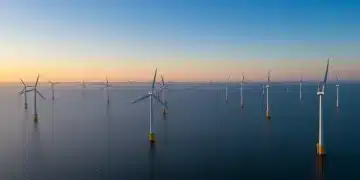
Offshore wind is a rapidly growing segment of US wind energy. Coastal states with strong offshore wind resources, proactive planning for offshore wind development (e.g., leasing areas, port infrastructure investments), and clear regulatory pathways for these complex projects will be significant players.
Economic and Job Creation Impact
While not a direct measure of capacity, states that actively promote the economic benefits of wind energy—such as job creation in manufacturing, construction, and operations—often foster a more supportive public and political environment for continued development. This creates a positive feedback loop for growth.
By weighing these criteria, we can make informed projections about which states are poised to dominate the US wind energy landscape by 2026, showcasing their commitment to a sustainable energy future.
The Top 5 States Leading US Wind Energy Growth by 2026
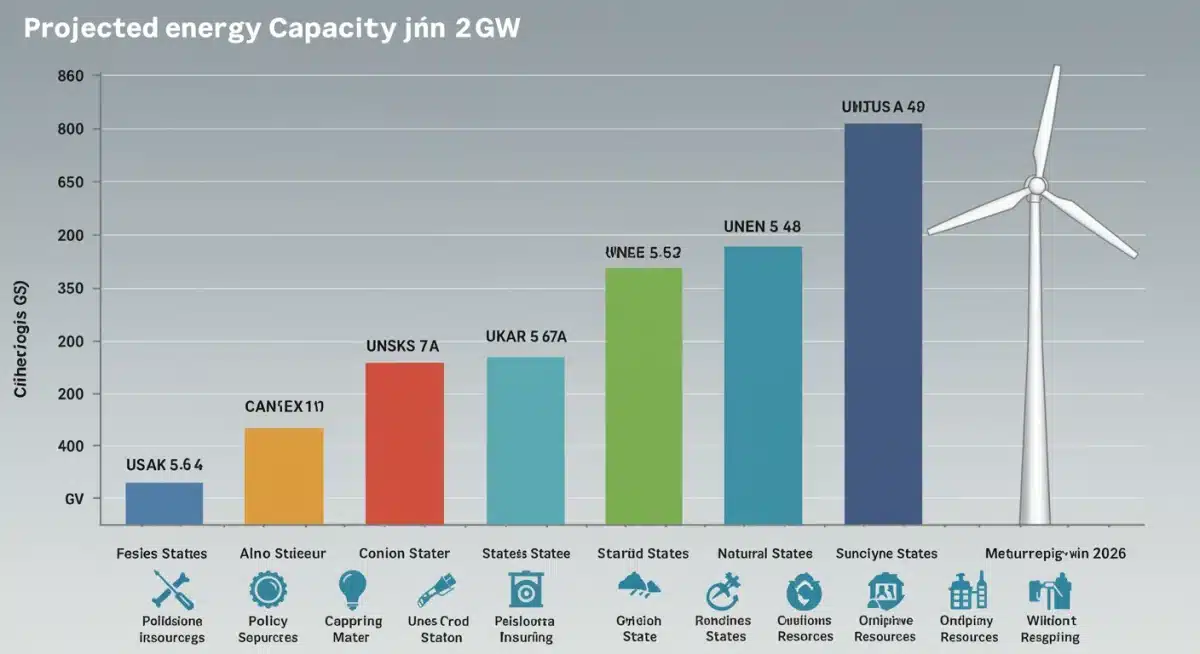
Based on the outlined criteria—installed capacity, project pipeline, policy environment, transmission infrastructure, and offshore potential—the following five states are projected to be at the forefront of US wind energy growth by 2026. Each has unique strengths contributing to its leadership position.
1. Texas: The Undisputed Giant Continues to Grow
Texas has long been the national leader in installed wind capacity, and there's no sign of it slowing down. Its vast, windy plains and a deregulated energy market have fostered an environment conducive to rapid wind development. By 2026, Texas is expected to significantly expand its already massive wind fleet. The state's competitive energy market, combined with its robust Competitive Renewable Energy Zones (CREZ) transmission lines, ensures that new wind projects can efficiently deliver power to consumers. While not having a formal RPS, market forces and the availability of abundant wind resources continue to drive investments. The sheer scale of projects in the pipeline, both onshore and increasingly exploring offshore opportunities in the Gulf of Mexico, solidifies Texas's position as the dominant force in US wind energy.
2. Iowa: A Model for Wind Integration
Iowa consistently ranks among the top states for wind energy, often generating over 50% of its electricity from wind. Its success is attributed to strong wind resources, a proactive regulatory environment, and a history of utility-scale investments. Iowa's utilities have embraced wind power, integrating it seamlessly into their grids. The state benefits from an established manufacturing base for wind turbine components, creating local jobs and economic benefits. With a continued focus on expanding existing wind farms and developing new projects, Iowa is set to maintain its leadership, demonstrating how a state can achieve high levels of wind penetration and reliability. The focus on local economic development and a stable policy landscape ensure Iowa's continued prominence in US wind energy.
3. Oklahoma: Surging Capacity and Strategic Location
Oklahoma has emerged as a major player in US wind energy, leveraging its prime location in the wind belt and a supportive policy framework. The state has seen a rapid increase in installed capacity, driven by favorable tax incentives and a commitment to diversifying its energy portfolio. Oklahoma's strategic position allows it to export wind power to neighboring states, making it a critical hub for regional energy markets. The state's ongoing investment in transmission infrastructure is key to unlocking even more of its vast wind potential. As more projects come online and grid connections improve, Oklahoma is poised for substantial growth, solidifying its role as a key contributor to the national wind energy landscape.
4. New York: Offshore Wind Pioneer Takes Center Stage
New York is rapidly becoming a leader, primarily due to its aggressive pursuit of offshore wind development. With ambitious state-level mandates, including a target of 9 gigawatts of offshore wind by 2035, New York is investing heavily in this nascent but highly promising sector. The state has awarded significant contracts for offshore wind projects and is developing critical port infrastructure to support their construction and operation. While onshore wind also contributes, it is the scale and commitment to offshore wind that truly differentiates New York. These projects, though complex, promise to deliver massive amounts of clean energy to densely populated areas, making New York a pivotal state in the future of US wind energy, particularly in the Northeast.
5. California: A Renewed Focus on Wind and Storage
California, a trailblazer in renewable energy, is experiencing a renewed focus on wind power, particularly in conjunction with energy storage solutions. While solar has dominated its recent renewable growth, the state is now looking to wind, both onshore and offshore (especially floating offshore wind technology), to meet its ambitious 100% clean energy goals by 2045. California's commitment to decarbonization, coupled with its innovative approach to grid modernization and energy storage, positions it for significant wind energy expansion. The state's robust policy environment, including its RPS and carbon pricing mechanisms, creates strong market signals for wind development. As technology evolves for floating offshore wind, California's vast Pacific coastline offers immense untapped potential, making it a state to watch for substantial US wind energy growth toward 2026 and beyond.
Key Drivers and Policies Fueling US Wind Energy Growth
The impressive growth of US wind energy is not simply a matter of favorable geography; it's deeply intertwined with a complex interplay of governmental policies, technological breakthroughs, and market dynamics. Understanding these drivers is essential to comprehending the trajectory of wind power in the United States.
Federal and State Policy Support
At the federal level, the Production Tax Credit (PTC) and Investment Tax Credit (ITC) have been instrumental in de-risking wind energy projects and making them economically viable. Although these credits have seen various extensions and phase-outs, their historical impact has been profound. More recently, the Inflation Reduction Act (IRA) of 2022 has injected new life into the renewable energy sector, offering long-term tax credits and incentives that are expected to spur unprecedented investment in wind, solar, and storage technologies through 2026 and beyond. This stable policy environment provides developers with the certainty needed for large-scale capital investments.
State-level policies, particularly Renewable Portfolio Standards (RPS), are equally critical. These mandates require utilities to source a certain percentage of their electricity from renewable sources by a specific date. States with ambitious RPS targets, such as New York, California, and many in the Midwest, create a guaranteed market for wind power, driving demand and investment. Streamlined permitting processes, interconnection rules, and state-specific tax incentives further enhance the attractiveness of wind development within these leading states.
Technological Advancements and Cost Reductions
The continuous evolution of wind turbine technology has been a primary catalyst for growth. Turbines have become significantly larger, with longer blades and taller towers, allowing them to capture more wind energy and operate more efficiently at various wind speeds. This increase in scale has led to substantial reductions in the levelized cost of electricity (LCOE) from wind, making it one of the most cost-effective forms of new electricity generation. Innovations in materials science, digital controls, and predictive maintenance are further enhancing performance and reliability. The development of advanced offshore wind technologies, including floating foundations, is opening up vast new resource areas, particularly off the coasts of states like California and New York, which previously had limited viable offshore wind potential due to deep waters.
Expansion of Transmission Infrastructure
Wind resources are often located far from major load centers, necessitating robust transmission infrastructure to deliver the generated electricity. States that are proactively investing in upgrading and expanding their grid, such as Texas with its CREZ lines, are better equipped to integrate large quantities of new wind power. Federal initiatives and regional transmission organizations (RTOs) are also working to facilitate interregional transmission projects, which are crucial for unlocking the full potential of US wind energy by allowing power to flow from windy regions to demand centers across state lines. Without adequate transmission, even the most promising wind projects can be stalled.
Growing Corporate and Consumer Demand
An often-underestimated driver is the surging corporate demand for renewable energy. Many Fortune 500 companies have committed to ambitious renewable energy targets, often through power purchase agreements (PPAs) directly with wind farms. This corporate procurement provides a stable revenue stream for developers and signals strong market confidence in wind power. Simultaneously, increasing consumer awareness and preference for clean energy are putting pressure on utilities and policymakers to accelerate the transition away from fossil fuels, further bolstering the case for US wind energy.
Economic and Environmental Impacts of US Wind Energy Expansion
The rapid expansion of US wind energy is not merely an energy trend; it's a profound economic and environmental transformation with far-reaching benefits across the nation. These impacts extend beyond kilowatt-hours, touching upon job creation, local economies, air quality, and climate change mitigation.
Job Creation and Economic Development
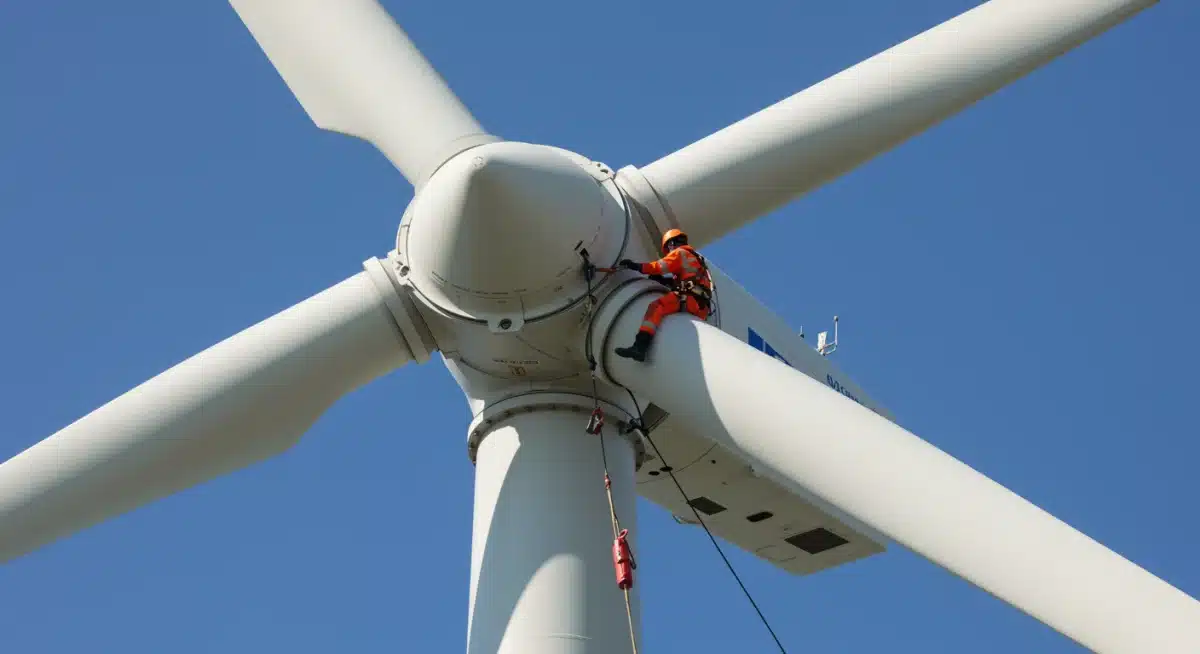
The wind energy sector is a significant employer, creating a diverse range of jobs across various skill levels. From manufacturing turbine components and constructing wind farms to operating and maintaining the facilities, the industry supports thousands of American jobs. Rural communities, in particular, benefit from wind farm development through property tax revenues, land lease payments to farmers and landowners, and local spending by project developers and employees. These economic injections can revitalize local economies, providing stable income and opportunities where traditional industries may be declining. For instance, states like Iowa and Oklahoma have seen substantial economic benefits from their robust wind sectors, fostering local supply chains and skilled labor forces.
Reduced Energy Costs and Price Stability
Once built, wind farms produce electricity with zero fuel costs, making them immune to the volatility of fossil fuel prices. This provides long-term price stability for consumers and businesses, helping to hedge against fluctuating energy markets. The low operational costs of wind energy contribute to a lower overall cost of electricity, benefitting ratepayers. In competitive markets like Texas, the abundance of wind power can drive down wholesale electricity prices, especially during periods of high wind generation.
Environmental Benefits and Climate Change Mitigation
Perhaps the most significant environmental benefit of US wind energy is its role in reducing greenhouse gas emissions. As a zero-emission energy source, wind power displaces electricity generated from fossil fuels, thereby cutting carbon dioxide and other harmful pollutants. This directly contributes to combating climate change and improving air quality, leading to better public health outcomes. The reduction in water consumption associated with electricity generation is another crucial environmental advantage, as wind farms require virtually no water for cooling, unlike thermal power plants.
Energy Independence and Diversification
Investing in domestic wind energy resources enhances national energy independence and reduces reliance on imported fuels. By diversifying the energy mix, states and the nation as a whole become more resilient to geopolitical disruptions and supply chain vulnerabilities. This strategic advantage is a powerful motivator for continued investment in US wind energy.
Challenges and Future Outlook for US Wind Energy
While the outlook for US wind energy is overwhelmingly positive, its continued expansion is not without challenges. Addressing these hurdles will be crucial for realizing the full potential of wind power by 2026 and beyond.
Transmission Constraints and Grid Modernization
One of the most significant challenges remains the need for substantial upgrades and expansion of the national transmission grid. Many of the best wind resources are located in remote areas, far from population centers, requiring new transmission lines to carry the electricity. The permitting and construction of these large-scale projects can be lengthy and complex, often facing local opposition and regulatory hurdles. Investing in smart grid technologies and energy storage solutions will be vital to manage the intermittency of wind power and ensure grid stability.
Siting and Environmental Concerns
While generally considered environmentally friendly, wind farms can raise local concerns regarding visual impact, noise, and potential impacts on wildlife, particularly birds and bats. Careful siting, environmental impact assessments, and the implementation of mitigation strategies are essential to address these concerns and ensure sustainable development. Offshore wind projects face additional challenges related to marine ecosystems, fishing industries, and shipping lanes.
Supply Chain and Workforce Development
The rapid growth of the wind industry puts pressure on the supply chain for components and the availability of a skilled workforce. Ensuring a robust domestic manufacturing base for turbines, blades, and other equipment, along with investing in educational and training programs for wind technicians and engineers, will be critical to sustain growth and create American jobs.
Policy Stability and Long-Term Certainty
While federal and state policies have been supportive, the long-term stability of these incentives is always a consideration for investors. Consistent, predictable policy frameworks are necessary to encourage the massive capital investments required for new wind projects. Any uncertainty can slow down development.
Innovation in Storage and Hybrid Projects
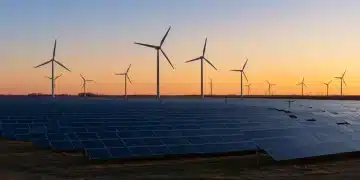
To maximize the value of wind energy, particularly as its penetration increases, innovation in energy storage technologies (e.g., batteries, pumped hydro, green hydrogen) will be paramount. Hybrid projects that combine wind with solar and storage are becoming increasingly common, offering more reliable and dispatchable power. Continued research and development in these areas will enhance the grid integration of wind power.
Despite these challenges, the momentum behind US wind energy is undeniable. The leading states are demonstrating that with strategic planning, supportive policies, and continuous innovation, wind power can be a reliable, cost-effective, and environmentally responsible cornerstone of the nation's energy future. The trajectory towards 2026 suggests a continued acceleration, firmly establishing wind as a dominant force in America's clean energy transition.
Conclusion: A Breezy Future for US Wind Energy
As we've explored, the future of US wind energy is exceptionally bright, with several states paving the way for a cleaner, more sustainable energy landscape. Texas, Iowa, Oklahoma, New York, and California stand out as the projected leaders by 2026, each leveraging unique combinations of natural resources, policy innovation, and strategic investments to drive significant growth. From the vast onshore wind farms of the Great Plains to the burgeoning offshore projects along the coasts, the diversity of approaches underscores the adaptability and widespread potential of wind power across the nation.
The accelerating momentum is fueled by a confluence of factors: robust federal and state policies providing crucial incentives, continuous technological advancements that reduce costs and enhance efficiency, and a growing demand from corporations and consumers for clean energy. These drivers are not just transforming the energy grid; they are creating substantial economic benefits through job creation, local tax revenues, and increased energy independence.
While challenges such as transmission infrastructure upgrades, careful environmental siting, and workforce development remain, the industry's proven track record of overcoming obstacles suggests these will be addressed through continued innovation and collaborative efforts. The commitment to decarbonization and the clear economic advantages position US wind energy as a cornerstone of the nation's energy future.
By 2026, these leading states will not only contribute significantly to the national energy mix but also serve as models for how to successfully transition to a renewable-powered economy. Their success demonstrates that with vision and strategic investment, the United States can harness the power of the wind to achieve its climate goals, strengthen its economy, and ensure a sustainable energy future for generations to come. The breeze of change is blowing strong, and US wind energy is riding its crest.