US Offshore Wind Investment Outlook 2026: 30 GW by 2030
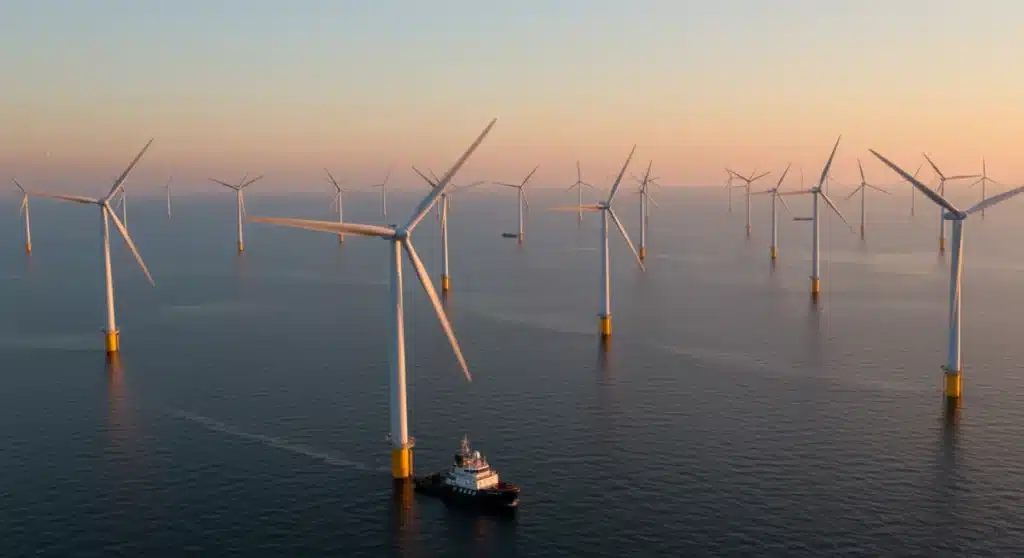
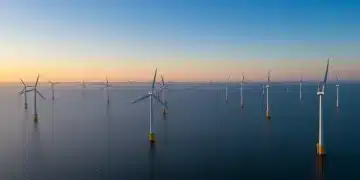
The 2026 investment outlook for offshore wind in the U.S. is poised for significant growth, driven by federal targets to achieve 30 GW by 2030, attracting substantial capital and fostering technological advancements across the sector.
The landscape of clean energy in the United States is undergoing a profound transformation, with offshore wind emerging as a pivotal component. As we navigate the year 2026, the discussion around the future of renewable energy is increasingly focused on the ambitious federal target of deploying 30 gigawatts (GW) of offshore wind capacity by 2030. This goal isn’t merely a numerical aspiration; it represents a significant shift in energy policy, economic development, and environmental stewardship, making the US offshore wind investment outlook a critical topic for stakeholders across various sectors.
The Ambitious 30 GW by 2030 Target: A National Imperative
The United States has set an ambitious goal to deploy 30 GW of offshore wind capacity by 2030. This target is not just a lofty aspiration but a strategic imperative to combat climate change, create high-paying jobs, and strengthen energy independence. Achieving this goal requires unprecedented collaboration between federal and state governments, industry players, and local communities. The year 2026 marks a crucial period within this timeline, where initial projects begin to come online and the supply chain matures.
This aggressive target is underpinned by a robust policy framework, including significant federal incentives and a streamlined permitting process. The commitment from the Biden-Harris administration has provided a clear signal to investors and developers, fostering an environment ripe for growth. States along the Atlantic, Pacific, and Gulf coasts are actively developing their own offshore wind strategies, creating a patchwork of opportunities and challenges.
Federal Policy and Regulatory Support
Federal agencies like the Bureau of Ocean Energy Management (BOEM) are central to this expansion, responsible for leasing areas for development and overseeing environmental reviews. The regulatory landscape, while complex, is continuously being refined to accelerate project timelines without compromising environmental integrity. The recent establishment of national supply chain initiatives further supports domestic manufacturing and job creation.
- Investment Tax Credits (ITCs): Extended and enhanced ITCs provide significant financial incentives for offshore wind projects.
- Production Tax Credits (PTCs): Offer ongoing financial support based on electricity generation.
- Streamlined Permitting: Efforts to reduce bureaucratic hurdles and accelerate project approvals.
- Research and Development Funding: Government grants supporting innovation in turbine technology and installation methods.
State-Level Commitments and Procurement
Many coastal states have established their own procurement targets, creating a stable demand signal for developers. States like New York, Massachusetts, and New Jersey are leading the charge, issuing solicitations for significant amounts of offshore wind capacity. These state-level commitments are vital, as they translate federal ambitions into tangible project pipelines.
The interplay between federal and state policies creates a dynamic environment for offshore wind development. While federal support provides the overarching framework and financial incentives, state-level actions are crucial for specific project execution, grid integration, and community engagement. This multi-layered approach ensures a comprehensive strategy for achieving the 30 GW goal.
In conclusion, the 30 GW by 2030 target is a testament to the nation’s commitment to clean energy. The policy landscape in 2026 is designed to accelerate this transition, offering a clear path for investment and development. The coordinated efforts at both federal and state levels are essential for overcoming challenges and realizing the full potential of offshore wind as a cornerstone of the U.S. energy future.
Investment Outlook 2026: Capital Flows and Economic Drivers
The year 2026 is critical for understanding the financial momentum behind the U.S. offshore wind sector. Billions of dollars are being committed by both domestic and international investors, signaling strong confidence in the market’s long-term viability. This influx of capital is driven by a combination of favorable policy, technological advancements, and increasing corporate demand for renewable energy credits.
Private equity firms, infrastructure funds, and major energy companies are actively seeking opportunities, from early-stage project development to established operational assets. The scale of these investments reflects the massive infrastructure build-out required, encompassing everything from turbine manufacturing facilities to port upgrades and new transmission lines.
Key Investment Catalysts
Several factors are converging to make 2026 a pivotal year for offshore wind investment. The clarity provided by federal targets, coupled with state-specific procurement mandates, reduces market uncertainty. Furthermore, the rising cost of carbon emissions and the increasing focus on Environmental, Social, and Governance (ESG) criteria are pushing institutional investors towards sustainable assets.
- Long-term Power Purchase Agreements (PPAs): Provide stable revenue streams, reducing financial risk for investors.
- Federal Loan Programs: Access to low-cost capital through government-backed initiatives.
- Green Bonds and Sustainable Finance: Growing investor appetite for instruments funding environmentally friendly projects.
- Technological De-risking: Maturation of turbine technology and installation techniques reduces perceived project risks.
Economic Impact and Job Creation
The economic benefits of offshore wind extend far beyond electricity generation. The sector is projected to create tens of thousands of high-paying jobs across the supply chain, from manufacturing and construction to operations and maintenance. This job creation is a significant draw for policymakers and communities, fostering economic revitalization in coastal regions.
Investment in offshore wind is not just about building turbines; it’s about developing an entirely new industrial ecosystem. This includes investments in port infrastructure capable of handling massive components, specialized installation vessels, and a skilled workforce. The economic ripple effect is substantial, impacting local economies through increased tax revenues and business activity.
In summary, the 2026 investment outlook for U.S. offshore wind is exceptionally positive, characterized by robust capital flows and diverse economic drivers. The sector’s ability to attract significant investment is crucial for achieving the 30 GW target by 2030, creating a sustainable energy future and fostering economic growth across the nation.
Technological Advancements and Infrastructure Development
The rapid evolution of offshore wind technology is a key enabler for achieving the 30 GW target. In 2026, we are witnessing the deployment of larger, more efficient turbines, coupled with innovations in foundation design and grid integration. These advancements are not only improving project economics but also expanding the potential areas for development, particularly into deeper waters.
The sheer scale of modern offshore wind turbines, with blades longer than football fields, demands specialized manufacturing processes and installation techniques. Floating offshore wind technology, while still nascent in the U.S., is gaining traction for its potential to unlock vast resources in regions with deeper continental shelves, such as the West Coast. This technological frontier is attracting significant research and development investment.
Innovations in Turbine Technology
The trend towards ever-larger turbines continues, with capacities reaching 15 MW or more. These gargantuan machines capture more wind energy, reducing the number of turbines required for a given capacity and lowering overall project costs. Advances in materials science and aerodynamic design are also enhancing efficiency and durability.
- Increased Turbine Size: Larger rotor diameters and higher power ratings maximize energy capture.
- Floating Foundations: Opens up new development areas in deeper waters, particularly off the West Coast.
- Digitalization and AI: Predictive maintenance and operational optimization through advanced analytics.
- Modular Construction: Streamlines manufacturing and assembly processes, reducing installation times.
Critical Infrastructure Upgrades
Developing 30 GW of offshore wind requires a massive overhaul and expansion of existing infrastructure. Ports need to be upgraded to handle the enormous components, and new transmission lines must be built to deliver the generated electricity to the grid. This infrastructure development is a multi-billion-dollar undertaking, creating a significant demand for skilled labor and specialized equipment.
Grid modernization is paramount. Integrating large-scale offshore wind into the existing grid demands smart grid technologies, energy storage solutions, and robust transmission networks. The development of offshore transmission backbone infrastructure is a critical area of focus, aiming to efficiently connect multiple wind farms to shore and reduce curtailment risks.
In conclusion, technological advancements and substantial infrastructure development are foundational to the U.S. offshore wind sector’s growth. The innovations seen in 2026 are not only making projects more viable but also expanding the horizons of where and how offshore wind can be deployed, paving the way for the 30 GW target and beyond.
Supply Chain Development and Domestic Manufacturing
Building 30 GW of offshore wind capacity by 2030 necessitates the rapid development of a robust domestic supply chain. In 2026, significant efforts are underway to foster local manufacturing, from turbine components to specialized vessels and subsea cables. This focus on domestic content aims to create jobs, reduce reliance on foreign imports, and ensure the long-term sustainability of the industry.
The scale of investment required to establish this supply chain is immense, attracting both established global players and new domestic entrants. States are actively competing to host manufacturing facilities, offering incentives and developing specialized port infrastructure to support these industrial hubs. The goal is to build a self-sufficient ecosystem that can meet the demands of the burgeoning U.S. market.
Fostering Local Content and Job Creation
Policies promoting local content requirements are driving manufacturers to establish production facilities within the U.S. This not only creates direct manufacturing jobs but also stimulates growth in ancillary industries, such as logistics, engineering, and maintenance services. The economic benefits are distributed across various regions, strengthening local economies.
- Manufacturing Hubs: Development of specialized ports and industrial zones for turbine and component fabrication.
- Workforce Training Programs: Initiatives to upskill and reskill workers for the demands of the offshore wind industry.
- Small and Medium Enterprise (SME) Integration: Support for local businesses to participate in the supply chain.
- Research and Development Partnerships: Collaboration between industry, academia, and government to innovate domestically.
Challenges and Opportunities in Supply Chain Scaling
While the opportunities are vast, scaling the domestic supply chain presents significant challenges. These include the high capital investment required for manufacturing facilities, the need for a highly skilled workforce, and competition from established European and Asian suppliers. Overcoming these hurdles requires concerted effort and strategic planning.
However, the commitment to 30 GW by 2030 provides a clear market signal, encouraging long-term investments in domestic production capabilities. The U.S. has an opportunity to leapfrog some of the challenges faced by earlier offshore wind markets by adopting advanced manufacturing techniques and focusing on innovative solutions. This proactive approach is crucial for building a resilient and competitive supply chain.
In conclusion, the development of a robust domestic supply chain is integral to the success of the U.S. offshore wind sector. In 2026, the focus on local content and manufacturing is creating new jobs and economic opportunities, while addressing the challenges of scaling up to meet the ambitious 30 GW target. This strategic investment in infrastructure and human capital will secure the nation’s clean energy future.
Environmental Considerations and Community Engagement
As the U.S. offshore wind industry expands towards 30 GW by 2030, balancing environmental protection and community interests is paramount. In 2026, developers are increasingly focused on minimizing impacts on marine ecosystems and fisheries, while also ensuring transparent and equitable engagement with coastal communities. These efforts are crucial for securing social license and ensuring sustainable development.
Environmental assessments are rigorous, covering potential impacts on marine mammals, birds, and fish habitats. Mitigation strategies are being refined, incorporating advanced monitoring technologies and adaptive management approaches. Simultaneously, robust community engagement strategies are essential to address concerns, share benefits, and build local support for projects.
Mitigating Environmental Impacts
Minimizing the ecological footprint of offshore wind farms is a continuous priority. This involves careful site selection, innovative foundation designs that reduce seabed disturbance, and advanced techniques for noise reduction during construction. Post-construction monitoring is also critical for understanding long-term impacts and informing future projects.
- Marine Mammal Protection: Advanced acoustic monitoring and mitigation during pile driving.
- Avian Impact Assessments: Studies to understand flight paths and potential collision risks for birds.
- Fisheries Compensation Funds: Programs to support fishing communities potentially affected by development.
- Habitat Enhancement: Potential for artificial reef creation around turbine foundations, benefiting marine life.
Engaging Coastal Communities and Stakeholders
Effective community engagement goes beyond mere consultation; it involves genuine partnership and benefit sharing. Developers are working closely with local governments, fishing associations, and environmental groups to ensure that projects are developed responsibly and that local concerns are addressed proactively. This transparent approach builds trust and reduces potential conflicts.
Benefit-sharing agreements, such as community benefit funds, job training programs, and local procurement targets, are becoming standard practice. These initiatives help ensure that the economic opportunities created by offshore wind are distributed equitably, fostering local ownership and support for the projects. Early and continuous dialogue is key to successful project realization.
In conclusion, environmental considerations and community engagement are fundamental to the successful deployment of U.S. offshore wind. In 2026, the industry is demonstrating a strong commitment to sustainable practices and inclusive development, addressing potential impacts while maximizing benefits for both the environment and local communities. This balanced approach is vital for achieving broad public support and reaching the 30 GW target.
Challenges and Opportunities on the Path to 30 GW
The journey to 30 GW of offshore wind capacity by 2030 is not without its challenges, yet each hurdle presents an opportunity for innovation and growth. In 2026, the industry is grappling with issues ranging from permitting complexities and grid interconnection bottlenecks to supply chain constraints and workforce development needs. Understanding these challenges is key to navigating the path forward successfully.
While the U.S. has significant offshore wind resources, translating that potential into operational projects requires overcoming substantial logistical, technical, and regulatory barriers. However, the strong political will and increasing industry collaboration are creating pathways to address these challenges, transforming them into opportunities for sector advancement.
Overcoming Permitting and Regulatory Hurdles
The multi-agency federal and state permitting process can be lengthy and complex, often leading to project delays. Streamlining this process while maintaining environmental safeguards is a critical challenge. Efforts are underway to improve inter-agency coordination and standardize environmental review procedures, which should accelerate project timelines.
- Inter-agency Task Forces: Improving coordination between federal and state regulatory bodies.
- Standardized Environmental Reviews: Developing consistent methodologies for impact assessments.
- Early Stakeholder Engagement: Addressing concerns proactively to prevent late-stage objections.
- Digital Permitting Platforms: Utilizing technology to manage and track applications more efficiently.
Addressing Grid and Transmission Constraints
Connecting large-scale offshore wind farms to the onshore grid requires significant transmission infrastructure upgrades. The existing grid was not designed for the influx of renewable energy from offshore sources, leading to potential bottlenecks and grid congestion. Developing a robust and resilient offshore transmission network is a major opportunity for innovation and investment.
Innovative solutions, such as meshed offshore grids and HVDC (High-Voltage Direct Current) transmission lines, are being explored to efficiently transport power from distant wind farms to demand centers. Policy frameworks that incentivize transmission development and cost-sharing mechanisms are crucial for unlocking this potential. This area represents a substantial investment opportunity for grid operators and infrastructure developers.
In conclusion, while the U.S. offshore wind sector faces considerable challenges on its path to 30 GW by 2030, these obstacles are simultaneously driving innovation and fostering strategic collaborations. By proactively addressing permitting complexities, strengthening the supply chain, and modernizing grid infrastructure, the industry can capitalize on these opportunities, ensuring a successful and sustainable energy transition.
The Long-Term Vision Beyond 2030
While the 30 GW by 2030 target serves as a crucial near-term milestone, the vision for U.S. offshore wind extends far beyond this decade. In 2026, industry leaders and policymakers are already laying the groundwork for sustained growth, envisioning a future where offshore wind plays an even more dominant role in the nation’s energy mix, potentially reaching 100 GW or more by mid-century. This long-term perspective shapes current investment decisions and policy development.
This ambitious long-term vision is driven by the vast untapped potential of U.S. offshore wind resources, particularly in deeper waters amenable to floating technology. The continued decarbonization of the electricity sector, coupled with the electrification of transportation and industrial processes, will necessitate even greater renewable energy deployment. Offshore wind is uniquely positioned to meet this growing demand due to its scale and consistent power generation.
Strategic Planning for Sustained Growth
Achieving sustained growth beyond 2030 requires proactive strategic planning across multiple fronts. This includes continued investment in research and development to drive down costs and improve efficiency, particularly for floating offshore wind. Policy stability and predictability are also critical to attract the consistent, long-term capital needed for such large-scale infrastructure projects.
- Advanced Technology Development: Investing in next-generation turbines and floating platforms.
- Regional Transmission Planning: Developing offshore grid solutions to connect future projects efficiently.
- Workforce Development Pipeline: Ensuring a continuous supply of skilled labor for construction and O&M.
- International Collaboration: Learning from mature offshore wind markets in Europe and Asia.
Offshore Wind’s Role in a Decarbonized Economy
Beyond electricity generation, offshore wind is increasingly seen as a key enabler for broader decarbonization efforts. The vast amounts of clean electricity generated can be used to produce green hydrogen, which can then fuel heavy industry, transportation, and provide long-duration energy storage. This integration positions offshore wind as a foundational element of a future clean energy economy.
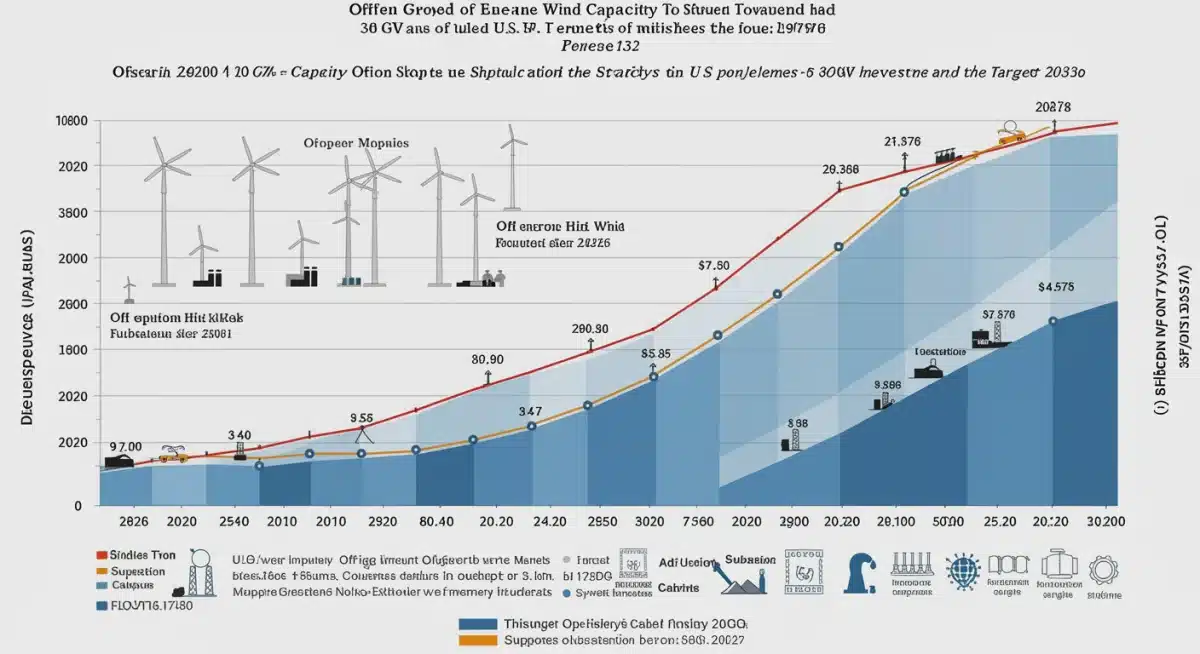
The long-term vision also encompasses the potential for offshore wind to support other emerging industries, such as aquaculture and marine research. By fostering a multi-use ocean economy, offshore wind can deliver even greater societal and economic benefits. This holistic approach ensures that offshore wind is not just an energy source but a catalyst for sustainable development.
In conclusion, while the 30 GW by 2030 target is ambitious, it represents just the beginning of the U.S. offshore wind journey. The long-term vision extends much further, envisioning offshore wind as a cornerstone of a fully decarbonized economy. Through strategic planning, technological innovation, and a commitment to sustainability, the U.S. is poised to unlock the full potential of this powerful clean energy resource for generations to come.
| Key Aspect | Brief Description |
|---|---|
| 30 GW by 2030 Target | Ambitious federal goal to significantly expand U.S. offshore wind capacity. |
| 2026 Investment Outlook | Strong capital influx driven by policy, tech, and ESG criteria; billions committed. |
| Technological Progress | Larger turbines, floating foundations, and digital solutions enhance viability. |
| Supply Chain & Jobs | Focus on domestic manufacturing and job creation, building a new industrial ecosystem. |
Frequently Asked Questions About US Offshore Wind
The United States has an ambitious federal goal to deploy 30 gigawatts (GW) of offshore wind energy capacity by the year 2030. This target is a cornerstone of the nation’s clean energy strategy, aimed at reducing carbon emissions and fostering economic growth.
Investment in U.S. offshore wind in 2026 is primarily driven by strong federal and state policy support, including tax credits and procurement mandates. Additionally, technological advancements, increasing corporate demand for renewables, and ESG investment criteria are significant catalysts for capital flow.
Technology is profoundly impacting offshore wind development through the deployment of larger, more efficient turbines and the emergence of floating foundation technology. These innovations are lowering costs, increasing energy capture, and opening up new development areas in deeper waters, enhancing overall project viability.
Key challenges for the U.S. offshore wind sector include complex permitting processes, grid interconnection bottlenecks, and the need to rapidly scale a domestic supply chain. Addressing these requires significant investment in infrastructure, workforce development, and regulatory streamlining.
Beyond 2030, the long-term vision for U.S. offshore wind includes sustained growth to potentially 100 GW or more by mid-century. This expansion aims to further decarbonize the energy sector, support green hydrogen production, and foster a multi-use ocean economy.
Conclusion
The US offshore wind investment outlook for 2026 is unequivocally strong, underpinned by an ambitious federal target of 30 GW by 2030 and significant capital commitments. This burgeoning sector is not merely about generating electricity; it represents a comprehensive national effort to drive economic growth, create thousands of high-paying jobs, and secure a sustainable energy future. While challenges such as complex permitting and grid integration persist, the industry’s proactive approach to technological innovation, supply chain development, and community engagement is paving the way for success. The long-term vision extends far beyond 2030, positioning offshore wind as a pivotal component of a fully decarbonized U.S. economy. As the nation continues its transition towards clean energy, the strategic investments made today will yield profound environmental and economic benefits for generations to come, solidifying offshore wind’s role as a cornerstone of America’s energy independence.