2026 U.S. Hydrogen Economy Outlook: Production, Infrastructure, & 15% Growth
Anúncios
The 2026 U.S. Hydrogen Economy Outlook: Analyzing Production, Infrastructure, and a Projected 15% Growth
The global energy landscape is undergoing a profound transformation, driven by an urgent need to decarbonize and transition towards sustainable sources. Within this paradigm shift, hydrogen has emerged as a frontrunner, heralded as a versatile and clean energy carrier with the potential to revolutionize various sectors. The U.S. Hydrogen Economy 2026 is poised for significant expansion, marked by pivotal advancements in production methods, robust infrastructure development, and an ambitious projected market growth of 15%. This comprehensive outlook delves into the intricate dynamics shaping this burgeoning industry, exploring the technological innovations, policy frameworks, and economic forces propelling hydrogen to the forefront of America’s clean energy future.
Hydrogen, often referred to as the ‘fuel of the future,’ offers a compelling solution to reduce greenhouse gas emissions across hard-to-abate sectors such as heavy industry, long-haul transportation, and power generation. Its ability to store energy, produce electricity, and serve as a feedstock for industrial processes makes it an indispensable component of a net-zero economy. As we approach 2026, the United States is strategically positioning itself to become a global leader in hydrogen production and utilization, leveraging its vast renewable energy potential and innovative spirit. The projected 15% growth signifies not just an increase in market size, but a deepening integration of hydrogen into the national energy mix, creating new industries, jobs, and pathways to energy independence.
Understanding the trajectory of the U.S. Hydrogen Economy 2026 requires a multi-faceted analysis. We must examine the diverse production methods, from the carbon-intensive ‘gray’ hydrogen to the environmentally friendly ‘green’ hydrogen. We must also scrutinize the critical infrastructure needed to transport, store, and distribute hydrogen efficiently and safely. Furthermore, the interplay of government policies, private sector investments, and technological breakthroughs will be crucial in realizing the full potential of this energy carrier. This article aims to provide a detailed and insightful exploration of these facets, offering a clear picture of what to expect from the U.S. hydrogen sector in the coming years.
The Evolving Landscape of Hydrogen Production Methods
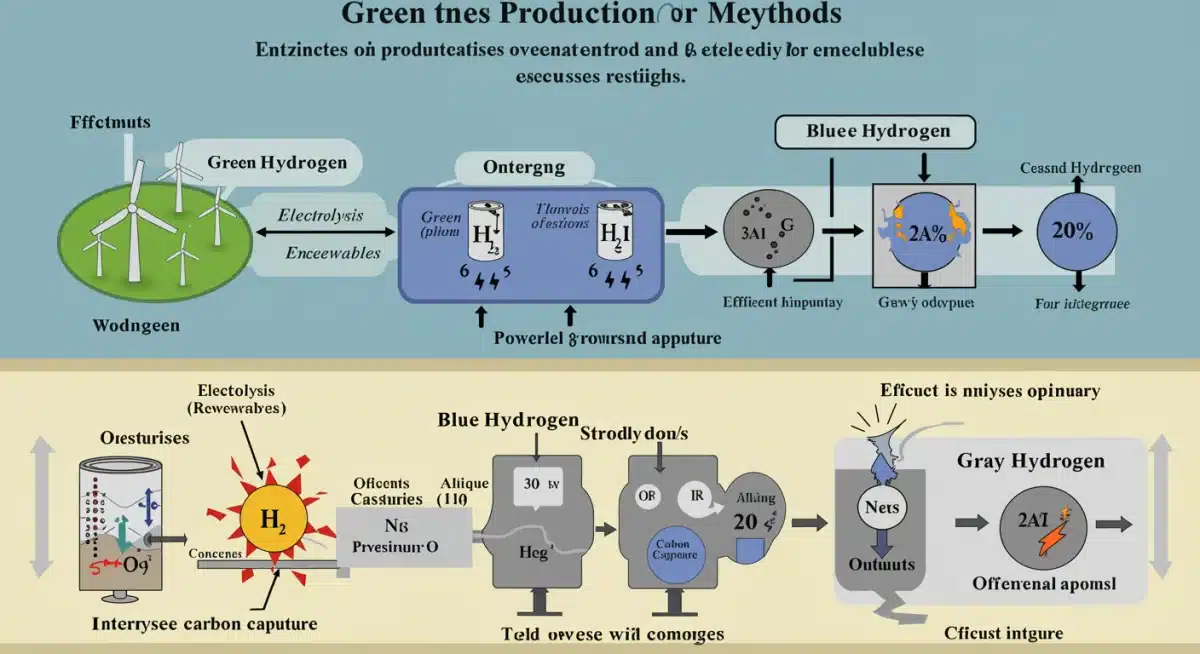
The foundation of a thriving U.S. Hydrogen Economy 2026 lies in its production capabilities. Historically, the vast majority of hydrogen has been produced through steam methane reforming (SMR), a process that uses natural gas and results in significant carbon emissions. This ‘gray’ hydrogen, while cost-effective, runs counter to the nation’s decarbonization goals. Consequently, there’s a strong push towards cleaner production methods, primarily ‘blue’ and ‘green’ hydrogen.
Green Hydrogen: The Renewable Frontier
Green hydrogen, produced through electrolysis powered by renewable electricity (such as solar, wind, or hydro), is considered the holy grail of clean energy. This method splits water into hydrogen and oxygen, with zero greenhouse gas emissions if the electricity source is renewable. The United States possesses immense renewable energy resources, making it an ideal location for large-scale green hydrogen production. By 2026, we anticipate a substantial increase in electrolytic capacity, driven by falling renewable energy costs, technological advancements in electrolyzers, and supportive government incentives. The Inflation Reduction Act (IRA), for instance, offers significant tax credits for clean hydrogen production, making green hydrogen increasingly competitive. Projects are already underway to develop gigawatt-scale electrolyzer plants across the country, particularly in regions rich in wind and solar power, such as the Southwest and the Great Plains. This rapid scaling of green hydrogen production is a cornerstone of the projected 15% growth in the U.S. Hydrogen Economy 2026.
Blue Hydrogen: A Transitional Bridge
Blue hydrogen also plays a crucial role, especially as a transitional fuel. It is produced from natural gas using SMR, but with the added step of carbon capture, utilization, and storage (CCUS) technologies to mitigate emissions. While not entirely carbon-free due to upstream methane leaks and the energy intensity of CCUS, blue hydrogen offers a lower-carbon alternative to gray hydrogen and can be rapidly scaled up using existing natural gas infrastructure. For regions with abundant natural gas resources and established CCUS capabilities, blue hydrogen provides a pragmatic pathway to reduce emissions in the short to medium term. The development of dedicated carbon capture hubs and pipelines is essential for the economic viability of blue hydrogen, and several such projects are expected to be operational or under construction by 2026. This dual approach – investing in both green and blue hydrogen – provides flexibility and accelerates the decarbonization process within the U.S. Hydrogen Economy 2026.
Other Production Methods and Innovations
Beyond green and blue, other production methods are also gaining traction. ‘Pink’ hydrogen uses nuclear energy for electrolysis, offering a constant, low-carbon power source. ‘Turquoise’ hydrogen involves methane pyrolysis, splitting methane into hydrogen and solid carbon, which can be stored or utilized. Research and development in these areas are ongoing, with pilot projects exploring their scalability and economic viability. The diversity in production methods underscores the adaptability and resilience of the emerging U.S. Hydrogen Economy 2026, ensuring multiple pathways to meet increasing demand and address varying regional energy profiles. Innovation in catalyst technology, electrolyzer efficiency, and novel thermochemical processes will continue to drive down costs and improve the environmental footprint of hydrogen production.
Infrastructure Development: The Backbone of the Hydrogen Economy
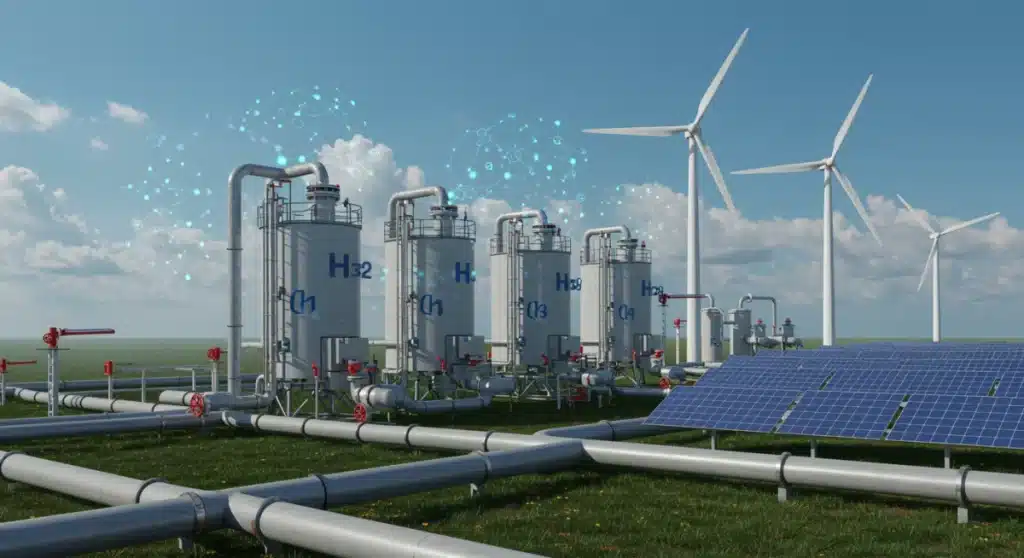
The ambitious growth projections for the U.S. Hydrogen Economy 2026 are intrinsically linked to the development of robust and extensive infrastructure. Without adequate means to transport, store, and deliver hydrogen, even the most efficient production methods will fail to unlock its full potential. Infrastructure challenges are significant, ranging from the high cost of building new pipelines to concerns about material compatibility and safety.
Pipelines: The Arteries of Hydrogen Distribution
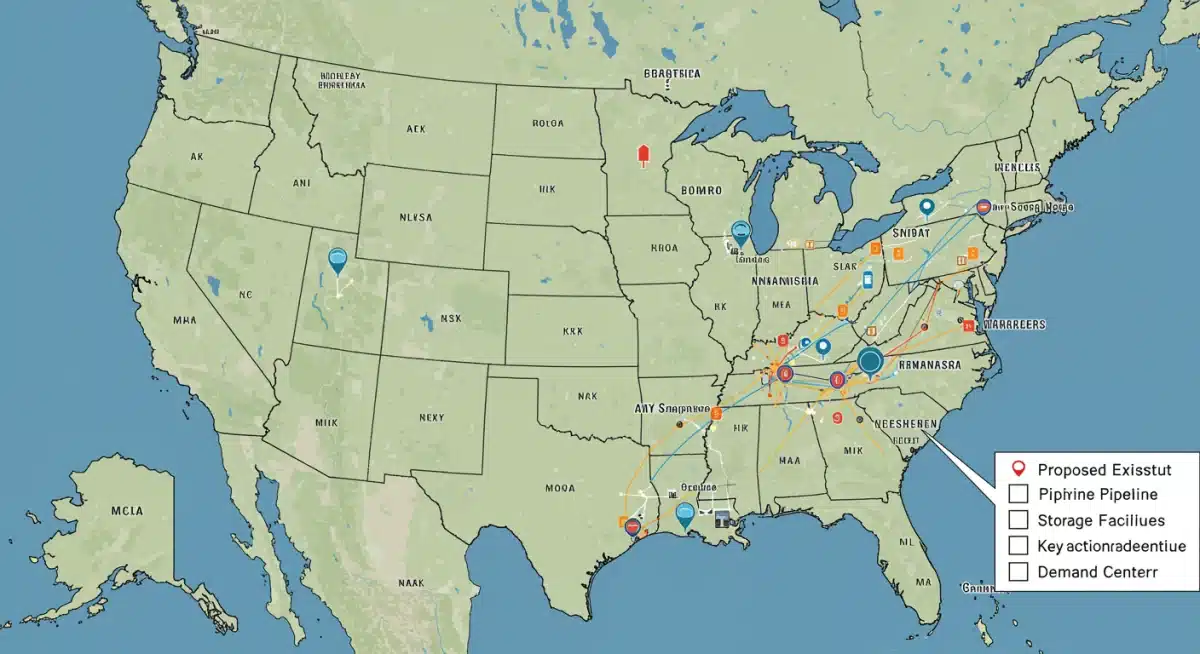
Dedicated hydrogen pipelines are crucial for large-scale distribution, connecting production hubs to demand centers. While some existing natural gas pipelines can be repurposed for hydrogen blending or even 100% hydrogen transport after modifications, significant investment is required for new construction. By 2026, we expect to see the expansion of several key hydrogen pipeline corridors, particularly in industrial clusters where hydrogen demand is high (e.g., Gulf Coast, Midwest). These corridors will facilitate the movement of hydrogen for industrial processes, power generation, and potentially even residential heating. The regulatory framework for pipeline development is also evolving, aiming to streamline permitting and ensure safety standards are met. The Department of Energy’s hydrogen hubs initiative plays a critical role here, fostering regional ecosystems where production, infrastructure, and end-use are co-located and interconnected.
Storage Solutions: Ensuring Supply Reliability
Hydrogen storage is another critical piece of the infrastructure puzzle. Hydrogen has a lower volumetric energy density than natural gas, meaning it requires larger volumes or higher pressures for storage. Various storage solutions are being developed and deployed: underground salt caverns, depleted oil and gas reservoirs, and above-ground pressurized tanks. Salt caverns, in particular, offer large-scale, cost-effective storage for significant volumes of hydrogen, providing seasonal flexibility and ensuring supply reliability. Several projects are underway to expand salt cavern storage capacity, especially in states like Texas and Louisiana. For smaller-scale or mobile applications, advanced material-based storage solutions and liquid hydrogen technologies are also being explored. The ability to store large quantities of hydrogen is vital for balancing supply and demand fluctuations, especially as hydrogen integrates with intermittent renewable energy sources, further strengthening the U.S. Hydrogen Economy 2026.
Refueling Stations and End-Use Infrastructure
For hydrogen to become a viable fuel for transportation, a network of refueling stations is indispensable. While the current number of hydrogen fueling stations in the U.S. is limited, primarily concentrated in California for light-duty vehicles, 2026 is projected to see a notable increase. This expansion will focus on heavy-duty trucking, port operations, and potentially even aviation and maritime applications. Public-private partnerships are essential here, with government incentives and private investment driving the deployment of these critical facilities. Beyond transportation, infrastructure for industrial applications (e.g., steel, ammonia production), power generation (e.g., hydrogen-fired turbines, fuel cells), and even residential heating (via blending with natural gas) will also see significant upgrades and new installations. The holistic development of this end-use infrastructure is paramount for the projected 15% growth of the U.S. Hydrogen Economy 2026.
Policy and Investment Driving Market Growth
The projected 15% growth of the U.S. Hydrogen Economy 2026 is not merely a result of technological progress but is heavily influenced by a supportive policy environment and substantial financial investment. Both federal and state governments recognize hydrogen’s potential for decarbonization and economic growth, leading to a concerted effort to foster its development.
Federal Initiatives and Incentives
The Inflation Reduction Act (IRA) stands as a landmark piece of legislation, offering unprecedented incentives for clean hydrogen production. The Clean Hydrogen Production Tax Credit (45V) provides up to $3 per kilogram for hydrogen produced with near-zero greenhouse gas emissions, significantly improving the economic viability of green and blue hydrogen. This credit alone is expected to catalyze billions of dollars in private investment. Furthermore, the Bipartisan Infrastructure Law (BIL) allocated $8 billion for the establishment of regional clean hydrogen hubs (H2Hubs) across the country. These hubs are designed to create interconnected ecosystems of hydrogen production, processing, delivery, storage, and end-use, accelerating commercialization and deployment. By 2026, we anticipate several of these hubs to be well into their development phases, demonstrating tangible progress and attracting further investment into the U.S. Hydrogen Economy 2026.
Private Sector Investment and Partnerships
Beyond government support, the private sector is increasingly recognizing the strategic importance of hydrogen. Major energy companies, industrial giants, and innovative startups are investing heavily in hydrogen projects, from developing new electrolyzer technologies to building large-scale production facilities and infrastructure. Venture capital and private equity firms are also pouring funds into hydrogen-related ventures, signaling strong market confidence. Strategic partnerships between traditional energy players, renewable energy developers, and technology providers are becoming common, pooling resources and expertise to overcome technical and financial hurdles. This collaborative approach is vital for the rapid scaling required to achieve the projected 15% growth in the U.S. Hydrogen Economy 2026. International collaborations are also emerging, positioning the U.S. as a key player in the global hydrogen market.
State-Level Support and Regulatory Frameworks
Many states are also implementing their own policies and incentives to support hydrogen development, often aligning with federal initiatives or addressing specific regional needs. California, for example, has long been a leader in hydrogen fuel cell vehicle deployment and continues to invest in hydrogen infrastructure. States with significant industrial sectors, such as those along the Gulf Coast, are actively pursuing carbon capture and storage projects to facilitate blue hydrogen production. The evolving regulatory landscape, including permitting processes, safety standards, and environmental regulations, will be crucial in ensuring responsible and sustainable growth. Harmonizing these regulations across state and federal levels will provide clarity and reduce uncertainty for investors and developers, further boosting the prospects of the U.S. Hydrogen Economy 2026.
Projected Market Growth and Key Applications
The projected 15% market growth for the U.S. Hydrogen Economy 2026 is a testament to the increasing demand for clean energy solutions and hydrogen’s expanding role across various sectors. This growth will be fueled by both traditional and emerging applications, creating a diverse and resilient market.
Industrial Decarbonization
One of the most significant drivers of demand for hydrogen is the decarbonization of heavy industries. Sectors such as ammonia production (for fertilizers), petroleum refining, steel manufacturing, and chemical production currently use large amounts of ‘gray’ hydrogen. Switching to green or blue hydrogen in these processes offers a direct and impactful way to reduce industrial emissions. By 2026, we anticipate a substantial uptake of clean hydrogen in these sectors, driven by corporate sustainability goals, regulatory pressures, and the economic incentives provided by the IRA. The development of direct reduced iron (DRI) processes using hydrogen instead of coal is a prime example of this industrial transformation, promising significant emissions reductions in steelmaking.
Transportation Sector Advancements
While hydrogen fuel cell electric vehicles (FCEVs) for light-duty transport have faced challenges, hydrogen is gaining significant traction in heavy-duty transportation, maritime shipping, and aviation. Fuel cell trucks offer longer ranges and faster refueling times compared to battery electric trucks, making them ideal for long-haul logistics. Major trucking companies and port operators are piloting hydrogen fuel cell trucks and infrastructure. Similarly, hydrogen is being explored as a clean fuel for ships and aircraft, with demonstration projects already underway. The expansion of hydrogen refueling infrastructure, coupled with advancements in fuel cell technology and falling hydrogen costs, will accelerate the adoption of hydrogen in these challenging transportation segments, contributing substantially to the U.S. Hydrogen Economy 2026’s growth.
Power Generation and Grid Stability
Hydrogen also offers solutions for grid stability and long-duration energy storage. It can be used in fuel cells or blended with natural gas in turbines to generate electricity, providing a flexible and dispatchable power source that complements intermittent renewables. As the share of solar and wind power on the grid increases, the need for reliable backup and seasonal storage becomes more critical. Hydrogen can be produced during periods of excess renewable generation and stored, then converted back to electricity when needed. By 2026, we expect to see more demonstration projects and commercial deployments of hydrogen-fired power plants and large-scale hydrogen energy storage facilities, enhancing grid resilience and contributing to the overall growth of the U.S. Hydrogen Economy 2026.
Emerging Applications and Innovations
Beyond these established areas, new applications for hydrogen are constantly emerging. These include its use in synthetic fuels (e-fuels) for hard-to-electrify sectors, as a heating fuel in buildings (via blending or dedicated hydrogen boilers), and in various niche industrial processes. Research and development continue to push the boundaries of hydrogen utilization, discovering new efficiencies and cost reductions. The vibrancy of innovation within the startup ecosystem and established companies alike ensures that the U.S. Hydrogen Economy 2026 will remain dynamic and responsive to evolving energy needs.
Challenges and Opportunities on the Horizon
Despite the optimistic outlook and projected 15% growth, the U.S. Hydrogen Economy 2026 faces several challenges that need to be addressed for sustained success. Understanding these hurdles also reveals significant opportunities for innovation and strategic investment.
Cost Competitiveness
One of the primary challenges is achieving cost competitiveness with conventional fossil fuels and other clean energy alternatives. While the IRA’s production tax credits significantly reduce the cost of clean hydrogen, further cost reductions are needed across the entire value chain – from production and compression to transport and storage. Economies of scale, technological advancements (e.g., more efficient electrolyzers), and innovative business models will be key to driving down costs. The opportunity here lies in leveraging domestic manufacturing capabilities to reduce equipment costs and foster a competitive supply chain within the U.S.
Infrastructure Development and Permitting
As discussed, infrastructure is crucial, but its development is often slow and capital-intensive. Siting and permitting new pipelines, storage facilities, and production plants can be complex and time-consuming, involving multiple regulatory bodies and community engagement. Streamlining these processes while maintaining rigorous safety and environmental standards is a significant challenge. The opportunity lies in developing standardized permitting procedures and fostering strong community relationships to ensure projects move forward efficiently and with local support. Public-private partnerships can also help de-risk large-scale infrastructure investments.
Safety and Public Perception
Hydrogen, like any energy carrier, requires careful handling. Ensuring public safety in its production, transport, storage, and use is paramount. Developing robust safety standards, training workforces, and educating the public about hydrogen’s properties are essential. Addressing public perception, which may associate hydrogen with past incidents or misconceptions, is also crucial. The opportunity exists to build a strong safety culture and transparent communication strategies, positioning hydrogen as a safe and reliable energy solution.
Supply Chain Development
A rapidly growing U.S. Hydrogen Economy 2026 will require a robust domestic supply chain for key components, including electrolyzers, fuel cells, compressors, and specialized materials. Relying too heavily on foreign supply chains can introduce vulnerabilities and increase costs. The opportunity here is to invest in domestic manufacturing capabilities, research and development, and workforce training programs to create a resilient and innovative U.S. hydrogen supply chain. This not only supports economic growth but also enhances national energy security.
Conclusion: A Promising Future for the U.S. Hydrogen Economy
The U.S. Hydrogen Economy 2026 is on an undeniable upward trajectory, poised for a remarkable 15% market growth driven by strategic investments, technological innovation, and a supportive policy environment. The shift towards cleaner production methods, particularly green and blue hydrogen, forms the bedrock of this expansion. Simultaneously, the concerted efforts to build out critical infrastructure – including pipelines, storage facilities, and end-use applications – are transforming hydrogen from a niche concept into a mainstream energy solution.
While challenges related to cost, infrastructure development, and public perception remain, the opportunities for the United States to lead in this nascent industry are immense. The federal government’s commitment, exemplified by the Inflation Reduction Act and the H2Hubs initiative, provides a powerful impetus for private sector investment and technological advancement. As we move closer to 2026, the hydrogen sector will not only contribute significantly to decarbonization goals but also foster economic growth, create high-value jobs, and enhance energy independence across the nation.
The vision of a comprehensive hydrogen ecosystem, where clean hydrogen fuels industries, powers transportation, and stabilizes the grid, is rapidly becoming a reality. The projected 15% growth is not just a statistic; it represents a fundamental shift in how the U.S. approaches its energy future, embracing hydrogen as a cornerstone of a sustainable, resilient, and prosperous economy. The journey ahead will require continued collaboration, innovation, and strategic foresight, but the foundations are firmly in place for a vibrant and transformative U.S. Hydrogen Economy 2026.