2026 U.S. Clean Energy Policy Shifts: A Comprehensive Regulatory Review
Anúncios
The landscape of clean energy development in the United States is in a constant state of flux, shaped by technological advancements, market dynamics, and, perhaps most significantly, evolving regulatory frameworks. As we look towards 2026, several pivotal policy changes are poised to redefine the trajectory of the nation’s energy transition. Understanding these shifts is not merely an academic exercise; it is crucial for investors, developers, policymakers, and indeed, every citizen concerned with the future of our planet. This comprehensive review delves into four recent and highly impactful policy changes that are significantly influencing U.S. clean energy development, offering an in-depth analysis of their mechanisms, intended outcomes, and the myriad challenges and opportunities they present. Our focus on clean energy policy aims to provide clarity in a complex and rapidly evolving sector.
The commitment to decarbonization and the pursuit of energy independence have spurred a wave of legislative action, creating both tailwinds and headwinds for the clean energy sector. These policy adjustments are not isolated incidents but rather interconnected components of a broader strategy to accelerate the adoption of renewable energy sources, enhance energy efficiency, and foster innovation in sustainable technologies. From tax incentives designed to spur investment to stricter environmental regulations aimed at mitigating climate change, each policy layer contributes to a multifaceted regulatory environment that demands careful navigation. The nuances of each change, their interactions, and their potential long-term consequences are critical for anyone operating within or observing the clean energy policy arena.
The Inflation Reduction Act (IRA) Refinements: A Deeper Dive into Tax Credits and Domestic Content Requirements
The Inflation Reduction Act (IRA) of 2022 was a landmark piece of legislation, injecting unprecedented levels of federal funding and tax incentives into the U.S. clean energy sector. While initially met with widespread acclaim, the subsequent years have seen continuous refinements and clarifications to its provisions, particularly those pertaining to tax credits and domestic content requirements. These adjustments, especially those slated for full implementation or reevaluation by 2026, are having a profound impact on project finance, supply chain strategies, and manufacturing decisions across the industry. The core intent of the IRA was to accelerate the deployment of clean energy technologies and promote domestic manufacturing, thereby creating jobs and enhancing energy security. However, the devil, as always, is in the details of its implementation and subsequent modifications.
Expanded and Transferable Tax Credits: A Game Changer for Financing
One of the most significant aspects of the IRA, which continues to evolve, is the structure and transferability of its various tax credits, including the Investment Tax Credit (ITC) and Production Tax Credit (PTC) for renewable energy projects, as well as new credits for manufacturing and clean hydrogen. For 2026, the refined guidelines for these credits are making them even more accessible and attractive. The expansion of direct pay and transferability options has fundamentally altered how clean energy projects are financed. Previously, only entities with significant tax liabilities could fully utilize these credits. Now, non-taxable entities (like municipalities and rural co-ops) can opt for direct pay, receiving the credit as a cash payment. Furthermore, the ability to transfer (sell) these credits to other taxpayers has opened up new avenues for financing, allowing developers to monetize credits more efficiently and reduce overall project costs. This flexibility is particularly crucial for smaller developers and those without large in-house tax appetites. The implications for attracting diverse capital into the clean energy policy space are immense, potentially democratizing access to project funding. However, the market for transferable credits is still maturing, and issues of liquidity, pricing, and standardization are ongoing considerations that will likely see further regulatory guidance by 2026.
Domestic Content Requirements: Boosting U.S. Manufacturing
A key objective of the IRA, reinforced by subsequent clarifications, is to incentivize domestic manufacturing. The legislation includes bonus tax credits for projects that meet specific domestic content thresholds for steel, iron, and manufactured products. By 2026, the enforcement and verification mechanisms for these requirements are expected to be more robust, influencing procurement strategies and supply chain resilience. While designed to foster a robust U.S. clean energy manufacturing base, these requirements also present challenges. Developers must navigate complex supply chains to ensure compliance, which can sometimes lead to higher initial costs or delays if domestic components are not readily available or competitive. The balance between promoting domestic industry and ensuring timely, cost-effective project deployment is a delicate one. The government’s approach to waivers and exceptions, as well as its support for domestic manufacturing expansion, will be critical in determining the success of this aspect of clean energy policy. Companies are increasingly investing in U.S. manufacturing facilities for solar panels, wind turbine components, and battery storage to capitalize on these incentives, creating a tangible shift in the industrial landscape.
Evolving EPA Regulations on Emissions: Impact on Fossil Fuel Transition and Carbon Capture
The Environmental Protection Agency (EPA) plays a crucial role in shaping the U.S. energy landscape through its regulatory authority over emissions. By 2026, several key EPA regulations, particularly those targeting greenhouse gas emissions from power plants and industrial facilities, are expected to be fully implemented or significantly tightened. These regulations are designed to accelerate the transition away from fossil fuels and incentivize the adoption of cleaner technologies, including carbon capture, utilization, and storage (CCUS). The interplay between these EPA rules and the IRA’s incentives creates a powerful, albeit sometimes complex, push-pull mechanism for the energy sector. This dual approach of regulation and incentive is central to the nation’s clean energy policy.
Stricter Emissions Standards for Power Plants
New and revised EPA rules are setting more stringent emissions standards for existing fossil fuel-fired power plants, especially those relying on coal and natural gas. These regulations often mandate the use of best available control technologies or require a significant reduction in carbon intensity. For many older plants, meeting these new standards will necessitate substantial investments in upgrades, conversion to cleaner fuels, or, in some cases, early retirement. This creates a powerful impetus for utilities to invest in renewable energy sources, which inherently have zero operational emissions. The economic calculus for new power generation projects is also shifting, making renewables more competitive against new fossil fuel plants that would need to incorporate costly emissions control technologies from the outset. The impact on grid planning, reliability, and the overall energy mix is profound, pushing the nation further towards a cleaner electricity supply. The long-term implications for public health and environmental quality are significant, aligning with broader climate goals.
Promotion of Carbon Capture, Utilization, and Storage (CCUS)
Alongside stricter emissions standards, the EPA is also developing regulatory frameworks that facilitate the deployment of CCUS technologies. While not strictly ‘clean energy’ in the sense of renewables, CCUS is seen as a vital tool for decarbonizing hard-to-abate industrial sectors and for allowing some continued, albeit mitigated, use of fossil fuels during the energy transition. The EPA’s role includes permitting for CO2 injection wells (under the Underground Injection Control program) and establishing monitoring, reporting, and verification (MRV) protocols for captured carbon. By 2026, clearer guidelines and streamlined permitting processes for CCUS projects are anticipated, complementing the IRA’s generous tax credits (45Q) for carbon capture. This regulatory clarity is essential for de-risking CCUS investments and accelerating their deployment. However, environmental justice concerns regarding the siting of CCUS infrastructure and potential leakage risks remain areas of ongoing debate and regulatory focus, impacting the social license to operate for these projects. Effective clean energy policy must address these concerns holistically.

Transmission Modernization and Permitting Reform: Unlocking Renewable Potential
The rapid growth of renewable energy generation, particularly from remote solar and wind farms, has exposed a critical bottleneck in the U.S. energy system: an aging and inadequate transmission infrastructure. Without significant upgrades and a more efficient permitting process, even the most ambitious clean energy goals will remain out of reach. By 2026, several federal initiatives and policy changes are targeting these challenges, aiming to accelerate the build-out of new transmission lines and streamline the complex permitting landscape. Addressing these infrastructure deficiencies is paramount to realizing the full potential of U.S. clean energy policy.
Federal Incentives for Transmission Projects
Recognizing the urgency, federal agencies, including the Department of Energy (DOE) and the Federal Energy Regulatory Commission (FERC), are rolling out new programs and regulatory changes to incentivize transmission development. This includes increased federal funding for grid modernization, loan programs for high-priority transmission projects, and new cost allocation mechanisms designed to fairly distribute the costs of new lines among beneficiaries. By 2026, these incentives are expected to catalyze a significant increase in transmission planning and construction activities. The goal is to connect more renewable energy projects to the grid, reduce congestion, and enhance grid resilience against extreme weather events. However, overcoming local opposition and navigating the complexities of right-of-way acquisition remain significant hurdles that require ongoing policy innovation and community engagement. The success of these incentives will largely depend on their ability to overcome these entrenched challenges.
Streamlining Permitting Processes
The permitting process for large-scale infrastructure projects, including transmission lines, is notoriously lengthy and complex, often involving multiple federal, state, and local agencies. Efforts are underway to streamline these processes, with a focus on improving interagency coordination, establishing clearer timelines, and utilizing advanced environmental review techniques. Legislation passed or being considered by 2026 aims to accelerate environmental reviews while maintaining robust environmental protections. This includes initiatives to designate certain projects as being in the national interest, which can help expedite approvals. The balance between environmental protection and project acceleration is delicate, and policymakers are seeking solutions that satisfy both objectives. A more predictable and efficient permitting pathway is crucial for reducing project development timelines and costs, thereby attracting more investment into grid infrastructure and enabling greater deployment of renewable energy. This aspect of clean energy policy is often less glamorous but incredibly vital.
State-Level Renewable Energy Mandates and Market Design Adjustments
While federal policies set a broad framework, state-level actions often provide the granular detail and specific market signals that drive clean energy deployment. By 2026, a number of states are either increasing their Renewable Portfolio Standards (RPS) or implementing new clean energy mandates, while also refining their electricity market designs to better accommodate intermittent renewable generation. These state-specific policy shifts are critical drivers of local and regional clean energy markets, creating diverse opportunities and challenges across the nation. The decentralized nature of U.S. energy governance means that state clean energy policy is just as, if not more, impactful in many regions.
Increased Renewable Portfolio Standards (RPS)
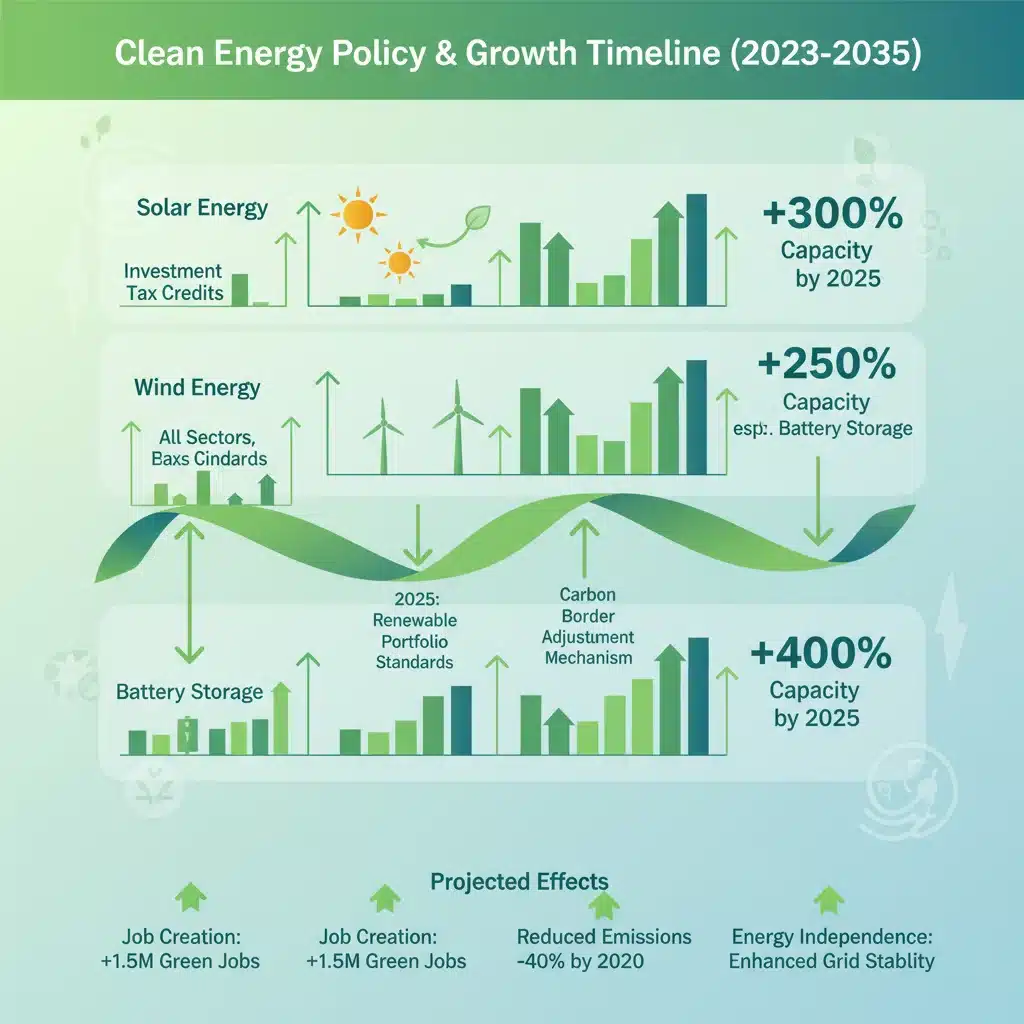
Many states have long utilized RPS as a primary mechanism to encourage renewable energy development, requiring utilities to source a certain percentage of their electricity from renewable sources by a specific date. As we approach 2026, several leading states are not only increasing these percentages but also accelerating their timelines, with some targeting 100% clean electricity by 2035 or 2040. These ambitious targets create a strong, consistent demand signal for renewable energy projects, driving investment in solar, wind, and geothermal. The mechanisms for compliance, such as Renewable Energy Credits (RECs), are also being refined to ensure greater market transparency and effectiveness. The impact of these heightened RPS targets is profound, leading to significant build-out of renewable capacity within those states and creating strong regional markets for clean energy technologies. This sustained demand is a cornerstone of effective clean energy policy.
Market Design Reforms for Grid Integration
With a growing penetration of intermittent renewable resources, electricity markets are undergoing significant reforms to ensure grid reliability and efficiency. By 2026, many states and Regional Transmission Organizations (RTOs)/Independent System Operators (ISOs) are implementing new market rules that better value flexibility, energy storage, and demand-side management. This includes reforms to capacity markets, ancillary services markets, and real-time energy markets. The goal is to create a market environment where resources that can quickly ramp up or down, provide voltage support, or store energy are adequately compensated. These reforms are crucial for integrating large amounts of renewable energy without compromising grid stability. For example, policies that incentivize battery storage co-located with solar farms, or that allow distributed energy resources to participate in wholesale markets, are becoming more prevalent. These adjustments to market design are essential for the smooth and cost-effective transition to a high-renewable grid, making them a vital part of modern clean energy policy.
Challenges and Opportunities in the Evolving Regulatory Landscape
While these policy changes collectively aim to accelerate clean energy development, they also introduce a new set of challenges and opportunities that stakeholders must navigate. The dynamic nature of the regulatory environment necessitates constant vigilance and strategic adaptation. Understanding these nuances is key to successful project development and investment in the clean energy policy sector.
Navigating Supply Chain Dynamics and Geopolitical Risks
The emphasis on domestic content, while beneficial for U.S. manufacturing, can create short-term supply chain constraints and potentially increase costs if domestic production cannot keep pace with demand or offer competitive pricing. Furthermore, geopolitical tensions can disrupt global supply chains for critical minerals and components, underscoring the need for diversified sourcing strategies and robust domestic capabilities. Companies operating in the clean energy sector must develop resilient supply chains that can adapt to these evolving policy and geopolitical pressures. This involves strategic partnerships, investment in domestic manufacturing, and careful risk assessment.
Workforce Development and Equity Considerations
The rapid growth of the clean energy sector, fueled by these policies, creates a significant demand for a skilled workforce. Policies often include provisions for prevailing wages, apprenticeships, and investments in vocational training programs. However, ensuring that the workforce can meet the demands of this transition, and that the benefits of new jobs are equitably distributed across communities, particularly those historically reliant on fossil fuel industries, remains a critical challenge. Addressing environmental justice concerns in the siting of new energy infrastructure, whether it be renewable projects, transmission lines, or CCUS facilities, is also gaining prominence in policy discussions, ensuring that the energy transition is just and inclusive. This human element is an often-overlooked but crucial aspect of effective clean energy policy.
Intermittency and Grid Reliability Concerns
As more intermittent renewables come online, ensuring grid reliability becomes paramount. While market design reforms and energy storage solutions are addressing this, the scale of the challenge requires continuous innovation and investment. Policies that promote long-duration storage, advanced grid management technologies, and flexible generation sources are essential. The regulatory framework must support a diverse portfolio of resources to maintain a stable and resilient grid, especially in the face of increasing extreme weather events driven by climate change. The conversation around grid reliability is becoming increasingly central to the debate on clean energy policy.
Investment Certainty and Policy Durability
For long-term clean energy projects, investment certainty is crucial. Frequent shifts or uncertainties in policy can deter capital investment. While the IRA and other policies aim to provide long-term signals, the political landscape can be unpredictable. Developers and investors constantly assess the durability of these policies and the risk of future reversals or significant modifications. Advocacy for bipartisan support for clean energy initiatives and careful structuring of projects to be resilient to policy changes are vital strategies. The consistency and predictability of clean energy policy will ultimately dictate the pace of the energy transition.
Conclusion: A Transformative Era for U.S. Clean Energy
The year 2026 stands as a pivotal point in the evolution of U.S. clean energy policy. The refinements to the Inflation Reduction Act’s tax credits and domestic content rules, the tightening of EPA emissions regulations, the concerted efforts towards transmission modernization and permitting reform, and the accelerating state-level mandates are collectively ushering in a transformative era. These four recent policy changes are not merely incremental adjustments; they represent a fundamental reshaping of the regulatory and economic landscape for clean energy development.
While the path forward is complex, fraught with challenges related to supply chain resilience, workforce development, grid integration, and policy durability, the opportunities are immense. The robust federal and state support creates a fertile ground for innovation, investment, and job creation within the clean energy sector. Companies that proactively understand and adapt to these evolving policies, and that strategically position themselves to leverage the incentives while mitigating the risks, will be best placed to thrive.
Ultimately, the success of these policies will be measured not just by the amount of renewable energy deployed, but by the extent to which they foster a sustainable, equitable, and resilient energy system for the United States. The ongoing dialogue between industry, government, and communities will be essential to ensure that these policy frameworks continue to evolve in a manner that serves the nation’s long-term energy and environmental goals. The future of U.S. clean energy is being written now, through these critical policy decisions and their subsequent implementation, making the study of clean energy policy more relevant than ever.