2026 Energy Storage Tax Credit: Unlocking the 10% Boost

Anúncios
Understanding the 2026 Investment Tax Credit for Standalone Energy Storage in the US: A 10% Boost?
The landscape of renewable energy in the United States is continuously evolving, driven by ambitious climate goals and supportive legislative frameworks. Central to this evolution is the role of energy storage, a critical component for grid stability, reliability, and the effective integration of intermittent renewable sources like solar and wind. As we look towards 2026, a significant incentive looms large for developers and investors in standalone energy storage projects: the Investment Tax Credit (ITC). This comprehensive guide delves into the specifics of the Energy Storage ITC 2026, exploring the potential for a 10% boost and its profound implications for the clean energy transition.
The Dawn of Standalone Energy Storage ITC
For many years, the Investment Tax Credit (ITC) was primarily associated with solar energy projects. Energy storage systems could only qualify if they were paired directly with a solar installation and charged at least 75% by the solar array. This limitation, while beneficial for co-located projects, left a significant gap for standalone energy storage systems, which are increasingly vital for grid modernization and resilience.
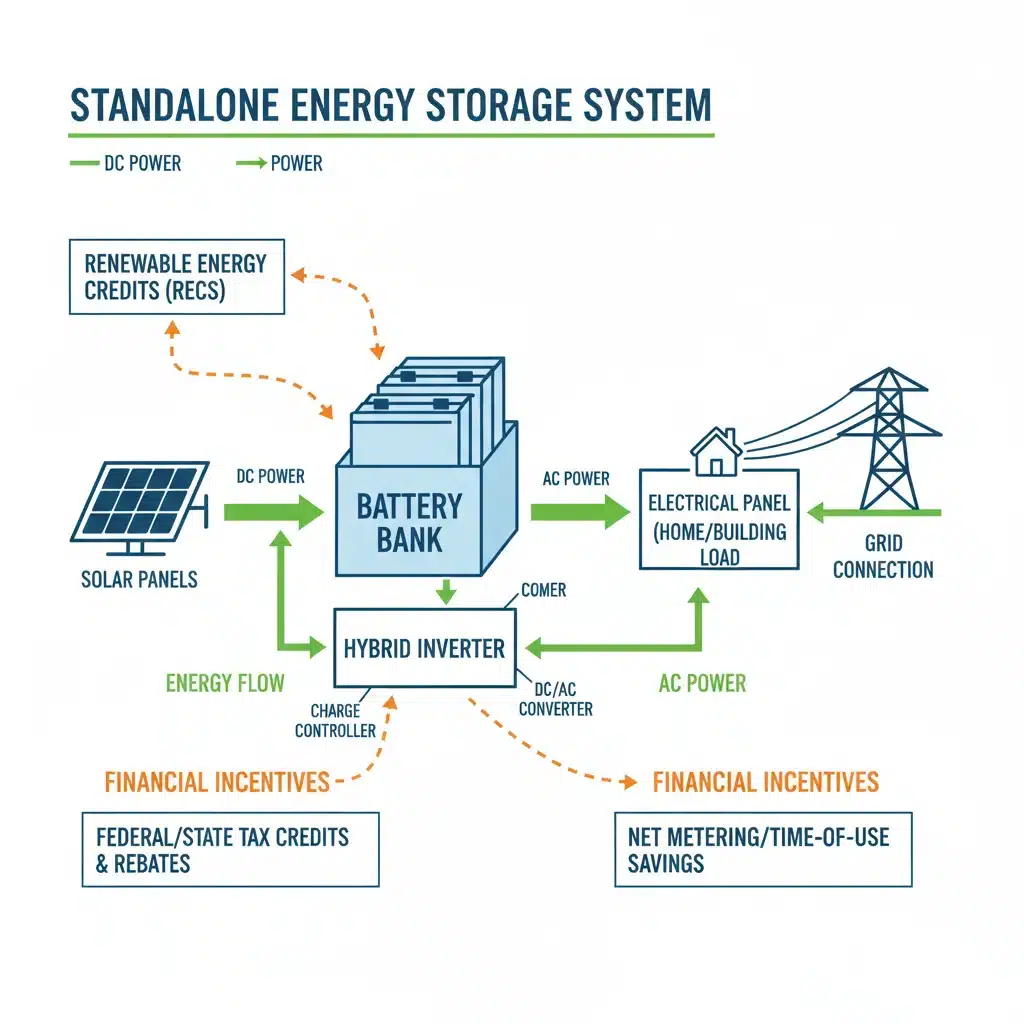
The game-changer arrived with the Inflation Reduction Act (IRA) of 2022. This landmark legislation fundamentally reshaped the clean energy incentive landscape by extending the ITC to standalone energy storage. This means that, for the first time, projects solely focused on storing and dispatching energy, regardless of their charging source (as long as it’s not exclusively fossil fuels), can qualify for a substantial tax credit. This expansion marks a pivotal moment, recognizing the independent value and necessity of energy storage infrastructure.
The base ITC for qualifying energy storage projects is set at 30%. This is a significant incentive on its own, designed to accelerate the deployment of battery storage, pumped hydro, thermal storage, and other eligible technologies. However, the IRA goes further, introducing a series of ‘adders’ that can increase this base rate, potentially reaching a total credit of up to 70% in certain circumstances. It is these adders, particularly the domestic content and energy community bonuses, that hold the key to understanding the potential 10% boost in 2026 and beyond.
Deconstructing the 10% Boost: Domestic Content and Energy Community Adders
The 10% boost in the Energy Storage ITC 2026 is not a standalone provision but rather a combination of specific bonus credits available under the Inflation Reduction Act. These adders are designed to promote specific policy objectives: fostering domestic manufacturing and supporting communities historically reliant on fossil fuel industries.
Domestic Content Adder: Strengthening US Manufacturing
One of the most impactful adders is the domestic content bonus, which can increase the ITC by an additional 10 percentage points. To qualify for this bonus, a project must meet specific requirements regarding the origin of its components. For projects commencing construction before 2025, 40% of the total cost of all manufactured products (including steel or iron) must be domestically produced. This threshold increases to 45% for projects beginning construction in 2025, 50% in 2026, and 55% in 2027 and thereafter.
For standalone energy storage, this means that batteries, inverters, and other critical components must be manufactured in the United States to a certain extent. This provision aims to spur the growth of a robust domestic supply chain for clean energy technologies, creating jobs and reducing reliance on foreign manufacturing. The increase to 50% in 2026 is precisely why this year is often highlighted for the potential of this 10% boost. Developers planning projects for 2026 must carefully consider their sourcing strategies to capitalize on this significant incentive.
Energy Community Adder: Supporting Transitioning Regions
Another crucial adder, also worth 10 percentage points, is the energy community bonus. This credit is available for projects located in designated ‘energy communities.’ These are typically areas with significant historical fossil fuel employment or where a coal mine or coal-fired power plant has been retired. The goal is to provide economic development opportunities and employment transitions in regions that have historically powered the nation but are now facing economic shifts due to the decline of traditional energy industries.
Qualifying energy communities include:
- Brownfield sites.
- Areas with significant fossil fuel employment (as defined by specific unemployment rate criteria).
- Census tracts where a coal mine closed after 1999 or a coal-fired electric power plant retired after 2009.
Developers considering projects in these areas can claim an additional 10% credit, further enhancing the financial viability of their standalone energy storage installations. This adder, combined with the domestic content bonus, allows for the stacking of incentives, leading to a potentially higher overall ITC.
Stacking the ITC: Beyond the Base and 10% Boost
While the base 30% ITC and the potential 10% boost from domestic content and energy community adders are significant, the IRA offers even more opportunities to increase the credit. Understanding these additional layers is crucial for maximizing the financial benefits of an Energy Storage ITC 2026 project.
Low-Income Community Bonus Credit Program
The IRA also introduces a Low-Income Communities Bonus Credit Program, which can provide an additional 10% or 20% credit. This program is highly competitive and allocates capacity annually. Projects must be located in low-income communities or on Native American land to qualify for the 10% adder, or be part of a qualified low-income residential building project or low-income economic benefit project for the 20% adder.
While this adder is not part of the standard 10% boost discussion often heard in relation to domestic content or energy communities, it represents another layer of potential incentive for strategically located projects. Its competitive nature means that early planning and application are essential.
Prevailing Wage and Apprenticeship Requirements
It’s important to note that to qualify for the full 30% base ITC (and any of the adders), projects must meet prevailing wage and apprenticeship requirements. If these requirements are not met, the base credit drops significantly to 6%. This provision is designed to ensure that clean energy jobs are high-quality, well-paying positions, further supporting economic development.
Developers must certify that all laborers and mechanics employed in the construction of the project, as well as any alteration or repair during the credit period, are paid wages at rates not less than the prevailing wages determined by the Secretary of Labor. Additionally, a certain percentage of total labor hours must be performed by qualified apprentices.
Eligibility Criteria for Standalone Energy Storage ITC
Beyond the bonus adders, several fundamental eligibility criteria must be met for a standalone energy storage project to qualify for the ITC. These criteria ensure that the incentive is directed towards technologies that genuinely contribute to grid modernization and decarbonization.
Storage Technology Requirements
The IRA defines eligible energy storage technology broadly to include systems that receive, store, and discharge energy. This encompasses a range of technologies, with battery storage (lithium-ion, flow batteries, etc.) being the most common, but also including:
- Thermal energy storage.
- Pumped-hydro storage.
- Flywheels.
- Compressed air energy storage.
The key requirement is that the system must have a nominal capacity of at least 5 kilowatt-hours (kWh). This threshold ensures that the credit targets projects with a meaningful impact on energy supply and demand.
Commencement of Construction
The ITC is typically tied to the ‘commencement of construction’ date. For projects to qualify for the full benefits, including the adders, they must have begun construction within the specified timeframe. The IRA extends the ITC for projects that begin construction before January 1, 2025. After this date, the credit transitions to a technology-neutral clean electricity investment credit or clean electricity production credit, depending on the project type.
This makes 2026 a critical year for projects that commence construction in 2023 or 2024 and are expected to be placed in service by then, allowing them to fully realize the benefits of the current ITC structure, including the escalating domestic content requirements.
Ownership and Tax Equity Structures
The IRA also introduced ‘direct pay’ and ‘transferability’ options, which can significantly simplify tax equity financing. Direct pay allows certain tax-exempt entities, state and local governments, and rural electric cooperatives to receive the value of the credit as a direct payment from the IRS. Transferability allows eligible taxpayers to sell their clean energy tax credits to unrelated third parties for cash. These provisions make the Energy Storage ITC 2026 more accessible to a wider range of project owners and developers.
Impact and Opportunities for 2026
The availability of a 30% base ITC, coupled with the potential for a 10% boost (and more) through domestic content and energy community adders, creates unprecedented opportunities for the standalone energy storage sector in 2026. This comprehensive incentive package is expected to drive significant investment and deployment across the United States.
Accelerated Deployment of Storage
The enhanced ITC significantly improves the economics of energy storage projects, making them more attractive to investors and developers. This will undoubtedly lead to an accelerated deployment of battery storage and other eligible technologies, supporting grid modernization efforts and enhancing reliability. As more renewable energy comes online, the need for flexible, dispatchable storage solutions becomes paramount, and the ITC provides the financial impetus to meet this demand.
Growth of Domestic Manufacturing
The domestic content adder, with its escalating requirements, is a powerful driver for establishing and expanding US-based manufacturing capabilities for batteries, inverters, and other components. This will create jobs, foster innovation, and reduce supply chain vulnerabilities. For projects targeting the Energy Storage ITC 2026, strategic partnerships with domestic suppliers will be crucial for maximizing incentives.
Economic Development in Energy Communities
The energy community adder directs investment to regions that need it most, facilitating a just transition away from fossil fuel economies. Standalone energy storage projects in these areas can bring new jobs, tax revenue, and infrastructure, helping to revitalize local economies and provide new opportunities for skilled workers.
Enhanced Grid Resiliency and Decarbonization
Ultimately, the primary goal of these incentives is to accelerate the transition to a clean energy economy. By making energy storage more economically viable, the ITC supports the integration of more renewable energy, reduces reliance on fossil fuels, and enhances the overall resilience of the electrical grid. Standalone storage can provide critical services like peak shaving, frequency regulation, and backup power, contributing to a more stable and sustainable energy future.
Challenges and Considerations
While the Energy Storage ITC 2026 presents immense opportunities, developers and investors must also navigate several challenges and considerations.
Navigating Domestic Content Requirements
Meeting the domestic content requirements, especially the 50% threshold for projects beginning construction in 2026, can be complex. The supply chain for many clean energy components is still heavily reliant on international manufacturing. Developers will need to work closely with suppliers to verify the origin of materials and components and ensure compliance. This may involve detailed documentation and auditing processes.
Interconnection and Permitting Hurdles
Despite financial incentives, energy storage projects still face significant hurdles related to interconnection queues and permitting processes. Grid operators are often overwhelmed with interconnection requests, leading to delays and increased costs. Streamlining these processes will be critical to realizing the full potential of the ITC.
Market Dynamics and Revenue Streams
The profitability of standalone energy storage projects relies on their ability to generate revenue from various grid services (e.g., wholesale energy markets, ancillary services, capacity markets). Market designs vary significantly across regions, and understanding these dynamics is essential for financial modeling and project viability. The ITC improves upfront economics but sustained profitability depends on robust market participation.
Evolving Policy Landscape
While the IRA provides long-term certainty, the interpretation and implementation of its provisions continue to evolve through guidance from the Treasury Department and IRS. Developers must stay abreast of the latest rules and clarifications to ensure compliance and maximize their credit potential. The details surrounding prevailing wage, apprenticeship, and domestic content are particularly subject to ongoing guidance.
Case Studies and Future Outlook
Although 2026 is still a few years away, the impact of the IRA’s energy storage provisions is already being felt. Developers are actively planning projects with these incentives in mind, and the market for standalone storage is booming. We are seeing a significant uptick in announced projects, particularly large-scale battery energy storage systems, designed to leverage these credits.
For instance, projects are being strategically sited in former coal communities to capture the energy community adder, bringing new life and economic activity to these regions. Similarly, battery manufacturers are announcing new or expanded facilities in the US, directly in response to the domestic content requirements, aiming to supply the growing demand for compliant components.

The future outlook for standalone energy storage in the US, supported by the Energy Storage ITC 2026 and its adders, is exceptionally bright. The combination of strong federal incentives, declining technology costs, and increasing demand for grid flexibility creates a powerful impetus for growth. We can expect to see:
- A diversified portfolio of energy storage technologies, with advanced battery chemistries and other long-duration solutions gaining traction.
- Increased integration of storage with renewable energy projects, even if not directly co-located, to optimize energy dispatch.
- A more resilient and reliable grid capable of handling extreme weather events and fluctuating energy demands.
- Significant job creation in manufacturing, construction, and operations within the clean energy sector.
Conclusion
The 2026 Investment Tax Credit for standalone energy storage, bolstered by the potential for a 10% boost through domestic content and energy community adders, represents a monumental opportunity for the US clean energy sector. The Inflation Reduction Act has fundamentally altered the economic calculus for energy storage projects, making them more attractive and viable than ever before.
Developers, investors, and policymakers must work collaboratively to navigate the complexities of these incentives, ensuring compliance with prevailing wage, apprenticeship, and domestic content rules. By strategically leveraging the Energy Storage ITC 2026, the United States can significantly accelerate the deployment of critical energy storage infrastructure, strengthen its domestic manufacturing base, support transitioning communities, and ultimately build a more resilient, reliable, and decarbonized energy future.
The path to a clean energy economy is paved with innovation and strategic investment. The ITC for standalone energy storage is a cornerstone of this path, promising not just a cleaner grid, but also economic growth and energy independence for the nation.