AI in 2026 U.S. Energy: Predictive Analytics Deep Dive

Anúncios
The Role of AI in 2026 U.S. Energy Management: Deep Dive into 3 Emerging Predictive Analytics Applications
The energy landscape of the United States is undergoing a profound transformation, driven by a confluence of factors including climate change concerns, technological advancements, and the relentless pursuit of efficiency. At the heart of this revolution lies Artificial Intelligence (AI), particularly its predictive analytics capabilities. By 2026, AI is not just expected to be a supporting technology; it will be an indispensable cornerstone of U.S. energy management. This article delves into the critical role of AI Energy Management, exploring three emerging predictive analytics applications that are poised to redefine how the nation generates, distributes, and consumes power.
The imperative for sophisticated energy management has never been more urgent. With an aging infrastructure, the increasing intermittency of renewable energy sources, and growing demand, traditional methods are proving inadequate. AI offers a powerful solution, enabling unprecedented levels of foresight, optimization, and resilience. Predictive analytics, a subset of AI, leverages historical data, real-time feeds, and complex algorithms to forecast future events and trends with remarkable accuracy. This capability is not merely about predicting; it’s about proactively shaping the energy future, mitigating risks, and unlocking efficiencies that were once unimaginable.
Our journey into the future of AI Energy Management will explore how these intelligent systems are being deployed across various facets of the U.S. energy sector. From optimizing the intricate dance of the power grid to anticipating consumer demand with granular precision and seamlessly integrating diverse renewable sources, AI’s influence is pervasive. The year 2026 serves as a crucial benchmark, a point by which these emerging applications will have matured significantly, demonstrating tangible benefits and setting new standards for energy operations.
The sheer volume and velocity of data generated by modern energy systems – from smart meters and sensors to weather stations and market indicators – create a perfect storm for AI. Without intelligent processing, this data would remain a chaotic deluge. AI, however, transforms this data into actionable insights, making it the central nervous system of future energy grids. This deep dive will illuminate the technical underpinnings, practical implications, and the transformative potential of these AI-driven predictive analytics applications, painting a comprehensive picture of the U.S. energy landscape in 2026.
1. Advanced Grid Optimization with AI-Powered Predictive Maintenance
The U.S. power grid is a marvel of engineering, yet it faces persistent challenges related to aging infrastructure, increasing demand, and the integration of distributed energy resources. Maintaining its reliability and efficiency is paramount. This is where AI Energy Management, specifically through predictive maintenance, steps in to revolutionize grid operations. By 2026, AI algorithms will be continuously monitoring vast networks of sensors, transformers, power lines, and substations, predicting potential failures before they occur.
The Limitations of Traditional Maintenance
Historically, grid maintenance has been reactive (fixing problems after they happen) or preventative (scheduled maintenance regardless of actual need). Both approaches are costly and inefficient. Reactive maintenance leads to outages, revenue loss, and customer dissatisfaction. Preventative maintenance, while better, often results in unnecessary interventions, wasting resources and potentially shortening equipment lifespan through unwarranted shutdowns and restarts. The complexity of the grid, with its millions of components, makes a truly efficient manual oversight virtually impossible.
How AI Predictive Maintenance Works
AI-powered predictive maintenance utilizes machine learning algorithms to analyze real-time and historical data from various sources. These sources include:
- Sensor Data: Temperature, vibration, current, voltage, and acoustic readings from critical grid components.
- Operational Data: Load profiles, switching events, and fault records.
- Environmental Data: Weather conditions (temperature, humidity, wind, lightning strikes) and seismic activity.
- Asset Specifications: Age of equipment, manufacturer data, and previous maintenance records.
The AI models, trained on patterns associated with equipment degradation and failure, can identify subtle anomalies that human operators might miss. For instance, a slight increase in transformer oil temperature coupled with specific harmonic distortions in current might indicate an incipient fault. The AI can then forecast the probability of failure and estimate the remaining useful life of a component. This proactive approach allows utility companies to schedule repairs and replacements precisely when needed, minimizing downtime and maximizing asset utilization.
Impact and Benefits by 2026
By 2026, the widespread adoption of AI predictive maintenance will lead to several significant improvements in AI Energy Management:
- Reduced Outages: Proactive intervention will drastically cut down on unexpected power failures, enhancing grid reliability and customer satisfaction.
- Optimized Maintenance Costs: Utilities will move away from time-based maintenance to condition-based maintenance, saving millions in labor, parts, and operational expenses.
- Extended Asset Lifespan: By addressing minor issues before they escalate, AI helps prolong the operational life of expensive grid infrastructure.
- Enhanced Safety: Fewer equipment failures mean a safer working environment for utility personnel and reduced risk to the public.
- Improved Grid Resilience: A healthier, proactively maintained grid is better equipped to withstand extreme weather events and cyber threats.
Consider a scenario where an AI system identifies a high probability of failure in a specific substation transformer within the next three months. Instead of waiting for a catastrophic failure or performing unwarranted maintenance, the utility can schedule its replacement during a period of low demand, ensuring minimal disruption and cost. This level of foresight is a game-changer for grid operators, solidifying AI’s role in future energy security.
2. Highly Accurate Demand Forecasting for Resource Allocation
One of the perennial challenges in AI Energy Management is balancing supply and demand. Energy cannot be stored efficiently on a large scale, making accurate demand forecasting crucial for operational efficiency, cost management, and grid stability. By 2026, AI-powered predictive analytics will elevate demand forecasting to an unprecedented level of precision, transforming resource allocation strategies across the U.S. energy sector.
The Complexity of Energy Demand
Energy demand is a dynamic and complex variable, influenced by a multitude of factors:
- Weather Conditions: Temperature (heating and cooling loads), humidity, cloud cover, and wind speed.
- Time of Day/Week/Year: Daily peaks, weekend dips, seasonal variations.
- Economic Activity: Industrial output, commercial operations.
- Social Behavior: Holidays, major events, population shifts.
- Distributed Energy Resources (DERs): Rooftop solar generation, electric vehicle charging patterns.
- Policy and Regulations: Energy efficiency mandates, demand response programs.
Traditional forecasting methods, often statistical models, struggle to capture the intricate, non-linear relationships between these variables and adapt to rapidly changing conditions. This often leads to over-generation (wasted fuel, increased emissions) or under-generation (power shortages, price spikes).
AI’s Superior Forecasting Capabilities
AI, particularly deep learning and machine learning algorithms, excels at identifying complex patterns and correlations within massive datasets. For demand forecasting, AI models can ingest and process:
- Historical Demand Data: Years of consumption records at various granularities (hourly, daily, weekly, monthly).
- Real-time Data Streams: Current weather, smart meter readings, and grid status.
- External Data: Economic indicators, social media trends, public holiday schedules.
- IoT Data: Data from smart appliances and building management systems.
These models can learn from past forecasting errors, continuously improving their accuracy. They can also perform probabilistic forecasting, providing not just a single prediction but a range of possible outcomes with associated probabilities, allowing for more robust risk management. By 2026, these systems will offer forecasts at very fine spatial and temporal resolutions – predicting demand not just for a city, but for specific neighborhoods or even individual buildings, hours or days in advance.

Benefits for Resource Allocation by 2026
The enhanced accuracy of AI-driven demand forecasting will have profound implications for AI Energy Management and resource allocation:
- Optimized Generation Dispatch: Utilities can precisely match generation to demand, reducing the need for expensive ‘peaker’ plants and minimizing fuel waste.
- Efficient Energy Purchasing: Energy traders can make more informed decisions in wholesale markets, buying and selling power at optimal times, leading to significant cost savings.
- Effective Demand Response: Utilities can better plan and implement demand response programs, incentivizing consumers to reduce consumption during peak periods, thereby stabilizing the grid.
- Strategic Storage Management: For grids with battery storage, AI can predict when to charge and discharge batteries to maximize their economic and operational value.
- Reduced Carbon Emissions: By optimizing generation and reducing waste, AI contributes directly to lower greenhouse gas emissions.
Imagine a hot summer day in 2026. An AI system, having analyzed weather forecasts, historical usage, and even social media sentiment about heatwaves, predicts a surge in air conditioning demand in a specific urban area. It then advises the grid operator to ramp up specific renewable energy sources and pre-position stored energy, preventing potential brownouts and ensuring a stable power supply without unnecessary over-generation. This proactive resource management is a hallmark of advanced AI Energy Management.
3. Seamless Integration of Intermittent Renewable Energy Sources
The U.S. is increasingly relying on renewable energy sources like solar and wind power to decarbonize its energy sector. While environmentally beneficial, these sources are inherently intermittent – their output fluctuates based on weather conditions. Managing this variability is a major challenge for grid stability and reliability. By 2026, AI Energy Management, through advanced predictive analytics, will be instrumental in seamlessly integrating these intermittent renewables into the national grid.
The Renewable Intermittency Challenge
Unlike conventional power plants that can generate electricity on demand, solar panels only produce during daylight hours and wind turbines only when the wind blows. Sudden changes in weather (e.g., a cloud passing over a solar farm, a drop in wind speed) can lead to rapid fluctuations in power supply, which can destabilize the grid if not managed effectively. The more renewables are integrated, the more pronounced this challenge becomes.
AI’s Role in Forecasting Renewable Output
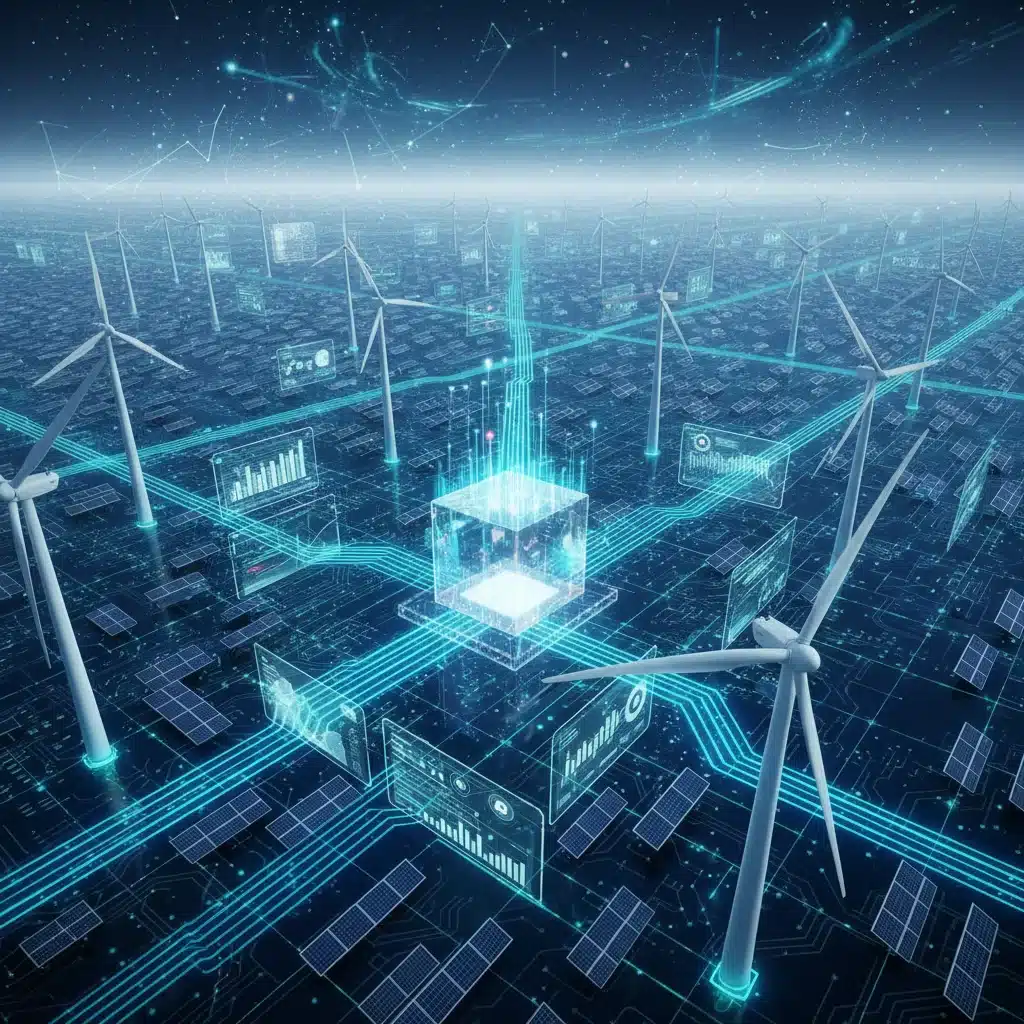
AI’s predictive power is ideally suited to address renewable intermittency. By 2026, specialized AI models will be deployed to accurately forecast the output of solar and wind farms. These models will leverage a diverse array of data inputs:
- Hyperlocal Weather Data: High-resolution forecasts for solar irradiance, wind speed and direction, temperature, and cloud cover.
- Satellite Imagery: Real-time and historical satellite data to track cloud movements.
- Sensor Data from Plants: Performance data from individual solar panels and wind turbines.
- Geographic Information Systems (GIS): Topography and terrain data that influence wind patterns and solar exposure.
Using algorithms like neural networks, AI can learn the complex relationships between these variables and the actual power output, providing highly accurate short-term (minutes to hours ahead) and medium-term (days ahead) forecasts. This foresight is critical for grid operators.
Achieving Seamless Integration by 2026
The accurate forecasting of renewable output, facilitated by AI Energy Management, enables several key strategies for seamless integration:
- Optimized Energy Storage: AI predicts periods of high renewable generation and low demand, directing excess energy to battery storage systems. Conversely, it forecasts periods of low renewable output and high demand, triggering the discharge of stored energy.
- Hybrid Power Plant Management: AI can intelligently control hybrid facilities (e.g., solar-plus-storage or wind-plus-gas) to ensure a consistent power supply, effectively firming up intermittent renewables.
- Dynamic Grid Balancing: With precise forecasts, grid operators can proactively adjust the output of conventional power plants or activate demand response programs to compensate for predicted dips or surges in renewable generation, maintaining grid frequency and voltage stability.
- Market Participation: Renewable energy producers can use AI forecasts to better participate in energy markets, optimizing their bidding strategies and maximizing revenue.
- Inter-Regional Energy Trading: AI can identify opportunities to trade renewable energy surpluses between different regions, balancing supply and demand across broader geographical areas.
Consider a large wind farm in the Midwest. An AI system predicts a significant drop in wind speed in the afternoon. This prediction allows grid operators to pre-emptively increase generation from a flexible natural gas plant or dispatch stored energy from a nearby battery facility, ensuring continuous power supply without disruption. This proactive balancing act, driven by AI, is fundamental to achieving high penetrations of renewable energy, making AI Energy Management indispensable for a sustainable future.
Challenges and the Path Forward for AI Energy Management
While the promise of AI Energy Management is immense, its widespread adoption by 2026 is not without challenges. These include:
- Data Quality and Availability: AI models are only as good as the data they are trained on. Ensuring high-quality, comprehensive, and standardized data across diverse energy systems is crucial.
- Cybersecurity Concerns: Integrating AI into critical infrastructure raises significant cybersecurity risks. Robust security protocols and continuous monitoring are essential.
- Interoperability: Different systems and platforms within the energy sector must be able to communicate effectively with AI algorithms. Standardized APIs and data exchange formats are vital.
- Regulatory Frameworks: Existing regulations may not be equipped to handle the complexities introduced by AI-driven autonomous systems. Adaptive and forward-thinking regulatory policies are needed.
- Skills Gap: There is a growing need for professionals with expertise in both energy systems and AI/data science to develop, deploy, and manage these advanced solutions.
- Ethical Considerations: As AI takes on more decision-making roles, questions of accountability, bias, and transparency must be addressed.
Despite these hurdles, the momentum towards AI integration in U.S. energy management is undeniable. Investments in smart grid technologies, increased deployment of sensors, and the continuous development of more sophisticated AI algorithms are paving the way. Collaborative efforts between government agencies, utility companies, technology providers, and academic institutions will be key to overcoming these challenges and realizing the full potential of AI Energy Management.
The path forward involves:
- Continued R&D: Investing in research to develop more robust, explainable, and secure AI models for energy applications.
- Pilot Programs and Scaling: Implementing successful pilot projects and then scaling them across the national grid.
- Workforce Development: Creating training programs to upskill the existing energy workforce and educate new talent in AI and data science relevant to the energy sector.
- Policy Support: Crafting policies that encourage innovation while ensuring reliability, security, and equity in AI-driven energy systems.
Conclusion: The AI-Powered Energy Future of 2026
By 2026, Artificial Intelligence will have cemented its position as an indispensable force in U.S. energy management. The three predictive analytics applications we’ve explored – advanced grid optimization through predictive maintenance, highly accurate demand forecasting for resource allocation, and the seamless integration of intermittent renewable energy sources – represent just a fraction of AI’s broader impact. These applications are not merely incremental improvements; they are foundational shifts that will lead to a more reliable, efficient, sustainable, and resilient energy system.
The benefits extend beyond operational efficiencies and cost savings. A grid powered by intelligent foresight will be better equipped to handle the increasing frequency and intensity of extreme weather events, more resilient against cyber threats, and more adept at incorporating the diverse and distributed energy resources of the future. The ability to predict, adapt, and optimize in real-time will be the defining characteristic of the U.S. energy landscape in 2026.
As we move towards this AI-powered energy future, continuous innovation, strategic investment, and a collaborative approach will be paramount. The journey is complex, but the destination – a smarter, cleaner, and more secure energy future for the United States – is well within reach, largely thanks to the transformative power of AI Energy Management.