Community Solar Programs: A 2026 Guide to Maximizing Your Clean Energy Savings by 15%
In an era defined by increasing environmental consciousness and volatile energy markets, the pursuit of sustainable and affordable power solutions has never been more critical. As we look towards 2026, community solar savings are emerging as a beacon of hope for countless households and businesses eager to embrace clean energy without the complexities of rooftop solar installations. This comprehensive guide will delve into the intricacies of community solar programs, offering a roadmap to understanding their benefits, navigating participation, and ultimately, maximizing your clean energy savings by a significant margin, potentially up to 15% or more.
The landscape of energy production and consumption is undergoing a profound transformation. Traditional fossil fuels are giving way to renewable sources, and solar power stands at the forefront of this revolution. However, not everyone has the luxury of installing solar panels on their own property due to various constraints such as roof suitability, homeownership status, or upfront costs. This is precisely where community solar steps in, democratizing access to solar energy and empowering a broader demographic to contribute to a sustainable future while enjoying tangible financial benefits.
Our journey through this guide will uncover what community solar truly entails, why 2026 is a pivotal year for these programs, and the practical steps you can take to harness their potential. From understanding the underlying mechanisms of shared solar arrays to deciphering bill credits and exploring the diverse range of incentives available, we aim to equip you with all the knowledge necessary to make informed decisions and optimize your participation. Prepare to embark on a path that not only reduces your carbon footprint but also significantly enhances your financial well-being through smart energy choices. The future of energy is collaborative, clean, and accessible, and community solar is leading the charge.
Understanding Community Solar: The Foundation of Future Energy
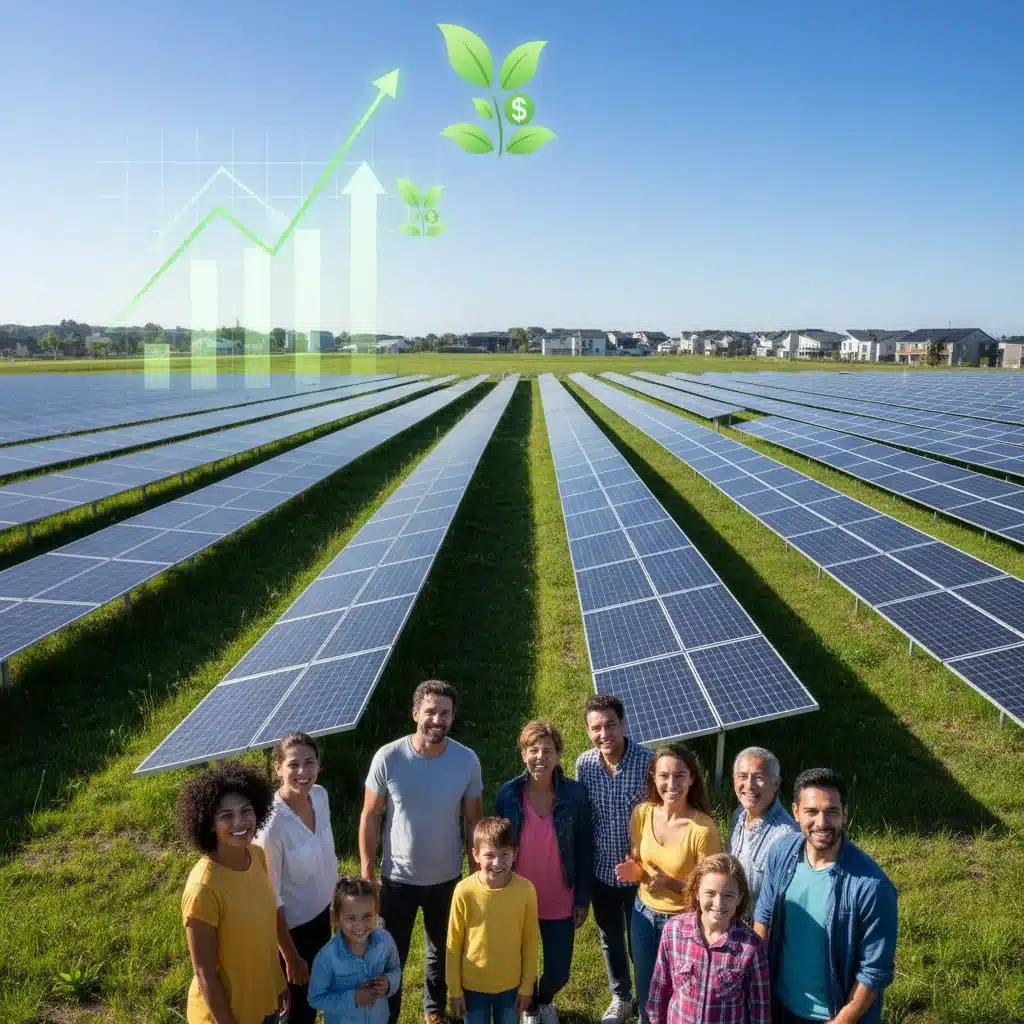
At its core, community solar is a collaborative model that allows multiple individuals, businesses, or organizations to subscribe to a shared solar energy project. Instead of installing panels on individual rooftops, participants buy or subscribe to a portion of the electricity generated by a larger, off-site solar farm. The energy produced by this farm is then fed into the local power grid, and subscribers receive credits on their electricity bills for their share of the power generated. This innovative approach removes many of the traditional barriers to solar adoption, making clean energy accessible to renters, apartment dwellers, and homeowners with unsuitable rooftops or limited capital for personal installations.
The concept is relatively straightforward: a developer builds and operates a large-scale solar array, often located on unused land or commercial rooftops. Local residents and businesses can then subscribe to this project, typically without any upfront costs. Their subscription entitles them to a share of the solar farm’s output. The utility company then tracks the energy produced by the subscriber’s share and applies corresponding credits to their monthly electricity bill. These credits often result in a net reduction in the subscriber’s overall energy expenses, directly contributing to significant community solar savings.
The widespread adoption of community solar is driven by several key advantages. Firstly, it offers a tangible way for individuals to support renewable energy and reduce their carbon footprint, even if they cannot host solar panels themselves. Secondly, it provides financial benefits through reduced electricity bills, often without the substantial upfront investment required for private solar installations. Thirdly, it fosters a sense of community involvement in sustainable practices, bringing people together to achieve a common environmental goal. As we move into 2026, the policy landscape and technological advancements are making these programs even more attractive and efficient, paving the way for unprecedented growth and benefits.
Moreover, community solar projects are typically developed and maintained by third-party companies, which means subscribers don’t have to worry about the maintenance, insurance, or performance of the solar panels. This hands-off approach makes it an incredibly convenient option for those looking to transition to clean energy. The simplicity and accessibility of these programs are crucial factors in their increasing popularity and their potential to redefine how communities interact with their energy supply.
Why 2026 is a Pivotal Year for Community Solar Savings
The year 2026 is poised to be a landmark year for community solar programs, driven by a confluence of favorable policy environments, technological advancements, and growing public demand for sustainable energy solutions. Several factors contribute to this optimistic outlook, making it an opportune time for individuals and businesses to explore the benefits of community solar savings.
Evolving Policy and Regulatory Support
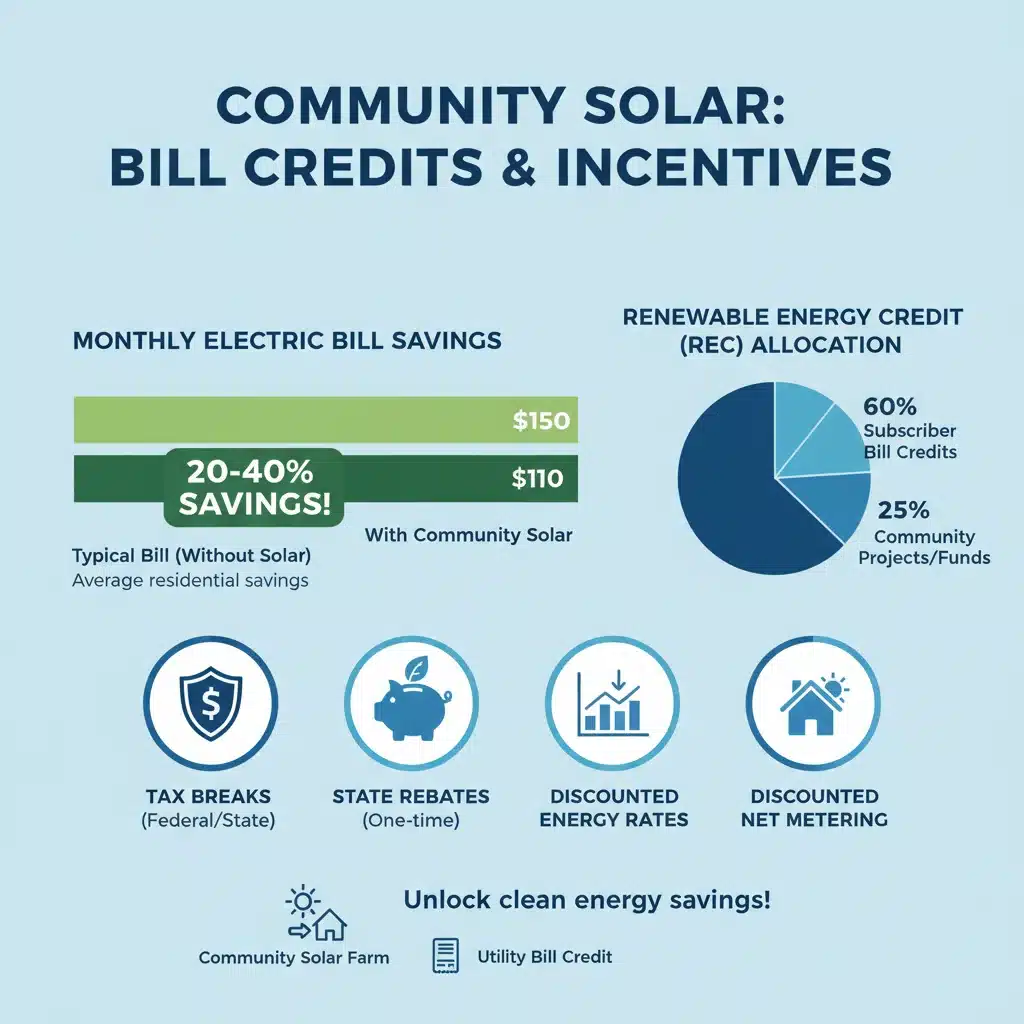
Governments at both federal and state levels are increasingly recognizing the vital role of community solar in achieving ambitious renewable energy targets. Many states are implementing or expanding policies such as net metering, virtual net metering, and community solar specific legislation that facilitate the development and financial viability of these projects. These policies often mandate utility companies to offer fair credit rates for the solar energy fed into the grid, directly translating to greater savings for subscribers. Furthermore, federal incentives, including tax credits, continue to make solar investments more attractive, indirectly boosting the growth of community solar farms.
By 2026, we anticipate a more streamlined and standardized regulatory framework across more states, reducing administrative hurdles for developers and making it easier for consumers to find and subscribe to projects. This regulatory clarity will lead to increased competition among community solar providers, potentially driving down costs and enhancing subscriber benefits.
Technological Advancements and Cost Reductions
The solar industry has witnessed remarkable technological progress in recent years. Solar panel efficiency continues to improve, meaning more electricity can be generated from smaller footprints. Concurrently, the cost of solar technology, including panels and inverters, has significantly decreased. These advancements make community solar projects more economically viable for developers, allowing them to offer more competitive subscription rates and better savings to their customers. Energy storage solutions, such as battery systems, are also becoming more integrated into community solar projects, enhancing reliability and optimizing energy dispatch, which further contributes to the stability and attractiveness of these programs.
The continuous innovation in solar technology ensures that community solar remains a cutting-edge and increasingly efficient source of renewable energy, directly impacting the potential for substantial community solar savings.
Growing Consumer Awareness and Demand
Public awareness regarding climate change and the benefits of renewable energy is at an all-time high. Consumers are actively seeking ways to reduce their environmental impact and lower their utility bills. Community solar offers a straightforward and impactful solution to both these concerns. Educational initiatives and successful case studies are further demystifying community solar, making it a more mainstream option for energy consumers. This growing demand creates a robust market for community solar developers, encouraging further investment and expansion of projects across the nation.
The collective push from policy, technology, and consumer demand converges in 2026 to create an unprecedented opportunity for individuals and communities to embrace solar energy and realize significant financial and environmental benefits through community solar programs.
How Community Solar Programs Work: A Step-by-Step Guide
Understanding the operational mechanics of community solar programs is key to maximizing your community solar savings. While specifics can vary by state and provider, the general process follows a consistent pattern designed for simplicity and accessibility.
Step 1: Project Development and Construction
Community solar programs begin with the development of a large-scale solar farm. This project is typically initiated by a solar developer or a utility company. They secure suitable land, often a brownfield site, a large commercial rooftop, or an open field, and obtain the necessary permits and financing. Once approvals are in place, the solar farm is constructed, comprising hundreds or thousands of solar panels designed to generate electricity efficiently.
Step 2: Subscription and Allocation
Once the solar farm is operational or nearing completion, it opens for subscriptions. This is where individuals, businesses, and even non-profits can sign up to become subscribers. You typically choose a share of the solar farm’s output that aligns with your average electricity consumption. For example, if your household uses 1,000 kWh per month, you might subscribe to a portion of the solar farm expected to generate 1,000 kWh monthly.
Subscription models vary:
- Pay-as-you-go: You pay a monthly fee for your subscription, often at a discounted rate compared to your utility’s standard electricity price.
- Pre-purchase: You might pay an upfront sum for a certain amount of solar energy over a long period.
- Ownership share: Less common, but some programs allow you to purchase an actual ownership stake in the solar array.
Most programs focus on the pay-as-you-go model due to its low barrier to entry and flexibility.
Step 3: Energy Generation and Grid Integration
The community solar farm generates electricity, which is then fed directly into the local power grid. The utility company tracks the total energy produced by the farm and the specific output attributed to each subscriber’s share. It’s important to note that the electricity from the community solar farm doesn’t flow directly into your home. Instead, it offsets the electricity you consume from the grid.
Step 4: Bill Credits and Savings
This is where the community solar savings become tangible. Your utility company will apply credits to your monthly electricity bill based on the amount of electricity your subscribed share of the community solar farm generated. For instance, if your share produced 500 kWh in a month, you would receive a credit for 500 kWh on your bill. You then pay the community solar provider for your subscription at a rate that is typically 5-15% less than the value of the credits you received, resulting in net savings on your overall energy costs.
The calculation usually looks something like this:
(Value of Bill Credits) - (Subscription Payment to Solar Provider) = Monthly Savings
These savings accrue over time, significantly reducing your annual energy expenditure and contributing to a more predictable energy budget.
Step 5: Monitoring and Management
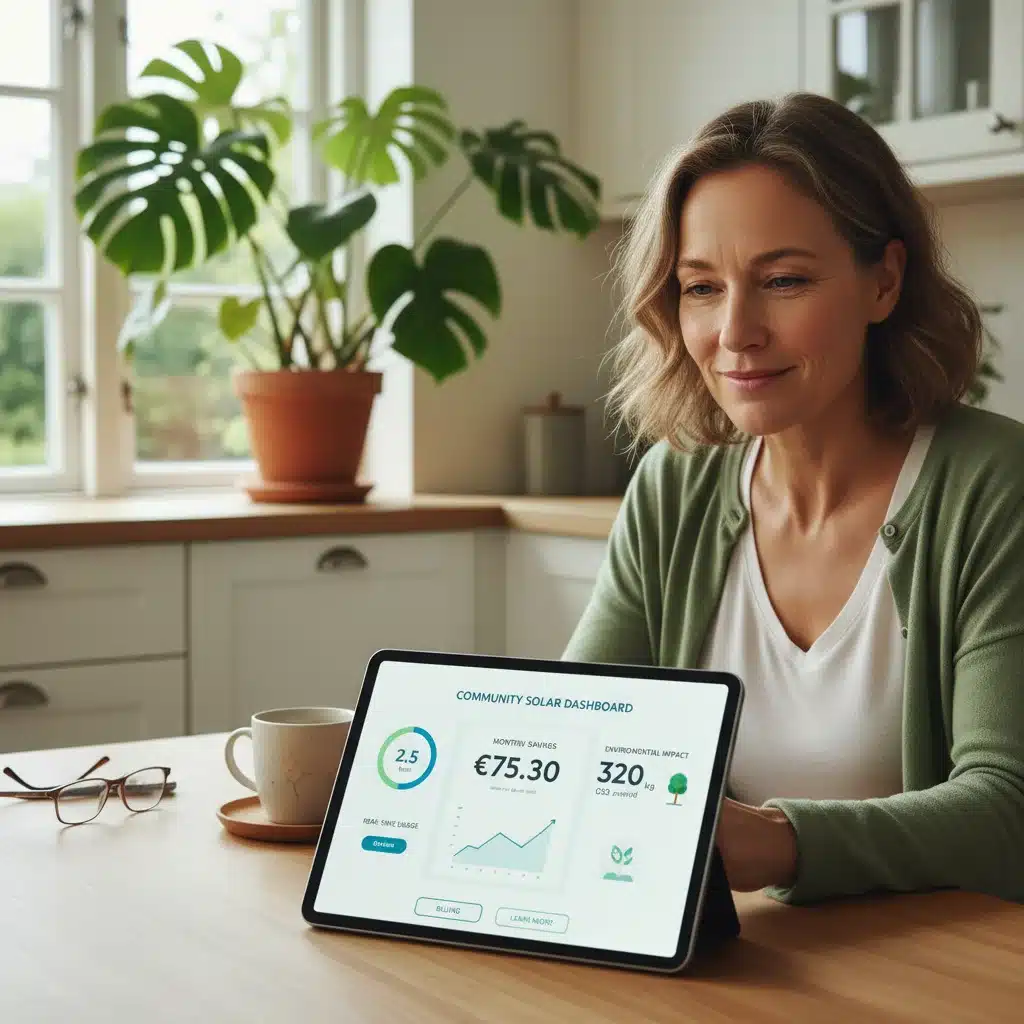
Most community solar providers offer online portals or mobile apps where subscribers can monitor their energy production, bill credits, and accumulated savings. This transparency allows you to track your impact and ensure you are maximizing your benefits. The subscription is often transferable if you move within the same utility service area, adding a layer of flexibility.
By understanding these steps, potential subscribers can confidently engage with community solar programs, knowing exactly how their participation translates into both environmental benefits and substantial financial relief.
Maximizing Your Community Solar Savings: Strategies for 2026
To truly unlock the full potential of community solar savings in 2026, a proactive and informed approach is essential. While the programs are designed to be user-friendly, a few strategic considerations can significantly enhance your financial and environmental benefits.
1. Research and Compare Providers and Programs
Not all community solar programs are created equal. The first step to maximizing your savings is thorough research. Look for programs in your area (many states have dedicated websites or resources listing available projects) and compare:
- Discount Rates: How much of a discount do they offer on the bill credits? A higher discount (e.g., 10-15% off the utility rate) means greater savings.
- Contract Terms: Understand the length of the contract (e.g., 5, 10, 20 years), cancellation policies, and any associated fees. Look for flexibility if your circumstances might change.
- Pricing Structure: Is it a fixed discount, or does it vary? Some programs might have variable rates tied to energy market prices.
- Customer Reviews and Reputation: Choose a reputable provider with a strong track record of customer satisfaction and reliable project operation.
- Local Incentives: Some local municipalities or utility companies offer additional incentives for community solar participation.
Websites like the Department of Energy’s community solar resources or state energy offices are excellent starting points for your research.
2. Optimize Your Subscription Size
Subscribing to the right amount of community solar is crucial for maximizing savings. Ideally, your subscribed share should match or slightly exceed your average monthly electricity consumption. If you subscribe to too little, you won’t fully offset your usage. If you subscribe to too much, you might receive fewer credits for excess generation or face limitations on how those credits are applied, depending on your utility’s policies.
Review your past 12 months of electricity bills to determine your average monthly consumption. Most community solar providers will help you calculate the optimal subscription size, but it’s good to have your own data ready. Most community solar providers will help you calculate the optimal subscription size, but it’s good to have your own data ready. Keep in mind that your energy usage might fluctuate seasonally, so consider an average that accounts for these variations.
3. Understand Bill Credit Mechanisms
The way bill credits are applied can significantly impact your community solar savings. Familiarize yourself with your utility’s specific net metering or virtual net metering policies. Some utilities offer full retail rate credits, meaning each kWh generated by your share is credited at the same price you pay for electricity. Others might offer a slightly lower rate or differentiate between energy and delivery charges.
Ask potential providers for clear examples of how credits will appear on your utility bill and how your savings will be calculated. Transparency here is key to avoiding surprises and ensuring you understand the true financial benefit.
4. Leverage State and Federal Incentives
While community solar programs typically handle the direct application of bill credits, some states and the federal government offer additional incentives that can indirectly boost your savings. For example, federal investment tax credits (ITCs) are primarily for project developers, but their existence helps make projects more financially feasible, allowing providers to offer better terms to subscribers. Some states may have specific low-income community solar programs or additional rebates. Stay informed about these broader incentives, as they contribute to the overall health and competitiveness of the community solar market, ultimately benefiting subscribers.
5. Monitor and Adjust Your Subscription
Your energy needs might change over time due to lifestyle changes, home improvements, or new appliances. Regularly monitor your energy consumption and compare it with your community solar production. Most providers allow for adjustments to your subscription size, within certain limits, to ensure it continues to align with your needs. This flexibility ensures you’re always getting the most out of your community solar participation and maximizing your ongoing community solar savings.
By diligently applying these strategies, you can ensure that your engagement with community solar programs in 2026 is not just environmentally responsible but also financially astute, leading to substantial and sustained reductions in your energy expenditures.
The Environmental and Community Impact of Shared Solar
Beyond the undeniable financial advantages of community solar savings, the environmental and communal benefits of these programs are equally, if not more, compelling. Participating in a community solar project means contributing directly to a cleaner, more sustainable energy future for everyone.
Reducing Carbon Emissions and Air Pollution
Every kilowatt-hour of electricity generated by a community solar farm displaces electricity that would otherwise come from fossil fuel power plants. This direct substitution leads to a significant reduction in greenhouse gas emissions, such as carbon dioxide, which are major contributors to climate change. Additionally, it helps decrease the release of other harmful pollutants like sulfur dioxide and nitrogen oxides, which cause smog, acid rain, and respiratory issues. By collectively supporting these projects, communities can make a substantial dent in their regional carbon footprint, improving air quality and public health.
The cumulative effect of numerous community solar projects can be immense. As more individuals and businesses subscribe, the demand for fossil-fuel-generated electricity lessens, accelerating the transition to a fully renewable energy grid. This shift is critical for meeting global climate targets and preserving our planet for future generations.
Promoting Local Economic Development and Job Creation
Community solar projects are not just environmental initiatives; they are also powerful engines for local economic development. The construction and maintenance of these solar farms create jobs in engineering, construction, electrical work, project management, and administration. These are often well-paying, skilled jobs that contribute to the local economy. Furthermore, the land used for community solar projects can provide lease payments to landowners, offering a new revenue stream, particularly in rural areas.
The distributed nature of community solar also means that energy generation is localized, reducing the need for extensive and costly transmission infrastructure. This can lead to greater energy independence and resilience for local communities, insulating them from the volatility of distant energy markets.
Enhancing Energy Equity and Accessibility
One of the most profound impacts of community solar is its ability to democratize access to clean energy. Historically, solar power was largely accessible to homeowners with suitable roofs and the financial means for upfront investment. Community solar breaks down these barriers, allowing renters, apartment dwellers, low-income households, and businesses with shaded properties to participate. This ensures that the benefits of clean energy, both environmental and financial, are distributed more equitably across all segments of society.
Many community solar programs actively include provisions for low-to-moderate income (LMI) subscribers, offering even greater discounts or specialized support to ensure that those who stand to benefit most from reduced energy bills are not left behind. This focus on energy equity is a cornerstone of a just and sustainable energy transition.
Building Stronger, More Resilient Communities
Community solar fosters a sense of collective action and shared responsibility towards a common goal. It brings neighbors, businesses, and local governments together in a tangible effort to build a more sustainable future. This collaborative spirit can strengthen community bonds and encourage further environmental initiatives.
Moreover, by diversifying the energy supply and relying less on centralized power plants, community solar projects enhance grid resilience. In the event of outages affecting traditional power sources, a distributed network of solar farms can help maintain power supply, contributing to greater energy security for participating communities.
In essence, while community solar savings provide immediate and tangible financial relief, the broader implications for the environment, local economies, and social equity make these programs an indispensable component of our collective journey towards a sustainable and prosperous future.
Challenges and Considerations for Community Solar in 2026
While the outlook for community solar savings in 2026 is overwhelmingly positive, it’s crucial to acknowledge the challenges and considerations that stakeholders must navigate to ensure continued growth and success. Understanding these hurdles allows for proactive solutions and more robust program development.
Policy and Regulatory Consistency
One of the primary challenges remains the patchwork of state-specific policies and regulations. While many states have embraced community solar, others still lack comprehensive frameworks, or their existing policies may not be sufficiently robust to support widespread adoption. Inconsistent policies can deter developers, create confusion for consumers, and slow down market growth. Advocacy efforts will continue to focus on standardizing and strengthening community solar legislation across more states, ensuring predictable market conditions for all participants.
Utility Engagement and Interconnection Queues
The success of community solar heavily relies on the cooperation of utility companies. Interconnecting new solar projects to the grid can sometimes be a lengthy and complex process, known as the interconnection queue. Delays in interconnection can push back project completion dates, increasing costs for developers and delaying benefits for subscribers. Ensuring utilities have efficient and transparent interconnection processes, along with fair compensation mechanisms for solar generation, is vital. Regulatory bodies often play a critical role in mediating these relationships and setting appropriate standards.
Subscriber Acquisition and Education
Despite growing awareness, many potential subscribers are still unfamiliar with community solar or are hesitant to sign up due to a lack of understanding. Educating the public about how these programs work, their financial benefits, and their environmental impact remains a significant undertaking. Effective outreach strategies, clear communication, and trusted community partnerships are essential to overcome this barrier and expand participation, especially among underserved communities who stand to benefit most from community solar savings.
Land Use and Siting Challenges
Finding suitable land for large-scale community solar farms can be a challenge, particularly in densely populated areas. Concerns about agricultural land use, visual impact, and environmental assessments need to be carefully managed. Innovative siting solutions, such as deploying solar on brownfields, landfills, commercial rooftops, or alongside existing infrastructure (agrivoltaics), will become increasingly important. Balancing the need for renewable energy generation with local land use preferences requires careful planning and community engagement.
Financial Viability and Market Dynamics
While solar costs have decreased, the long-term financial viability of community solar projects can be influenced by fluctuating energy prices, interest rates, and the availability of financing. Developers must navigate these market dynamics to ensure projects are profitable, allowing them to offer attractive rates to subscribers. Government incentives and innovative financing models will continue to play a role in de-risking investments and fostering a healthy market.
Addressing these challenges proactively will be key to unlocking the full potential of community solar in 2026 and beyond. Through collaborative efforts from policymakers, utilities, developers, and communities, the path forward for shared solar is bright, promising sustained community solar savings and a greener energy future.
Conclusion: Embracing a Brighter, Cleaner Future with Community Solar
As we navigate the complexities of the modern energy landscape, community solar programs stand out as a uniquely powerful and accessible solution for individuals and communities committed to both environmental stewardship and financial prudence. Our exploration of community solar in this 2026 guide has illuminated its core mechanics, highlighted the pivotal factors driving its growth, and provided actionable strategies for maximizing your community solar savings. From reducing your monthly electricity bills by 15% or more to contributing to a significant reduction in carbon emissions, the benefits are multifaceted and profound.
The year 2026 marks a crucial juncture for community solar. With supportive policies, advancing technology, and a heightened public demand for clean energy, these programs are no longer a niche alternative but a mainstream pathway to sustainable living. They empower those who were previously excluded from direct solar ownership, fostering energy equity and building stronger, more resilient communities.
The journey towards a clean energy future is a collective one. By subscribing to a community solar program, you are not just making a smart financial decision; you are actively participating in a movement that transforms our energy infrastructure, creates local jobs, and protects our planet. The minimal effort required to participate, coupled with the substantial and long-term financial and environmental rewards, makes community solar an irresistible option for forward-thinking consumers.
We encourage you to take the next step: research the community solar options available in your area, compare providers, and make an informed choice. The opportunity to achieve significant community solar savings while making a tangible positive impact on the environment is within your reach. Embrace this chance to be part of the solution, to lower your energy costs, and to contribute to a brighter, cleaner, and more sustainable future for everyone.
The time to act is now. Join the growing number of individuals and communities who are harnessing the power of the sun, together, through community solar.