Beyond the Home: Integrating EV Batteries for Stationary Storage – A 2026 Opportunity with 20% Efficiency Gains (Practical Solutions)
The energy landscape is undergoing a profound transformation, driven by an urgent need for sustainable solutions and enhanced grid resilience. At the forefront of this revolution is the burgeoning potential of EV battery storage – specifically, the repurposing and integration of electric vehicle batteries for stationary energy applications. This isn’t just a futuristic concept; it’s a rapidly approaching reality, poised to deliver significant benefits, including an anticipated 20% efficiency gain by 2026. This comprehensive guide delves into the opportunities, challenges, and practical solutions for leveraging EV batteries in stationary storage systems, moving beyond their primary role in transportation to become critical components of our energy infrastructure.
The sheer volume of EV batteries reaching their end-of-life in vehicles, yet still retaining substantial capacity for less demanding stationary applications, presents an unprecedented resource. Instead of discarding these valuable assets, innovative approaches are emerging to give them a second life, unlocking economic and environmental advantages. This article will explore how these batteries can stabilize grids, power homes, and ultimately contribute to a more sustainable and efficient energy future. We will discuss the technological advancements, economic incentives, and policy frameworks that are accelerating this transition, providing a clear roadmap for stakeholders interested in this exciting sector.
The Vision for EV Battery Storage by 2026: A Paradigm Shift
By 2026, the integration of EV battery storage into stationary applications is expected to move from niche projects to mainstream adoption. This shift is driven by several converging factors: the rapid growth of the EV market, leading to a surplus of ‘second-life’ batteries; advancements in battery management systems (BMS) and power electronics; and an increasing demand for flexible and resilient energy storage solutions. The projected 20% efficiency gain is not merely an incremental improvement; it represents a significant leap in how we manage and utilize energy, impacting everything from individual households to national grids.
This efficiency gain stems from several areas. Firstly, improved battery chemistries and manufacturing processes mean newer EV batteries are inherently more durable and retain capacity longer. When repurposed, sophisticated BMS can optimize their performance, extracting maximum usable energy. Secondly, advancements in power conversion technologies reduce energy losses during charging and discharging. Finally, smarter grid integration and predictive analytics allow for more intelligent energy dispatch, minimizing waste and maximizing the economic value of stored energy. The synergy of these improvements makes the prospect of widespread EV battery storage an incredibly attractive proposition for the near future.
Defining EV Battery Storage: Second Life and Beyond
When we talk about EV battery storage in a stationary context, we are primarily referring to two main categories: second-life batteries and, in some cases, new batteries specifically designed or adapted for stationary use. Second-life batteries are those that have been retired from electric vehicles because their capacity has degraded below the threshold required for automotive applications (typically 70-80% of original capacity). However, for stationary applications, which often have less stringent power and cycle life requirements, these batteries still offer substantial usable capacity.
The process of giving an EV battery a ‘second life’ involves rigorous testing, grading, and often repackaging of individual battery modules or cells. This ensures that the repurposed battery system is safe, reliable, and performs as expected in its new role. The economic advantage of second-life batteries is significant: they are often considerably cheaper than new stationary storage batteries, making energy storage more accessible. Furthermore, this approach aligns perfectly with circular economy principles, reducing waste and maximizing resource utilization. The environmental benefits are equally compelling, as it reduces the demand for new raw materials and minimizes the carbon footprint associated with manufacturing new batteries.
While second-life batteries are a major focus, it’s also worth noting that some new batteries are now being designed with modularity in mind, allowing for easier transition between automotive and stationary applications, or even direct deployment in stationary roles from the outset. This flexibility further enhances the versatility and long-term value of EV battery storage solutions.
The Core Technologies Driving 20% Efficiency Gains
Achieving a 20% efficiency gain in EV battery storage by 2026 relies on a suite of interconnected technological advancements. Understanding these core technologies is essential for appreciating the full potential of this energy revolution.
Advanced Battery Management Systems (BMS)
Modern BMS are far more sophisticated than their predecessors. For second-life batteries, a specialized BMS can analyze the health and performance of each individual cell or module, allowing for intelligent charging and discharging strategies that extend the overall lifespan and maximize usable capacity. These systems can dynamically adjust to the specific characteristics of aged batteries, compensating for imbalances and preventing further degradation. For new batteries, advanced BMS optimize performance from day one, ensuring peak efficiency and safety.
Sophisticated Power Conversion Systems (PCS)
Power conversion is a critical stage where energy can be lost. New generations of inverters and converters are achieving higher efficiencies, reducing the energy wasted when converting DC power from batteries to AC power for the grid or home, and vice-versa. Wide bandgap semiconductors, such as silicon carbide (SiC) and gallium nitride (GaN), are playing a crucial role here, enabling faster switching speeds, higher power densities, and significantly lower energy losses compared to traditional silicon-based devices.
Thermal Management Systems
Battery performance and longevity are highly sensitive to temperature. Effective thermal management systems, whether active (liquid cooling) or passive (advanced heat sinks), ensure that battery packs operate within their optimal temperature range. This not only prevents premature degradation but also improves charge/discharge efficiency, as batteries exhibit better performance at ideal temperatures. Maintaining a stable temperature environment directly contributes to the 20% efficiency target by minimizing internal resistance and maximizing energy throughput.
Intelligent Grid Integration and AI-powered Optimization
The true power of EV battery storage is unleashed when it’s intelligently integrated into the broader energy ecosystem. AI and machine learning algorithms are pivotal in this regard. They can forecast energy demand and supply, optimize charging and discharging schedules based on electricity prices, weather patterns, and grid conditions, and even participate in grid services like frequency regulation and voltage support. This predictive and adaptive control minimizes inefficiencies, ensures optimal use of stored energy, and maximizes economic returns, directly contributing to the overall efficiency gains.
Practical Solutions: Where EV Battery Storage Shines
The applications for EV battery storage are diverse and impactful, spanning from residential backup power to large-scale grid stabilization. Here are some of the most promising practical solutions:
Residential Energy Storage (Home Battery Systems)
For homeowners, integrating EV batteries offers a powerful solution for energy independence and cost savings. Paired with rooftop solar panels, these systems can store excess solar energy generated during the day for use at night, reducing reliance on the grid and lowering electricity bills. They also provide critical backup power during outages, ensuring essential appliances remain operational. The modularity of EV battery packs makes them ideal for scaling residential systems to meet varying energy needs.
Commercial and Industrial (C&I) Peak Shaving and Demand Charge Management
Businesses often face high demand charges from utilities, based on their peak energy consumption during certain times. EV battery storage systems can mitigate these costs by ‘peak shaving’ – discharging stored energy during periods of high demand to reduce the amount of electricity drawn from the grid. This not only saves money but also reduces strain on the local grid infrastructure. Furthermore, C&I facilities can use these batteries for load shifting, buying cheaper electricity during off-peak hours and using it during more expensive on-peak times.
Grid-Scale Energy Storage and Ancillary Services
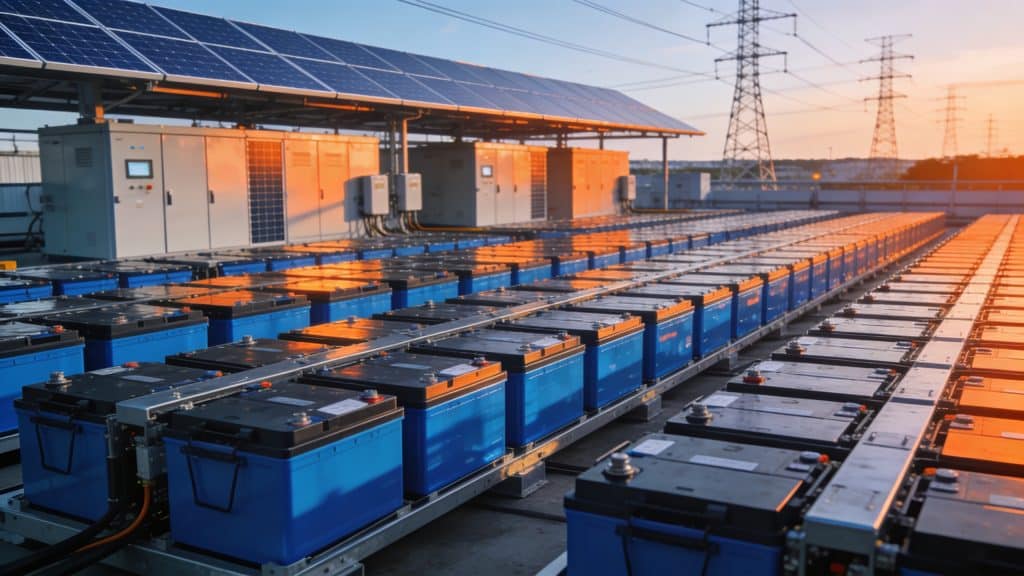
At the utility level, large arrays of repurposed EV batteries can provide essential grid services. They can store surplus renewable energy from wind and solar farms, smoothing out their intermittent output and ensuring a stable power supply. They can also offer frequency regulation, responding almost instantaneously to fluctuations in grid frequency to maintain stability. This makes the grid more resilient, more efficient, and better equipped to integrate a higher proportion of renewable energy sources. Virtual power plants (VPPs) using aggregated EV battery storage units can further enhance grid flexibility.
Electric Vehicle Charging Infrastructure Support
Ironically, EV batteries can also support the very infrastructure that charges them. Rapid charging stations often require significant power, which can strain local grids. Integrating stationary EV battery storage at charging hubs allows these stations to draw power from the grid more slowly over time, store it, and then deliver it quickly to EVs as needed. This reduces infrastructure upgrade costs for utilities and ensures a smoother, more reliable charging experience for EV owners.
Challenges and Overcoming Them
While the potential of EV battery storage is immense, there are challenges that need to be addressed to fully realize its benefits and achieve the projected 20% efficiency gains by 2026.
Standardization and Certification
Currently, there’s a lack of universal standards for testing, grading, and certifying second-life EV batteries. This can create uncertainty for integrators and end-users regarding battery health, remaining capacity, and safety. Developing robust industry standards and clear certification processes will be crucial for building trust and scaling deployments. Organizations like SAE International and UL are actively working on these standards.
Logistics and Supply Chain
Managing the collection, transportation, testing, and repackaging of used EV batteries requires a complex and efficient logistics chain. Establishing dedicated infrastructure for this ‘reverse supply chain’ is essential. Partnerships between EV manufacturers, battery recyclers, and stationary storage integrators will be key to streamlining these processes.
Economic Viability and Business Models
While second-life batteries are cheaper than new ones, the costs associated with testing, reconditioning, and integration still need to be optimized. Innovative business models, such as Battery-as-a-Service (BaaS) or leasing arrangements, can help reduce upfront costs for consumers and businesses, making EV battery storage more financially attractive. Government incentives and subsidies for sustainable energy storage can also play a vital role.
Safety and Performance Concerns
Ensuring the long-term safety and predictable performance of repurposed EV batteries is paramount. Advanced BMS, robust thermal management, and thorough initial testing are critical. Continuous monitoring and predictive maintenance can further enhance safety and reliability. Public perception also needs to be managed, emphasizing the rigorous testing and safety protocols in place for these systems.
The Economic and Environmental Case for EV Battery Storage
The transition to widespread EV battery storage is not just a technological imperative but also an economic and environmental opportunity. Economically, it creates new industries and jobs in battery repurposing, integration, and service. It also lowers the cost of energy storage, making renewable energy more competitive and reducing overall electricity costs for consumers and businesses. The ability to defer costly grid upgrades by deploying distributed storage is another significant economic benefit.
Environmentally, the impact is profound. Giving EV batteries a second life significantly extends their useful lifespan, reducing the demand for new raw materials like lithium, cobalt, and nickel, and minimizing the energy and carbon emissions associated with their extraction and processing. It also diverts significant waste from landfills, promoting a more circular economy. Furthermore, by enabling greater integration of intermittent renewable energy sources, EV battery storage helps reduce reliance on fossil fuels, leading to lower greenhouse gas emissions and improved air quality. The 20% efficiency gain directly translates into less energy wasted, further amplifying these environmental benefits.
The Road Ahead: Policy, Innovation, and Collaboration
To fully realize the vision of EV battery storage achieving 20% efficiency gains by 2026, a concerted effort across multiple sectors is required. Policy makers need to establish clear regulatory frameworks, offer incentives for deployment, and support research and development into advanced battery technologies and repurposing techniques. Standardization bodies must accelerate the creation of robust guidelines for testing and certification.
Innovation will continue to be a driving force. This includes refining battery chemistries for even greater longevity and safety, developing more intelligent and adaptive BMS, and creating modular and scalable system designs that are easy to install and maintain. Breakthroughs in recycling technologies for when batteries finally reach their ultimate end-of-life will also be crucial, ensuring a truly circular economy.
Finally, collaboration between automakers, battery manufacturers, energy companies, technology providers, and governments will be paramount. Sharing data, expertise, and resources will accelerate the learning curve and foster the development of a robust ecosystem for EV battery storage. Pilots and demonstration projects are essential to showcase the technology’s capabilities and build public confidence.
Conclusion: A Brighter, More Efficient Energy Future
The integration of EV battery storage for stationary applications represents one of the most exciting and impactful developments in the energy sector. By harnessing the unused capacity of electric vehicle batteries, we are not only addressing the challenges of energy storage but also creating a more sustainable, resilient, and efficient energy future. The projected 20% efficiency gains by 2026 are a testament to the rapid advancements in this field and the immense potential that lies ahead.
From powering individual homes to stabilizing national grids, EV battery storage offers practical, scalable, and environmentally responsible solutions. While challenges remain, the collective efforts of industry, government, and innovators are paving the way for a paradigm shift in how we generate, store, and consume energy. Embracing this technology is not just an option; it’s a critical step towards a cleaner, more reliable, and more economically viable energy landscape for everyone.
The journey to mainstream EV battery storage is well underway, and 2026 is set to be a pivotal year in its widespread adoption and the realization of its transformative benefits. The future of energy is here, and it’s powered by the very batteries that drive our electric vehicles.