Optimize Energy Portfolio: U.S. Businesses & Natural Gas 2025

Optimizing energy portfolios for U.S. businesses amidst fluctuating natural gas prices in 2025 requires a proactive, data-driven 3-month strategic guide to mitigate risks and enhance financial stability.
Navigating the complex landscape of energy markets can be a daunting task for U.S. businesses, especially with the persistent volatility of natural gas prices. This guide provides actionable insights: optimizing energy portfolios for U.S. businesses amidst fluctuating natural gas prices – a 3-month strategic guide for 2025, offering a clear, month-by-month roadmap to fortify your energy strategy and enhance resilience against market shifts.
Understanding the Volatile Natural Gas Market in 2025
The natural gas market is inherently dynamic, influenced by a multitude of factors ranging from geopolitical events to weather patterns and regulatory changes. For U.S. businesses, understanding these underlying drivers is the first step toward effective portfolio optimization. The year 2025 is projected to continue this trend of volatility, necessitating a keen awareness of market signals and potential disruptions.
Several key elements contribute to the unpredictable nature of natural gas prices. Supply-side factors, such as production levels from shale plays and infrastructure developments, directly impact availability. Demand, conversely, is heavily influenced by seasonal weather, industrial activity, and the growth of liquefied natural gas (LNG) exports, which connect U.S. domestic supply to global markets. These interconnected forces create a delicate balance that can shift rapidly, leading to significant price swings.
Key Influencers on Natural Gas Prices
- Geopolitical Instability: Global events can disrupt supply chains or alter energy policies, creating ripple effects on natural gas prices.
- Weather Patterns: Extreme temperatures, both hot and cold, significantly impact demand for heating and cooling, directly affecting gas consumption.
- Regulatory Changes: New environmental policies or shifts in energy regulations can influence production costs and market access.
- LNG Export Growth: Increasing U.S. capacity to export LNG links domestic prices more closely to international energy markets.
Businesses that proactively monitor these indicators can better anticipate price movements and adjust their procurement strategies accordingly. A robust understanding of these market dynamics is not just about reacting to changes but about forecasting potential scenarios to position your energy portfolio advantageously.
Ultimately, a deep dive into the factors driving natural gas price volatility is crucial for any U.S. business aiming to stabilize its energy costs and ensure operational continuity. This foundational knowledge empowers decision-makers to implement more informed and effective strategies.
Month 1: Assessment and Baseline Establishment
The initial month of your strategic optimization plan should focus heavily on a comprehensive assessment of your current energy consumption, costs, and existing contracts. This foundational work provides the necessary data to inform all subsequent decisions and ensures that your strategies are tailored to your specific operational needs and financial objectives.
Begin by gathering detailed historical energy data. This includes monthly consumption figures for natural gas, electricity, and any other energy sources used, alongside their corresponding costs. Analyze these trends to identify peak usage periods, seasonal variations, and any anomalies that might indicate inefficiencies. Understanding your consumption profile is paramount for accurate forecasting and identifying areas for potential savings.
Conducting a Thorough Energy Audit
A professional energy audit can reveal inefficiencies in your equipment, building envelope, and operational processes. This audit should cover:
- Equipment Efficiency: Evaluate the performance of boilers, HVAC systems, and industrial machinery.
- Building Insulation: Assess the thermal integrity of your facilities to minimize heat loss or gain.
- Operational Practices: Review energy usage protocols and identify opportunities for behavioral changes or process improvements.
Simultaneously, a meticulous review of all existing natural gas supply contracts is essential. Understand the contract terms, pricing structures (fixed, variable, indexed), renewal dates, and any clauses related to penalties or early termination. Knowing the intricacies of your current agreements will highlight opportunities for renegotiation or switching providers.
Establishing a clear baseline allows you to measure the effectiveness of your optimization efforts over time. This baseline should include not only cost per unit but also carbon footprint data, if sustainability is a strategic objective. This initial month is about gathering intelligence and setting the stage for impactful changes.
Month 2: Strategy Development and Risk Mitigation
With a comprehensive understanding of your energy baseline and market dynamics, Month 2 transitions into developing and refining your strategic approach. This phase involves exploring various procurement options, implementing risk mitigation tools, and considering diversification strategies to build a more resilient energy portfolio.
One primary area of focus should be diversifying your natural gas procurement strategy. Relying on a single supplier or a single pricing mechanism can expose your business to unnecessary risk. Investigate options such as fixed-price contracts for a portion of your load, indexed pricing for another, and potentially swing contracts for flexibility. The goal is to create a balanced portfolio that offers both predictability and adaptability.
Implementing Hedging and Financial Instruments
To further mitigate price volatility, businesses can explore financial hedging strategies. This involves using instruments like futures contracts, options, or swaps to lock in future natural gas prices or set price ceilings. While these instruments carry their own complexities and costs, they can provide significant protection against adverse market movements.
- Futures Contracts: Agree to buy or sell a specific amount of natural gas at a predetermined price and date.
- Options: Grant the right, but not the obligation, to buy or sell natural gas at a certain price.
- Swaps: Exchange a fixed price for a floating price over a set period, providing price stability.
Beyond financial instruments, consider operational risk mitigation. This could involve investing in energy storage solutions, exploring on-site generation options (like solar or combined heat and power), or implementing demand-side management programs to reduce consumption during peak price periods. Diversifying energy sources and reducing overall demand lessens your exposure to natural gas price fluctuations.
This month is about crafting a multi-faceted strategy that combines informed procurement, financial prudence, and operational enhancements. The aim is to create a robust energy framework that can withstand market turbulence and support long-term business objectives.
Month 3: Implementation, Monitoring, and Adjustment
The final month of this strategic guide focuses on putting your developed strategies into action, meticulously monitoring their performance, and establishing a framework for continuous adjustment. This is where theoretical plans translate into tangible results and where the groundwork for ongoing optimization is laid.
Begin by executing new contracts or renegotiating existing ones based on the insights gained in Month 2. Ensure that all new agreements align with your risk tolerance and cost objectives. This might involve engaging with multiple suppliers to secure competitive bids and favorable terms. Transparency and clear communication during this phase are crucial for successful implementation.
Continuous Performance Monitoring
Once new strategies are in place, establish robust monitoring systems to track key performance indicators (KPIs). These should include:
- Actual vs. Budgeted Costs: Compare your actual energy expenditures against your forecasts.
- Consumption Trends: Monitor daily, weekly, and monthly consumption to identify deviations.
- Market Price Movements: Continuously track natural gas market prices to assess the effectiveness of hedging strategies.
Regularly review these KPIs to identify areas where adjustments might be needed. The energy market is not static, and your strategy shouldn’t be either. Be prepared to adapt to new information, market shifts, or internal operational changes. This iterative process of monitoring and adjustment is vital for sustaining an optimized energy portfolio.
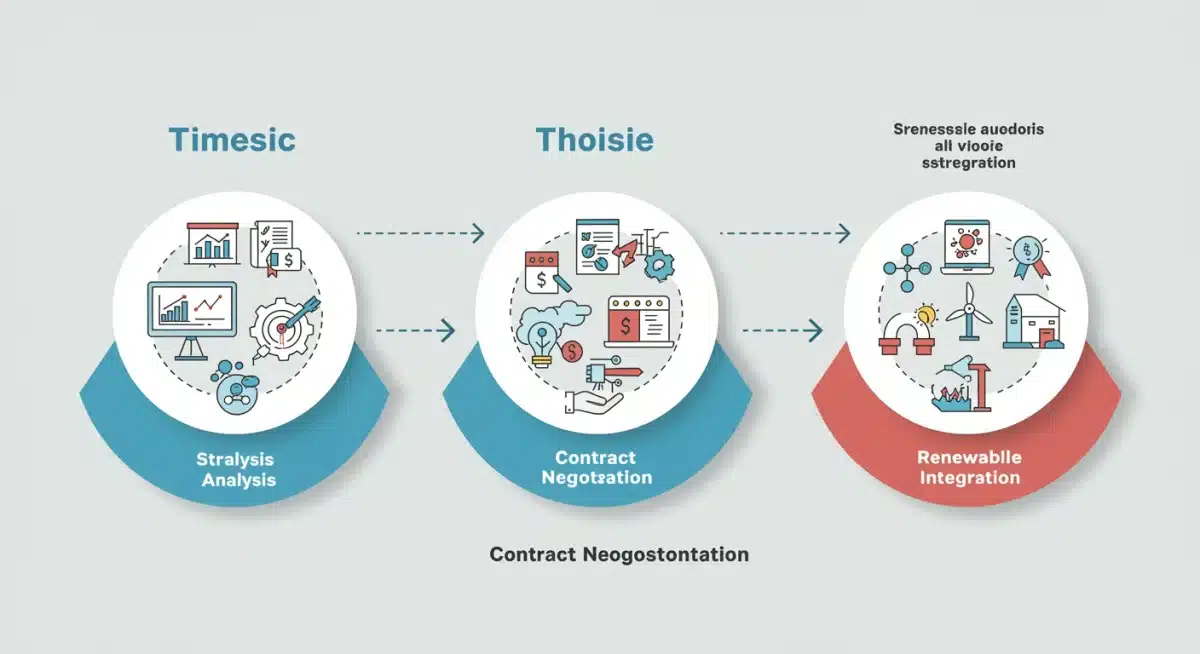
Furthermore, consider incorporating renewable energy sources or energy efficiency upgrades into your long-term plans. While these might not be fully implemented within a three-month window, starting the planning and feasibility studies now can pave the way for future savings and environmental benefits. This month is about solidifying your current strategy while also looking ahead to future opportunities for improvement.
The successful completion of Month 3 signifies not an end, but the beginning of a cycle of continuous energy portfolio optimization, ensuring your business remains competitive and financially sound.
Leveraging Technology for Energy Management
In today’s rapidly evolving energy landscape, technology plays an indispensable role in optimizing energy portfolios. For U.S. businesses, embracing advanced energy management systems (EMS) and data analytics tools can unlock significant efficiencies and provide deeper insights into consumption patterns and cost drivers.
Modern EMS platforms offer capabilities far beyond simple meter reading. They can integrate data from various sources—utility bills, smart meters, weather forecasts, and even market price feeds—to provide a holistic view of your energy ecosystem. This real-time data aggregation allows for immediate identification of inefficiencies, predictive modeling of consumption, and automated responses to price signals.
Benefits of Advanced Energy Management Systems
- Real-time Monitoring: Gain immediate visibility into energy consumption across all facilities.
- Predictive Analytics: Forecast future energy needs and costs based on historical data and external factors.
- Automated Controls: Implement automated adjustments to HVAC, lighting, and machinery based on occupancy or price.
- Reporting and Compliance: Generate detailed reports for internal analysis, budgeting, and regulatory compliance.
Beyond EMS, artificial intelligence (AI) and machine learning (ML) are increasingly being deployed to analyze vast datasets, identify complex correlations, and optimize energy usage with unprecedented precision. These technologies can help businesses predict equipment failures, optimize maintenance schedules, and even suggest optimal times for energy-intensive operations to coincide with lower market prices.
The investment in such technologies, while potentially significant upfront, often yields substantial returns through reduced energy costs, improved operational efficiency, and enhanced sustainability credentials. Leveraging technology is no longer an option but a necessity for businesses aiming to maintain a competitive edge in the energy market.
Ultimately, integrating advanced technological solutions into your energy management strategy ensures that your optimization efforts are data-driven, dynamic, and capable of adapting to future market challenges effectively.
Long-Term Sustainability and Future-Proofing Strategies
While the 3-month guide focuses on immediate and near-term optimization, true resilience for U.S. businesses lies in integrating long-term sustainability goals and future-proofing strategies into their energy portfolios. This forward-looking approach ensures continued competitiveness and aligns with evolving environmental and regulatory landscapes.
One critical aspect of long-term sustainability is the gradual transition towards renewable energy sources. Even if immediate adoption isn’t feasible, businesses should begin exploring options like on-site solar generation, power purchase agreements (PPAs) for off-site renewables, or investing in renewable energy credits (RECs). These steps not only reduce reliance on fossil fuels but can also provide long-term price stability against volatile natural gas markets.
Investing in Energy Efficiency and Decarbonization
Continual investment in energy efficiency upgrades is another cornerstone of a future-proof energy strategy. Technologies and best practices are constantly evolving, offering new opportunities to reduce consumption. This includes:
- LED Lighting Upgrades: A straightforward yet impactful way to reduce electricity usage.
- High-Efficiency Equipment: Replacing older machinery with newer, more energy-efficient models.
- Building Automation Systems: Smart controls that optimize energy use based on occupancy and environmental conditions.
- Carbon Capture Technologies: For industrial processes, exploring options to reduce direct emissions.
Furthermore, businesses should actively engage with policy developments and regulatory changes related to energy and emissions. Staying informed allows for proactive adaptation and can uncover incentives or funding opportunities for sustainable initiatives. Participating in industry forums and collaborating with energy experts can also provide valuable insights and best practices.
By embedding sustainability and future-proofing into the core of their energy strategy, U.S. businesses can not only mitigate future risks but also enhance their brand reputation, attract environmentally conscious customers, and contribute positively to a greener economy.
These long-term considerations are essential for building an energy portfolio that is not only cost-effective today but also resilient and responsible for decades to come.
Navigating Regulatory and Policy Landscapes
The regulatory and policy environment surrounding natural gas and energy in the U.S. is constantly in flux, presenting both challenges and opportunities for businesses. Successfully optimizing an energy portfolio requires a keen awareness of these changes and the ability to adapt strategies accordingly.
Federal, state, and local regulations can significantly impact natural gas supply, distribution, and pricing. For instance, pipeline infrastructure projects, environmental protection standards, and carbon pricing initiatives all have direct implications for energy costs and availability. Businesses must monitor these developments closely to anticipate potential impacts on their operations and supply chains.
Key Regulatory Areas to Monitor
- Environmental Regulations: Policies related to emissions, methane leakage, and air quality can affect natural gas production and transport.
- Infrastructure Development: Approvals or delays in new pipeline construction can influence regional supply and pricing.
- Energy Efficiency Incentives: Government programs offering tax credits or rebates for energy-efficient upgrades.
- Renewable Energy Mandates: State-level requirements for utilities to source a percentage of their power from renewables.
Beyond regulations, government incentives and subsidies can play a crucial role in lowering the cost of energy efficiency improvements or renewable energy adoption. Businesses should actively research and apply for programs that align with their energy optimization goals, as these can significantly improve the return on investment for sustainable initiatives.
Engaging with industry associations and staying informed through reliable energy news sources can provide early warnings of impending policy shifts. Proactive engagement, such as providing feedback on proposed regulations, can also help shape policies in a way that is more favorable to business interests.
Ultimately, a deep understanding of the regulatory and policy landscape empowers businesses to not only comply with current requirements but also to strategically position themselves to capitalize on future opportunities and mitigate risks posed by an evolving energy governance framework.
| Key Takeaway | Brief Description |
|---|---|
| Market Volatility Awareness | Understand key drivers of natural gas price fluctuations to anticipate market shifts. |
| Strategic Planning Phases | Implement a 3-month plan: assess, strategize, then implement and monitor for optimization. |
| Risk Mitigation Tools | Utilize hedging, diversified procurement, and energy efficiency to reduce price exposure. |
| Technology Integration | Leverage EMS and AI for real-time monitoring, predictive analytics, and automated controls. |
Frequently Asked Questions About Energy Portfolio Optimization
Natural gas price volatility directly impacts operational costs and financial predictability for U.S. businesses. Unforeseen price spikes can erode profit margins, disrupt budgeting, and hinder long-term planning, making strategic optimization crucial for stability and competitiveness.
The initial step involves a thorough assessment of current energy consumption, costs, and existing contracts. This baseline understanding is critical for identifying inefficiencies, understanding usage patterns, and informing effective strategies for cost reduction and risk mitigation.
Businesses can mitigate risks through diversified procurement strategies, such as blending fixed and indexed contracts, and by utilizing financial hedging instruments like futures, options, and swaps. Investing in energy efficiency and on-site generation also provides a buffer against market fluctuations.
Technology, including Energy Management Systems (EMS) and AI-driven analytics, enables real-time monitoring, predictive modeling, and automated controls. These tools provide deeper insights into consumption, optimize usage, and enhance overall efficiency, leading to significant cost savings.
A long-term sustainability plan, including renewable energy integration and continuous efficiency upgrades, future-proofs businesses against market volatility and evolving regulations. It enhances brand reputation, attracts eco-conscious customers, and ensures lasting operational and financial resilience.
Conclusion
Optimizing energy portfolios for U.S. businesses amidst fluctuating natural gas prices is not merely a reactive measure but a strategic imperative for long-term success. The 3-month guide outlined provides a structured, actionable framework for assessment, strategy development, and implementation. By understanding market dynamics, leveraging technology, and embracing sustainable practices, businesses can transform energy challenges into opportunities for enhanced efficiency, reduced costs, and improved resilience. The journey towards an optimized energy portfolio is continuous, demanding vigilance and adaptability, but the rewards in stability and competitiveness are substantial.