Maximizing ROI: How to Get a 15% Return with Grid-Tied Battery Systems in the US by 2026
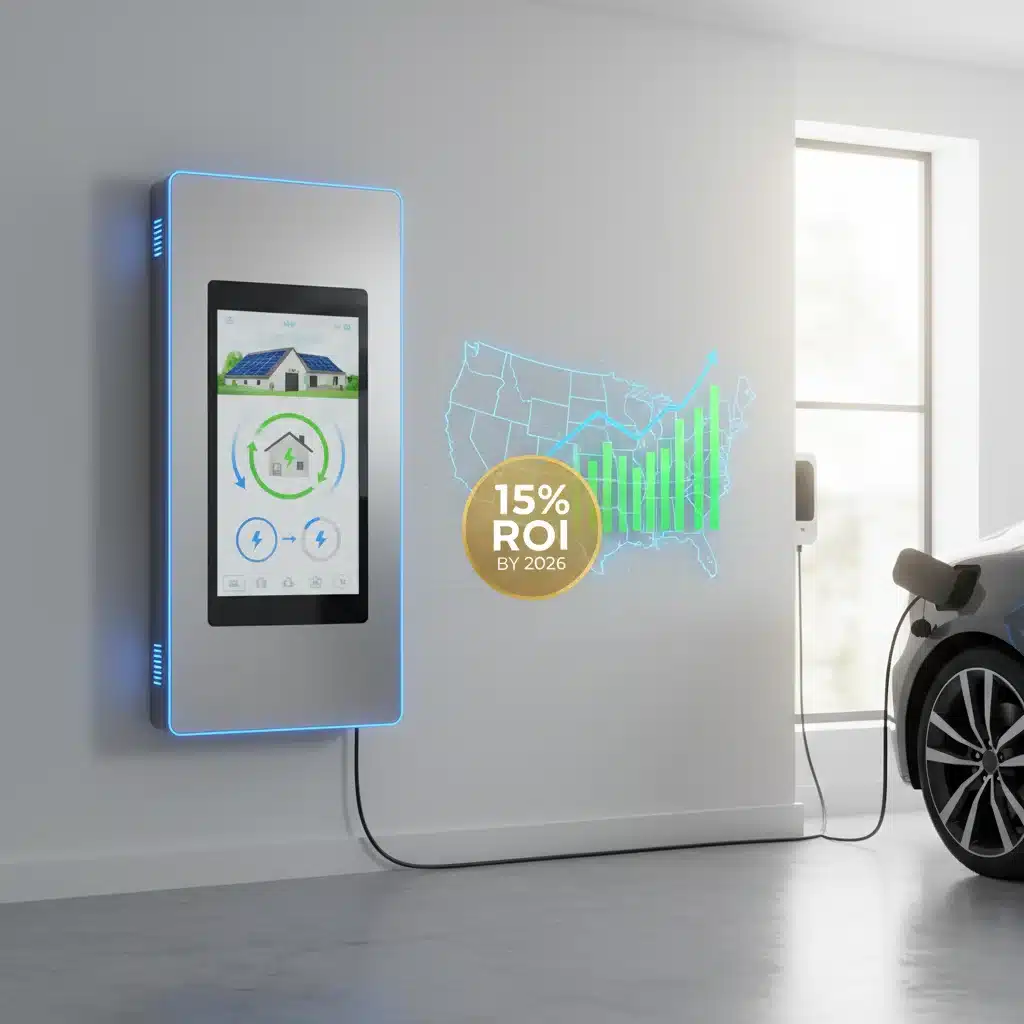
In an era defined by fluctuating energy prices, growing environmental consciousness, and a fervent desire for energy independence, homeowners and businesses across the United States are increasingly turning to advanced energy solutions. Among these, grid-tied battery systems stand out as a particularly promising investment. Far from being a mere backup power source, these sophisticated systems offer a compelling pathway to significant financial returns. Our focus today is on a bold, yet achievable, target: securing a 15% ROI with grid-tied battery systems in the US by 2026. This isn’t just an aspiration; it’s a strategic goal, underpinned by evolving technology, supportive policies, and a dynamic energy market.
The landscape of energy storage is rapidly transforming. What was once a niche technology is now becoming mainstream, driven by innovations that reduce costs and enhance efficiency. For many, the decision to invest in a grid-tied battery system is multifaceted, encompassing environmental benefits, enhanced resilience, and, critically, financial advantages. This article will delve deep into how you can strategically leverage grid-tied battery systems to achieve an impressive 15% return on investment within the next three years. We’ll explore the underlying principles, the technological advancements, the crucial role of incentives, and the strategic operational decisions that will pave your way to this financial milestone.
Understanding Grid-Tied Battery Systems
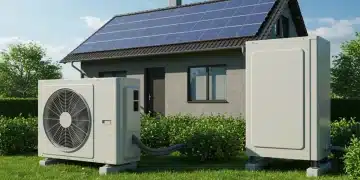
Before we dissect the ROI potential, it’s essential to grasp what grid-tied battery systems entail. A grid-tied battery system, also known as a hybrid or grid-interactive system, is an energy storage solution that works in conjunction with the public utility grid. Unlike off-grid systems that operate entirely independently, grid-tied systems maintain a connection to the grid, offering the best of both worlds: energy independence and grid reliability.
How They Work
Typically, these systems are paired with a renewable energy source, most commonly solar panels. During periods of high solar production and low home energy demand, excess electricity charges the battery bank. When solar production is low (e.g., at night or on cloudy days) or during peak demand times when electricity prices are highest, the stored energy from the battery can be used to power the home. Crucially, if the battery is depleted or if energy needs exceed what the solar panels and battery can supply, the system seamlessly draws power from the utility grid. Conversely, if the solar panels produce more power than the home needs and the battery is full, the excess electricity can be exported back to the grid, often earning credits or payments through net metering programs.
Key Components of a Grid-Tied Battery System:
- Solar Panels: Generate electricity from sunlight.
- Inverter: Converts DC electricity from solar panels and batteries into AC electricity usable by homes and the grid. Hybrid inverters manage both solar and battery power.
- Battery Bank: Stores excess electricity. Lithium-ion batteries are currently the most popular choice due to their high energy density, efficiency, and longevity.
- Charge Controller: Regulates the voltage and current coming from the solar panels to charge the battery bank, preventing overcharging.
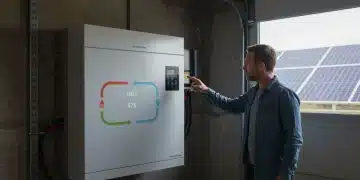
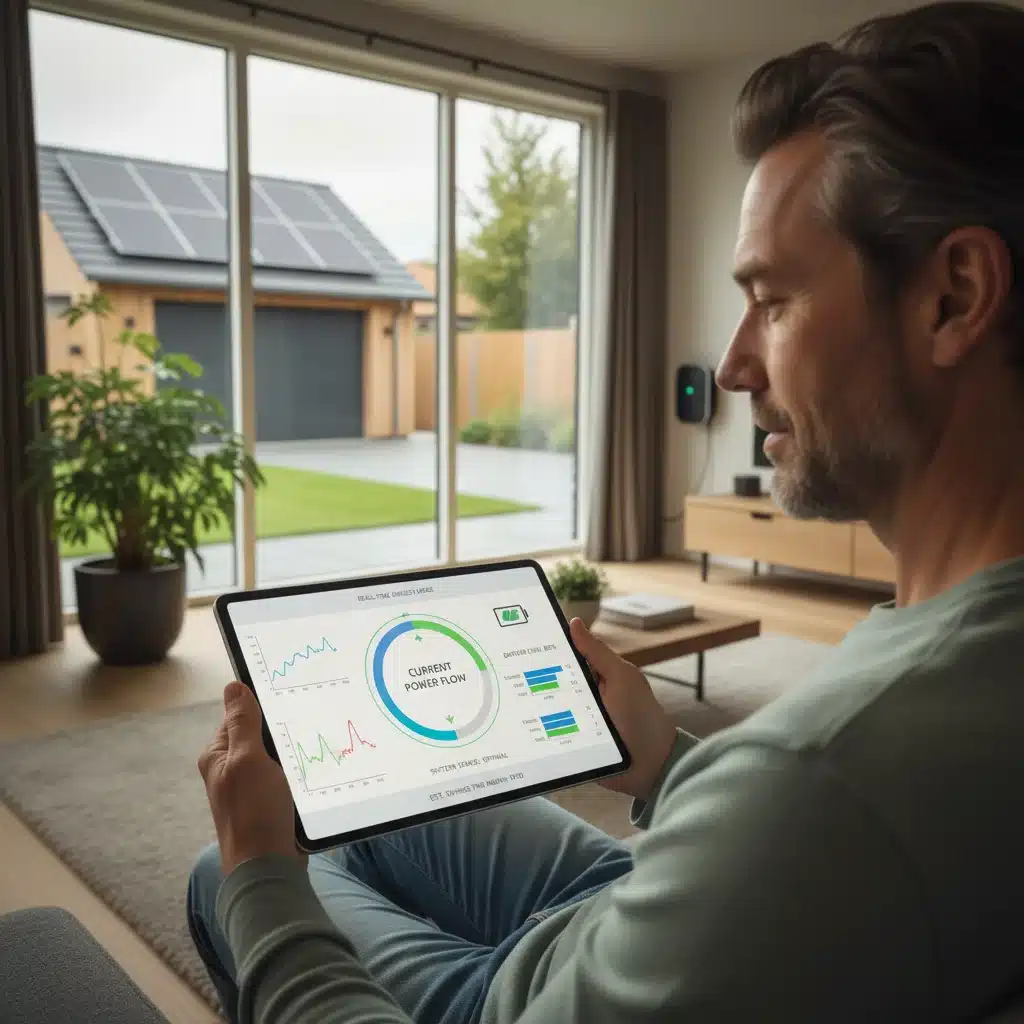
- Smart Energy Management System: Software and hardware that optimize energy flow, deciding when to charge the battery, discharge it, or draw/send power to the grid based on electricity prices, weather forecasts, and household consumption patterns.
- Utility Grid Connection: The physical and contractual link to the public electricity network.
The intelligent management of these components is what truly unlocks the financial potential, enabling users to optimize their energy consumption and capitalize on dynamic energy pricing structures. Understanding this foundation is the first step towards achieving a 15% ROI with grid-tied battery systems.
The Financial Case for Grid-Tied Battery Systems: Targeting 15% ROI
Achieving a 15% ROI with grid-tied battery systems by 2026 is an ambitious yet entirely plausible goal. This return is not solely derived from a single factor but is a cumulative result of several financial benefits and strategic optimizations. Let’s break down the key drivers:
1. Energy Bill Savings through Peak Shaving and Time-of-Use (TOU) Arbitrage
One of the most significant financial advantages comes from intelligent energy management. Many utility companies employ Time-of-Use (TOU) rates, where electricity prices vary significantly throughout the day, being highest during peak demand hours (e.g., late afternoon/early evening) and lowest during off-peak hours. A grid-tied battery system excels at:
- Peak Shaving: Discharging stored energy during peak price periods, reducing reliance on expensive grid electricity.
- TOU Arbitrage: Charging batteries during off-peak hours when electricity is cheap (either from the grid or from solar) and discharging during peak hours, effectively buying low and selling (or using) high.
The savings generated by these strategies can be substantial, especially in regions with aggressive TOU pricing. As more utilities adopt dynamic pricing models, the value proposition of battery storage for TOU arbitrage will only grow, directly contributing to a higher grid-tied battery ROI.
2. Maximizing Solar Self-Consumption and Net Metering Optimization
For homes with solar panels, a battery system allows for greater self-consumption of generated electricity. Instead of exporting excess solar power to the grid at potentially lower net metering rates (or facing reduced compensation in some markets), the power can be stored and used later. This maximizes the value of every kWh produced by your solar array. In areas where net metering policies are less favorable or being phased out, battery storage becomes even more critical for optimizing solar investments and boosting overall ROI.
3. Federal, State, and Local Incentives
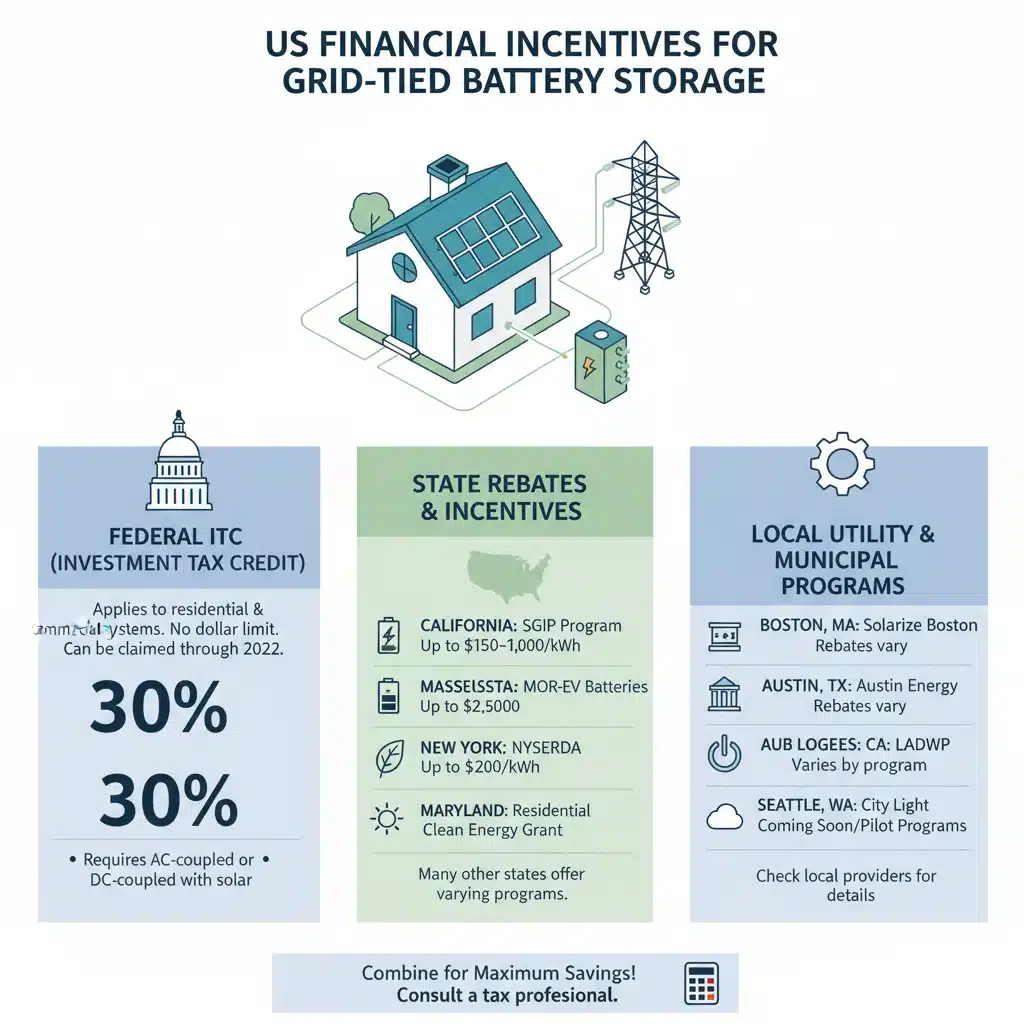
The US government and many state and local authorities offer robust incentives to encourage the adoption of renewable energy and energy storage. These can dramatically reduce the upfront cost of a grid-tied battery system, thereby accelerating the payback period and increasing ROI. Key incentives include:
- Federal Investment Tax Credit (ITC): The ITC currently offers a 30% tax credit for new residential and commercial solar installations, and importantly, stand-alone battery storage systems of at least 3 kWh capacity are also eligible. This is a direct reduction in your tax liability, making a significant impact on the total cost. This credit is extended through 2032, providing long-term stability for investors.
- State and Local Rebates: Many states (e.g., California with SGIP, Massachusetts with SMART) and even specific utility companies offer additional rebates, grants, or performance-based incentives for battery storage. These programs are constantly evolving, so staying informed about your local offerings is crucial.
- Property Tax Exemptions: Some regions exempt the added value of renewable energy systems, including batteries, from property tax assessments.
- Sales Tax Exemptions: A few states offer sales tax exemptions for solar and storage equipment.
These incentives are cornerstone elements in making a 15% ROI with grid-tied battery systems a reality. They directly lower the initial capital outlay, which is a primary determinant of ROI.
4. Grid Services and Demand Response Programs
An emerging and increasingly lucrative revenue stream for grid-tied battery owners is participation in grid services and demand response (DR) programs. Utilities and grid operators are looking for ways to stabilize the grid, especially with the influx of intermittent renewable energy sources. Batteries can provide these services:
- Demand Response: Utilities pay customers to reduce their electricity consumption (by discharging their battery instead of drawing from the grid) during periods of high grid stress.
- Ancillary Services: In some markets, aggregators can pool residential or commercial battery systems to provide services like frequency regulation or voltage support to the grid, earning payments for these contributions.
As grid modernization continues, the opportunities to participate in these programs are expected to expand, offering new pathways to enhance your grid-tied battery ROI.
5. Increased Property Value and Resilience
While not a direct cash return, increased property value is a significant financial benefit. Homes equipped with solar and battery storage systems are often more attractive to buyers, commanding a higher resale value. Furthermore, the enhanced energy resilience provided by a battery system – offering backup power during grid outages – has an intrinsic value that can be quantified in terms of avoided losses during power disruptions and peace of mind.
Strategic Implementation for Maximum ROI
Achieving that 15% ROI isn’t just about installing a battery; it’s about smart planning and execution. Here’s how to optimize your strategy:
1. Right-Sizing Your System
One of the most critical steps is correctly sizing your battery system. An undersized system won’t provide adequate savings or backup, while an oversized system represents unnecessary capital expenditure. A professional energy audit will assess your energy consumption patterns, peak demand, and solar production (if applicable) to recommend the optimal battery capacity and power output.
2. Choosing the Right Technology
While lithium-ion batteries dominate the market, variations exist. Research different battery chemistries, manufacturers, and warranty periods. Look for systems with high round-trip efficiency (how much energy is lost during charging and discharging) and a long cycle life (how many times the battery can be charged and discharged before significant degradation). The long-term performance and durability of your chosen battery will directly impact your grid-tied battery ROI.
3. Advanced Energy Management Systems
The intelligence behind your battery system is paramount. Modern grid-tied batteries come with sophisticated energy management software that can learn your consumption patterns, integrate with weather forecasts, and respond to dynamic electricity pricing. These systems automate TOU arbitrage, optimize solar self-consumption, and can even participate in utility demand response programs autonomously. Investing in a smart system with robust software is key to unlocking the full financial potential.
4. Navigating Incentives and Regulations
Staying abreast of the latest federal, state, and local incentives is crucial. Work with an installer or consultant who is knowledgeable about these programs and can help you navigate the application processes. Furthermore, understand local interconnection rules and permitting requirements, as these can vary significantly and impact project timelines and costs.
5. Professional Installation and Maintenance
A properly installed and maintained system ensures optimal performance and longevity. Choose certified installers with a proven track record. Regular maintenance, though often minimal for modern battery systems, can prevent issues and ensure continued efficiency, safeguarding your grid-tied battery ROI.
Market Trends and Future Outlook Towards 2026
The forecast for grid-tied battery systems in the US is overwhelmingly positive, reinforcing the 15% ROI target by 2026. Several market trends are converging to create a highly favorable environment:
- Decreasing Costs: Battery technology continues to advance, leading to significant cost reductions. As manufacturing scales up and R&D progresses, battery prices are expected to fall further, making systems more affordable and improving ROI.
- Grid Modernization: Utilities are actively investing in grid modernization efforts, which include integrating more distributed energy resources like solar and storage. This creates more opportunities for battery owners to participate in grid services.
- Evolving Policy Landscape: While incentives can change, the overall trend is towards continued support for renewable energy and storage. The federal government’s commitment to clean energy, coupled with state-level initiatives, provides a stable policy environment.
- Increased Demand for Resilience: Extreme weather events and an aging grid are making power outages more frequent. The demand for reliable backup power is rising, increasing the perceived and actual value of battery storage.
- Technological Advancements: Beyond just cost, batteries are becoming more efficient, safer, and offer higher energy densities. New chemistries and form factors are continuously being developed, promising even better performance in the future.
These trends collectively suggest that the financial benefits of grid-tied battery systems will only grow, making the 15% ROI with grid-tied battery systems a highly attainable benchmark by 2026.
Potential Challenges and Mitigation Strategies
While the outlook is bright, it’s important to acknowledge potential challenges and how to mitigate them to ensure your grid-tied battery ROI remains on track:
- Upfront Cost: Despite falling prices, the initial investment can still be substantial. Mitigation: Leverage all available incentives (ITC, state rebates) and explore financing options like loans or leases that can make the investment more manageable.
- Policy Changes: Incentive programs and net metering rules can change. Mitigation: Stay informed about local energy policies. Choose systems with flexible management capabilities that can adapt to different rate structures. Consider long-term projections rather than short-term policy whims.
- Battery Degradation: All batteries degrade over time. Mitigation: Invest in high-quality batteries from reputable manufacturers with strong warranties (e.g., 10+ years). Properly size your system to avoid excessive cycling.
- Installation Complexity: Grid-tied systems require professional installation and adherence to electrical codes. Mitigation: Work with certified and experienced installers who are familiar with local regulations and have a strong safety record.
- Grid Interconnection: The process of connecting to the utility grid can sometimes be complex or slow. Mitigation: Start the interconnection application process early. Work with an installer who has experience navigating local utility requirements.
Case Studies and Real-World Examples (Illustrative)
To further illustrate the potential for a strong grid-tied battery ROI, let’s consider a hypothetical scenario:
Scenario: The Smart Homeowner in California
A homeowner in California installs a 10 kWh grid-tied battery system alongside an existing 8 kW solar array. The total cost of the battery system is $15,000 before incentives. California has high electricity rates and a strong Time-of-Use (TOU) pricing structure, making peak shaving highly lucrative. The homeowner also qualifies for the 30% federal ITC and a state rebate of $2,000.
- Initial Cost: $15,000
- Federal ITC (30% of $15,000): -$4,500
- State Rebate: -$2,000
- Net Cost: $8,500
Through TOU arbitrage and maximizing solar self-consumption, the homeowner estimates annual electricity bill savings of $1,200. Additionally, they participate in a local demand response program, earning an average of $300 per year. The total annual financial benefit is $1,500.
ROI Calculation (Simplified for illustrative purposes):
($1,500 Annual Benefit / $8,500 Net Cost) * 100% = 17.6% Annual Return.
While this is a simplified example and actual returns vary, it demonstrates how a combination of incentives and smart energy management can quickly lead to substantial returns, even exceeding our 15% target. The continued reduction in battery costs and expansion of grid service programs will only make such scenarios more common and more profitable by 2026.
Conclusion: Powering Your Future with a 15% ROI
The journey to achieving a 15% ROI with grid-tied battery systems in the US by 2026 is not just a possibility; it’s a strategic imperative for those looking to optimize their energy consumption and financial health. The convergence of decreasing technology costs, robust governmental incentives, and the increasing value of grid services creates an unprecedented opportunity. By understanding the technology, carefully planning your system, leveraging available financial benefits, and adopting smart energy management practices, you can transform your home or business into a more resilient, sustainable, and profitable entity.
As we move towards 2026, the energy landscape will continue to evolve, with grid-tied battery systems playing an ever more central role. Investing now means positioning yourself at the forefront of this energy revolution, securing not only your energy independence but also a significant financial return. The future of energy is distributed, intelligent, and, for savvy investors, highly rewarding. Take the steps today to unlock the full potential of your energy storage investment.