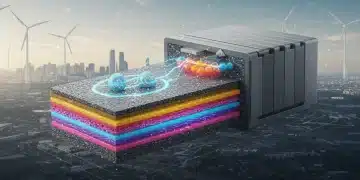
Beyond Lithium: Top 4 Emerging Energy Storage Technologies in the US by 2026
Anúncios
Beyond Lithium: Exploring 4 Emerging Energy Storage Technologies Set to Dominate the US Market by 2026
The energy landscape in the United States is undergoing a profound transformation. As renewable energy sources like solar and wind power become increasingly prevalent, the demand for efficient, reliable, and scalable energy storage solutions has never been higher. For years, lithium-ion batteries have been the undisputed champions of this domain, powering everything from our smartphones to electric vehicles and grid-scale storage projects. However, the limitations of lithium-ion – including supply chain vulnerabilities, environmental concerns, safety issues, and cost at very large scales – are pushing innovators to explore a new generation of emerging energy storage technologies.
By 2026, the US market is expected to see significant advancements and deployments of these alternative storage methods. These innovations promise to offer enhanced safety, longer lifespans, greater scalability, and a reduced environmental footprint, paving the way for a more resilient and sustainable energy future. This comprehensive analysis delves into four of the most promising emerging energy storage technologies poised to make a substantial impact on the US energy sector in the coming years.
The Imperative for Diverse Energy Storage
The transition to a clean energy economy hinges critically on effective energy storage. Intermittent renewable sources require robust storage to ensure a stable and continuous power supply. While lithium-ion batteries have served as a crucial bridge, their inherent characteristics make them less ideal for all applications, particularly for long-duration, grid-scale storage where discharge times can extend to many hours or even days. The search for emerging energy storage solutions is driven by several key factors:
- Resource Availability and Supply Chain Resilience: Lithium, cobalt, and nickel are finite resources, and their extraction often comes with significant environmental and geopolitical challenges. Diversifying storage technologies reduces reliance on a single, potentially volatile supply chain.
- Safety Concerns: While advancements have been made, lithium-ion batteries can pose thermal runaway risks, especially in large installations. Alternative chemistries often offer enhanced inherent safety.
- Cost-Effectiveness at Scale: For very long-duration storage, the capital cost of lithium-ion can become prohibitive. New technologies aim to offer more economical solutions for these applications.
- Environmental Impact: Beyond extraction, the recycling and disposal of lithium-ion batteries present challenges. Many emerging energy storage technologies utilize more abundant, less toxic materials.
- Performance Characteristics: Different applications require different performance metrics. Some technologies excel at rapid power delivery, while others are better suited for sustained, long-duration discharge. A diverse portfolio allows for optimal matching of technology to need.
Understanding these drivers is crucial to appreciating the significance of the four emerging energy storage technologies we will explore next.
1. Redox Flow Batteries (RFBs): The Long-Duration Contender
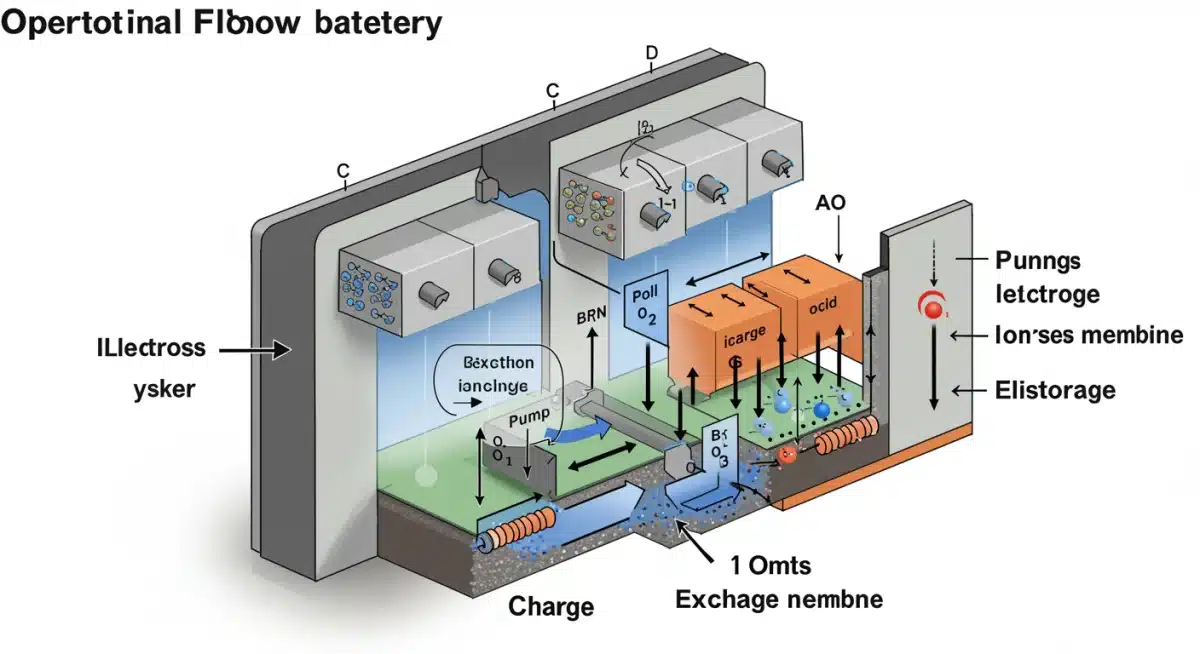
Redox Flow Batteries (RFBs) represent a compelling alternative for large-scale, long-duration energy storage. Unlike conventional batteries that store energy in solid electrode materials, RFBs store energy in liquid electrolytes contained in external tanks. Two separate electrolyte solutions circulate through an electrochemical cell, where chemical energy is converted to electrical energy and vice-versa. The power and energy ratings of an RFB are decoupled: power is determined by the size of the reaction stack, while energy capacity is determined by the volume of the electrolyte tanks.
How Redox Flow Batteries Work:
In a typical RFB, two electroactive species dissolved in liquid electrolytes flow past a proton-exchange membrane. During charging, an external electrical current drives a redox reaction, storing energy in the chemical potential of the electrolytes. During discharge, the reverse reaction occurs, releasing electrical energy. The most common types include vanadium redox flow batteries (VRFBs), but other chemistries like zinc-bromine, iron-chromium, and organic flow batteries are also under development.
Advantages of RFBs for Emerging Energy Storage:
- Scalability and Long Duration: The ability to scale energy capacity by simply increasing the size of the electrolyte tanks makes RFBs ideal for multi-hour to multi-day storage.
- Long Cycle Life: Electrolytes generally do not degrade significantly over many charge/discharge cycles, leading to very long operational lifespans (20+ years).
- Enhanced Safety: Electrolytes are typically non-flammable and operate at ambient temperatures, reducing fire risks compared to lithium-ion.
- Flexible Siting: External tanks allow for flexible system design and installation.
- Low Self-Discharge: Energy loss when idle is minimal, making them suitable for infrequent, long-term storage.
Challenges and Outlook for RFBs:
Despite their advantages, RFBs face challenges in terms of their lower energy density (requiring larger footprints), higher initial capital costs for some chemistries (e.g., vanadium), and the need for more complex balance-of-plant components (pumps, plumbing). However, ongoing research is focused on reducing costs, improving efficiency, and developing new, more abundant chemistries. Companies like Invinity Energy Systems and Sumitomo Electric are already deploying VRFB projects in the US. By 2026, we anticipate a significant increase in RFB installations, particularly for grid services, industrial applications, and remote microgrids requiring sustained power.
2. Solid-State Batteries (SSBs): The High-Performance Future
Solid-state batteries (SSBs) represent a paradigm shift in battery technology, replacing the flammable liquid or polymer gel electrolytes found in traditional lithium-ion batteries with a solid electrolyte. This fundamental change promises to unlock superior performance, safety, and energy density, making them a highly anticipated emerging energy storage solution.
How Solid-State Batteries Work:
In an SSB, lithium ions move through a solid material (e.g., ceramics, polymers, or sulfides) between the anode and cathode. The solid electrolyte acts as both an ion conductor and a physical separator, eliminating the need for a bulky, porous separator and potentially allowing for the use of energy-dense lithium metal anodes, which are unstable with liquid electrolytes.
Advantages of SSBs for Emerging Energy Storage:
- Enhanced Safety: The elimination of flammable liquid electrolytes significantly reduces the risk of thermal runaway and fire, a major concern for large-scale battery deployments.
- Higher Energy Density: Solid electrolytes can enable the use of lithium metal anodes, which have a theoretical energy density far greater than conventional graphite anodes, leading to smaller, lighter battery packs.
- Longer Lifespan: Solid electrolytes can be more stable over many charge/discharge cycles, potentially leading to longer battery life.
- Faster Charging: Some solid electrolytes exhibit very high ionic conductivity, allowing for rapid charging capabilities.
- Wider Operating Temperature Range: SSBs may perform better in extreme temperatures compared to liquid electrolyte batteries.
Challenges and Outlook for SSBs:
While the potential of SSBs is immense, they face significant manufacturing challenges. These include achieving high ionic conductivity in solid electrolytes comparable to liquids, ensuring stable interfaces between solid electrodes and electrolytes, and scaling production at competitive costs. Companies like QuantumScape, Solid Power, and Toyota are heavily investing in SSB research and development, primarily targeting the electric vehicle market, but their advancements will inevitably spill over into grid storage. By 2026, we may see initial commercial deployments of SSBs in niche high-performance applications, with broader adoption expected in the subsequent decade as manufacturing processes mature and costs decline. Their impact on grid stability and portable power could be transformative.
3. Green Hydrogen Storage: The Versatile Energy Carrier
Hydrogen, particularly ‘green hydrogen’ produced via electrolysis powered by renewable electricity, is rapidly gaining recognition as a critical emerging energy storage vector. It offers a unique ability to store vast amounts of energy for extended periods, making it a powerful solution for seasonal storage and decarbonizing hard-to-abate sectors.
How Green Hydrogen Storage Works:
Excess renewable electricity is used to split water into hydrogen and oxygen (electrolysis). The hydrogen gas is then stored, either compressed, liquefied, or converted into other hydrogen-rich chemicals (e.g., ammonia). When energy is needed, the hydrogen can be converted back to electricity using fuel cells or combusted in turbines for power generation. It can also be used as a feedstock for industrial processes or as a fuel for transportation.
Advantages of Green Hydrogen for Emerging Energy Storage:
- Long-Duration and Seasonal Storage: Hydrogen can be stored in large quantities for weeks or months in underground caverns or tanks, providing an unparalleled solution for seasonal energy imbalances.
- Versatility: It can be used for power generation, heating, industrial processes, and transportation, offering a multi-sectoral decarbonization pathway.
- High Energy Density by Weight: While voluminous, hydrogen has a very high energy density per unit of mass, making it efficient for transporting energy.
- Leveraging Existing Infrastructure: With modifications, existing natural gas pipelines could potentially be repurposed to transport hydrogen.
- Zero Emissions at Point of Use: When used in fuel cells or as a fuel, hydrogen produces only water, with no greenhouse gas emissions.
Challenges and Outlook for Green Hydrogen:
The primary challenges for green hydrogen include the energy efficiency losses during the conversion processes (electricity to hydrogen and back to electricity), the high capital cost of electrolyzers and fuel cells, and the infrastructure required for storage and distribution. However, significant government incentives (like those in the US Inflation Reduction Act) and private investments are driving down costs and accelerating deployment. By 2026, we expect to see pilot projects scaling up, particularly in industrial clusters and for blending with natural gas, demonstrating the viability of hydrogen as a long-term emerging energy storage solution and a key enabler for deep decarbonization.

4. Thermal Energy Storage (TES): Harnessing Heat and Cold
Thermal Energy Storage (TES) involves storing energy by heating or cooling a storage medium and then using that stored thermal energy for later use. While often overlooked in discussions about grid-scale storage, TES plays a crucial role, especially when integrated with concentrated solar power (CSP) plants, industrial processes, or for building heating and cooling. It is a powerful, often overlooked, emerging energy storage technology.
How Thermal Energy Storage Works:
TES systems typically store heat in materials like molten salts, concrete, rocks, or water, or store cold in ice or chilled water. The stored thermal energy can then be used directly for heating/cooling, or converted back into electricity using steam turbines (e.g., in CSP plants). Phase Change Materials (PCMs) are also gaining traction, as they store and release large amounts of energy during their phase transition (e.g., melting/freezing) at a constant temperature.
Advantages of TES for Emerging Energy Storage:
- Cost-Effective for Long Duration: Once installed, the storage medium itself is often inexpensive and plentiful, making TES a cost-effective solution for multi-hour to multi-day storage.
- High Capacity: Large volumes of materials can store significant amounts of thermal energy.
- Mature Technology (for some forms): Molten salt storage in CSP plants is a well-established technology.
- Diverse Applications: Beyond electricity generation, TES can directly offset fossil fuel use in industrial heating/cooling, district heating, and building climate control, offering significant energy efficiency benefits.
- Non-Degrading Medium: The thermal storage medium itself generally does not degrade over cycles, leading to very long system lifespans.
Challenges and Outlook for TES:
The main challenges for TES include its large physical footprint, the need for efficient heat exchangers, and the conversion losses when converting thermal energy back to electricity. However, advancements in PCMs, high-temperature storage materials, and integration with industrial waste heat recovery are expanding its applicability. By 2026, we anticipate increased deployment of TES in conjunction with CSP plants to extend their dispatchability, greater integration with industrial processes for energy efficiency, and innovative applications for grid balancing and building decarbonization. Companies like Malta Inc. are developing novel pumped thermal energy storage systems that could offer grid-scale solutions.
Comparative Analysis and Market Impact by 2026
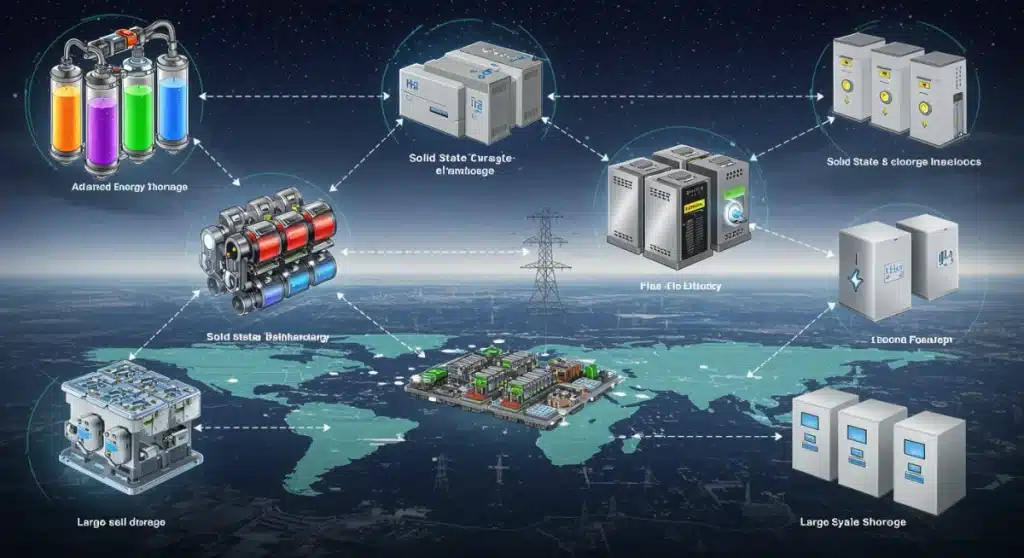
Each of these emerging energy storage technologies brings a unique set of advantages and challenges, making them suitable for different applications within the evolving US energy grid. While lithium-ion will continue to dominate short-duration and mobile applications, these alternatives are set to carve out significant market shares, particularly for long-duration and specialized uses.
| Technology | Key Strength | Primary Application (by 2026) | Scalability | Environmental Footprint |
|---|---|---|---|---|
| Redox Flow Batteries | Long-duration, high cycle life, safety | Grid-scale storage (4-12+ hours), microgrids, industrial backup | High (energy capacity independent of power) | Lower (non-toxic electrolytes, recyclable) |
| Solid-State Batteries | High energy density, enhanced safety, fast charging | High-performance EVs, niche grid applications, portable electronics | Medium (manufacturing scale-up is key) | Potentially lower (no liquid electrolyte, safer materials) |
| Green Hydrogen Storage | Seasonal storage, multi-sector integration, versatility | Long-duration grid storage, industrial feedstock, transportation fuel | Very High (can store massive quantities) | Very Low (if produced renewably, zero emissions at use) |
| Thermal Energy Storage | Cost-effective long duration, industrial heat/cold, CSP integration | CSP power dispatch, industrial energy efficiency, district heating/cooling | High (large-scale physical storage) | Low (often uses abundant, non-toxic materials) |
By 2026, the US energy market will likely see a mosaic of storage solutions. RFBs will become more common for utility-scale applications requiring several hours of discharge. SSBs will start making inroads in specialized high-value segments, pushing the boundaries of battery performance. Green hydrogen projects will move from demonstration to initial commercialization, particularly where existing gas infrastructure can be leveraged or in industrial settings. TES will solidify its role in optimizing renewable energy dispatch, especially from concentrated solar, and in decarbonizing industrial heat and building sectors.
Policy and Investment Driving Emerging Energy Storage
The rapid growth of these emerging energy storage technologies is not happening in a vacuum. Supportive government policies, significant R&D investments, and growing private sector interest are crucial accelerators. The US Inflation Reduction Act (IRA), for instance, provides substantial tax credits for energy storage deployments, creating a fertile ground for innovation and market expansion. Furthermore, the Department of Energy’s initiatives, such as the Long Duration Storage Shot, are specifically targeting cost reductions and performance improvements for technologies capable of storing energy for 10+ hours.
Venture capital and corporate partnerships are also pouring into these sectors, recognizing the immense market potential. This confluence of policy support, technological advancement, and financial backing suggests that by 2026, many of these emerging energy storage solutions will transition from nascent concepts to commercially viable, impactful components of the US energy infrastructure.
The Road Ahead: Integration and Optimization
The ultimate success of these emerging energy storage technologies will depend not only on their individual performance but also on their ability to integrate seamlessly into a complex, interconnected grid. Advanced grid management systems, artificial intelligence, and sophisticated forecasting tools will be essential to optimize the charging and discharging of diverse storage assets, maximizing their value and ensuring grid stability.
Furthermore, the development of robust supply chains for these new materials and manufacturing processes will be critical. Workforce development will also be key, as new skills will be required to design, install, operate, and maintain these advanced systems. The journey beyond lithium-ion is not just about new chemistry; it’s about building an entirely new energy ecosystem.
Conclusion: A Diverse and Resilient Energy Future
The era of energy storage is truly upon us, and while lithium-ion batteries have laid a strong foundation, the next wave of innovation is set to diversify and strengthen our capabilities. By 2026, redox flow batteries, solid-state batteries, green hydrogen storage, and thermal energy storage will be recognized as vital pillars of the US energy system, each contributing unique strengths to address the multifaceted challenges of decarbonization and grid modernization.
These emerging energy storage technologies promise a future where renewable energy is not just abundant but also reliably available, where grids are more resilient, and where the environmental footprint of our energy infrastructure is significantly reduced. The next few years will be pivotal in shaping this exciting new chapter in energy storage, moving us closer to a truly sustainable and secure energy future for the United States and beyond.