EV Charging Infrastructure 2026: Key Updates & Homeowner Impact
The landscape of electric vehicles (EVs) is evolving at an unprecedented pace, and with it, the EV charging infrastructure that supports them. As we look towards 2026, several significant advancements and policy shifts are set to redefine how we power our electric cars, especially for homeowners. Understanding these changes is not just about staying informed; it’s about preparing for a future where your home plays a central role in the energy ecosystem. This comprehensive guide will delve into the four key updates to EV charging infrastructure by 2026 and explore what they mean for you, the homeowner.
The journey to widespread EV adoption is intrinsically linked to the reliability, accessibility, and efficiency of charging solutions. For years, the focus has been on building out public charging networks. However, as EV ownership matures, the spotlight is increasingly shifting towards home charging, recognizing its critical role in daily convenience and grid stability. By 2026, the convergence of technological innovation, regulatory support, and consumer demand will usher in a new era of smart, integrated, and sustainable EV charging solutions right at our doorsteps.
This article aims to unpack the complexities of these upcoming changes, offering clear insights into how they will impact your decision-making, your home’s energy consumption, and ultimately, your lifestyle. From groundbreaking Vehicle-to-Grid (V2G) capabilities to advanced smart charging systems and crucial policy incentives, we will cover the essential developments that every current and prospective EV owner needs to know. Let’s explore the future of EV charging infrastructure together.
1. The Rise of Vehicle-to-Grid (V2G) and Vehicle-to-Home (V2H) Technology
One of the most revolutionary advancements set to become more mainstream by 2026 is the widespread adoption of Vehicle-to-Grid (V2G) and Vehicle-to-Home (V2H) technologies. Historically, an EV charger was a one-way street: electricity flowed from the grid into your car’s battery. V2G and V2H change this paradigm entirely, allowing your EV to not only draw power from the grid but also to feed power back into it, or directly into your home.
What is V2G and V2H?
- Vehicle-to-Grid (V2G): This technology enables your EV to send stored energy from its battery back to the electrical grid. This can happen during peak demand periods when electricity prices are high, or to help stabilize the grid by providing ancillary services. In return, homeowners can receive financial incentives from utility companies.
- Vehicle-to-Home (V2H): Similar to V2G, V2H allows your EV to power your home directly. This is particularly beneficial during power outages, turning your EV into a substantial backup battery. It can also be used to offset peak electricity usage, drawing power from your car when grid prices are highest and charging when they are lowest.
Impact on Homeowners
For homeowners, the implications of V2G and V2H are profound. Imagine your EV not just as transportation, but as a dynamic energy asset. Here’s how it will affect you:
- Energy Cost Savings: By strategically discharging power during peak hours and charging during off-peak hours, homeowners can significantly reduce their electricity bills. Your EV becomes a mobile energy storage unit, optimizing your home’s energy consumption.
- Enhanced Energy Resilience: V2H capabilities offer unparalleled peace of mind during blackouts. Your EV can keep essential home appliances running for hours, or even days, depending on its battery size and your energy usage. This transforms your car into a crucial component of your home’s emergency preparedness plan.
- Participation in the Energy Market: Some utility programs will allow homeowners to actively participate in demand response programs, earning credits or payments for providing grid services. This turns your EV into a revenue-generating asset.
- Integration with Renewables: For homes with solar panels, V2G/V2H can further enhance energy independence. Excess solar energy can be stored in your EV battery, then used to power your home at night or sold back to the grid, maximizing the value of your solar investment.
Technological Requirements and Challenges
Implementing V2G/V2H requires specific hardware and software:
- Bi-directional Chargers: Standard EV chargers are unidirectional. V2G/V2H requires specialized bi-directional chargers capable of both drawing and supplying power. These will become more common and affordable by 2026.
- Vehicle Compatibility: Not all EVs are currently V2G/V2H compatible. However, major manufacturers are increasingly designing new models with this capability in mind.
- Smart Home Energy Management Systems: To effectively manage energy flow between your car, home, and grid, sophisticated energy management systems will become standard.
The rollout of V2G and V2H technologies represents a paradigm shift in how we view and utilize our vehicles. By 2026, this technology will move from niche applications to a mainstream offering, fundamentally altering the relationship between EVs, homes, and the national grid, making the EV charging infrastructure much more dynamic.
2. Advanced Smart Charging and Energy Management Systems
The concept of ‘smart charging’ isn’t new, but by 2026, it will have evolved significantly, moving beyond simple scheduled charging to highly sophisticated, AI-driven energy management systems. These advancements in EV charging infrastructure will empower homeowners with unprecedented control over their energy consumption and costs.
Evolution of Smart Charging
Early smart chargers allowed users to set basic schedules to charge during off-peak hours. The next generation, arriving by 2026, will integrate with a wider array of data points and technologies:
- Real-time Grid Data: Smart charging systems will tap into real-time electricity pricing, grid demand, and renewable energy availability. This allows them to dynamically adjust charging schedules to optimize for the lowest cost and cleanest energy sources.
- AI and Machine Learning: Algorithms will learn your driving patterns, energy needs, and local weather forecasts to predict optimal charging times. For instance, if solar production is expected to be high tomorrow, your system might prioritize charging during those hours.
- Integration with Home Energy Systems: These systems will seamlessly integrate with your home’s smart thermostat, solar panels, battery storage, and other smart appliances. This holistic approach ensures that your EV charging is just one component of an optimized home energy ecosystem.
Benefits for Homeowners
The advancements in smart charging offer tangible benefits:
- Maximized Cost Savings: By automatically charging when electricity is cheapest (e.g., during off-peak hours or when renewable energy supply is abundant), homeowners can drastically reduce their EV charging costs. Some systems will even integrate with dynamic pricing models offered by utilities, ensuring you always get the best rate.
- Reduced Carbon Footprint: Smart charging can prioritize charging when renewable energy sources (like solar or wind) are generating surplus power. This means your EV is powered by cleaner energy, further contributing to environmental sustainability.
- Grid Stability Support: By allowing your charger to intelligently respond to grid signals, you contribute to a more stable and efficient electrical grid. This can help prevent blackouts and reduce the need for fossil fuel peaker plants.
- Convenience and Automation: Once set up, these systems operate largely autonomously. You simply plug in your car, and the system handles the rest, ensuring your EV is charged when you need it, at the lowest possible cost.
Key Technologies Driving Smart Charging
- Open Charge Point Protocol (OCPP): This open standard facilitates communication between EV chargers and central management systems, enabling greater interoperability and advanced features.
- ISO 15118: This international standard defines the communication interface between the EV and the charging station, paving the way for advanced features like Plug & Charge (automatic authentication and billing) and V2G.
- Home Energy Management Systems (HEMS): These platforms act as the central brain for your home’s energy usage, coordinating between solar, storage, EV charging, and other appliances.
By 2026, homeowners will find that smart charging is not just a premium feature but a standard expectation, making the management of EV charging infrastructure at home both effortless and economically advantageous.
3. Standardization and Interoperability Across Charging Networks
One of the persistent frustrations for early EV adopters has been the fragmentation of charging networks and standards. By 2026, significant strides towards standardization and interoperability within the EV charging infrastructure are anticipated, promising a much smoother experience for all EV owners.
Addressing Fragmentation
Historically, different charging networks often required separate apps, accounts, and sometimes even different connector types (though this has largely consolidated for Level 2 and DC fast charging). This created a significant barrier to seamless travel and everyday convenience.
Key Trends Towards Standardization
- North American Charging Standard (NACS) Dominance: The adoption of Tesla’s NACS connector by major automakers (Ford, GM, Rivian, etc.) is perhaps the most significant development. By 2026, NACS is expected to become the de facto standard in North America, simplifying charging for millions. This means fewer adapters and a more unified hardware experience.
- Plug & Charge (ISO 15118): This technology allows EVs to communicate directly with charging stations for automatic authentication and billing. No more fumbling with apps or RFID cards – simply plug in, and your car does the rest. This will become much more prevalent by 2026, making public charging as easy as refueling a gasoline car.
- Open Protocols and APIs: Increased adoption of open communication protocols like OCPP ensures that charging stations from different manufacturers can communicate with various network operators and energy management systems. This fosters competition and innovation, leading to better services for consumers.
- Roaming Agreements: Charging network operators are increasingly forming roaming agreements, allowing users of one network to charge on another without needing a separate account. This expands the effective reach of each network and reduces range anxiety.
Benefits for Homeowners and Public Charging
While the focus of this article is home charging, public EV charging infrastructure directly impacts homeowners’ confidence in owning an EV, especially for longer journeys:
- Reduced Range Anxiety: A unified and interoperable charging network means easier access to charging wherever you go, making long-distance travel in an EV far less stressful.
- Simplified User Experience: With NACS and Plug & Charge becoming standard, the entire charging process—both at home and on the road—will be streamlined and more intuitive.
- Greater Choice and Competition: Standardization allows more players to enter the market, leading to more competitive pricing and innovative services for charging.
- Future-Proofing Home Chargers: As standards solidify, homeowners can invest in home charging equipment with greater confidence that it will remain compatible with future EV models and grid services.
The push for standardization ensures that the EV charging infrastructure is not just growing in size but also in coherence and user-friendliness, ultimately benefiting every EV owner by 2026.
4. Policy Support, Incentives, and Grid Modernization Efforts
The rapid evolution of EV charging infrastructure is not solely driven by technological advancements; it is significantly bolstered by supportive government policies, financial incentives, and proactive grid modernization efforts. By 2026, these external factors will play an even more crucial role in shaping the EV charging landscape for homeowners.
Government Incentives for Home Charging
Governments at federal, state, and local levels are increasingly recognizing the importance of home charging. Expect to see:
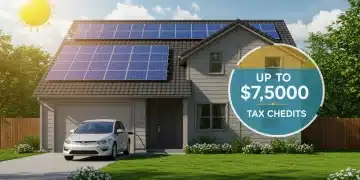
- Expanded Tax Credits and Rebates: Existing federal tax credits for EV charger installation (e.g., the 30% credit up to $1,000 in the U.S. under the Inflation Reduction Act) are likely to continue and potentially expand. Many states and utility companies offer additional rebates, which help offset the cost of purchasing and installing Level 2 chargers. By 2026, these incentives may also specifically target bi-directional chargers and smart charging systems.
- Streamlined Permitting Processes: Local governments are working to simplify and expedite the permitting process for home EV charger installations, removing administrative hurdles that can delay adoption.
- Support for Multi-Unit Dwellings (MUDs): Policies are being developed to address the unique challenges of EV charging in apartments and condos, including grants for shared charging infrastructure and ‘right-to-charge’ legislation.
Utility Programs and Time-of-Use (TOU) Rates
Utility companies are pivotal in supporting the growth of EV charging infrastructure, particularly at home:
- Time-of-Use (TOU) Rates: These rate structures charge different prices for electricity depending on the time of day, encouraging charging during off-peak hours when demand is low and electricity is cheaper. By 2026, TOU rates will be more prevalent and sophisticated, often integrated directly with smart charging systems.
- Demand Response Programs: Utilities will offer more programs that incentivize homeowners to reduce or shift their electricity consumption (including EV charging) during periods of high grid stress. V2G technology will integrate seamlessly with these programs, allowing EVs to provide power back to the grid for compensation.
- Infrastructure Upgrades: Utilities are investing heavily in upgrading local grid infrastructure to handle increased electricity demand from EVs. This includes transformer upgrades and smart grid technologies that can better manage fluctuating loads.
Grid Modernization and Resilience
The influx of EVs necessitates a more robust and intelligent electrical grid. By 2026, significant progress will be made in:
- Smart Grid Technologies: Deployment of advanced sensors, communication technologies, and automation across the grid will allow for real-time monitoring and dynamic management of electricity flow, essential for integrating millions of EVs.
- Distributed Energy Resources (DER) Integration: EVs, especially with V2G capabilities, are considered DERs alongside solar panels and home battery storage. Grid modernization efforts will focus on seamlessly integrating these resources to enhance grid stability and efficiency.
- Cybersecurity Enhancements: As the grid becomes more interconnected and digital, robust cybersecurity measures are being implemented to protect charging infrastructure and energy management systems from threats.
These policy and infrastructure initiatives are designed to create a supportive environment for EV adoption, making home charging more affordable, convenient, and beneficial for both the individual homeowner and the broader energy system. The coordinated efforts in enhancing EV charging infrastructure are crucial for a sustainable electric future.
Preparing Your Home for the Future of EV Charging
As we approach 2026, the convergence of these four key updates to EV charging infrastructure presents an exciting, yet potentially complex, future for homeowners. Proactive planning can ensure you are well-positioned to reap the maximum benefits from these advancements.
Assessing Your Home’s Electrical Capacity
The first step in preparing for advanced EV charging is to evaluate your home’s electrical system. Most Level 2 chargers require a 240-volt circuit, similar to an electric dryer or oven. If you plan for V2G/V2H or anticipate multiple EVs, you might need an electrical panel upgrade. Consult with a certified electrician to assess your current capacity and discuss future needs.
Choosing the Right Charging Equipment
When selecting a home charger, consider not just its power output but also its smart features and future compatibility:
- Smart Charger Features: Look for chargers with Wi-Fi connectivity, app control, scheduling capabilities, and compatibility with home energy management systems.
- V2G/V2H Readiness: If you’re considering a new EV, research models that support bi-directional charging. Simultaneously, look for chargers explicitly marketed as V2G/V2H compatible, even if the feature isn’t immediately active in your area.
- NACS Compatibility: With NACS becoming the dominant standard in North America, opting for a charger with a NACS connector or one that is easily adaptable will ensure long-term compatibility.
Exploring Utility Programs and Incentives
Before making any significant investments, research local and federal incentives. Check with your utility provider for any specific EV charging programs, rebates for charger installation, or special Time-of-Use (TOU) electricity rates designed for EV owners. These programs can significantly reduce upfront costs and ongoing operating expenses.
Integrating with Home Energy Management Systems (HEMS)
For those with solar panels or home battery storage, integrating your EV charger into a comprehensive HEMS will be key to unlocking maximum energy savings and resilience. A well-designed HEMS can orchestrate energy flow, prioritizing solar self-consumption, optimizing battery usage, and intelligently managing EV charging and discharging.
Staying Informed
The EV and charging landscape is dynamic. Subscribing to industry newsletters, following reputable EV news sources, and engaging with local EV owner communities can help you stay abreast of new technologies, policy changes, and incentive programs. This continuous learning will be invaluable in making informed decisions about your EV charging infrastructure.
Conclusion: A Smarter, More Integrated EV Future
The year 2026 marks a pivotal moment for EV charging infrastructure, especially for homeowners. The rise of Vehicle-to-Grid and Vehicle-to-Home technologies will transform EVs from mere transportation devices into active participants in our home energy ecosystems, offering unprecedented resilience and cost savings. Advanced smart charging systems, intertwined with AI and real-time grid data, will make managing your EV’s energy consumption more efficient and automated than ever before.
Simultaneously, the drive towards standardization and interoperability, particularly with the widespread adoption of NACS and Plug & Charge, will simplify the charging experience, eliminating past frustrations and making EV ownership more accessible and convenient. Finally, robust policy support, attractive incentives, and ongoing grid modernization efforts will create a fertile ground for these innovations to flourish, ensuring that the infrastructure keeps pace with the accelerating adoption of electric vehicles.
For homeowners, these changes mean more than just plugging in a car. They signify an opportunity to become more energy independent, reduce utility bills, contribute to a more sustainable grid, and enhance household resilience against power interruptions. By understanding and embracing these key updates, homeowners can confidently navigate the evolving EV landscape, making their homes an integral part of the electric future. The journey to a truly integrated and sustainable energy future, powered by our EVs, is well underway, and 2026 promises to be a landmark year for this transformation in EV charging infrastructure.