Smart Grid Integration: Optimize Energy Storage for 2026
Anúncios
Smart grid integration is crucial for optimizing energy storage systems, enabling them to achieve peak performance and efficiency by dynamically responding to grid demands and maximizing renewable energy utilization for 2026.
As we approach 2026, the energy landscape is rapidly evolving, demanding more intelligent and resilient solutions. Optimizing your energy storage system for peak performance isn’t just about having the right batteries; it’s fundamentally about how well it integrates with the wider grid. This guide offers a comprehensive, smart grid storage optimization strategy, providing practical steps to ensure your system is future-ready and efficient.
Understanding the smart grid in 2026
The smart grid of 2026 is far more than just an upgraded power network; it’s a dynamic, interconnected ecosystem designed for efficiency, resilience, and sustainability. It leverages advanced digital communication and information technology to detect and react to local changes in energy demand and supply. This intelligence is paramount for integrating intermittent renewable sources and distributed energy resources (DERs) like solar, wind, and, critically, energy storage.
At its core, a smart grid facilitates bidirectional power flow and real-time data exchange, moving beyond the traditional one-way electricity delivery system. This capability allows for more sophisticated energy management, enabling consumers to become prosumers who not only consume but also produce and store energy. The benefits extend from reduced transmission losses to enhanced grid stability and improved outage management, all contributing to a more robust and sustainable energy future.
Key characteristics of the 2026 smart grid
- Advanced metering infrastructure (AMI): Real-time energy consumption data for dynamic pricing and load management.
- Distributed energy resources (DERs) integration: Seamless incorporation of local generation and storage units.
- Self-healing capabilities: Automated detection and isolation of faults, restoring power quicker.
- Cybersecurity resilience: Robust protocols to protect critical infrastructure from digital threats.
Understanding these characteristics is the first step towards effectively integrating your energy storage system. The smart grid provides the necessary framework for your storage assets to participate actively in energy markets, offering services that enhance grid reliability and monetary value. This shift transforms storage from a passive backup to an active participant in energy optimization.
Ultimately, the evolution of the smart grid by 2026 underscores a fundamental shift in how we manage and consume electricity. It creates unprecedented opportunities for energy storage systems to play a pivotal role, not just in balancing supply and demand, but in shaping a more sustainable and efficient energy future. Preparing your system for this intelligent network is no longer optional; it’s essential for maximizing its value and contribution.
Assessing your current energy storage system
Before embarking on any integration efforts, a thorough assessment of your existing energy storage system (ESS) is non-negotiable. This involves evaluating not just the physical components but also the operational capabilities, software, and regulatory compliance. Understanding your system’s current state will inform the necessary upgrades and adjustments required for seamless smart grid integration.
Start with a detailed inventory of your hardware, including battery chemistry, capacity, power output, and lifespan. Beyond the batteries themselves, consider the power conversion systems (PCS), battery management systems (BMS), and any existing monitoring or control platforms. Compatibility with future smart grid communication protocols is a critical consideration at this stage.
Evaluating system components and software
- Hardware compatibility: Can your PCS handle bidirectional power flow and rapid response signals?
- Software capabilities: Does your BMS offer granular control and data logging necessary for grid services?
- Data acquisition: What data points are currently collected, and how frequently? Is it sufficient for grid optimization?
- Cybersecurity posture: Are your existing systems protected against evolving cyber threats?
Beyond the technical aspects, it’s vital to review your operational data. Analyze historical performance, including charge/discharge cycles, efficiency rates, and any instances of downtime or underperformance. This data provides valuable insights into potential bottlenecks or areas for improvement. Understanding peak usage patterns and renewable energy generation profiles is also crucial for defining optimal integration strategies.
Moreover, consider the regulatory and market landscape. Are there specific grid codes or interconnection standards you need to meet? Are there incentive programs or market mechanisms for grid services that your system could participate in? A comprehensive assessment will highlight gaps and opportunities, paving the way for an informed integration plan that maximizes both technical and financial returns.
Choosing the right communication protocols and standards
The backbone of any successful smart grid storage optimization lies in robust and standardized communication. In 2026, the choice of communication protocols and adherence to industry standards will dictate how effectively your energy storage system interacts with the grid, energy management systems, and other distributed energy resources. Making informed decisions here is paramount for interoperability and future scalability.
Several protocols are gaining prominence for smart grid applications, each with its strengths. IEC 61850 is widely adopted for substation automation and provides a comprehensive framework for communication within electrical utilities. For DERs and energy storage, protocols like IEEE 2030.5 (SEP 2.0) and OpenADR are becoming increasingly important for demand response and real-time energy management. These protocols enable devices to exchange information securely and efficiently, facilitating dynamic control and coordination.
Essential communication protocols for 2026 integration
Selecting the appropriate protocols involves considering your system’s specific functionalities, the services you aim to provide to the grid, and the regional requirements. A hybrid approach, leveraging multiple protocols, might be necessary to ensure comprehensive integration. For instance, while OpenADR might handle demand response signals, Modbus or DNP3 could be used for local device control.
- IEC 61850: For robust communication within large-scale utility infrastructure.
- IEEE 2030.5 (SEP 2.0): Critical for smart inverter functions and DER integration, enabling advanced grid services.
- OpenADR: Standardized protocol for automated demand response and real-time pricing signals.
- Modbus/DNP3: Widely used for industrial control systems and local device communication.
Beyond protocols, adherence to cybersecurity standards is non-negotiable. With increased connectivity comes increased vulnerability. Implementing encryption, authentication, and intrusion detection mechanisms aligned with standards like NIST Cyber Security Framework is crucial. The goal is to create a secure, resilient communication channel that allows your ESS to operate safely and reliably within the smart grid ecosystem.
Ultimately, a well-thought-out communication strategy ensures that your energy storage system isn’t just connected but actively participates in the smart grid, providing valuable services and maximizing its economic potential.
Implementing advanced energy management systems (EMS)
An advanced energy management system (EMS) is the brain behind effective smart grid storage optimization. In 2026, these systems are no longer just monitoring tools; they are sophisticated platforms that leverage artificial intelligence (AI) and machine learning (ML) to predict energy demand, optimize charge/discharge cycles, and orchestrate grid services in real time. The right EMS transforms your storage system from a reactive asset into a proactive grid participant.
A modern EMS integrates data from various sources: weather forecasts, electricity market prices, grid signals, and your system’s operational data. Using this information, it can make intelligent decisions, such as when to charge from solar, when to discharge to support grid stability, or when to participate in peak shaving programs. This level of automation and predictive capability is essential for maximizing both economic returns and grid benefits.
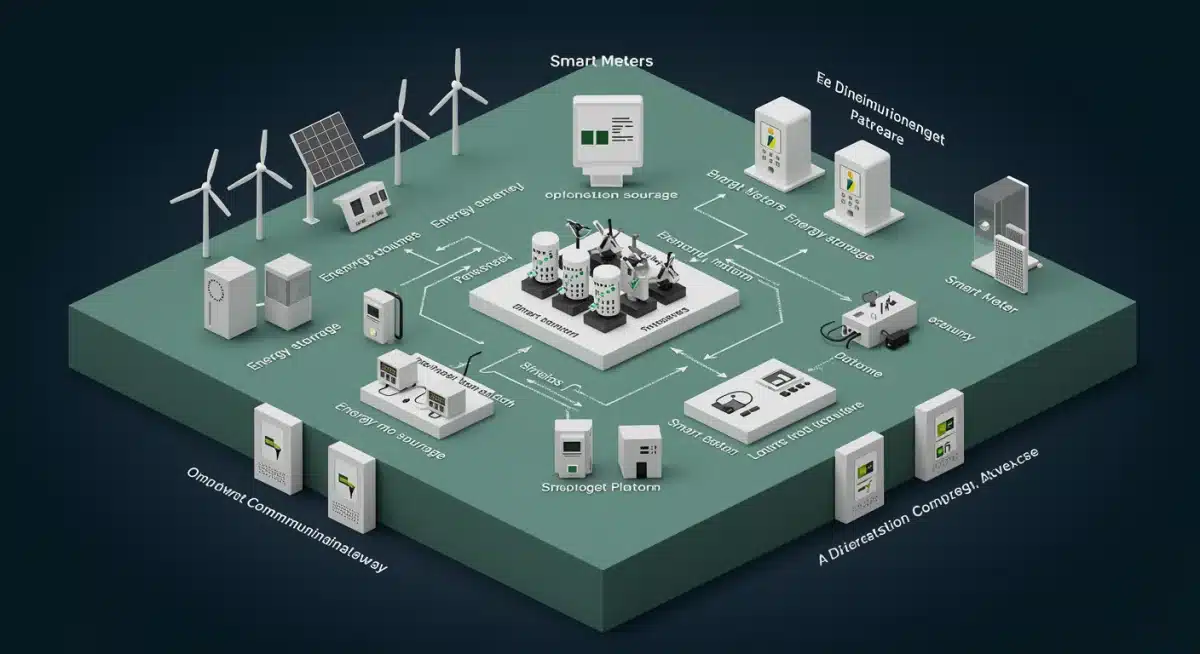
Implementing an EMS involves selecting software that aligns with your system’s capabilities and your integration goals. It should offer configurable algorithms, intuitive dashboards, and seamless integration with the chosen communication protocols. Training personnel to effectively utilize the EMS is also a critical step, ensuring that the system’s full potential is realized.
Key functionalities of a 2026-ready EMS
- Predictive analytics: AI/ML-driven forecasting of energy demand, supply, and pricing.
- Real-time optimization: Dynamic control of charge/discharge based on grid signals and market conditions.
- Grid services orchestration: Participation in frequency regulation, voltage support, and demand response.
- Cybersecurity integration: Built-in security features to protect data and control commands.
- Scalability: Ability to expand and adapt to future grid requirements and additional assets.
The strategic deployment of an advanced EMS enables your energy storage system to contribute significantly to grid resilience and renewable energy integration. It allows for the monetization of flexibility, turning your storage asset into a revenue generator by providing valuable services to the grid. This intelligent management is what truly unlocks the potential of energy storage in a smart grid environment.
In essence, an EMS is not merely a piece of software; it’s a strategic investment that future-proofs your energy storage system, ensuring its relevance and profitability in the evolving energy landscape of 2026 and beyond. It empowers you to navigate the complexities of dynamic energy markets with confidence and precision.
Navigating regulatory compliance and market participation
Successfully integrating an energy storage system into the smart grid by 2026 is not solely a technical endeavor; it also requires a deep understanding of the regulatory landscape and the various market participation opportunities. Compliance with evolving grid codes, interconnection standards, and environmental regulations is fundamental. Navigating these complexities ensures not only legal operation but also access to revenue streams.
Regulatory frameworks vary significantly by region and state in the United States. It’s crucial to identify the specific requirements set by your local utility, regional transmission organization (RTO), or independent system operator (ISO). These often dictate technical specifications for interconnection, performance standards for grid services, and procedures for market entry. Staying informed about these changes, especially those driven by federal initiatives pushing for grid modernization, is vital.
Key aspects of regulatory and market engagement
Participation in wholesale electricity markets, such as those managed by ISOs like PJM, CAISO, or ERCOT, offers significant revenue potential for energy storage. These markets allow storage systems to provide ancillary services (e.g., frequency regulation, reserves), capacity, and energy arbitrage. Understanding the bidding processes, market rules, and settlement procedures is essential for maximizing financial returns.
- Grid codes and interconnection standards: Ensure your system meets all technical and safety requirements for grid connection.
- Market mechanisms: Identify opportunities to participate in wholesale electricity markets for ancillary services, capacity, and energy.
- Incentive programs: Explore federal, state, and local incentives for energy storage deployment and grid integration.
- Environmental regulations: Comply with all environmental impact assessment and permitting requirements.
- Cybersecurity regulations: Adhere to evolving standards for protecting critical energy infrastructure.
Engaging with regulatory bodies and market operators early in the planning process can streamline the integration journey. This proactive approach can help identify potential roadblocks, clarify requirements, and even influence future policy. Furthermore, partnering with experienced consultants or legal experts specializing in energy regulation can provide invaluable guidance.
Ultimately, successful smart grid integration hinges on a comprehensive strategy that encompasses both technical prowess and regulatory acumen. By meticulously navigating these requirements and actively seeking market opportunities, your energy storage system can become a valuable and profitable asset within the evolving energy ecosystem of 2026.
Cybersecurity for integrated energy storage in 2026
As energy storage systems become more deeply integrated into the smart grid, their exposure to cyber threats dramatically increases. By 2026, robust cybersecurity measures are not merely an add-on but a foundational requirement for any interconnected ESS. A breach could lead to operational disruptions, data loss, financial penalties, and even grid instability. Therefore, a proactive and multi-layered approach to cybersecurity is indispensable.
The interconnected nature of smart grids means that vulnerabilities in one component can create ripple effects across the entire system. For energy storage, this includes protecting the battery management system (BMS), power conversion system (PCS), and especially the energy management system (EMS) which often communicates with external networks. Securing these critical points requires a comprehensive strategy that addresses hardware, software, and network security.
Essential cybersecurity practices for 2026
Implementing strong authentication protocols, encryption for all data in transit and at rest, and regular vulnerability assessments are basic necessities. Beyond these, adopting a “zero-trust” architecture, where no entity is inherently trusted, can significantly enhance security. This involves continuous verification of every user and device attempting to access the network, regardless of their location.
- Network segmentation: Isolate critical operational technology (OT) networks from information technology (IT) networks.
- Endpoint protection: Secure all connected devices, including sensors and controllers, with robust antivirus and intrusion detection systems.
- Regular audits and penetration testing: Proactively identify and address vulnerabilities before they can be exploited.
- Incident response plan: Develop a clear plan for detecting, responding to, and recovering from cyber incidents.
- Employee training: Educate staff on cybersecurity best practices and threat recognition.
Staying current with evolving threat landscapes and compliance standards, such as those from NIST or NERC CIP (Critical Infrastructure Protection), is also crucial. Continuous monitoring of system logs for suspicious activities and leveraging threat intelligence feeds can help in early detection and mitigation of potential attacks. Investing in specialized cybersecurity expertise for industrial control systems (ICS) and operational technology (OT) is highly recommended.
In conclusion, cybersecurity for integrated energy storage systems in 2026 must be an ongoing commitment, not a one-time project. By embedding security into every layer of your system and operations, you can safeguard your assets, maintain grid reliability, and ensure the continued trust in smart grid technologies.
Future-proofing your energy storage for 2026 and beyond
The energy landscape is in constant flux, and while we’re planning for 2026, it’s vital to adopt strategies that ensure your energy storage system remains relevant and valuable in the decades to come. Future-proofing involves designing for adaptability, embracing emerging technologies, and fostering continuous improvement. This forward-thinking approach protects your investment and maximizes its long-term utility within the evolving smart grid.
One key aspect of future-proofing is modularity and scalability. Designing your system with the ability to easily add or upgrade battery modules, power conversion units, or software components allows it to grow and adapt to changing energy demands or technological advancements. This avoids costly overhauls and extends the operational life of your assets. Furthermore, selecting open-standard-based hardware and software can reduce vendor lock-in and facilitate easier integration with new technologies.
Strategies for long-term ESS relevance
- Technology scouting: Continuously monitor advancements in battery chemistry, power electronics, and AI/ML for potential upgrades.
- Open standards adoption: Prioritize systems and protocols that are open and interoperable to avoid vendor lock-in.
- Scalable architecture: Design your system to easily expand capacity or integrate new functionalities as needs evolve.
- Data-driven decision making: Leverage operational data to identify trends, predict maintenance needs, and optimize performance over time.
- Regulatory engagement: Stay informed and participate in shaping future energy policies and market structures.
Investing in predictive maintenance and advanced diagnostic tools can significantly extend the lifespan of your components and optimize performance. By analyzing real-time data, you can anticipate potential failures, schedule maintenance proactively, and avoid costly downtime. This proactive approach not only saves money but also ensures consistent availability for grid services.
Finally, consider the long-term environmental impact and end-of-life management of your storage components. Planning for responsible recycling or repurposing of batteries aligns with sustainable practices and can also influence future regulatory compliance. By embracing these future-proofing strategies, your energy storage system will not only thrive in 2026 but continue to be a cornerstone of a resilient and sustainable energy future for years to come.
| Key Point | Brief Description |
|---|---|
| Smart Grid Understanding | Grasp the dynamic, interconnected, and intelligent nature of the 2026 grid for effective integration. |
| System Assessment | Evaluate current ESS hardware, software, and operational data to identify integration needs. |
| Communication Protocols | Select robust, standardized protocols (e.g., IEEE 2030.5, OpenADR) for seamless grid interaction. |
| Cybersecurity Measures | Implement multi-layered security to protect integrated ESS from evolving cyber threats. |
Frequently asked questions about smart grid integration
Smart grid integration for energy storage involves connecting an energy storage system to an intelligent electricity network that facilitates bidirectional power flow and real-time data exchange. This enables the storage system to dynamically respond to grid demands, optimize charging and discharging, and provide valuable services to enhance grid stability and efficiency.
By 2026, smart grid integration is critical because it maximizes the value and performance of energy storage systems. It allows for efficient utilization of renewable energy, participation in energy markets for revenue generation, enhanced grid resilience, and proactive management of energy assets in a rapidly evolving energy landscape.
Essential communication protocols for 2026 integration include IEEE 2030.5 (SEP 2.0) for smart inverter functions and DER integration, OpenADR for demand response, and IEC 61850 for utility-scale communication. A combination of these ensures comprehensive interoperability and secure data exchange within the smart grid.
An advanced Energy Management System (EMS) optimizes energy storage by leveraging AI and machine learning to predict energy patterns, dynamically control charge/discharge cycles, and orchestrate grid services in real time. It integrates various data sources to make intelligent decisions, maximizing both economic returns and grid benefits.
Crucial cybersecurity measures for integrated ESS include strong authentication, data encryption, network segmentation, regular vulnerability assessments, and an effective incident response plan. Adopting a zero-trust architecture and continuous monitoring are also vital to protect against evolving cyber threats in the smart grid environment.
Conclusion
Achieving peak performance for your energy storage system in 2026 through smart grid integration is a multifaceted yet highly rewarding endeavor. By meticulously assessing existing systems, adopting appropriate communication protocols, implementing advanced energy management systems, navigating regulatory complexities, and fortifying cybersecurity, you can transform your energy storage assets into dynamic, valuable components of the future energy landscape. This strategic approach not only enhances efficiency and reliability but also unlocks new revenue streams, ensuring your investment is future-proofed and contributes significantly to a sustainable, resilient energy grid.