Battery Degradation: Extend Your Energy Storage System Lifespan by 5 Years (2026 Guide)
Anúncios
Understanding Battery Degradation: A 2026 Guide to Extending Your Energy Storage System’s Lifespan by 5 Years (INSIDER KNOWLEDGE)
In an increasingly electrified world, energy storage systems are no longer a luxury but a necessity. From powering our homes and electric vehicles to stabilizing national grids, batteries are at the heart of our sustainable future. However, like all technologies, batteries are subject to wear and tear, a phenomenon known as battery degradation. Understanding this process, and more importantly, knowing how to mitigate it, is crucial for maximizing your investment and contributing to a more sustainable energy ecosystem. This comprehensive 2026 guide delves deep into the science of battery degradation and provides actionable, insider strategies to significantly extend battery lifespan by up to five years.
The Inevitable Truth: What is Battery Degradation?
At its core, battery degradation refers to the irreversible decline in a battery’s capacity to store and deliver energy, as well as an increase in its internal resistance, over time and use. This isn’t a sudden event but a gradual process influenced by a multitude of factors, both intrinsic to the battery’s chemistry and extrinsic to its operating environment. For anyone relying on energy storage, whether for a residential solar setup or an industrial application, comprehending the nuances of degradation is the first step towards proactive management.
The Chemical and Physical Realities of Degradation
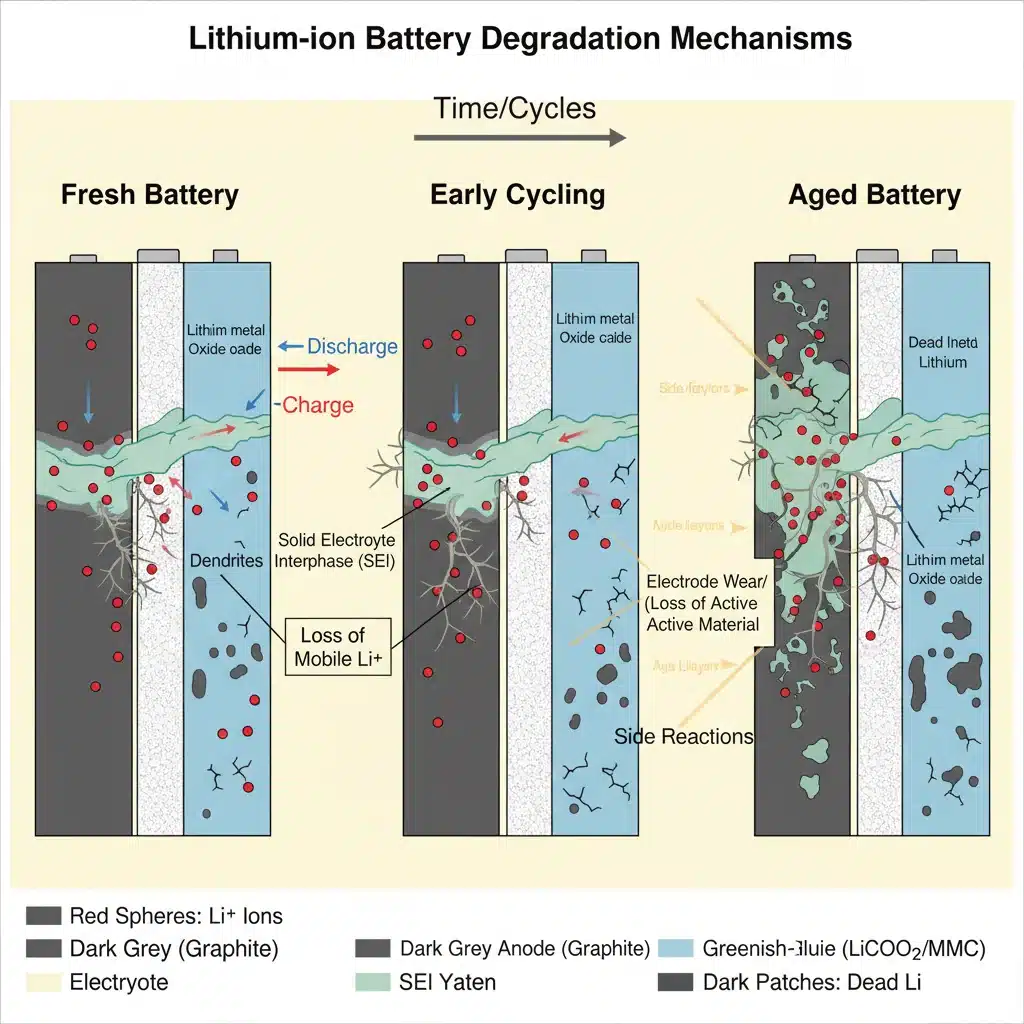
Most modern energy storage systems, especially those we interact with daily, rely on lithium-ion (Li-ion) battery technology. While incredibly efficient, Li-ion batteries are susceptible to several degradation mechanisms:
- Solid Electrolyte Interphase (SEI) Layer Growth: This is perhaps the most significant contributor to capacity fade. During the first charge cycle, a thin layer forms on the anode. While initially protective, this layer can continue to grow thicker over subsequent cycles, consuming active lithium and increasing internal resistance.
- Lithium Plating: When a battery is charged too quickly or at low temperatures, lithium ions can deposit as metallic lithium on the anode surface instead of intercalating into the graphite. This plated lithium is irreversible, leading to a direct loss of active material and posing safety risks.
- Electrode Material Degradation: The active materials in both the anode and cathode can undergo structural changes, cracking, or dissolution over time due to repeated intercalation and de-intercalation of lithium ions, leading to a loss of active sites.
- Electrolyte Decomposition: The liquid electrolyte, which facilitates lithium ion movement, can decompose under certain conditions (e.g., high voltage, high temperature), producing gases and further contributing to SEI growth and internal resistance.
- Current Collector Corrosion: Although less common, the current collectors (typically aluminum and copper foils) can corrode, particularly at high voltages or temperatures, leading to increased resistance and capacity loss.
These mechanisms don’t act in isolation; they often interact and accelerate each other, making the challenge of degradation complex. However, by understanding these underlying processes, we can develop targeted strategies to extend battery lifespan effectively.
Key Factors Accelerating Battery Degradation
While degradation is inevitable, its rate is highly variable and can be significantly influenced by operational choices and environmental conditions. Identifying and controlling these accelerators is paramount to extending the life of your energy storage system.
1. Temperature: The Silent Killer
Temperature is arguably the single most critical factor affecting battery longevity. Both excessively high and low temperatures have detrimental effects:
- High Temperatures: Accelerate chemical reactions within the battery, leading to increased SEI growth, electrolyte decomposition, and electrode material degradation. For every 10°C increase above optimal, the battery’s lifespan can be halved.
- Low Temperatures: While less damaging to chemical degradation, low temperatures significantly increase internal resistance and can promote lithium plating during charging, especially at higher currents.
Maintaining a stable, moderate temperature (typically between 20-25°C or 68-77°F) is vital to extend battery lifespan.
2. Depth of Discharge (DoD) & Cycle Life: The Usage Equation
Every time a battery is charged and discharged, it completes a ‘cycle.’ The depth to which it’s discharged (DoD) before recharging has a profound impact on its cycle life:
- Deep Discharges (High DoD): Repeatedly discharging a battery to a very low state of charge (e.g., 0-10% remaining) puts significant stress on the electrode materials, leading to faster degradation and a reduced number of overall cycles.
- Shallow Discharges (Low DoD): Discharging the battery partially (e.g., to 50% or 20% remaining) before recharging results in a much higher total number of cycles. For example, a battery might last 500 cycles at 100% DoD but 2000 cycles at 50% DoD.
Understanding and managing your DoD is a powerful way to extend battery lifespan.
3. State of Charge (SoC): The Storage Sweet Spot
The state of charge at which a battery is stored or kept for extended periods also plays a role:
- Full Charge (100% SoC): Storing a battery at 100% SoC, especially at elevated temperatures, accelerates degradation due to increased internal stress and parasitic reactions.
- Low Charge (0% SoC): Storing a battery completely empty can lead to irreversible damage (deep discharge) and make it unable to hold a charge.
The ideal SoC for long-term storage is typically around 50-60%. For daily use, avoiding prolonged periods at 100% or near 0% is beneficial.
4. Charge and Discharge Rates (C-rate): The Speed Factor
The rate at which a battery is charged or discharged (expressed as a C-rate, where 1C means the battery is charged/discharged in one hour) affects its longevity:
- High C-rates: Rapid charging and discharging generate more heat and can cause increased mechanical stress on the electrodes, accelerating degradation mechanisms like lithium plating and electrode cracking.
While fast charging is convenient, it comes at the cost of reduced battery life. Opting for slower charging whenever possible can significantly help to extend battery lifespan.
Insider Strategies to Extend Battery Lifespan by 5 Years (or More!)
Now that we understand the ‘why’ behind degradation, let’s explore the ‘how’ of extending your energy storage system’s operational life. These strategies, often overlooked, can collectively add years to your battery’s service.
Strategy 1: Optimal Thermal Management – The Foundation of Longevity
Effective temperature control is non-negotiable. This involves:
- Active Cooling/Heating Systems: For larger systems, integrated active cooling (e.g., liquid or air cooling) is essential to maintain the battery within its optimal temperature range, especially during high-power operations or in extreme climates.
- Passive Cooling/Ventilation: For smaller or residential systems, ensure adequate ventilation around the battery bank. Avoid enclosing batteries in unventilated spaces or direct sunlight.
- Insulation: In colder climates, insulation can help maintain battery temperature and prevent rapid drops that could lead to performance issues and plating risks during charging.
- Monitoring: Implement robust temperature monitoring systems with alerts to identify and address thermal anomalies promptly.
Investing in superior thermal management can be the single most impactful way to extend battery lifespan.
Strategy 2: Smart Charging & Discharging Protocols – The Usage Sweet Spot
Beyond simply using your battery, how you use it matters immensely:
- Partial Cycling (Shallow DoD): Aim to keep your battery’s state of charge between 20% and 80% for daily use. This ‘sweet spot’ significantly increases the number of available cycles compared to constantly cycling from 0% to 100%. Modern Battery Management Systems (BMS) can be programmed to enforce these limits.
- Avoid Prolonged Full or Empty States: Don’t leave your battery fully charged or completely discharged for extended periods, especially at high temperatures. If storing for a long time, aim for about 50-60% SoC.
- Moderate C-rates: Whenever possible, use slower charging and discharging rates. While fast charging is convenient, reserving it for emergencies will help preserve battery health in the long run.
- Trickle Charging with Caution: While some systems use trickle charging, ensure it’s managed intelligently by the BMS to prevent overcharging and minimize stress on the battery.
Implementing these smart protocols can dramatically extend battery lifespan, often by several years.
Strategy 3: Advanced Battery Management Systems (BMS) – Your Battery’s Guardian
A sophisticated BMS is the brain of your battery system and is critical for longevity. A good BMS will:
- Cell Balancing: Ensure all individual cells within a battery pack are uniformly charged and discharged, preventing overstressing of weaker cells.
- Overcharge/Over-discharge Protection: Prevent the battery from exceeding safe voltage limits during charging or dropping below safe limits during discharging, both of which cause severe degradation.
- Temperature Monitoring & Control: Continuously monitor cell temperatures and, if integrated, manage active cooling/heating systems.
- Current Limit Protection: Prevent excessive charge and discharge currents that can lead to overheating and accelerated degradation.
- State of Health (SoH) & State of Charge (SoC) Estimation: Provide accurate real-time data on the battery’s remaining capacity and overall health, allowing for informed operational decisions.
- Fault Detection: Identify and report potential issues before they become critical failures.
Ensure your energy storage system is equipped with a high-quality, intelligent BMS. It’s an investment that pays dividends in extended battery life.
Strategy 4: Environmental Protection – Shielding Your Investment
Beyond temperature, other environmental factors can impact battery health:
- Humidity: High humidity can lead to condensation and corrosion of battery terminals and electronics. Ensure appropriate sealing and, if necessary, dehumidification.
- Dust and Debris: Can impede cooling, accumulate on electrical contacts, and potentially cause short circuits. Keep the battery environment clean.
- Vibration: Excessive vibration can cause mechanical stress on battery components and connections. Securely mount battery systems to minimize movement.
A clean, stable, and protected environment is essential to extend battery lifespan.
Strategy 5: Regular Monitoring and Diagnostics – Proactive Health Checks
You can’t manage what you don’t measure. Regular monitoring provides vital insights:
- Performance Logging: Track key metrics like voltage, current, temperature, and SoC over time. Look for trends and anomalies that might indicate early signs of degradation.
- Capacity Testing: Periodically perform controlled capacity tests to assess the actual remaining capacity (SoH) of your battery. This helps you understand its true health and plan for future needs.
- Internal Resistance Monitoring: An increase in internal resistance is a strong indicator of degradation. Some advanced BMS can monitor this.
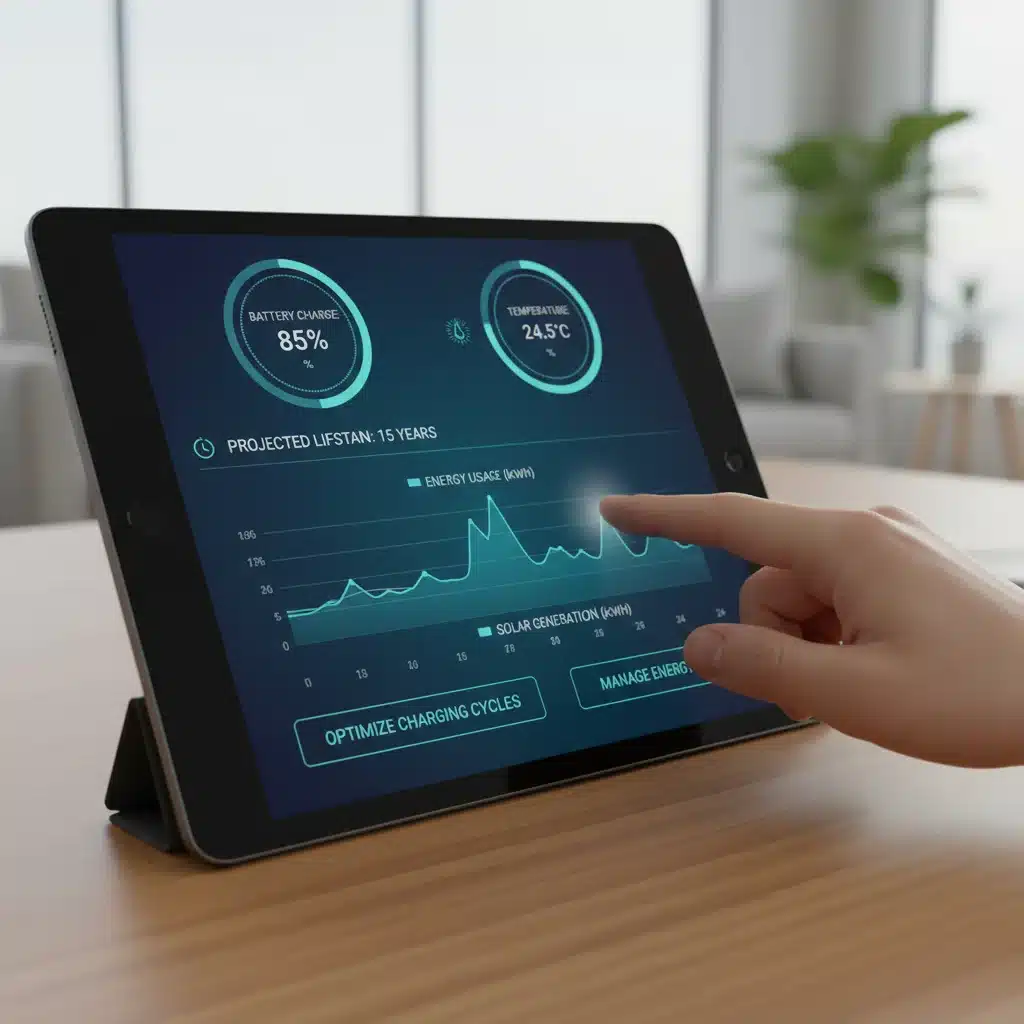
- Software Updates: Keep your BMS firmware and associated energy management software updated. Manufacturers often release updates that improve battery management algorithms and optimize performance, helping to extend battery lifespan.
Proactive monitoring allows for early intervention, preventing minor issues from escalating into major problems.
Strategy 6: Proper Installation and Sizing – Getting it Right from the Start
The foundation for a long-lasting battery system is laid during its initial setup:
- Correct Sizing: Ensure your battery system is appropriately sized for your energy demands. An undersized battery will be constantly cycled deeply, leading to rapid degradation. An oversized battery might cost more upfront but will experience shallower cycles and thus a longer life, helping to extend battery lifespan.
- Professional Installation: Incorrect wiring, inadequate ventilation, or improper mounting can all lead to premature battery failure. Always use certified professionals for installation.
- Component Compatibility: Ensure all components of your energy storage system (inverter, charge controller, BMS) are compatible and optimized to work together seamlessly.
A well-designed and installed system is inherently more resilient to degradation.
Strategy 7: Understanding Warranty and Manufacturer Guidelines – The Fine Print Matters
Don’t overlook the importance of your battery’s warranty and the manufacturer’s recommendations:
- Read the Manual: Manufacturers provide specific guidelines for operating, storing, and maintaining their batteries. Adhering to these guidelines is not only good practice but often a requirement for warranty validity.
- Understand Warranty Conditions: Be aware of the cycle life warranty, capacity retention warranty, and any specific conditions that might void your warranty (e.g., operating outside specified temperature ranges, exceeding C-rate limits).
- Seek Professional Advice: If you’re unsure about any aspect of your battery system, consult with the manufacturer or a certified energy storage professional.
Leveraging manufacturer expertise and adhering to their guidelines is a straightforward way to ensure you’re doing everything possible to extend battery lifespan.
The Future of Battery Longevity: Innovations on the Horizon (2026 and Beyond)
While the strategies above are actionable today, the field of battery technology is constantly evolving. In 2026 and beyond, we can expect even more advancements that will further combat degradation:
- Advanced Electrode Materials: Research into new anode (e.g., silicon-based) and cathode materials (e.g., solid-state) promises higher energy density and improved cycle life.
- Solid-State Batteries: Replacing liquid electrolytes with solid ones could eliminate many degradation mechanisms associated with electrolyte decomposition and SEI growth, offering vastly improved safety and longevity.
- AI and Machine Learning for Predictive Maintenance: Sophisticated AI algorithms are being developed to predict battery degradation patterns with high accuracy, enabling even more proactive maintenance and optimized operation.
- Self-Healing Batteries: Though still in early research, the concept of self-healing materials that can repair micro-cracks and other damage within the battery could revolutionize longevity.
- Improved Battery Recycling and Second-Life Applications: As batteries degrade for primary use, their ‘second life’ in less demanding applications (e.g., grid stabilization) will become more common, maximizing their overall utility before full recycling.
These innovations promise to make energy storage systems even more robust and long-lasting, further solidifying their role in our energy future. However, for current systems, diligent application of the strategies outlined in this guide remains the most effective way to extend battery lifespan.
Conclusion: Empowering Your Energy Future with Extended Battery Life
Battery degradation is a complex but manageable challenge. By understanding its scientific underpinnings and implementing proactive strategies, you can significantly extend battery lifespan of your energy storage system, potentially by five years or even more. From meticulous thermal management and smart charging protocols to leveraging advanced BMS and ensuring proper installation, every decision contributes to the longevity and efficiency of your investment.
As we move deeper into 2026 and beyond, the demand for reliable and long-lasting energy storage will only grow. By adopting these insider tips, you’re not just saving money on replacement costs; you’re also contributing to a more sustainable energy landscape by maximizing the utility of valuable resources. Take control of your battery’s destiny and ensure your energy storage system continues to power your world efficiently for years to come.