Flow Battery Game-Changers: 3 New Models for 2026 Long-Duration Storage
Anúncios
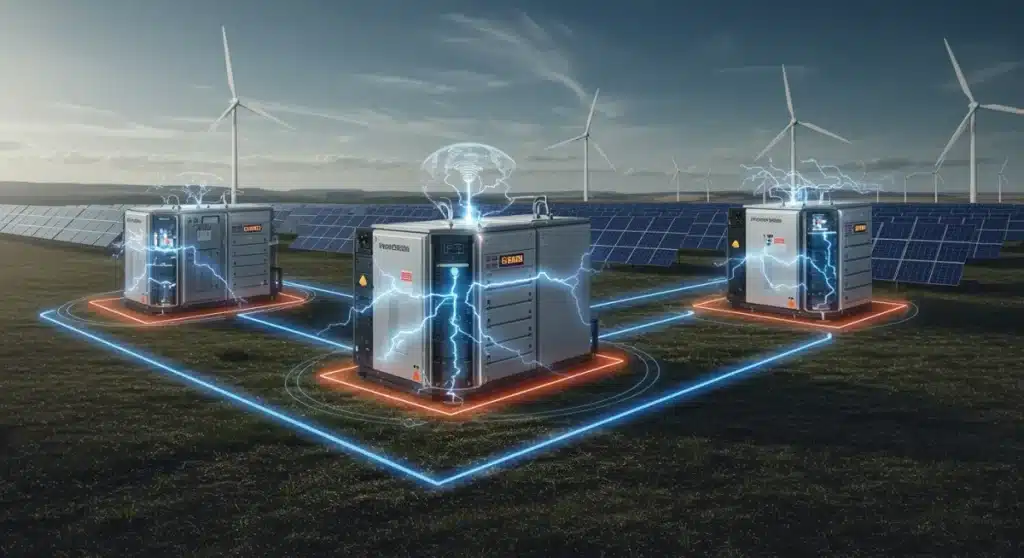
Three innovative flow battery models are emerging as pivotal technologies for long-duration energy storage in 2026, offering enhanced efficiency and cost-effectiveness critical for grid stability and renewable energy integration.
The energy landscape is rapidly evolving, and with it, the demand for reliable and efficient long-duration energy storage solutions. In 2026, we are witnessing a transformative period, particularly with the introduction of new battery technologies. Among these, flow battery game-changers are poised to revolutionize how we store and utilize renewable energy, offering unprecedented scalability and operational flexibility.
The Critical Need for Long-Duration Storage
The intermittency of renewable energy sources like solar and wind power presents a significant challenge to grid stability. Without effective long-duration storage, surplus energy generated during peak production cannot be efficiently stored for later use during periods of high demand or low generation. This imbalance leads to energy waste, increased reliance on fossil fuel peaker plants, and ultimately hinders the full potential of renewable integration.
Traditional battery technologies, such as lithium-ion, excel at short-to-medium duration storage but often struggle with the cost and degradation associated with storing energy for many hours or even days. This is where long-duration storage solutions become indispensable, providing the necessary buffer to ensure a consistent and reliable power supply, pushing us closer to a fully decarbonized grid. The market for these solutions is expanding rapidly, driven by ambitious climate goals and the decreasing costs of renewable generation.
Addressing this challenge requires innovative approaches that prioritize durability, safety, and economic viability over extended periods. The development of advanced flow batteries directly targets these critical requirements, promising to unlock new possibilities for energy management and grid resilience. Their inherent design allows for independent scaling of power and energy capacity, a key advantage for long-duration applications.
Understanding Flow Battery Technology: A Brief Overview
Flow batteries represent a distinct class of electrochemical energy storage devices that store energy in liquid electrolyte solutions contained in external tanks, rather than within the electrode structures themselves. This fundamental design difference offers several advantages, particularly for long-duration applications. The power output is determined by the size of the electrodes, while the energy capacity is dictated by the volume of the electrolyte tanks, allowing for independent scaling.
Unlike conventional batteries where degradation often impacts the entire system, flow batteries can maintain their performance over many cycles, as the active materials are continuously replenished. This separation of energy and power components also contributes to enhanced safety, as the electrolytes are often non-flammable and less prone to thermal runaway. These characteristics make flow batteries ideal candidates for grid-scale applications requiring extended discharge times.
While various chemistries exist, such as vanadium redox flow batteries (VRFBs), zinc-bromine, and iron-chromium systems, the core principle remains the same: electrochemical reactions occur as electrolytes are pumped through a cell stack, charging or discharging the system. The continuous circulation of these electrolytes allows for sustained operation and modular expansion, making them particularly attractive for utility-scale deployments and industrial uses. This inherent flexibility is a major driver of their growing adoption.
Game-Changer 1: The Enhanced Vanadium Redox Flow Battery (eVRFB)
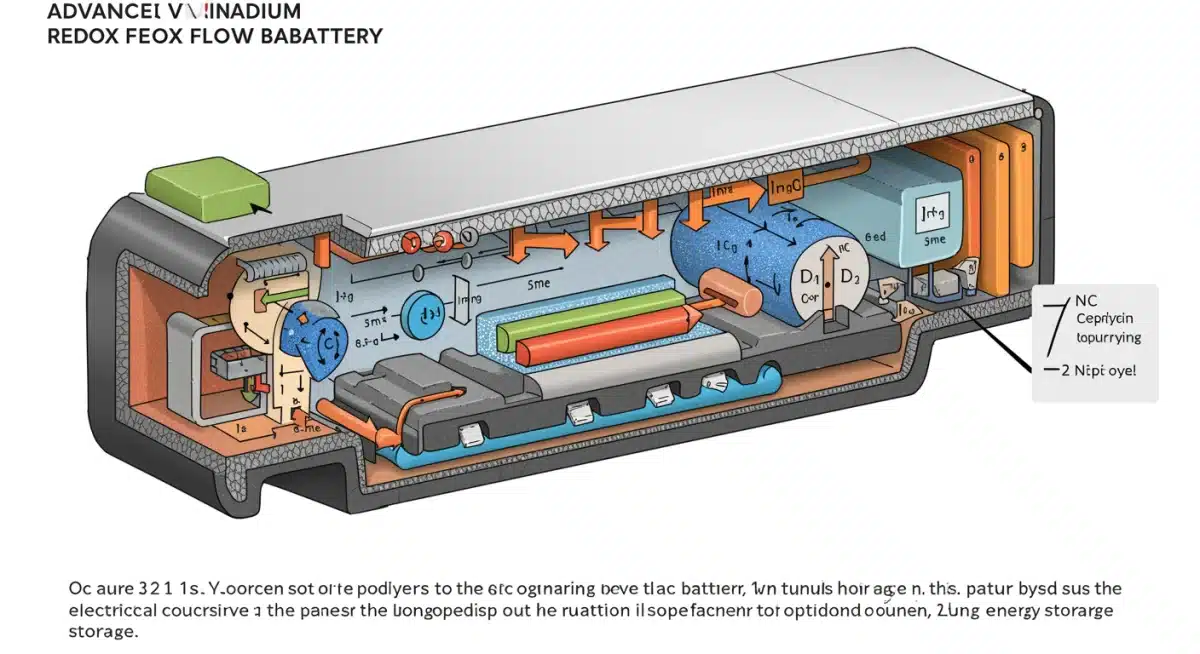
The first major game-changer emerging in 2026 is the Enhanced Vanadium Redox Flow Battery (eVRFB). Building upon the well-established vanadium redox chemistry, this next-generation system incorporates several key advancements that significantly boost its performance and economic viability. Researchers and developers have focused on improving electrolyte stability, increasing energy density, and optimizing cell stack design to reduce overall system costs.
One of the primary innovations in eVRFBs lies in the development of novel electrolyte formulations that can operate at higher concentrations, thereby increasing the energy density without compromising stability. This means smaller tanks can store more energy, leading to a reduced footprint and lower capital expenditure. Furthermore, advanced membrane materials are being utilized to enhance ion selectivity and reduce crossover, which minimizes self-discharge and improves cycle life.
Advancements in Electrolyte Design
- Higher Concentration Electrolytes: New formulations allow for greater energy storage per unit volume, reducing tank size.
- Improved Stability: Enhanced chemical compositions minimize side reactions and extend electrolyte lifespan.
- Wider Operating Temperature Range: Allows for deployment in diverse climates without significant performance degradation.
The eVRFB also features optimized cell stack architectures, leveraging advanced manufacturing techniques to create more compact and efficient power conversion units. These improvements collectively lead to a system that offers higher round-trip efficiency, longer operational lifespan, and a more competitive levelized cost of storage (LCOS). Its robust design and proven chemistry make it a strong contender for grid-scale long-duration applications, providing reliable power for hours or even days.
Game-Changer 2: The Zinc-Iron Flow Battery (ZIFB)
The second significant innovation making waves in 2026 is the Zinc-Iron Flow Battery (ZIFB). This technology leverages abundant and inexpensive materials, zinc and iron, which are far less costly than vanadium. The economic advantage of using common metals makes ZIFBs particularly attractive for large-scale deployments where upfront capital costs are a major consideration. This cost-effectiveness is a primary driver for its rapid development and commercialization.
The ZIFB operates by electrochemically plating and stripping zinc on one electrode, while iron ions undergo redox reactions in the other half-cell. A key breakthrough has been the successful management of zinc deposition, which historically has been a challenge in zinc-based battery systems due to dendrite formation. New electrolyte additives and cell designs have effectively mitigated these issues, leading to stable and long-lasting performance.
Beyond cost, ZIFBs boast a high inherent safety profile. The electrolytes are aqueous, non-flammable, and pose minimal environmental risk, making them suitable for widespread deployment in urban and sensitive areas. This combination of low cost, high safety, and long-duration capability positions the ZIFB as a formidable competitor in the energy storage market, especially for applications like industrial backup power and grid services.
Key Advantages of ZIFBs
- Cost-Effective Materials: Utilizes abundant zinc and iron, significantly reducing material costs.
- Enhanced Safety: Aqueous, non-flammable electrolytes minimize fire hazards.
- Long Cycle Life: Advanced designs mitigate dendrite formation, ensuring stable performance over thousands of cycles.
The modularity of the ZIFB system also allows for flexible deployment, from smaller commercial installations to massive utility-scale projects. Its ability to discharge for extended periods without significant capacity fade makes it an ideal solution for balancing grid loads and supporting renewable energy integration. The maturity of this technology in 2026 marks a pivotal moment for affordable long-duration storage.
Game-Changer 3: The Organic Redox Flow Battery (ORFB)
The third revolutionary flow battery model emerging as a game-changer in 2026 is the Organic Redox Flow Battery (ORFB). Unlike metal-based flow batteries, ORFBs utilize organic molecules dissolved in aqueous or non-aqueous electrolytes as their active materials. This approach offers significant advantages in terms of sustainability, scalability, and material sourcing, as organic compounds can be synthesized from readily available and often renewable feedstocks.
The primary appeal of ORFBs lies in their potential to completely avoid reliance on critical metals, which are often subject to price volatility and geopolitical supply chain risks. By using organic compounds, researchers are developing batteries that are not only more environmentally friendly but also have a more stable and predictable cost trajectory. This makes them highly attractive for long-term investment in energy infrastructure.
Recent breakthroughs in ORFB chemistry have focused on developing highly stable and electrochemically reversible organic molecules, overcoming previous challenges related to degradation and limited cycle life. These new molecules exhibit excellent redox properties and can withstand thousands of charge-discharge cycles without significant performance loss. Furthermore, the ability to fine-tune the molecular structure allows for optimization of cell voltage and energy density.
Innovations in ORFB Technology
- Sustainable Materials: Utilizes organic compounds, often derived from renewable sources, reducing reliance on critical metals.
- Tunable Chemistry: Molecular design allows for optimization of electrochemical properties and performance.
- Enhanced Safety: Typically employ non-toxic, non-flammable electrolytes, improving overall system safety.
The inherent flexibility of organic chemistry also opens doors for tailoring ORFBs to specific application needs, from grid-scale storage to niche industrial uses. As manufacturing processes for these organic active materials become more refined and scaled, ORFBs are projected to offer a highly competitive and sustainable long-duration storage solution, solidifying their role in the future energy landscape. Their environmental benefits are a strong selling point for eco-conscious consumers and utilities.
The Impact on Renewable Energy Integration and Grid Stability
The advent of these three flow battery game-changers – the Enhanced Vanadium Redox Flow Battery (eVRFB), the Zinc-Iron Flow Battery (ZIFB), and the Organic Redox Flow Battery (ORFB) – in 2026 is set to profoundly impact renewable energy integration and grid stability. Their collective strengths address the critical need for long-duration energy storage, a cornerstone for a truly sustainable and resilient power grid. These technologies provide the flexibility required to manage the inherent variability of solar and wind power, ensuring a consistent supply of electricity.
With enhanced capacity, efficiency, and cost-effectiveness, these flow batteries enable utilities to store vast amounts of renewable energy for extended periods, mitigating curtailment and maximizing the value of renewable assets. This means that energy generated during sunny or windy periods can be reliably dispatched hours or even days later, effectively decoupling energy generation from demand. The economic benefits are substantial, reducing the need for expensive peaker plants and lowering overall energy costs for consumers.
Furthermore, the improved safety profiles and environmental sustainability of these new models facilitate broader adoption and easier permitting for grid-scale projects. The ability to deploy large-scale, safe, and long-lasting storage solutions empowers grid operators to better manage fluctuations, prevent blackouts, and integrate more renewable capacity without compromising reliability. This marks a paradigm shift in how energy grids will operate, moving towards a more decentralized and resilient model. The widespread availability of these systems will accelerate the transition away from fossil fuels.
Challenges and Future Outlook for Flow Batteries
Despite the promising advancements, the widespread adoption of flow batteries, even these 2026 game-changers, still faces certain challenges. While costs are decreasing, they still need to become more competitive with conventional energy sources and short-duration storage options in some specific use cases. Scaling up manufacturing processes for these novel chemistries and components will be crucial for achieving further cost reductions and meeting global demand. Supply chain reliability, particularly for materials like vanadium or specialized organic compounds, needs continuous monitoring and diversification.
Another area of ongoing development involves improving the overall energy density and round-trip efficiency of flow battery systems. While significant progress has been made, further enhancements will reduce the physical footprint required for large installations and minimize energy losses during charge and discharge cycles. Research into new membrane materials and electrode designs continues to push these boundaries, aiming for even higher performance metrics.
However, the future outlook for flow batteries remains incredibly bright. With continued investment in research and development, coupled with supportive policy frameworks and growing market demand for long-duration storage, these technologies are set to play an indispensable role in the global energy transition. Their unique attributes, such as independent power and energy scaling, inherent safety, and long cycle life, position them as ideal candidates for the grid of tomorrow. We can expect to see even more innovative chemistries and system designs emerge beyond 2026, further solidifying their place in the energy storage ecosystem.
| Key Innovation | Brief Description |
|---|---|
| Enhanced Vanadium Redox Flow Battery (eVRFB) | Improved electrolyte stability and higher energy density for superior long-duration performance. |
| Zinc-Iron Flow Battery (ZIFB) | Cost-effective, safe, and utilizes abundant materials for large-scale grid storage. |
| Organic Redox Flow Battery (ORFB) | Sustainable, metal-free, and highly customizable using organic compounds. |
| Long-Duration Storage Impact | Crucial for integrating intermittent renewables and ensuring grid stability in 2026 and beyond. |
Frequently Asked Questions About Flow Batteries in 2026
Flow batteries are ideal because their power and energy capacities can be scaled independently. Energy is stored in external tanks, allowing for extended discharge durations without degrading the power components, unlike conventional batteries. This design also offers inherent safety advantages and a long cycle life, making them perfect for grid-scale applications.
The 2026 models feature advancements such as higher energy density electrolytes, more efficient membrane materials, and optimized cell stack designs. These improvements lead to better overall performance, reduced footprint, lower costs, and enhanced safety, addressing previous limitations and making them more competitive for various applications.
The Zinc-Iron Flow Battery (ZIFB) leverages abundant and inexpensive materials, significantly reducing manufacturing costs. Its aqueous electrolytes are non-flammable, ensuring high safety. Recent breakthroughs in managing zinc deposition have enabled a stable and long cycle life, positioning ZIFBs as a cost-effective and safe option for large-scale storage.
Organic Redox Flow Batteries (ORFBs) are sustainable because they use organic molecules, often derived from renewable resources, as active materials instead of critical metals. This reduces reliance on finite resources and mitigates supply chain risks. Their tunable chemistry also allows for customization, while generally non-toxic electrolytes enhance environmental friendliness.
These flow battery innovations are crucial for accelerating renewable energy adoption by providing reliable, long-duration storage. They will enhance grid stability, reduce reliance on fossil fuels, and enable more efficient integration of intermittent solar and wind power. This will lead to a more resilient, sustainable, and cost-effective energy future, supporting widespread decarbonization efforts.
Conclusion
The year 2026 marks a pivotal moment for long-duration energy storage, with the emergence of three truly transformative flow battery models: the Enhanced Vanadium Redox Flow Battery (eVRFB), the Zinc-Iron Flow Battery (ZIFB), and the Organic Redox Flow Battery (ORFB). These innovations are not mere incremental improvements; they represent fundamental shifts in how we approach energy storage, offering unparalleled efficiency, cost-effectiveness, and sustainability. By addressing the critical challenges of renewable energy integration and grid stability, these flow battery game-changers are paving the way for a more resilient, reliable, and decarbonized energy future. Their continued development and widespread deployment will be instrumental in achieving global climate goals and fostering a world powered predominantly by clean energy sources.