US Offshore Wind Growth: 25% Capacity Increase by 2026 & Supply Chain Solutions
Anúncios
The United States is on the precipice of a monumental shift in its energy landscape, with the US offshore wind sector emerging as a cornerstone of the nation’s clean energy ambitions. Projections indicate a substantial 25% increase in US offshore wind capacity by 2026, a target that underscores the aggressive push towards decarbonization and energy independence. This ambitious growth trajectory, however, is not without its complexities, particularly when considering the intricate web of supply chain dynamics that underpin such large-scale infrastructure development. This comprehensive analysis delves into the drivers behind this projected expansion, explores the critical policy frameworks facilitating it, and meticulously examines the inherent supply chain challenges and the innovative solutions being forged to overcome them.
The journey towards harnessing the immense power of the ocean winds has been a long one for the U.S., trailing behind European leaders for decades. Yet, recent years have witnessed an unprecedented acceleration, fueled by a convergence of technological advancements, favorable economic conditions, and a robust commitment from both federal and state governments. The 25% growth figure by 2026 represents not just an increase in megawatts, but a significant leap forward in establishing a nascent yet powerful industry capable of generating clean, reliable electricity for millions of American homes and businesses. Understanding the nuances of this growth, from its inception to its projected fruition, is crucial for stakeholders across the energy spectrum.
Understanding the US Offshore Wind Growth Trajectory
The projected 25% increase in US offshore wind capacity by 2026 is a testament to the nation’s burgeoning commitment to renewable energy. This growth is not merely a statistical anomaly but a carefully calculated expansion driven by several key factors. Firstly, technological advancements in turbine design, foundation engineering, and installation techniques have significantly reduced the levelized cost of energy (LCOE) for offshore wind, making it increasingly competitive with traditional fossil fuel sources. Larger, more efficient turbines, capable of generating upwards of 15 MW, are now becoming the industry standard, maximizing power output from each installation.
Secondly, the vast and largely untapped wind resources along the U.S. coastlines, particularly in the Northeast and Mid-Atlantic, offer an immense potential for energy generation. Unlike onshore wind, offshore wind benefits from stronger, more consistent winds, leading to higher capacity factors and a more reliable power supply. The sheer scale of these resources provides a compelling argument for continued investment and development in the US offshore wind sector.
Furthermore, a growing understanding of the economic benefits associated with offshore wind development has spurred significant interest. Beyond electricity generation, the industry promises substantial job creation across various sectors, including manufacturing, construction, logistics, and operations and maintenance. This economic stimulus is a powerful motivator for states and regions looking to revitalize their industrial bases and create a skilled workforce for the green economy.
The regulatory and policy landscape has also played a pivotal role. The Biden administration has set ambitious targets for offshore wind deployment, aiming for 30 gigawatts (GW) by 2030, a goal that necessitates rapid development in the coming years. This federal backing, coupled with proactive state-level procurement targets and supportive policies, has created a stable and predictable investment environment, attracting both domestic and international capital into the US offshore wind market. The interplay of these factors creates a robust foundation for the projected 25% growth in US offshore wind capacity by 2026, setting the stage for a transformative period in American energy production.
Policy and Regulatory Frameworks Driving Expansion
The ambitious growth in US offshore wind capacity is inextricably linked to a supportive and evolving policy and regulatory environment. The federal government, through agencies like the Bureau of Ocean Energy Management (BOEM), has streamlined the leasing and permitting processes for offshore wind projects, accelerating development timelines. BOEM’s strategic planning areas, which identify suitable zones for offshore wind development, provide clarity and reduce uncertainty for developers, facilitating a more efficient project pipeline.
At the state level, numerous policies are actively driving procurement and investment. States like New York, New Jersey, Massachusetts, and Maryland have established aggressive offshore wind procurement targets, often through long-term power purchase agreements (PPAs) or offshore renewable energy credit (OREC) programs. These mechanisms provide revenue certainty for project developers, de-risking investments and encouraging the deployment of significant capacity. For instance, New York’s goal of 9 GW of offshore wind by 2035 and New Jersey’s target of 11 GW by 2040 are powerful commitments that directly contribute to the national growth trajectory, including the 25% increase in US offshore wind capacity by 2026.
Moreover, state-level investments in port infrastructure upgrades, workforce development programs, and manufacturing incentives are crucial for building out the necessary ecosystem to support the industry. These investments are designed to attract component manufacturers, create local jobs, and ensure that the U.S. supply chain can meet the demands of a rapidly expanding offshore wind sector. The coordination between federal and state governments, often through interagency task forces and regional initiatives, is vital for harmonizing regulatory requirements and fostering a cohesive approach to offshore wind development.
The passage of the Inflation Reduction Act (IRA) in 2022 further solidified the policy landscape, offering significant tax credits and incentives for renewable energy projects, including offshore wind. The IRA’s provisions, such as the Investment Tax Credit (ITC) and Production Tax Credit (PTC), provide long-term financial certainty and encourage domestic manufacturing and content. These incentives are expected to play a crucial role in accelerating the deployment of US offshore wind projects, making the 25% growth by 2026 not just achievable but potentially surpassable. The synergy of these policy and regulatory frameworks creates a robust foundation for the sustained expansion of US offshore wind capacity, paving the way for a cleaner energy future.
The Crucial Role of the Supply Chain
Achieving a 25% increase in US offshore wind capacity by 2026 hinges critically on the development and robustness of its supply chain. Unlike established onshore wind markets, the US offshore wind supply chain is still in its nascent stages, presenting both significant challenges and immense opportunities. The sheer scale and complexity of offshore wind components – from massive turbine blades and nacelles to colossal foundations and specialized installation vessels – demand a highly coordinated and efficient global and domestic manufacturing and logistics network.
One of the primary challenges lies in the current reliance on international suppliers for many key components. While the global offshore wind supply chain is mature, adapting it to the specific needs and nascent infrastructure of the U.S. market requires substantial strategic investment. Developing a robust domestic manufacturing base for critical components, such as foundations, blades, and substations, is essential not only for economic development and job creation but also for mitigating geopolitical risks and reducing logistical complexities. This localization effort is central to the long-term sustainability and competitiveness of US offshore wind.
Port infrastructure is another critical bottleneck. Offshore wind components are enormous, requiring specialized heavy-lift cranes, reinforced quaysides, and vast laydown areas for assembly and staging. Many existing U.S. ports were not designed to handle these dimensions and weights, necessitating significant upgrades and new construction. Investments in port modernization are underway in several states, but the pace and scale of these developments must keep up with the projected deployment schedule to avoid project delays.
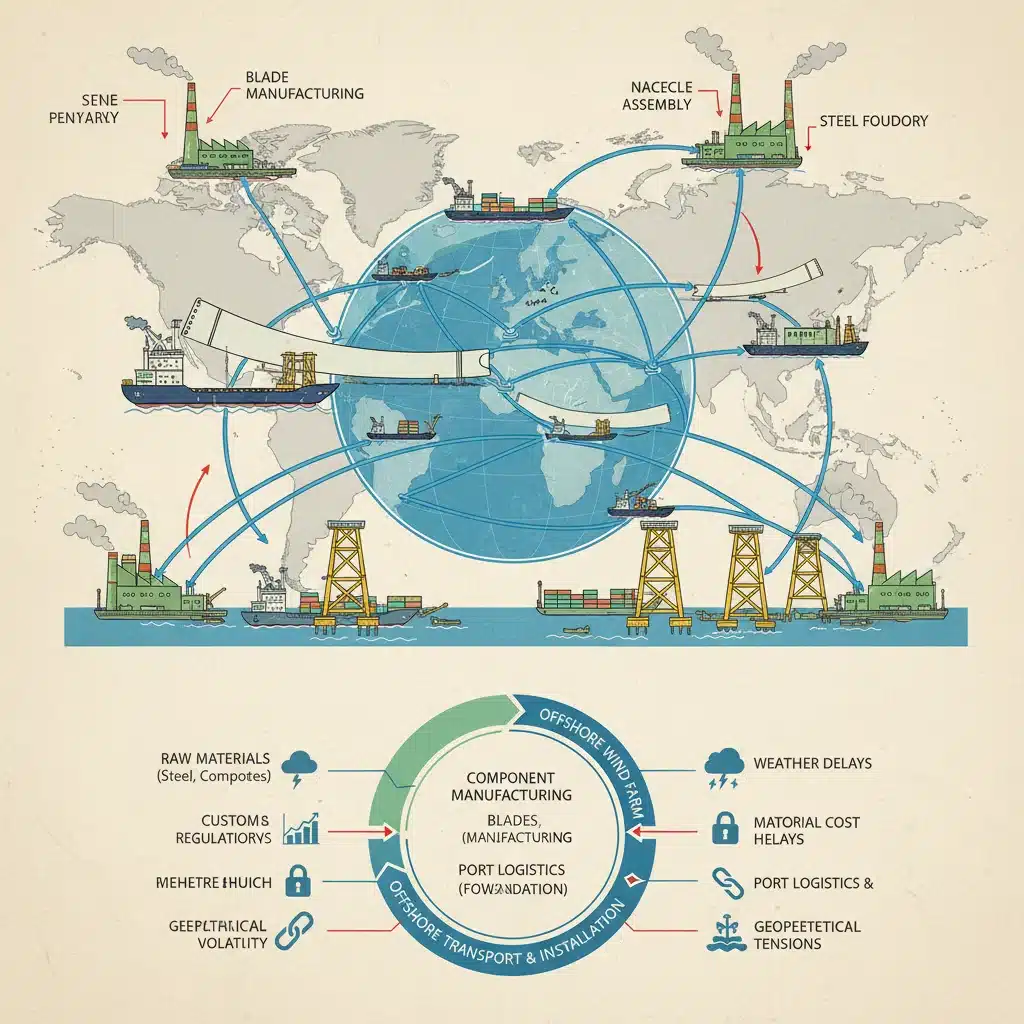
Furthermore, the availability of specialized installation vessels is a major concern. There are currently a limited number of vessels globally capable of installing the next generation of large offshore wind turbines and foundations, and even fewer are Jones Act compliant for operations in U.S. waters. Building new Jones Act-compliant vessels is a multi-year, multi-billion-dollar endeavor, and while projects are underway, their timely delivery is paramount for meeting deployment targets. The strategic development of a specialized fleet is indispensable for the successful expansion of US offshore wind capacity, ensuring that the components can be transported and installed efficiently and safely. Addressing these multifaceted supply chain challenges is not merely an operational necessity; it is a strategic imperative for the U.S. to realize its ambitious US offshore wind goals.
Key Supply Chain Challenges and Bottlenecks
While the potential for US offshore wind is immense, realizing the projected 25% increase in capacity by 2026 faces several significant supply chain hurdles. These bottlenecks, if not effectively addressed, could impede the pace of development and increase project costs, ultimately affecting the overall viability of the industry. Understanding these challenges is the first step towards formulating effective mitigation strategies.
Manufacturing Capacity and Localization
The existing U.S. manufacturing base for offshore wind components is limited. While some facilities are emerging, particularly for foundations and cables, the country largely relies on European and Asian manufacturers for critical components like turbine blades, nacelles, and towers. Scaling up domestic manufacturing requires substantial capital investment, access to skilled labor, and a predictable project pipeline to justify the investment. Without sufficient localization, the industry remains vulnerable to global supply disruptions, currency fluctuations, and increased logistics costs, directly impacting the cost-effectiveness of US offshore wind projects.
Port Infrastructure Limitations
As previously mentioned, U.S. ports present a significant challenge. The sheer size of modern offshore wind components necessitates purpose-built or extensively upgraded port facilities. This includes deeper berths, heavier load-bearing quays, larger laydown areas for pre-assembly, and specialized heavy-lift cranes. The development of these port facilities is time-consuming and capital-intensive, requiring coordinated planning and investment from federal, state, and private entities. Delays in port upgrades can create bottlenecks in project scheduling, impacting the timeline for the 25% increase in US offshore wind capacity.
Specialized Vessel Availability
The scarcity of specialized offshore wind installation vessels, particularly Jones Act-compliant vessels, is another critical bottleneck. These vessels are essential for transporting and installing massive turbine components and foundations safely and efficiently. The global fleet of these vessels is already stretched thin, and the construction of new vessels takes several years. The lack of sufficient U.S.-flagged vessels means developers often need to rely on waivers or seek alternative, more complex logistical solutions, adding significant cost and time to projects. This constraint directly impacts the ability to deploy new US offshore wind capacity at the desired pace.
Workforce Development and Skills Gap
A rapidly expanding industry requires a highly skilled workforce, and the US offshore wind sector faces a significant skills gap. From engineers and project managers to welders, electricians, and technicians specializing in offshore operations, there is a substantial need for training and education programs to build a domestic talent pool. While initiatives are underway to address this, ensuring a sufficient supply of qualified personnel across the entire project lifecycle – from manufacturing to installation and operations and maintenance – is a continuous challenge that needs proactive solutions to support the growth of US offshore wind.
Permitting and Regulatory Hurdles
While federal and state policies aim to streamline permitting, the regulatory landscape for offshore wind remains complex. Securing environmental permits, navigating stakeholder consultations, and complying with various federal and state regulations can be time-consuming and add uncertainty to project development. Delays in the permitting process can push back project timelines, directly affecting the achievement of the 25% increase in US offshore wind capacity by 2026. Continuous efforts to improve interagency coordination and predictability in the regulatory process are crucial for accelerating deployment.
Addressing these multifaceted supply chain challenges requires a concerted effort from government, industry, and academia. Strategic investments, innovative partnerships, and proactive planning are essential to overcome these hurdles and ensure the successful and timely expansion of US offshore wind capacity.
Opportunities for Supply Chain Development and Innovation
Despite the challenges, the rapid growth of US offshore wind presents unprecedented opportunities for supply chain development and innovation. The projected 25% increase in US offshore wind capacity by 2026 creates a massive market demand that can stimulate significant domestic investment, technological advancement, and job creation. Capitalizing on these opportunities is key to building a resilient and competitive US offshore wind industry.
Domestic Manufacturing Boom
The demand for components creates a strong incentive for establishing new manufacturing facilities across the U.S. This includes factories for turbine blades, towers, foundations (monopiles, jackets, floating platforms), cables, and electrical substations. States with strong industrial bases, particularly in the Gulf Coast and Great Lakes regions, are well-positioned to pivot existing capabilities towards offshore wind manufacturing. This localization not only reduces reliance on foreign imports but also generates high-quality manufacturing jobs and strengthens regional economies. Incentives from the Inflation Reduction Act further bolster the economic case for domestic production.
Port Modernization and New Hubs
The need for upgraded port infrastructure is transforming coastal communities. Investments in port modernization are creating new heavy-lift capabilities, specialized quays, and assembly areas. These developments are not just about facilitating offshore wind projects; they are creating new economic hubs that can support a broader range of maritime industries. The construction of new dedicated offshore wind port facilities, such as those planned in New York and New Jersey, represents a significant infrastructure investment that will serve the industry for decades.
Innovation in Foundation Technology
As US offshore wind projects move into deeper waters, particularly off the West Coast, there’s a growing need for innovative foundation technologies, specifically floating offshore wind platforms. This segment offers a substantial opportunity for U.S. companies to lead in research, development, and manufacturing of these advanced structures. Investment in floating technology can unlock vast new wind resources and establish the U.S. as a global leader in this cutting-edge area, driving the next phase of US offshore wind growth.
Workforce Training and Education Programs
The skills gap presents an opportunity for educational institutions, vocational schools, and industry to collaborate on comprehensive workforce development programs. This includes establishing specialized training centers for offshore wind technicians, engineers, and construction workers. Apprenticeship programs, certifications, and partnerships with European counterparts can accelerate the transfer of knowledge and skills, ensuring a steady supply of qualified personnel to support the expanding US offshore wind sector.
Digitalization and Advanced Analytics
The complexity of offshore wind projects, from design and construction to operations and maintenance, offers fertile ground for digitalization and advanced analytics. Opportunities exist in developing software for project management, supply chain optimization, predictive maintenance, and real-time performance monitoring. U.S. tech companies can play a significant role in providing these innovative solutions, enhancing efficiency and reducing costs across the entire lifecycle of US offshore wind farms.
By strategically addressing challenges and actively pursuing these opportunities, the U.S. can not only achieve its target of a 25% increase in US offshore wind capacity by 2026 but also establish a self-sufficient, innovative, and globally competitive offshore wind industry that drives sustainable economic growth for decades to come.
Economic Impact and Job Creation
The projected 25% increase in US offshore wind capacity by 2026 is not merely an environmental endeavor; it’s a powerful engine for economic growth and job creation across the United States. The development of a robust US offshore wind industry is poised to deliver significant economic benefits, stimulating investment, fostering innovation, and creating a diverse range of employment opportunities.
Direct and Indirect Job Creation
Offshore wind projects create jobs across the entire value chain, from initial planning and development to manufacturing, construction, installation, and long-term operations and maintenance (O&M). A single large-scale offshore wind farm can support thousands of jobs during its construction phase and hundreds of permanent O&M roles over its 25-30 year lifespan. These jobs span various skill levels, including highly specialized engineers and project managers, skilled tradespeople like welders, electricians, and crane operators, and support staff in logistics, administration, and environmental monitoring.
Beyond direct employment, the industry generates significant indirect and induced jobs. Indirect jobs are created in upstream supply chain industries that provide goods and services to offshore wind projects, such as steel manufacturers, cable suppliers, and specialized maritime service providers. Induced jobs arise from the spending of wages by direct and indirect employees, boosting local economies through increased demand for retail, housing, and services. The cumulative effect of these job categories underscores the transformative potential of US offshore wind.
Local Economic Development
The establishment of offshore wind manufacturing facilities and O&M bases revitalizes coastal communities and industrial regions. Ports are being modernized and expanded, creating new maritime industry hubs. These investments attract further economic activity, leading to the development of supporting businesses and infrastructure. For instance, a major component factory can anchor an entire industrial ecosystem, providing stable, well-paying jobs and fostering a new generation of skilled workers. The economic footprint of US offshore wind extends far beyond the turbines themselves, creating sustainable prosperity in regions embracing this new energy frontier.
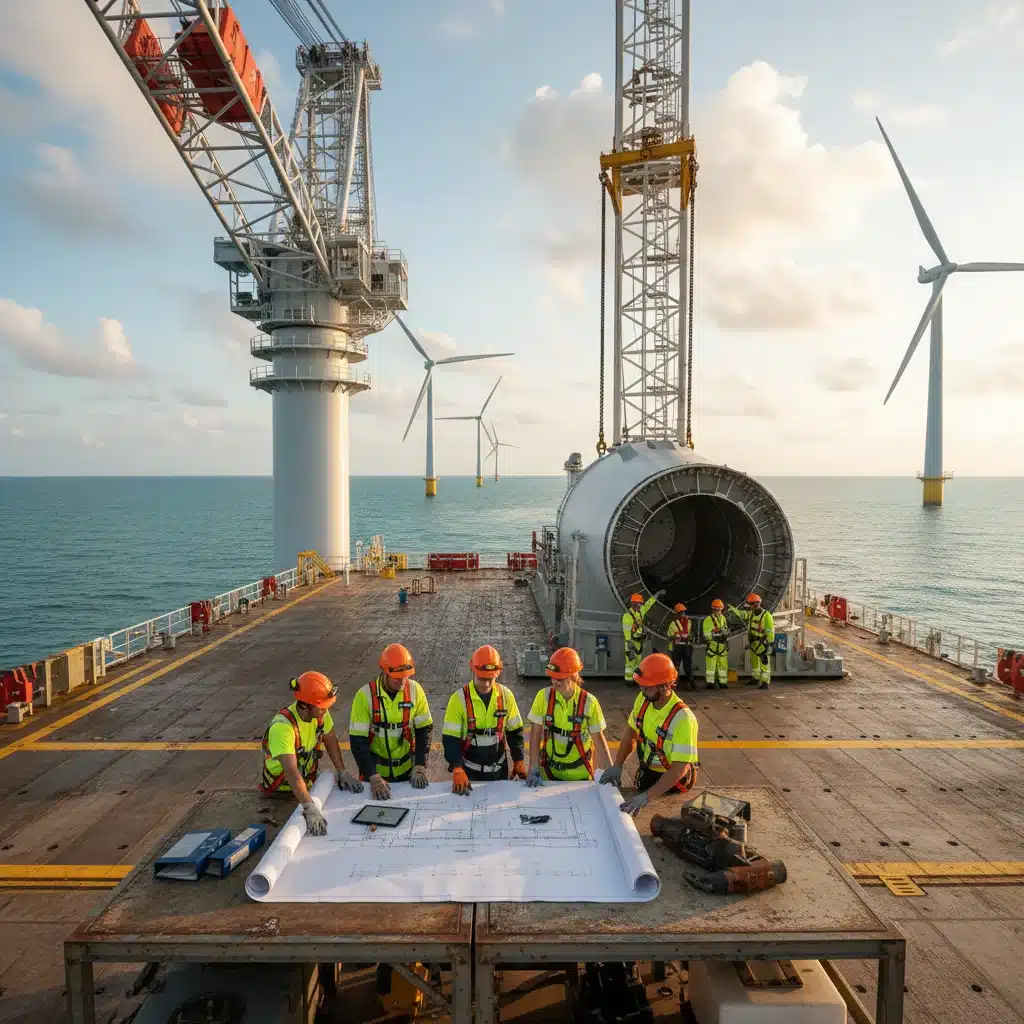
Investment and Capital Inflow
The offshore wind sector requires massive capital investment, attracting billions of dollars from domestic and international sources. This investment flows into project development, infrastructure upgrades, manufacturing facilities, and technology innovation. This significant capital inflow stimulates economic activity, drives technological advancements, and positions the U.S. as a leader in clean energy investment. The financial commitments underpinning the 25% increase in US offshore wind capacity by 2026 represent a substantial long-term investment in the nation’s economic future.
Energy Security and Price Stability
Diversifying the energy mix with domestic, renewable sources like US offshore wind enhances energy security by reducing reliance on volatile fossil fuel markets and foreign energy imports. Furthermore, once operational, offshore wind farms provide electricity at a stable, predictable cost, insulating consumers from fuel price fluctuations. This long-term price stability benefits businesses and households, contributing to overall economic resilience and supporting the broader energy transition.
In essence, the expansion of US offshore wind capacity is not just about generating clean electricity; it’s about building a new American industry that creates jobs, stimulates local economies, attracts investment, and enhances national energy security. The economic dividends from the projected 25% growth by 2026 will be felt across the nation, cementing offshore wind’s role as a cornerstone of a prosperous and sustainable future.
Environmental Benefits and Sustainability
Beyond the economic and energy security advantages, the projected 25% increase in US offshore wind capacity by 2026 carries profound environmental benefits, contributing significantly to sustainability goals and the fight against climate change. Offshore wind power is a clean, renewable energy source that produces no greenhouse gas emissions during operation, making it a critical tool in decarbonizing the electricity sector.
Climate Change Mitigation
The most significant environmental benefit of US offshore wind is its role in reducing carbon emissions. By displacing electricity generated from fossil fuels, offshore wind farms prevent millions of tons of carbon dioxide and other greenhouse gases from entering the atmosphere. This directly contributes to national and international climate targets, helping to mitigate the adverse impacts of global warming, such as rising sea levels, extreme weather events, and ecosystem disruption. The rapid deployment of US offshore wind is essential for achieving a net-zero economy.
Air Quality Improvement
Fossil fuel power plants are major sources of air pollutants, including sulfur dioxide, nitrogen oxides, and particulate matter, which contribute to smog, acid rain, and respiratory illnesses. By replacing these sources, offshore wind power significantly improves air quality, leading to better public health outcomes, particularly in densely populated coastal regions. This reduction in conventional air pollutants offers tangible, immediate benefits to communities located near traditional power generation facilities.
Reduced Water Consumption
Compared to thermal power plants (coal, natural gas, nuclear), which require vast amounts of water for cooling, offshore wind farms consume virtually no water during operation. This is a crucial advantage, especially in regions facing water scarcity, reducing strain on freshwater resources and minimizing environmental impacts associated with water withdrawal and discharge.
Conservation of Terrestrial Habitats
Unlike large-scale terrestrial renewable energy projects that can require significant land area, offshore wind farms utilize ocean space, thereby reducing pressure on valuable terrestrial habitats, agricultural lands, and sensitive ecosystems. While marine ecosystems require careful consideration during development, the overall land-use footprint on land is significantly smaller, preserving biodiversity and natural landscapes.
Sustainable Energy Source
Wind is a perpetually renewable resource, ensuring a sustainable and inexhaustible supply of energy for future generations. The U.S. coastal waters boast some of the strongest and most consistent wind resources in the world, making US offshore wind a reliable and long-term solution for meeting the nation’s energy demands without depleting finite natural resources. The development of US offshore wind represents a fundamental shift towards a truly sustainable energy system.
It is important to acknowledge that offshore wind development requires careful environmental planning and mitigation strategies to minimize potential impacts on marine life and ecosystems during construction and operation. Robust environmental assessments, stakeholder engagement, and adaptive management practices are integral to ensuring that the environmental benefits of US offshore wind are maximized while potential negative impacts are effectively managed. The sustainable deployment of the 25% increase in US offshore wind capacity by 2026 will play a pivotal role in creating a cleaner, healthier, and more sustainable future for the nation.
The Path Forward: Sustaining Momentum and Overcoming Obstacles
The trajectory for US offshore wind is undeniably upwards, with the projected 25% increase in capacity by 2026 serving as a critical waypoint in the nation’s energy transition. However, sustaining this momentum and achieving the even more ambitious long-term goals requires continuous strategic planning, proactive problem-solving, and collaborative efforts across all sectors. The path forward is dynamic, demanding adaptability and foresight to navigate emerging challenges and capitalize on new opportunities.
Continued Policy Support and Market Stability
Long-term policy certainty is paramount for attracting sustained investment. This includes consistent federal and state procurement targets, stable tax incentives, and a streamlined, predictable regulatory framework. Any wavering in policy commitment can deter investors and slow down project development. A clear, bipartisan vision for US offshore wind will reinforce market confidence and ensure the continuous flow of capital necessary for large-scale infrastructure projects.
Strategic Investments in Infrastructure and Manufacturing
Accelerating the development of domestic manufacturing capabilities and port infrastructure is non-negotiable. This requires targeted public and private investments, potentially through grants, loans, and tax credits, to de-risk the establishment of new factories and port upgrades. Fostering a ‘build America’ approach for key components will not only strengthen the supply chain but also create thousands of high-quality jobs, reinforcing the economic rationale for US offshore wind.
Innovation and Technological Advancement
Continued investment in research and development is crucial for driving down costs, improving efficiency, and addressing specific challenges of the U.S. market, such as hurricane resilience and deep-water installations. This includes R&D into next-generation turbine technologies, advanced foundation designs (especially floating offshore wind), grid integration solutions, and environmental monitoring technologies. Embracing innovation will ensure US offshore wind remains competitive and adaptable to future energy needs.
Robust Workforce Development
The success of the US offshore wind industry hinges on a skilled and diverse workforce. Expanding vocational training programs, university curricula, and apprenticeship schemes dedicated to offshore wind will be vital. Collaborative efforts between industry, academia, and government agencies are needed to forecast future labor demands and develop comprehensive training pathways, ensuring that Americans are equipped with the skills needed for the jobs of tomorrow in US offshore wind.
Effective Stakeholder Engagement and Environmental Stewardship
Maintaining public and stakeholder support is essential. This involves transparent communication, early and meaningful engagement with fishing communities, environmental groups, and coastal residents. Rigorous environmental impact assessments and adaptive management strategies must be central to all projects, ensuring that US offshore wind development minimizes its ecological footprint and coexists harmoniously with existing ocean uses. Sustainable development practices are not just good for the environment; they build trust and ensure long-term viability.
The collective efforts to address these areas will not only ensure the successful realization of the 25% increase in US offshore wind capacity by 2026 but will also lay a resilient foundation for the U.S. to become a global leader in offshore wind energy, driving economic prosperity, energy independence, and a sustainable future for generations to come. The transformative power of US offshore wind is within reach, provided a concerted and strategic approach is maintained.
Conclusion
The U.S. offshore wind sector stands at a pivotal juncture, poised for a remarkable 25% increase in capacity by 2026. This ambitious growth trajectory is a clear indicator of the nation’s unwavering commitment to transitioning towards a cleaner, more sustainable energy future. Driven by favorable policy frameworks, technological advancements, and a growing recognition of its profound economic and environmental benefits, US offshore wind is rapidly emerging as a cornerstone of America’s energy independence and climate mitigation strategies.
However, realizing this potential and sustaining long-term growth demands a strategic and concerted effort to address the inherent complexities of building a new industrial ecosystem. The challenges within the supply chain – from limited domestic manufacturing capacity and port infrastructure bottlenecks to the scarcity of specialized installation vessels and a burgeoning skills gap – are significant but not insurmountable. These obstacles, while formidable, also present unparalleled opportunities for innovation, domestic job creation, and the establishment of new industrial hubs across the country.
The path forward requires continued federal and state policy stability, substantial investments in infrastructure and manufacturing, and a relentless focus on workforce development. Furthermore, fostering innovation in areas like floating offshore wind technology and ensuring robust stakeholder engagement and environmental stewardship will be critical to building a resilient and socially responsible industry. The economic dividends, including substantial job creation and local economic development, coupled with the immense environmental benefits of reduced carbon emissions and improved air quality, underscore the imperative of this endeavor.
The journey to harness the full power of US offshore wind is a marathon, not a sprint. The projected 25% increase in capacity by 2026 is a vital milestone, demonstrating the industry’s burgeoning maturity and potential. By strategically navigating the challenges and proactively seizing the opportunities, the U.S. can solidify its position as a leader in the global clean energy transition, delivering a future powered by clean, reliable, and domestically sourced offshore wind energy.