Community Energy Storage: 20MWh Microgrids Powering US Neighborhoods in 2026
Anúncios
Community Energy Storage: How Microgrids with 20MWh Battery Banks are Empowering US Neighborhoods in 2026 (RECENT UPDATES)
The energy landscape in the United States is undergoing a profound transformation, driven by a dual imperative: the urgent need to combat climate change and the critical demand for enhanced energy resilience. At the forefront of this revolution is the burgeoning field of community energy storage, particularly the deployment of microgrids equipped with substantial battery banks, often reaching capacities of 20MWh or more. By 2026, these advanced systems are not just theoretical concepts; they are becoming tangible realities, empowering neighborhoods across the nation with unprecedented control over their energy future. This article delves into the intricate world of community energy storage, exploring its foundational principles, the pivotal role of 20MWh battery banks, the architecture and benefits of microgrids, recent policy developments, and the exciting future that lies ahead for US communities.
The traditional centralized grid, while robust for decades, has shown vulnerabilities to extreme weather events, cyberattacks, and an increasing strain from growing energy demands. This vulnerability has spurred innovation, leading to distributed energy resources (DERs) and, more specifically, community-level solutions. The idea is simple yet powerful: rather than relying solely on distant power plants and long transmission lines, communities can generate, store, and manage their own energy, creating islands of power that can operate independently when the main grid fails. This is where community energy storage comes into its own, providing the essential buffer and flexibility needed for such systems to thrive.
Understanding Community Energy Storage: More Than Just Batteries
At its core, community energy storage refers to energy storage systems that serve a defined group of customers or a specific geographic area, rather than individual homes or large utility-scale installations. These systems are designed to capture and store energy, typically from renewable sources like solar or wind, and then discharge it when needed. This could be during peak demand periods to reduce strain on the grid, during outages to maintain power, or to optimize the use of locally generated clean energy. The scale of these systems is crucial; while smaller batteries might support a single home, community energy storage aims for a broader impact, often necessitating capacities in the megawatt-hour (MWh) range.
The benefits of robust community energy storage are multi-faceted:
- Enhanced Grid Resilience: By providing backup power, these systems can keep essential services running during blackouts, protecting vulnerable populations and critical infrastructure.
- Integration of Renewables: Storage smooths out the intermittency of solar and wind power, making these renewable sources more reliable and dispatchable.
- Peak Shaving and Demand Charge Reduction: Stored energy can be discharged during periods of high electricity prices, reducing costs for the community and alleviating stress on the main grid.
- Reduced Transmission & Distribution Losses: Generating and storing energy closer to the point of consumption minimizes energy loss during transmission.
- Environmental Benefits: Facilitating greater renewable energy adoption leads to reduced greenhouse gas emissions and a cleaner energy mix.
- Economic Development: Investment in these technologies creates jobs and fosters local economic growth.
The shift towards localized energy systems is not merely a technological upgrade; it represents a fundamental change in how communities interact with and control their energy supply. It fosters a sense of energy independence and collective responsibility, moving away from a purely consumer-utility relationship to one of active participation and stewardship.
The Powerhouse: Why 20MWh Battery Banks are Game-Changers
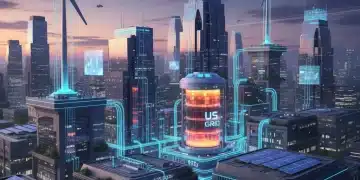
When discussing community energy storage, the capacity of the battery bank is a critical metric. A 20MWh battery bank is a significant installation, capable of powering hundreds, if not thousands, of homes for several hours, depending on their consumption. To put this into perspective, the average US home uses about 30 kWh per day. A 20MWh (20,000 kWh) battery could theoretically power approximately 660 average homes for a full day. This scale makes them ideal for supporting entire neighborhoods, small towns, or critical infrastructure hubs.
The technology behind these large-scale battery banks is predominantly lithium-ion, which offers high energy density, efficiency, and a relatively long cycle life. However, research and development continue to advance other chemistries, such as flow batteries and solid-state batteries, which promise even greater safety, longer duration, and lower costs in the future. For 2026, lithium-ion remains the dominant force, albeit with continuous improvements in safety, performance, and sustainability.
The selection and deployment of a 20MWh battery bank involve complex engineering considerations:
- Site Selection: Proximity to generation sources (e.g., solar farms), grid connection points, and the community it serves are vital.
- Grid Interconnection: Ensuring seamless and safe integration with the existing grid infrastructure.
- Safety Protocols: Implementing advanced fire suppression, thermal management, and monitoring systems.
- Sizing and Optimization: Carefully matching the battery capacity to the community’s energy needs and operational goals.
- Cost-Benefit Analysis: Evaluating the long-term economic returns, including savings from peak shaving, ancillary services, and resilience benefits.
The cost of these large-scale battery systems has been decreasing steadily over the past decade, making them increasingly economically viable. This cost reduction, coupled with supportive policies and growing environmental awareness, is fueling the rapid adoption of 20MWh battery banks as central components of sophisticated community energy storage solutions.
Microgrids: The Intelligent Framework for Community Energy Storage
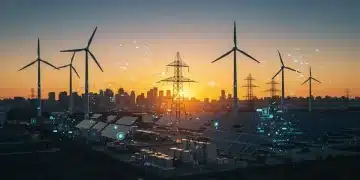
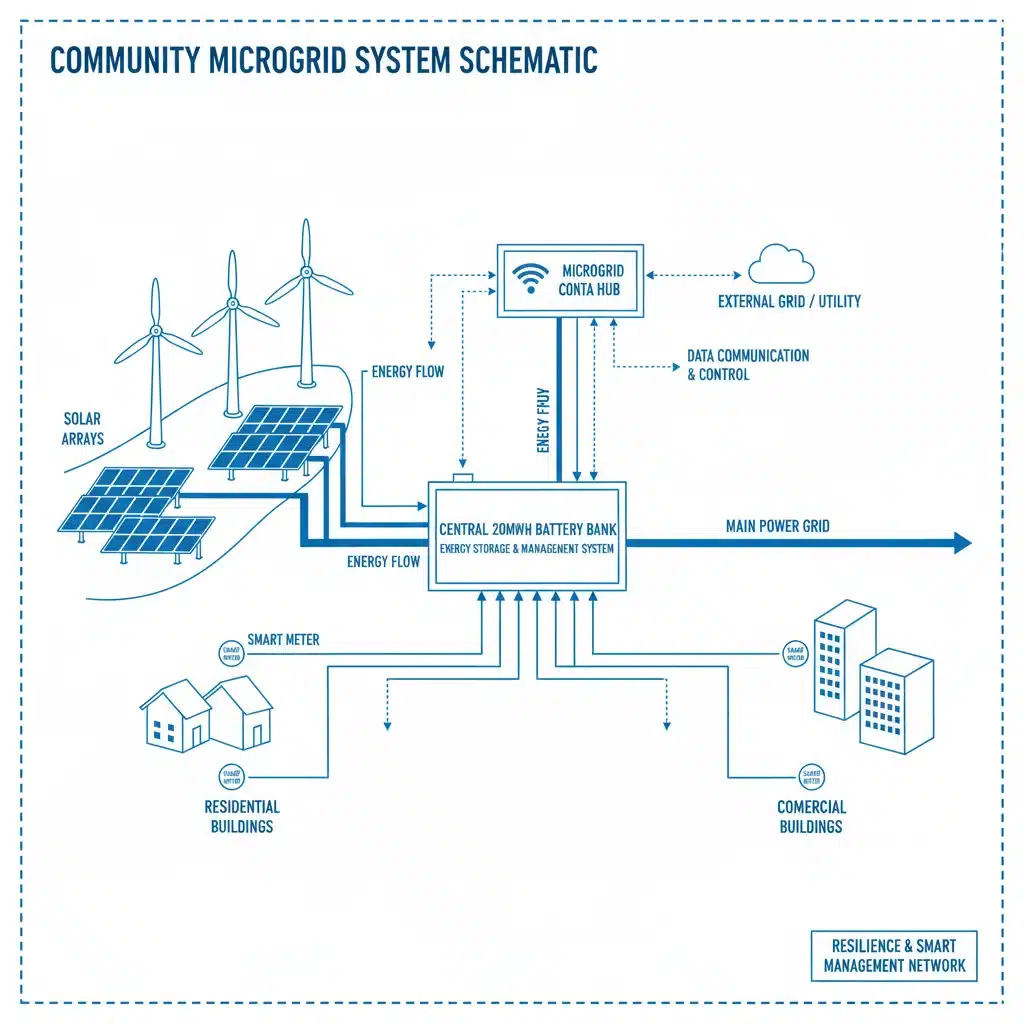
A 20MWh battery bank, while powerful, is just one component of a larger, more intelligent system: the microgrid. A microgrid is a localized group of electricity sources and loads that typically operates connected to a traditional synchronized grid (macrogrid), but can disconnect and operate autonomously as an electrical island during disturbances on the macrogrid. This ability to ‘island’ is what makes microgrids so valuable for resilience, especially in the context of community energy storage.
Key components of a modern microgrid include:
- Distributed Energy Resources (DERs): These are local energy generation sources, primarily renewables like solar PV, wind turbines, and sometimes combined heat and power (CHP) systems or small natural gas generators for backup.
- Energy Storage Systems: This is where our 20MWh battery banks play a crucial role, providing the flexibility and buffering capacity.
- Loads: The homes, businesses, and critical facilities within the community that consume electricity.
- Point of Common Coupling (PCC): The point where the microgrid connects to the main grid.
- Microgrid Controller: The brain of the system, responsible for managing energy flow, optimizing generation and storage, detecting grid disturbances, and facilitating seamless islanding and reconnection.
The microgrid controller is particularly sophisticated. It uses advanced algorithms, often incorporating artificial intelligence and machine learning, to predict energy demand, forecast renewable energy output, manage battery charge and discharge cycles, and ensure grid stability both when connected to the main grid and when operating independently. This level of intelligent management is what truly unlocks the potential of community energy storage for resilience and efficiency.
Benefits of Microgrids for Communities:
- Enhanced Reliability: Microgrids provide a reliable power supply even when the main grid fails, protecting communities from the impacts of outages.
- Improved Energy Security: Local generation and storage reduce dependence on external energy sources and infrastructure.
- Cost Savings: Optimized energy management, peak shaving, and potential participation in energy markets can lead to significant cost reductions for communities.
- Environmental Sustainability: Facilitates higher penetration of renewable energy sources, contributing to decarbonization goals.
- Local Economic Growth: Creates opportunities for local energy management and infrastructure development.
By 2026, many US neighborhoods are actively pursuing or have already implemented microgrid solutions, recognizing them as essential infrastructure for a sustainable and resilient future. These projects often involve collaboration between local governments, utilities, private developers, and community organizations.
Recent Updates and Policy Landscape for 2026
The rapid evolution of community energy storage and microgrids is heavily influenced by a dynamic policy and regulatory environment. Several key developments are shaping their adoption by 2026:
Federal Initiatives:
- Infrastructure Investment and Jobs Act (IIJA): This landmark legislation provides billions in funding for grid modernization, including significant allocations for smart grid technologies, energy storage, and microgrids. This federal push is directly accelerating the deployment of 20MWh battery banks in community settings.
- Department of Energy (DOE) Programs: The DOE continues to fund research, development, and demonstration projects for advanced energy storage and microgrid technologies, fostering innovation and reducing deployment costs. Initiatives like the Solar Energy Technologies Office (SETO) and the Office of Electricity (OE) are crucial.
- Investment Tax Credit (ITC) for Standalone Storage: The extension and expansion of the ITC to include standalone energy storage systems have been a game-changer, making 20MWh battery installations significantly more attractive economically. This policy provides a direct financial incentive for developers and communities.
State and Local Policies:
Many states are enacting policies and incentives tailored to promote community energy storage and microgrids:
- Resilience Programs: States prone to natural disasters (e.g., California, New York, Florida) are investing heavily in microgrids for critical facilities and vulnerable communities to enhance disaster preparedness.
- Renewable Portfolio Standards (RPS) with Storage Mandates: Some states are incorporating energy storage targets into their RPS, driving the demand for large-scale battery deployments.
- Utility Incentives and Tariffs: Utilities are increasingly offering programs that reward customers or communities for deploying storage, such as demand response programs or specific tariffs for grid services provided by storage.
- Streamlined Permitting: Local governments are working to streamline the permitting process for energy storage projects, reducing bureaucratic hurdles.
By 2026, the cumulative effect of these policies is creating a fertile ground for the widespread adoption of community energy storage, transforming what was once a niche technology into a mainstream solution for energy independence and resilience.
Case Studies and Emerging Trends in 2026
While specific 20MWh microgrid projects are often bespoke, several examples illustrate the growing momentum for community energy storage:
- Puerto Rico’s Resilience Efforts: Following devastating hurricanes, Puerto Rico has become a living laboratory for microgrid deployment, with numerous projects focusing on community-scale solar-plus-storage solutions to ensure power for essential services.
- California’s Community Microgrid Program: California, facing increasing wildfire risks and Public Safety Power Shutoffs (PSPS), has aggressive programs to support the development of community microgrids, often targeting capacities that align with the 20MWh range for resilience.
- Military Base Microgrids: US military bases are leading the way in microgrid implementation, prioritizing energy security and resilience. These projects often feature multi-megawatt-hour battery storage to ensure continuous operation during grid disturbances.
- Rural Electrification Initiatives: In remote or underserved areas, microgrids with substantial battery storage are providing reliable and affordable electricity, often replacing or supplementing expensive diesel generation.
Beyond these examples, several emerging trends are shaping the future of community energy storage:
- "Storage-as-a-Service" Models: Third-party developers are offering comprehensive storage solutions, including financing, installation, and operation, making it easier for communities to adopt these technologies without large upfront capital investments.
- Vehicle-to-Grid (V2G) Integration: As electric vehicle (EV) adoption grows, the potential for EVs to contribute to community energy storage, acting as mobile battery banks, is gaining traction.
- Advanced AI and Machine Learning: The intelligence of microgrid controllers is rapidly advancing, enabling more precise forecasting, optimization, and predictive maintenance, further enhancing the efficiency and reliability of 20MWh battery systems.
- Hybrid Storage Solutions: Combining different storage technologies, such as lithium-ion with flow batteries or ultracapacitors, to leverage the unique strengths of each for optimal performance and longevity.
- Cybersecurity Focus: With increased digitalization, robust cybersecurity measures are becoming paramount to protect microgrid control systems from potential threats.
By 2026, these trends are converging to create more sophisticated, resilient, and economically attractive community energy storage solutions, moving beyond mere backup power to become integral parts of a smart, sustainable energy infrastructure.

Challenges and the Path Forward
Despite the immense promise, the widespread adoption of community energy storage, particularly with 20MWh battery banks, faces several challenges:
- High Upfront Costs: While costs are decreasing, the initial investment for large-scale battery storage and microgrid infrastructure can still be substantial, requiring innovative financing models and continued government support.
- Regulatory Complexities: Navigating the patchwork of federal, state, and local regulations can be daunting, especially concerning grid interconnection and market participation rules.
- Technical Integration: Integrating diverse DERs, including a 20MWh battery, with existing grid infrastructure requires sophisticated engineering and project management expertise.
- Public Acceptance and Education: Gaining community buy-in and educating residents about the benefits and safety of these systems is crucial for successful deployment.
- Supply Chain and Raw Material Concerns: The growing demand for batteries raises concerns about the supply of critical raw materials (e.g., lithium, cobalt) and ethical sourcing.
- Cybersecurity Risks: As microgrids become more digitally interconnected, they also become potential targets for cyberattacks, necessitating robust security protocols.
Addressing these challenges requires a multi-pronged approach involving:
- Continued Policy Support: Consistent and predictable federal and state policies, including tax incentives, grants, and streamlined regulatory frameworks, are essential.
- Innovative Financing: Development of new financial instruments, public-private partnerships, and community ownership models to lower the financial burden on communities.
- Technological Advancements: Ongoing R&D to improve battery performance, reduce costs, enhance safety, and explore alternative storage chemistries.
- Workforce Development: Training a skilled workforce capable of designing, installing, operating, and maintaining these complex systems.
- Standardization: Developing industry standards for interoperability, safety, and performance to reduce complexity and increase scalability.
By actively tackling these hurdles, the US can accelerate the deployment of community energy storage and microgrids, securing a more resilient and sustainable energy future for all its neighborhoods.
The Future of Community Energy Storage Beyond 2026
Looking beyond 2026, the trajectory for community energy storage is one of continued growth and sophistication. We can anticipate:
- Larger and More Distributed Storage: While 20MWh is significant now, future community systems may see even larger capacities or a highly distributed network of smaller interconnected storage units working in concert.
- Hyper-Local Energy Markets: The emergence of peer-to-peer energy trading within microgrids, allowing residents to buy and sell excess renewable energy directly to their neighbors.
- Integration with Other Infrastructure: Seamless integration of energy microgrids with water management, transportation, and communication networks to create truly smart and resilient communities.
- Advanced Predictive Analytics: Even more sophisticated AI predicting weather patterns, energy demand, and potential grid disturbances with greater accuracy, optimizing microgrid operations to an unprecedented degree.
- Circular Economy Principles: Increased focus on the entire lifecycle of battery storage, from sustainable sourcing of materials to advanced recycling and repurposing initiatives.
- Global Replication: Successful models from the US will likely be replicated and adapted in communities worldwide, accelerating the global energy transition.
The vision is clear: communities will not just consume energy but will actively participate in its generation, storage, and management. This paradigm shift, powered by innovations like 20MWh battery banks within microgrids, promises a future where energy is cleaner, more reliable, and truly democratized. The journey to 2026 marks a pivotal chapter in this ongoing energy revolution, laying the groundwork for a future where every neighborhood can be an energy powerhouse.
Conclusion: Empowering Neighborhoods with Resilient Energy Solutions
The year 2026 stands as a significant milestone in the journey towards a resilient and sustainable energy future for US neighborhoods. The strategic deployment of community energy storage, particularly through microgrids anchored by powerful 20MWh battery banks, is fundamentally reshaping how communities access and manage their power. These systems are not merely technological upgrades; they are foundational pillars for enhanced grid resilience, deeper integration of renewable energy, significant cost savings, and a reduced environmental footprint.
From federal incentives like the expanded Investment Tax Credit to state-level mandates and innovative utility programs, the policy landscape is increasingly conducive to the proliferation of these advanced energy solutions. Communities are actively embracing microgrids to safeguard against outages, optimize local renewable generation, and foster a greater sense of energy independence. While challenges such as upfront costs and regulatory complexities persist, ongoing technological advancements, innovative financing models, and a concerted effort towards standardization are paving the way for broader adoption.
The future of community energy storage extends far beyond 2026, promising even larger capacities, hyper-local energy markets, and seamless integration with other critical infrastructure. By empowering neighborhoods with the tools to generate, store, and manage their own clean energy, the United States is not only building a more robust and sustainable energy grid but also fostering stronger, more self-reliant communities ready to face the energy challenges of the 21st century. The era of localized energy empowerment is here, and 20MWh microgrids are leading the charge.