AI for US Grid Optimization: A 2026 Perspective on Predictive Analytics

Anúncios
The Role of AI in U.S. Grid Optimization: A 2026 Perspective on Predictive Analytics for Energy Management
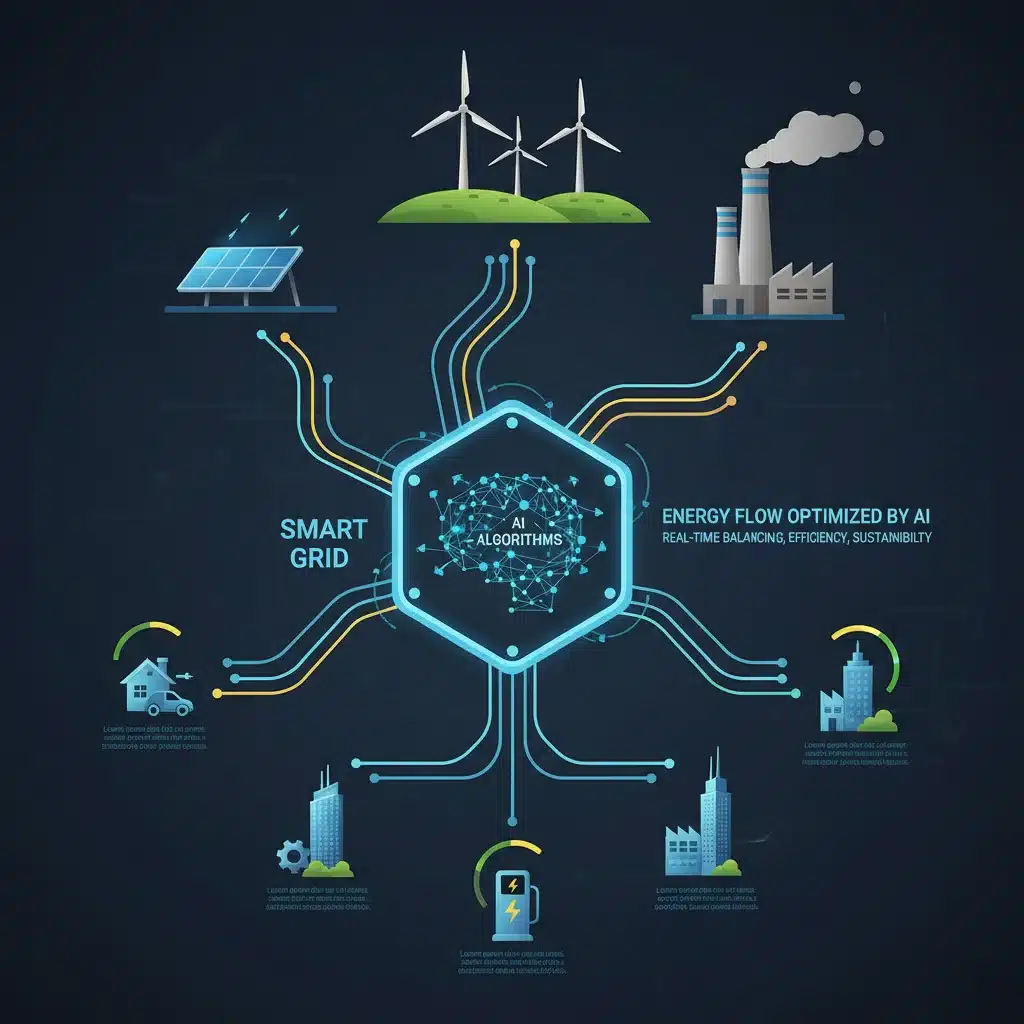
The United States power grid, a complex and sprawling network, is facing unprecedented challenges. From aging infrastructure and increasing demand to the integration of intermittent renewable energy sources and the growing threat of cyberattacks, the need for a more intelligent, resilient, and efficient energy system has never been more pressing. As we look towards 2026, Artificial Intelligence (AI) stands out as the most transformative technology poised to revolutionize U.S. grid optimization. Specifically, the application of predictive analytics, powered by AI, is set to redefine energy management, operational efficiency, and overall grid stability. This comprehensive article delves into the multifaceted ways AI is shaping the future of the U.S. power grid, exploring its current impact, future potential, and the challenges that lie ahead.
The Evolving Landscape of the U.S. Power Grid
Before diving into the specifics of AI’s role, it’s crucial to understand the context. The U.S. grid is undergoing a significant transition. Decarbonization efforts are accelerating the adoption of renewable energy, leading to a more distributed and less predictable generation profile. Electrification of transportation and heating is increasing demand, while extreme weather events, exacerbated by climate change, pose severe threats to infrastructure. These factors necessitate a paradigm shift from reactive grid management to a proactive, intelligent approach. This is where AI Grid Optimization becomes indispensable.
Historically, grid operations have relied on established engineering principles and human expertise, often reacting to events as they occur. However, the sheer volume, velocity, and variety of data generated by modern smart grid sensors, meters, and distributed energy resources (DERs) overwhelm traditional analytical methods. AI, particularly machine learning and deep learning, offers the ability to process this massive dataset, identify intricate patterns, and make highly accurate predictions, thereby enabling a new era of grid intelligence.
The Foundation of AI in Grid Operations: Data and Connectivity
The effectiveness of AI Grid Optimization is directly proportional to the quality and quantity of data it can access. The proliferation of smart meters, SCADA (Supervisory Control and Data Acquisition) systems, phasor measurement units (PMUs), and IoT devices across the grid provides a rich tapestry of real-time operational data. This data includes:
- Consumption Data: Granular information on electricity usage patterns from homes, businesses, and industrial facilities.
- Generation Data: Real-time output from conventional power plants, solar farms, wind turbines, and other renewable sources, including their variability.
- Grid State Data: Voltage, current, frequency, and phase angle measurements from various points in the transmission and distribution network.
- Environmental Data: Weather forecasts, temperature, wind speed, and solar irradiance, which directly impact renewable generation and demand.
- Equipment Health Data: Sensor readings from transformers, circuit breakers, and other assets indicating their operational status and potential for failure.
Coupled with robust communication networks, this data forms the bedrock upon which AI algorithms can build sophisticated predictive models. The challenge, however, lies not just in collecting the data but in cleaning, integrating, and interpreting it in a meaningful way – a task perfectly suited for AI.
Predictive Analytics: The Core of AI Grid Optimization
Predictive analytics, a subset of AI, involves using historical data, statistical algorithms, and machine learning techniques to identify the likelihood of future outcomes based on past performance. In the context of the U.S. power grid, this translates into anticipating demand fluctuations, predicting renewable energy output, forecasting equipment failures, and identifying potential vulnerabilities before they escalate into widespread outages. By 2026, predictive analytics will be deeply embedded in various aspects of grid operations.
Demand Forecasting and Load Management
Accurate demand forecasting is paramount for efficient grid operation. Over-forecasting leads to wasted generation and increased costs, while under-forecasting can result in blackouts. AI models, leveraging historical consumption data, weather patterns, economic indicators, and even social events, can predict electricity demand with unprecedented accuracy. This enables utilities to:
- Optimize Generation Schedules: Dispatch power plants more efficiently, minimizing reliance on expensive peaker plants.
- Implement Dynamic Pricing: Encourage consumers to shift demand to off-peak hours, flattening the load curve.
- Manage Distributed Energy Resources (DERs): Integrate rooftop solar and battery storage more effectively by predicting local demand and supply.
Renewable Energy Integration and Variability Management
The intermittent nature of solar and wind power poses significant challenges for grid stability. Clouds can unexpectedly block sunlight, and wind speeds can fluctuate rapidly. AI-powered predictive analytics can forecast renewable energy generation with greater precision by analyzing weather models, satellite imagery, and historical performance data. This allows grid operators to:
- Balance Supply and Demand: Proactively adjust conventional generation or deploy energy storage solutions to compensate for predicted renewable shortfalls or surpluses.
- Reduce Curtailment: Minimize instances where renewable energy has to be switched off due to oversupply, maximizing clean energy utilization.
- Optimize Energy Storage: Charge batteries when renewable generation is high and discharge them when demand peaks or renewables dip, enhancing grid flexibility.
Predictive Maintenance and Asset Management
Aging infrastructure is a major concern for the U.S. grid. Traditional maintenance often follows fixed schedules or reacts to failures. Predictive maintenance, enabled by AI, monitors the health of grid assets (transformers, power lines, circuit breakers) in real-time using sensor data and identifies potential failures before they occur. This approach offers several benefits:
- Reduced Downtime: Address issues before they lead to outages, minimizing service interruptions.
- Lower Maintenance Costs: Shift from routine, time-based maintenance to condition-based maintenance, optimizing resource allocation.
- Extended Asset Lifespan: Proactive repairs and replacements can prolong the operational life of expensive equipment.

Enhancing Grid Resilience and Security with AI
Beyond efficiency, AI Grid Optimization is crucial for strengthening the grid’s resilience against physical and cyber threats. By 2026, AI will play a pivotal role in preventing and mitigating the impact of various disruptions.
Outage Prediction and Restoration
AI models can analyze historical outage data, weather forecasts, and grid topology to predict areas most vulnerable to outages during severe weather events. This allows utilities to pre-position crews and resources, significantly reducing restoration times. Furthermore, during an outage, AI can rapidly identify the root cause, isolate the affected section, and recommend optimal restoration paths, accelerating the return to normalcy.
Cybersecurity and Threat Detection
The increasing digitalization of the grid also exposes it to cyber threats. AI algorithms can continuously monitor network traffic and system behavior, identifying anomalous patterns that might indicate a cyberattack. Machine learning can distinguish between legitimate operational fluctuations and malicious intrusions, providing early warnings and enabling rapid response, thereby safeguarding critical infrastructure. This proactive defense is vital for maintaining the integrity and reliability of the power supply.
Adaptive Grid Control and Self-Healing Capabilities
The ultimate vision for AI Grid Optimization is a self-healing grid. This involves AI-powered systems that can autonomously detect faults, reconfigure the network to bypass damaged sections, and restore power to unaffected areas without human intervention. While fully autonomous grids are still some years away, by 2026, we can expect significant advancements in adaptive control systems that leverage AI to dynamically manage power flow and maintain stability in the face of disturbances.
Challenges and Considerations for AI Grid Optimization by 2026
While the potential of AI in U.S. grid optimization is immense, its widespread implementation by 2026 is not without hurdles. Addressing these challenges will be critical for realizing the full benefits of this technology.
Data Quality, Integration, and Standardization
The effectiveness of AI heavily relies on high-quality, consistent data. The U.S. grid comprises numerous independent utilities, each with its own data collection systems and formats. Integrating these disparate datasets and ensuring data quality, accuracy, and standardization will be a monumental task. Robust data governance frameworks and interoperability standards are essential.
Computational Infrastructure and Edge Computing
Processing the vast amounts of real-time grid data requires significant computational power. While cloud computing offers scalability, latency can be an issue for time-sensitive grid operations. The adoption of edge computing, where AI processing occurs closer to the data source (e.g., at substations or local distribution networks), will be crucial for enabling real-time decision-making and enhancing resilience.
Regulatory and Policy Frameworks
Existing regulatory frameworks, often designed for a centralized, unidirectional power flow, may not be adequately equipped to handle the complexities of an AI-driven, distributed smart grid. New policies are needed to incentivize AI adoption, ensure data privacy, establish cybersecurity standards, and facilitate the integration of new technologies and business models.
Workforce Development and Skill Gaps
The transition to an AI-optimized grid requires a skilled workforce capable of developing, deploying, and managing these advanced systems. There is a pressing need for training programs to upskill existing utility personnel and attract new talent with expertise in AI, data science, cybersecurity, and power engineering. The human element remains critical, as AI will augment, not replace, human operators.
Ethical Considerations and Bias
As AI takes on more critical roles in grid management, ethical considerations come to the forefront. Ensuring transparency in AI decision-making, addressing potential biases in algorithms (which could inadvertently disadvantage certain communities), and establishing accountability mechanisms are vital. Trust in AI systems is paramount for public acceptance and successful deployment.
The Future Outlook: Beyond 2026 for AI Grid Optimization
While 2026 marks a significant milestone in AI’s integration into the U.S. grid, the journey doesn’t end there. Looking further into the future, we can anticipate even more sophisticated applications of AI Grid Optimization:
- Hyper-Local Grid Management: AI will enable highly granular control of microgrids and local energy communities, optimizing energy flow within small geographical areas.
- Predictive Market Operations: AI will analyze energy markets, predict price fluctuations, and optimize trading strategies for utilities and prosumers (producers-consumers).
- Advanced Anomaly Detection: AI will become even more adept at identifying subtle anomalies that precede major equipment failures or cyberattacks, enhancing preventive measures.
- Human-AI Collaboration: Future control rooms will feature highly integrated human-AI interfaces, where AI provides actionable insights and recommendations, allowing human operators to make more informed and strategic decisions.
- Quantum AI for Grid Optimization: While still nascent, quantum computing could eventually offer unprecedented computational power for solving highly complex grid optimization problems that are currently intractable.
The synergy between AI and other emerging technologies, such as blockchain for secure energy transactions and advanced materials for infrastructure, will further accelerate the evolution of the smart grid. The goal is to create an energy system that is not only efficient and resilient but also sustainable, equitable, and capable of supporting a decarbonized economy.
Conclusion
By 2026, Artificial Intelligence will have cemented its position as a cornerstone of U.S. grid optimization. Through advanced predictive analytics, AI is enabling utilities to forecast demand and renewable generation with greater accuracy, implement proactive maintenance strategies, enhance cybersecurity, and build a more resilient infrastructure. While challenges related to data, regulation, and workforce development remain, the ongoing investment and innovation in this field promise a future where the U.S. power grid is smarter, more reliable, and better equipped to meet the energy demands of the 21st century. The journey towards a fully intelligent grid is complex, but with AI leading the charge, the prospects for a robust and sustainable energy future are brighter than ever. Embracing AI Grid Optimization is not just an option; it’s a necessity for securing the nation’s energy future.