Utility-Scale Battery Storage: US Grid Stability Impact
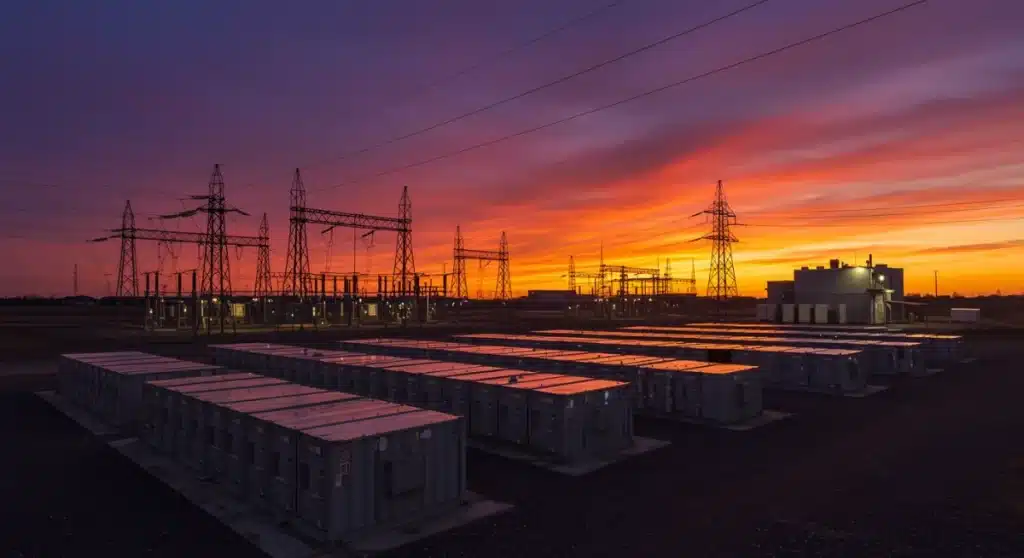
Q1 sees significant advancements in utility-scale battery storage across the US, fundamentally transforming grid stability and enabling greater integration of intermittent renewable energy sources nationwide.
The landscape of energy infrastructure in the United States is undergoing a profound transformation, driven by the imperative for a more resilient, efficient, and sustainable power grid. At the forefront of this evolution is utility-scale battery storage, a technology rapidly gaining traction for its unparalleled ability to manage intermittent renewable energy sources and ensure grid stability. As we delve into the first quarter of 2025, a wave of innovative projects across the nation is not only expanding storage capacity but also redefining how electricity is generated, distributed, and consumed.
The Rise of Utility-Scale Battery Storage
Utility-scale battery storage systems are large-scale installations designed to store electrical energy from various sources, including solar and wind farms, and then discharge it back into the grid when needed. These systems are crucial for balancing supply and demand, mitigating fluctuations from renewable energy, and providing essential grid services. Their growing deployment signifies a critical shift towards a more flexible and robust energy future.
The increasing penetration of renewable energy sources into the US grid has highlighted the inherent challenges of their variability. Solar power is only available when the sun shines, and wind power depends on wind conditions. Battery storage acts as a buffer, capturing excess energy during periods of high generation and releasing it during peak demand or when renewable output is low. This capability is not just about energy shifting; it’s about creating a more reliable and responsive electrical system.
Technological Advancements Driving Growth
Recent breakthroughs in battery technology, particularly in lithium-ion chemistry, have significantly improved energy density, lifespan, and cost-effectiveness. These advancements make utility-scale deployments more economically viable than ever before. Furthermore, innovations in battery management systems and power electronics are enhancing the efficiency and safety of these large-scale installations.
- Improved energy density and cycle life of battery cells.
- Reduced manufacturing costs through economies of scale.
- Enhanced safety features and thermal management systems.
- Smarter control systems for optimal charging and discharging.
The momentum behind utility-scale battery storage is undeniable. With continued research and development, we can expect even more efficient and sustainable storage solutions to emerge, further solidifying their role in the modern energy landscape. The first quarter of 2025 showcases how these technological leaps are translating into real-world projects with tangible benefits.
Q1 2025 Project Highlights Across the US
The first quarter of 2025 has seen an impressive proliferation of utility-scale battery storage projects across diverse regions of the United States. These projects vary in size, technology, and strategic purpose, reflecting a comprehensive approach to addressing regional energy needs and national grid modernization goals. From the sun-drenched plains of the Southwest to the bustling industrial centers of the Northeast, investment in energy storage is accelerating.
California’s Continued Leadership in Storage
California remains a trailblazer in battery storage deployment, driven by ambitious renewable energy mandates and a need to manage its vast solar generation. Q1 2025 includes several significant expansions to existing facilities and the commissioning of new projects designed to bolster grid resilience, especially during evening peak demand when solar generation declines. These projects are often co-located with large solar farms, maximizing the efficiency of renewable energy capture.
One notable development is the expansion of the Manzana Wind Energy Center in Tehachapi, adding 200 MW / 800 MWh of battery storage capacity. This expansion will further stabilize the transmission grid in Southern California, preventing curtailment of renewable energy and ensuring a steady power supply. Another project, the Gateway Energy Storage facility near San Diego, is undergoing a 150 MW / 600 MWh upgrade, reinforcing its role in providing critical reliability services to the region.
Texas: Integrating Renewables and Enhancing Reliability
Texas, with its deregulated energy market and abundant wind and solar resources, is rapidly integrating utility-scale battery storage to manage its volatile power grid. The state’s experience with extreme weather events has underscored the urgent need for robust energy storage solutions. Q1 2025 projects in Texas are primarily focused on providing ancillary services and firming up renewable energy output.
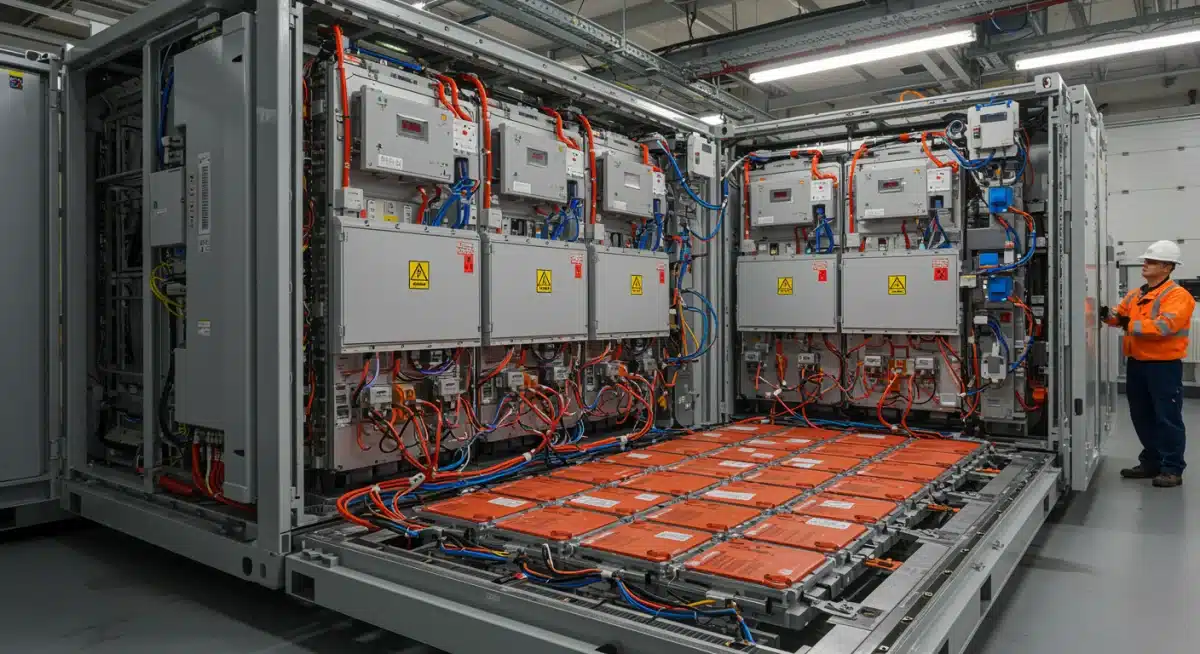
For instance, the new Maverick County Energy Storage project, a 300 MW / 1200 MWh facility, is set to become operational by late Q1, providing crucial support to the ERCOT grid. This project will help absorb excess wind energy during off-peak hours and discharge it during high demand, alleviating congestion and improving overall grid stability. Another key initiative is the development of several smaller, distributed battery systems totaling over 500 MWh across various industrial parks, enhancing localized reliability.
Impact on Grid Stability and Resilience
The primary benefit of utility-scale battery storage is its profound impact on grid stability and resilience. Traditional grids, largely reliant on fossil fuels, struggle to adapt to the rapid fluctuations inherent in renewable energy sources. Battery storage provides the flexibility needed to seamlessly integrate these intermittent power generators, ensuring a consistent and reliable supply of electricity. This technological capability is a game-changer for grid operators.
By absorbing and discharging electricity almost instantaneously, battery storage systems can respond to sudden changes in supply or demand, preventing outages and maintaining frequency stability. This fast response time is critical for managing the modern grid, which is becoming increasingly complex with the proliferation of distributed energy resources and dynamic load patterns. The ability to react quickly helps prevent cascading failures that can lead to widespread blackouts.
Frequency Regulation and Ancillary Services
Battery storage excels at providing essential ancillary services, particularly frequency regulation. When grid frequency deviates from its nominal value (e.g., 60 Hz in the US), battery systems can inject or absorb power within milliseconds to bring it back into balance. This precise control is superior to traditional generators, which take much longer to ramp up or down.
- Frequency Response: Rapid injection or absorption of power to maintain grid frequency.
- Voltage Support: Maintaining stable voltage levels across transmission lines.
- Black Start Capability: Restoring power to the grid after a blackout without external power.
- Peak Shaving: Discharging stored energy during periods of high demand to reduce stress on the grid.
These services are not merely technical advantages; they translate directly into a more robust and dependable electricity supply for consumers and businesses. The Q1 2025 projects are strategically designed to maximize these ancillary service benefits, contributing significantly to the overall health and reliability of regional grids.
Economic Benefits and Market Dynamics
Beyond technical contributions to grid stability, utility-scale battery storage projects offer substantial economic benefits and are reshaping energy market dynamics. The increasing deployment of storage is driving down costs, creating new revenue streams for project developers, and ultimately leading to more competitive electricity prices for consumers. This economic impetus is a key factor in the rapid adoption of the technology.
Battery storage allows for arbitrage opportunities, where electricity is purchased during low-price periods (e.g., when renewable generation is high) and sold during high-price periods (e.g., during peak demand). This not only optimizes resource utilization but also helps to flatten price volatility in wholesale electricity markets. The ability to smooth out price spikes makes energy more affordable and predictable.
Investment Trends and Policy Support
Investment in utility-scale battery storage has surged, with significant capital flowing from both public and private sectors. Government incentives, such as tax credits and grants, coupled with supportive regulatory frameworks, are de-risking projects and attracting a diverse range of investors. This favorable environment is fostering innovation and accelerating deployment.
Key policy drivers in Q1 2025 include: new federal investment tax credit (ITC) provisions specifically for standalone storage, state-level mandates for energy storage procurement, and streamlined permitting processes for large-scale projects. These policies are critical in creating a stable and predictable market for storage developers, ensuring continued growth and investment.
Challenges and Future Outlook
While the trajectory for utility-scale battery storage is overwhelmingly positive, several challenges remain. Addressing these hurdles is crucial for realizing the full potential of this transformative technology. These challenges range from supply chain constraints to regulatory complexities and the need for continuous technological improvement.
One significant challenge is the availability and sourcing of raw materials, particularly lithium, cobalt, and nickel. Geopolitical factors and ethical concerns surrounding mining practices can impact supply chains and drive up costs. Efforts are underway to diversify material sourcing, develop new battery chemistries that use more abundant materials, and improve recycling processes for end-of-life batteries.
Overcoming Integration Hurdles
Integrating large-scale battery systems into existing grid infrastructure requires sophisticated planning and coordination. Regulatory frameworks often lag behind technological advancements, creating bottlenecks in project development and interconnection. Furthermore, ensuring cybersecurity for these critical assets is paramount to prevent disruptions.
- Addressing supply chain vulnerabilities for critical battery components.
- Developing advanced grid management systems to optimize storage dispatch.
- Streamlining regulatory processes for faster project approval.
- Investing in cybersecurity measures to protect energy storage infrastructure.
Despite these challenges, the future outlook for utility-scale battery storage remains exceedingly bright. Continued innovation, coupled with strong policy support and growing economic competitiveness, positions battery storage as an indispensable component of the 21st-century energy grid. The projects emerging in Q1 2025 are a testament to this momentum, paving the way for an even more sustainable and resilient energy future.
Environmental Benefits and Sustainability
The environmental benefits of utility-scale battery storage are substantial and play a critical role in the global transition towards a sustainable energy system. By enabling greater integration of renewable energy sources, battery storage directly contributes to reducing greenhouse gas emissions and mitigating climate change. This represents a fundamental shift away from carbon-intensive power generation.
When renewable energy sources like solar and wind replace fossil fuel-fired power plants, there’s a direct reduction in air pollutants and carbon dioxide emissions. Battery storage accelerates this transition by making renewables more reliable and dispatchable, thereby decreasing the reliance on conventional, polluting peaker plants that are often brought online during periods of high demand.
Reducing Carbon Footprint
The ability of battery storage to smooth out the intermittency of renewables means that more clean energy can be effectively utilized. This reduces the need for fossil fuel backups, leading to a lower overall carbon footprint for the electricity sector. Furthermore, by improving grid efficiency, storage can also reduce transmission losses, which indirectly contributes to lower emissions.
However, it is also important to consider the environmental impact of battery manufacturing and disposal. Efforts are being made to develop more sustainable battery chemistries, improve recycling processes and ensure responsible sourcing of raw materials. The industry is increasingly focused on a circular economy approach to minimize the environmental footprint throughout the entire battery lifecycle.
| Key Aspect | Brief Description |
|---|---|
| Grid Stability | Battery storage enhances grid stability by balancing supply and demand, managing renewable intermittency, and providing rapid frequency regulation. |
| Renewable Integration | Enables higher penetration of solar and wind power by storing excess energy and discharging it when needed, reducing curtailment. |
| Economic Benefits | Offers energy arbitrage, reduces peak demand charges, and creates new revenue streams, contributing to lower electricity costs. |
| Environmental Impact | Reduces carbon emissions by displacing fossil fuel use and enhancing the efficiency of renewable energy deployment. |
Frequently Asked Questions About Battery Storage
Utility-scale battery storage refers to large battery systems connected to the electrical grid. They store electricity from various sources, including renewables, and release it when demand is high or generation is low, optimizing grid performance and reliability.
These projects significantly enhance grid stability by providing rapid response to fluctuations in supply and demand. They perform frequency regulation, voltage support, and peak shaving, preventing outages and ensuring consistent power delivery.
While various chemistries exist, lithium-ion batteries are currently the most common technology for utility-scale storage due to their high energy density, efficiency, and decreasing costs. Other emerging technologies include flow batteries and solid-state batteries.
Economic benefits include energy arbitrage, reduced need for expensive peaker plants, lower transmission congestion costs, and increased grid efficiency. These factors can lead to more stable and potentially lower electricity prices for consumers.
The outlook is very positive, with continued growth projected. Advancements in technology, supportive policies, and the increasing need for renewable energy integration will drive further deployment, making the US grid more resilient and sustainable.
Conclusion
The first quarter of 2025 has unequivocally demonstrated the critical and expanding role of utility-scale battery storage in shaping the future of the US energy grid. New projects across the nation are not merely adding capacity but are fundamentally redesigning grid operations, enhancing stability, and accelerating the integration of renewable energy sources. While challenges such as supply chain management and regulatory harmonization persist, the overarching trend points towards a more resilient, efficient, and sustainable energy infrastructure. As technology continues to evolve and policy support strengthens, utility-scale battery storage will remain an indispensable cornerstone of America’s clean energy transition, delivering profound economic and environmental benefits for decades to come.