Geothermal Energy’s Resurgence: US Projects Expected to Increase Capacity by 10% by 2027
Anúncios
Geothermal Energy’s Resurgence: US Projects Expected to Increase Capacity by 10% by 2027
The energy landscape is constantly evolving, driven by innovation, environmental concerns, and economic shifts. Amidst this dynamic environment, one renewable energy source is quietly but steadily gaining momentum in the United States: geothermal energy. Often overshadowed by solar and wind power, geothermal is now poised for a significant resurgence, with projections indicating a remarkable 10% increase in US capacity by 2027. This anticipated growth marks a pivotal moment for a technology that harnesses the Earth’s internal heat, offering a reliable, baseload power source that can operate 24/7, regardless of weather conditions. The implications of this expansion are far-reaching, touching upon energy independence, grid stability, job creation, and the global fight against climate change. Understanding the drivers behind this renewed interest, the technological advancements making it possible, and the potential impact it will have on the nation’s energy mix is crucial for anyone interested in the future of sustainable power.
For decades, geothermal energy has been a consistent, if sometimes overlooked, contributor to the US power grid. Unlike intermittent sources like solar and wind, geothermal plants provide a continuous supply of electricity, making them an invaluable component for grid stability. The Earth’s core provides a virtually endless supply of heat, and geothermal technology simply taps into this immense reservoir. This inherent reliability is a key factor in its growing appeal, especially as grids integrate more variable renewable sources. The projected 10% increase in capacity by 2027 represents not just a numerical bump, but a strategic investment in a diversified, resilient, and decarbonized energy future for the United States. This article will delve into the intricacies of this exciting development, exploring the technologies, challenges, and immense potential that US geothermal growth presents.
The Unseen Giant: Understanding Geothermal Energy
Before diving into the specifics of the US expansion, it’s essential to grasp what geothermal energy is and how it works. At its core, geothermal energy is heat from within the Earth. This heat is a result of the planet’s formation and the ongoing radioactive decay of minerals in its interior. This thermal energy manifests in various ways, from hot springs and geysers to vast reservoirs of hot water and steam trapped beneath the Earth’s surface.
Types of Geothermal Power Plants
There are generally three primary types of geothermal power plants, each designed to harness this subsurface heat in slightly different ways:
- Dry Steam Plants: These are the oldest and simplest type of geothermal power plant. They directly use steam from the geothermal reservoir to turn a turbine, which then activates a generator to produce electricity.
- Flash Steam Plants: The most common type, flash steam plants take high-pressure hot water from deep inside the Earth and convert it to steam in a “flasher” vessel. This steam then drives a turbine. Any remaining water is injected back into the reservoir.
- Binary Cycle Plants: These plants use moderate-temperature geothermal water to heat a secondary fluid (like isobutane or isopentane) that has a much lower boiling point than water. The heated secondary fluid flashes to vapor, which then drives a turbine. The geothermal water never comes into direct contact with the turbine, and it is reinjected back into the Earth. This type is particularly important for the future of US geothermal growth as it can utilize lower-temperature resources.
The Baseload Advantage
One of the most compelling advantages of geothermal energy is its baseload capacity. Unlike solar panels that only produce electricity when the sun shines or wind turbines that require sufficient wind, geothermal plants operate continuously. This constant, reliable output makes them an ideal complement to intermittent renewable sources, helping to stabilize the grid and ensure a consistent power supply. This characteristic is becoming increasingly vital as nations strive to decarbonize their energy sectors while maintaining grid reliability.
Drivers Behind the US Geothermal Resurgence
Several converging factors are fueling the projected 10% increase in US geothermal capacity by 2027. These drivers encompass technological breakthroughs, supportive policies, economic incentives, and a growing recognition of geothermal’s unique benefits.
Technological Advancements: Enhanced Geothermal Systems (EGS)
Perhaps the most significant driver is the advancement in drilling technologies and the development of Enhanced Geothermal Systems (EGS). Traditional geothermal resources are often found in geologically active regions where hot water or steam naturally exists near the surface. EGS technology, however, allows us to create or enhance geothermal reservoirs in areas that previously weren’t considered viable. This involves injecting water into hot, dry rock formations deep underground, fracturing the rock to create pathways for water to circulate, and then extracting the heated water or steam. This innovation dramatically expands the potential geographical footprint for geothermal development across the US.
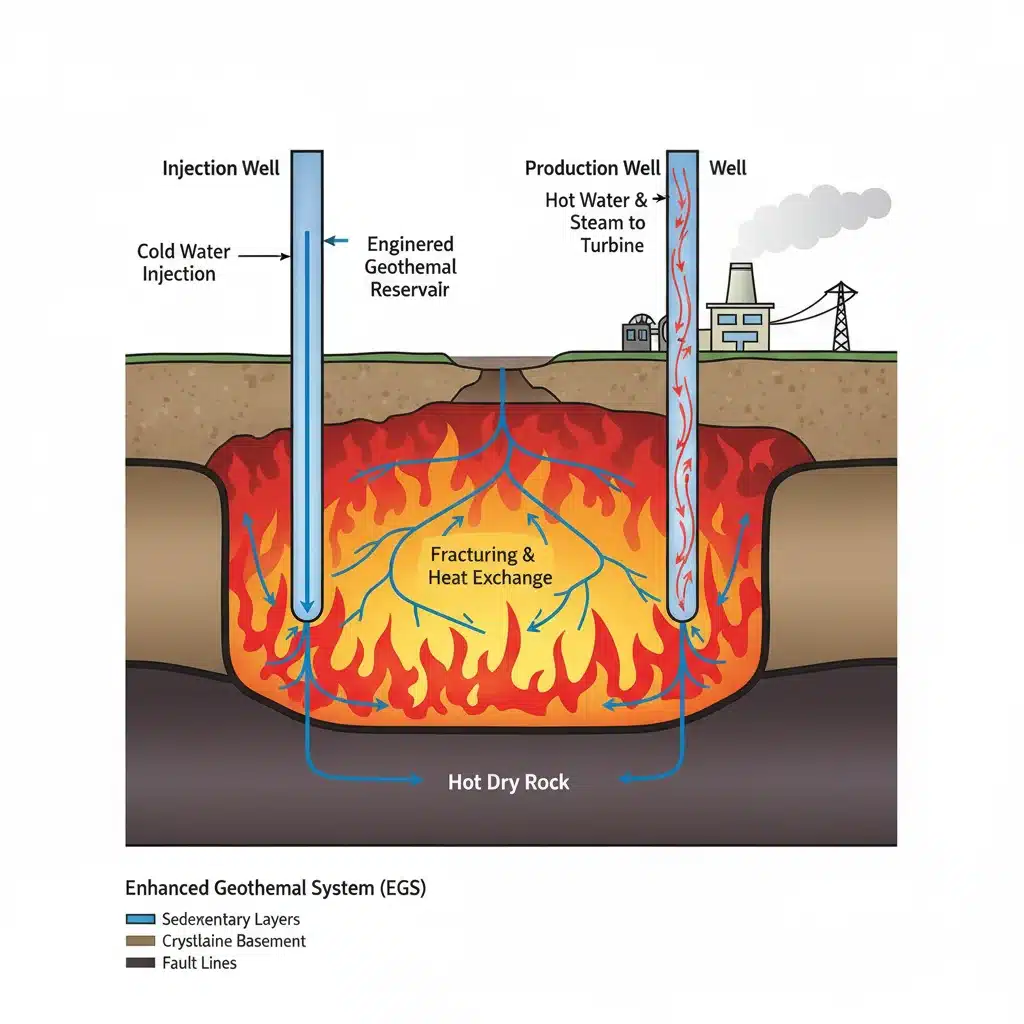
EGS effectively “engineers” a geothermal reservoir where one doesn’t naturally exist in an easily accessible form. This opens up vast swaths of the country to geothermal development, moving beyond the traditional hotspots in the Western United States. The Department of Energy has been a significant proponent of EGS research and development, recognizing its potential to unlock gigawatts of clean, dispatchable power. The success of pilot projects and the refinement of drilling techniques are paving the way for commercial-scale EGS deployment, which is a cornerstone of the anticipated US geothermal growth.
Supportive Government Policies and Incentives
The US government, through various legislative initiatives, has been instrumental in creating a more favorable environment for renewable energy, including geothermal. The Inflation Reduction Act (IRA) of 2022, for instance, includes significant tax credits and incentives for clean energy projects, making geothermal investments more attractive. These policies provide long-term certainty for developers and investors, reducing financial risks and accelerating project timelines. Furthermore, federal funding for research and development into geothermal technologies, particularly EGS, continues to push the boundaries of what’s possible.
Economic Viability and Job Creation
As the technology matures and deployment scales up, the economic viability of geothermal projects improves. The long operational lifespan of geothermal plants (often 30-50 years or more) and their low operating costs contribute to competitive electricity prices. Moreover, geothermal development creates a wide range of jobs, from geologists and drillers to engineers and construction workers, contributing to local economies. These are often high-paying, skilled jobs that cannot be easily offshored, offering a significant economic benefit to the regions where projects are developed. The economic stimulus provided by these projects is a powerful incentive for continued investment and expansion, reinforcing the trajectory of US geothermal growth.
Energy Security and Grid Reliability
The pursuit of energy independence and grid reliability is a national priority. Geothermal energy, with its baseload capabilities and indigenous resource base, plays a crucial role in achieving these goals. Reducing reliance on imported fossil fuels and diversifying the energy mix with a stable, domestic power source enhances national security. Furthermore, the distributed nature of potential geothermal resources means that power generation can occur closer to demand centers, reducing transmission losses and improving grid resilience against disruptions.
Challenges and Opportunities for Geothermal Expansion
Despite the optimistic projections, the path to a 10% increase in US geothermal capacity by 2027 is not without its challenges. Addressing these hurdles will be critical to realizing the full potential of this renewable resource.
High Upfront Costs and Drilling Risks
One of the primary challenges for geothermal development is the high upfront capital cost, particularly associated with exploration and drilling. Locating suitable reservoirs and drilling deep wells can be expensive and carries geological risks. “Drill or no drill” decisions require substantial investment without guaranteed success, which can deter investors. However, advancements in seismic imaging, geophysical surveys, and artificial intelligence are helping to reduce exploration risks and improve drilling success rates. Government-backed risk mitigation programs and innovative financing mechanisms are also crucial for de-risking these initial phases.
Permitting and Siting Issues
Like all large-scale infrastructure projects, geothermal plants face complex permitting and siting challenges. Navigating environmental regulations, land use policies, and securing necessary approvals can be time-consuming and costly. Streamlining these processes while ensuring environmental protection is essential for accelerating deployment. Engaging with local communities early and transparently can also help build support and address concerns, facilitating smoother project development.
Water Usage Concerns
While geothermal plants typically consume less water than thermal power plants, some designs, especially those in arid regions, can raise concerns about water usage. However, many modern geothermal plants, particularly binary cycle systems, operate in a closed-loop system, recycling the water used, thereby minimizing fresh water consumption. Continued innovation in water management and the development of air-cooled systems can further mitigate these concerns, making geothermal a more attractive option in water-stressed areas.
Competition with Other Renewables
Geothermal energy also faces competition from other rapidly expanding renewable technologies like solar and wind, which have seen dramatic cost reductions. While geothermal offers unique baseload advantages, its higher upfront costs can sometimes make it less competitive in certain markets. However, as grids become more saturated with intermittent renewables, the value of dispatchable, 24/7 power from geothermal is likely to increase, commanding a premium for its reliability and grid stability benefits. This evolving energy market dynamic will be key to sustaining US geothermal growth.
Key Projects and Regions Driving the Growth
The projected 10% increase in US geothermal capacity by 2027 will not be evenly distributed across the country. Certain regions, rich in geothermal resources and supported by favorable regulatory environments, are expected to lead this expansion.
The Western United States: A Geothermal Hotbed
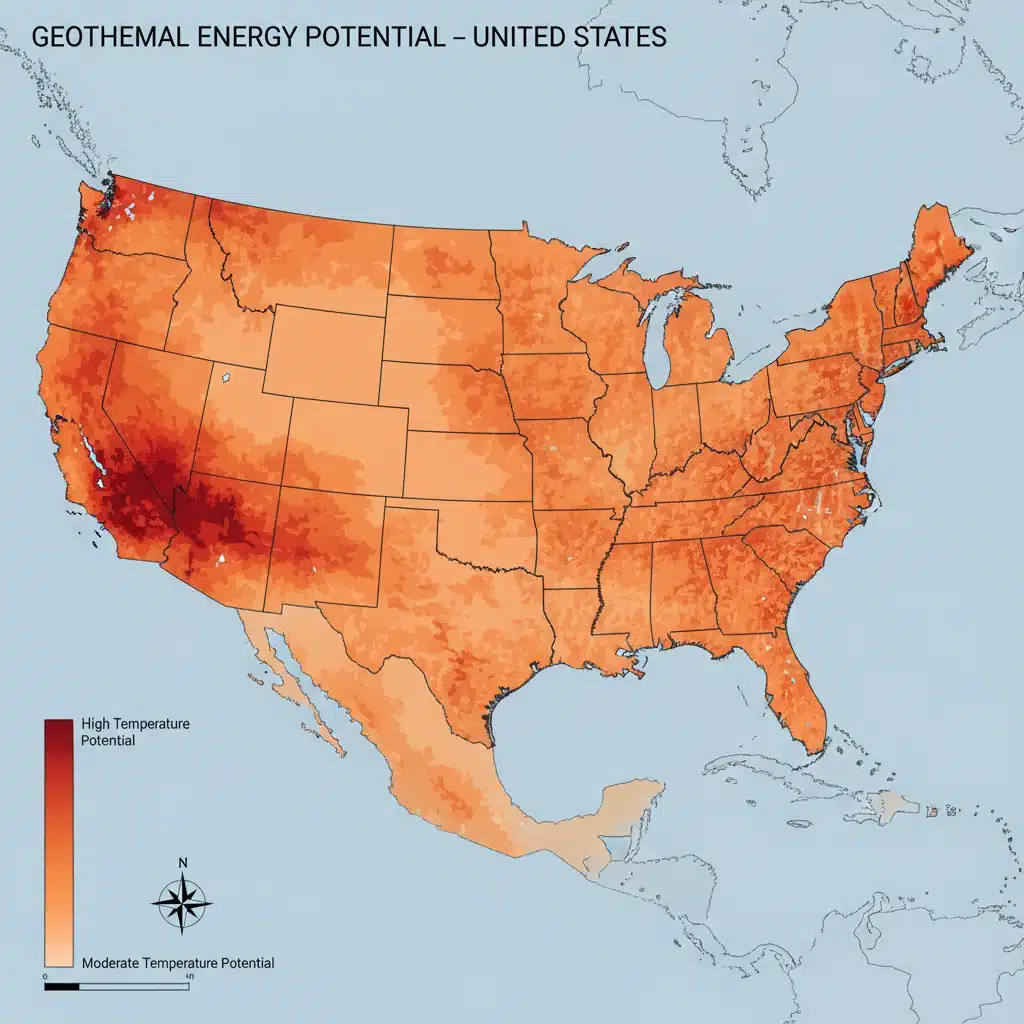
The Western United States, particularly states like California, Nevada, Utah, Oregon, and Idaho, has historically been the epicenter of geothermal development due to its abundant geological activity. This region is characterized by tectonic plate boundaries, volcanic activity, and thin crusts, which bring heat closer to the surface. California, home to The Geysers – the largest geothermal complex in the world – continues to be a leader in geothermal power generation. New projects and expansions in these states, often leveraging existing infrastructure and expertise, will contribute significantly to the national capacity increase.
Emerging Geothermal Frontiers: EGS in the East
While the West dominates current geothermal production, the advent of EGS technology is opening up new frontiers. States in the central and eastern US, traditionally not considered geothermal hotspots, are now being explored for their EGS potential. Projects demonstrating the viability of EGS in diverse geological settings are crucial for unlocking the immense, untapped geothermal resource base across the entire country. The Department of Energy’s Frontier Observatory for Research in Geothermal Energy (FORGE) initiative in Utah is a prime example of efforts to advance EGS technology and demonstrate its commercial feasibility.
Specific Project Spotlights
Several notable projects are either under development or in various stages of planning that will contribute to the projected growth. These include expansions of existing facilities, as well as entirely new ventures utilizing advanced drilling and reservoir management techniques. While specific project details are constantly evolving, the trend is clear: a renewed focus on leveraging both conventional and unconventional geothermal resources. These projects often involve collaborations between government agencies, private developers, and academic institutions, pooling expertise and resources to overcome technical and financial challenges. Their success will be paramount to achieving the ambitious goals for US geothermal growth.
The Environmental and Economic Benefits of Expanded Geothermal
The anticipated surge in US geothermal capacity brings with it a host of environmental and economic advantages that align with broader national goals for sustainability and prosperity.
Reduced Carbon Emissions
Geothermal power plants produce very low to near-zero greenhouse gas emissions during operation. Unlike fossil fuel plants, they do not burn fuel to generate electricity, making them a crucial tool in the fight against climate change. Expanding geothermal capacity directly contributes to decarbonizing the electricity sector, helping the US meet its climate targets and transition to a cleaner energy economy. This environmental benefit is a core driver for increasing US geothermal growth.
Minimal Land Footprint
Compared to other large-scale renewable energy projects like solar farms or wind farms, geothermal power plants typically require a relatively small land footprint for the amount of electricity they produce. Much of the infrastructure is underground, minimizing surface disruption and preserving natural habitats. This characteristic makes geothermal an attractive option in areas where land availability is a concern or where preserving scenic landscapes is a priority.
Water Conservation (Closed-Loop Systems)
As mentioned earlier, modern geothermal plants, especially binary cycle systems, often operate in closed-loop systems, meaning the water or working fluid is continuously recycled. This significantly reduces fresh water consumption compared to traditional thermal power plants that require vast amounts of water for cooling. This efficiency in water use is a critical environmental benefit, particularly in drought-prone regions of the Western US where geothermal resources are abundant.
Economic Stability and Local Investment
Geothermal projects represent significant long-term investments in local economies. They create stable, well-paying jobs during construction and operation, provide tax revenues to local governments, and often offer opportunities for local businesses to supply goods and services. The predictable nature of geothermal operations also provides long-term energy price stability for consumers and industries, shielding them from the volatility of fossil fuel markets. This economic stability further cements the value proposition of US geothermal growth.
The Road Ahead: Policy, Innovation, and Public Awareness
To ensure the projected 10% increase in US geothermal capacity by 2027 is not just a temporary spike but a sustained trend, continued effort will be required in several key areas.
Continued Policy Support and Regulatory Streamlining
Maintaining and expanding supportive government policies, including tax incentives, grants, and loan programs, will be crucial. Furthermore, efforts to streamline the permitting and regulatory processes at federal, state, and local levels can significantly reduce project development timelines and costs. A predictable and efficient regulatory environment is vital for attracting private investment and accelerating deployment.
Investment in Research and Development
Ongoing investment in research and development, particularly for advanced geothermal technologies like EGS, superhot rock geothermal, and co-production with oil and gas wells, is essential. These innovations can unlock even greater geothermal potential, reduce costs, and improve efficiency, making geothermal competitive in a broader range of geological settings. The Department of Energy’s role in funding these cutting-edge research initiatives will remain paramount.
Public Education and Awareness
Increasing public awareness and understanding of geothermal energy’s benefits is also important. Often overshadowed by other renewables, geothermal’s unique attributes – its baseload capacity, small land footprint, and minimal emissions – are not always widely known. Educating policymakers, communities, and the general public about the value proposition of geothermal can foster greater support for projects and policies that promote its expansion. This public engagement will be key to sustaining US geothermal growth over the long term.
Grid Modernization and Integration
As more diverse energy sources come online, modernizing the electricity grid to efficiently integrate and manage different types of generation will be critical. Geothermal’s baseload nature can actually help in this regard, providing stability to a grid increasingly reliant on intermittent sources. Investing in smart grid technologies, energy storage solutions, and improved transmission infrastructure will ensure that the new geothermal capacity can be effectively utilized and delivered to consumers.
Conclusion: A Bright Future for US Geothermal Growth
The projected 10% increase in US geothermal capacity by 2027 signals a new era for this often-underestimated renewable energy source. Driven by technological breakthroughs in Enhanced Geothermal Systems, supportive government policies, and a growing recognition of its unique baseload and environmental benefits, geothermal is poised to play a more prominent role in the nation’s energy mix. While challenges related to upfront costs, drilling risks, and permitting remain, ongoing innovation, strategic investments, and collaborative efforts are paving the way for overcoming these hurdles.
As the United States continues its transition towards a clean energy future, the reliable, continuous power provided by geothermal energy will be an indispensable asset. It offers a pathway to enhanced energy security, significant reductions in carbon emissions, and the creation of skilled jobs, all while providing a stable foundation for the grid. The resurgence of US geothermal growth is not just about adding megawatts; it’s about building a more resilient, sustainable, and prosperous energy future for the nation. The coming years will be critical in demonstrating the full potential of the Earth’s hidden heat, solidifying geothermal’s position as a cornerstone of America’s renewable energy portfolio.