Home Battery Storage: Top Technologies for 2026 Performance
Anúncios
Home Battery Storage: Top Technologies for 2026 Performance
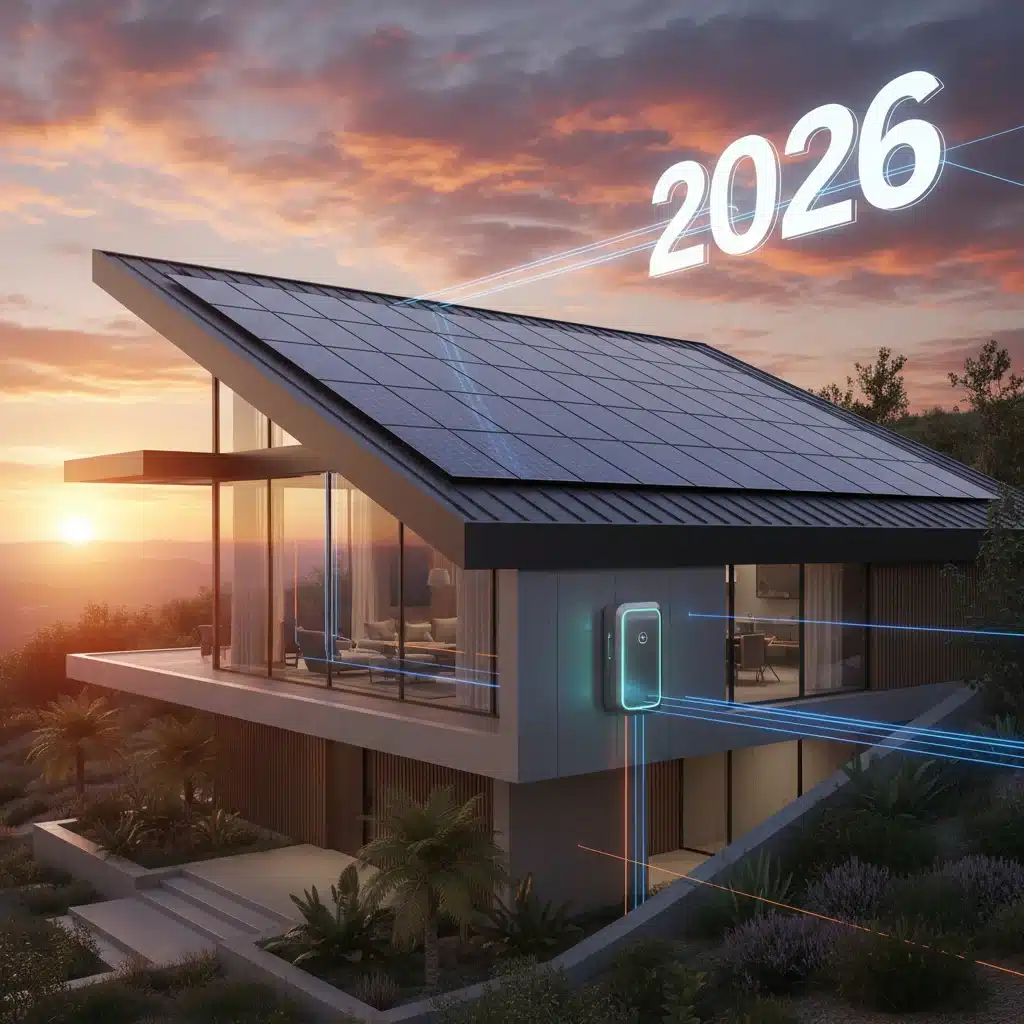
As the world pivots towards a more sustainable future, the concept of energy independence for homeowners has never been more relevant. With the increasing adoption of solar panels and fluctuating grid reliability, the demand for efficient and reliable home battery storage solutions is skyrocketing. For homeowners looking to future-proof their energy needs, understanding the cutting-edge technologies available in 2026 is crucial. This comprehensive guide delves into the leading contenders in the home battery storage market, comparing their performance, cost-effectiveness, longevity, and environmental impact.
The energy landscape is evolving rapidly, and by 2026, we anticipate significant advancements and wider adoption of several key battery technologies. These systems not only store excess solar energy but also provide backup power during outages, optimize energy consumption, and can even participate in grid services for additional financial benefits. Choosing the right home battery storage system is a significant investment, one that promises both immediate savings and long-term security. Let’s explore the options that will define residential energy storage in the coming years.
The Rise of Home Battery Storage: Why Now?
The impetus behind the surge in home battery storage isn’t singular; it’s a confluence of factors. First, the decreasing cost of renewable energy generation, particularly solar photovoltaics, has made self-sufficiency more attainable. Homeowners are keen to maximize their solar investment by storing surplus energy instead of selling it back to the grid at potentially lower rates or losing it entirely. Second, grid instability, driven by extreme weather events and aging infrastructure, has highlighted the critical need for reliable backup power. A robust home battery storage system can keep essential appliances running when the grid fails, offering peace of mind.
Furthermore, government incentives and evolving energy policies are increasingly favoring decentralized energy solutions. Many regions offer rebates, tax credits, or performance-based incentives for installing battery storage, making the financial case even stronger. The environmental consciousness of consumers also plays a significant role; reducing reliance on fossil fuels and minimizing one’s carbon footprint are powerful motivators. Finally, advancements in battery technology itself have led to safer, more efficient, and longer-lasting products, making home battery storage a viable and attractive option for a wider demographic.
Understanding these underlying trends is essential for appreciating the technological innovations we’re about to discuss. The market for home battery storage is dynamic, with new players and improved chemistries constantly emerging. Our focus for 2026 will be on the technologies that offer the best balance of performance, cost, and sustainability for the average homeowner.
Lithium-Ion Batteries: The Current Dominator and Future Evolution
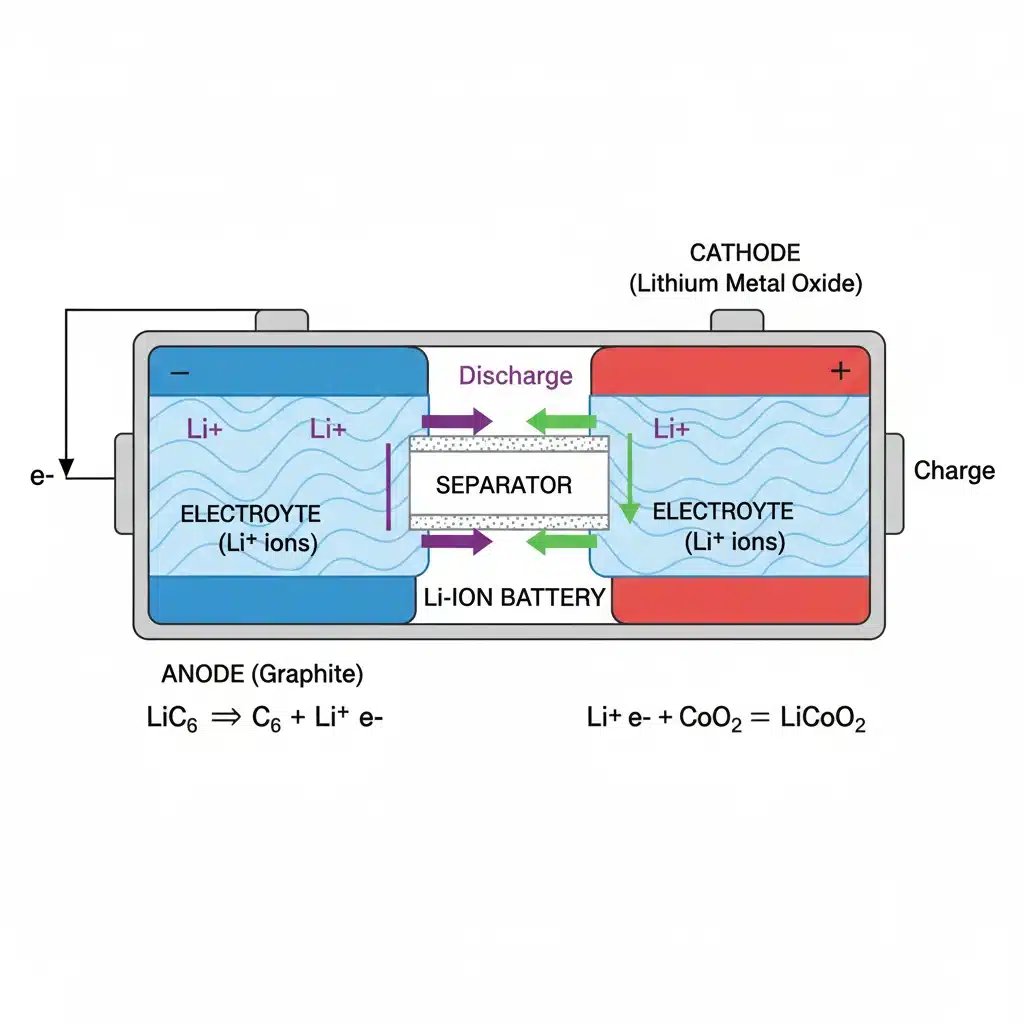
When discussing home battery storage, lithium-ion (Li-ion) batteries are often the first technology that comes to mind. They currently dominate the market, largely due to their high energy density, relatively compact size, and established manufacturing processes. From the Tesla Powerwall to the LG Chem RESU, Li-ion batteries have set the benchmark for residential energy storage.
Chemistry Variations and Their Impact
Within the broad category of lithium-ion, several distinct chemistries exist, each with its own advantages and disadvantages for home battery storage applications:
- Lithium Iron Phosphate (LFP): This chemistry is gaining significant traction for residential use due to its excellent safety profile, longer cycle life, and lower cost compared to other Li-ion variants. While its energy density is slightly lower, its superior stability and reduced risk of thermal runaway make it a preferred choice for stationary applications like home battery storage. We expect LFP to be the dominant Li-ion chemistry in 2026 for residential systems.
- Nickel Manganese Cobalt (NMC): Often found in electric vehicles, NMC offers higher energy density, meaning more power in a smaller package. However, it tends to be more expensive and has a slightly higher thermal runaway risk if not properly managed. While some early home battery storage systems used NMC, the trend is shifting towards LFP for safety and cost reasons in stationary applications.
- Lithium Nickel Cobalt Aluminum Oxide (NCA): Similar to NMC, NCA offers high energy density but is typically more expensive and less stable at high temperatures. It’s less common in residential storage than LFP or NMC.
Advantages of Lithium-Ion for Home Battery Storage
- High Energy Density: Stores a significant amount of energy in a relatively small volume, making them space-efficient.
- High Efficiency: Typically boast round-trip efficiencies of 90% or more, meaning minimal energy loss during charging and discharging.
- Long Cycle Life: Modern Li-ion batteries, especially LFP, can last for thousands of cycles, translating to 10-15+ years of daily use.
- Rapid Charging/Discharging: Can deliver and accept power quickly, ideal for managing peak loads or sudden grid outages.
- Established Technology: Mature supply chains and extensive research and development mean continuous improvements and reliability.
Disadvantages and Challenges
- Cost: While prices are decreasing, Li-ion batteries still represent a significant upfront investment.
- Temperature Sensitivity: Performance and lifespan can be affected by extreme hot or cold temperatures, requiring robust thermal management systems.
- Safety Concerns (though improving): Early Li-ion chemistries had a reputation for thermal runaway, though LFP has largely mitigated these risks for home battery storage.
- Environmental Impact: Mining of raw materials (lithium, cobalt) and recycling processes pose environmental challenges, though efforts are underway to improve sustainability.
By 2026, we anticipate Li-ion batteries, particularly LFP variants, to remain the primary choice for home battery storage due to their proven track record, ongoing cost reductions, and enhanced safety features. Further innovations in battery management systems (BMS) will also optimize their performance and extend their lifespan.
Flow Batteries: The Long-Duration Contender
While lithium-ion batteries excel in energy density, they face limitations in terms of very long-duration storage (e.g., storing energy for multiple days). This is where flow batteries, a less common but highly promising technology for home battery storage, enter the picture. Instead of storing energy in solid electrodes, flow batteries store energy in liquid electrolyte solutions contained in external tanks.
How Flow Batteries Work
In a flow battery, two liquid electrolytes are pumped from separate tanks through a central cell stack, where an electrochemical reaction occurs, generating or storing electricity. The power output (kW) is determined by the size of the cell stack, while the energy capacity (kWh) is determined by the volume of the electrolyte tanks. This decoupling of power and energy is a key advantage.
Types of Flow Batteries
- Vanadium Redox Flow Batteries (VRFB): The most mature flow battery technology, VRFBs use vanadium ions in different oxidation states as the active material. They are known for their long lifespan, deep discharge capability, and inherent safety.
- Zinc-Bromine Flow Batteries: Another established type, offering good energy density but with some challenges related to bromine’s corrosive nature and self-discharge.
- Organic Flow Batteries: An emerging category that uses organic molecules dissolved in aqueous solutions, aiming for lower cost and greater sustainability.
Advantages of Flow Batteries for Home Battery Storage
- Exceptional Longevity: Flow batteries can typically undergo tens of thousands of cycles without significant degradation, often rated for 20+ years of operation.
- Scalability: Energy capacity can be easily scaled by simply adding larger electrolyte tanks, making them ideal for future expansion.
- Inherent Safety: The active materials are typically non-flammable and stored in separate tanks, virtually eliminating the risk of thermal runaway.
- Deep Discharge Capability: Can be fully discharged repeatedly without damaging the battery, unlike Li-ion.
- No Self-Discharge: When the pumps are off, the electrolytes are separated, meaning very little energy loss over time.
Disadvantages and Challenges
- Lower Energy Density: They are significantly larger and heavier than Li-ion batteries for the same energy capacity, requiring more installation space. This is a major hurdle for widespread home battery storage adoption.
- Lower Round-Trip Efficiency: Typically 70-85%, which is less efficient than Li-ion.
- Higher Upfront Cost (currently): Though this is expected to decrease with increased manufacturing scale.
- Complexity: Involve pumps, pipes, and tanks, making them more complex to install and maintain than solid-state batteries.
While flow batteries are currently more common in commercial and utility-scale projects due to their size and cost, advancements in miniaturization and cost reduction could make them a compelling option for certain segments of the home battery storage market by 2026, especially for homeowners prioritizing extreme longevity and safety over compact size.
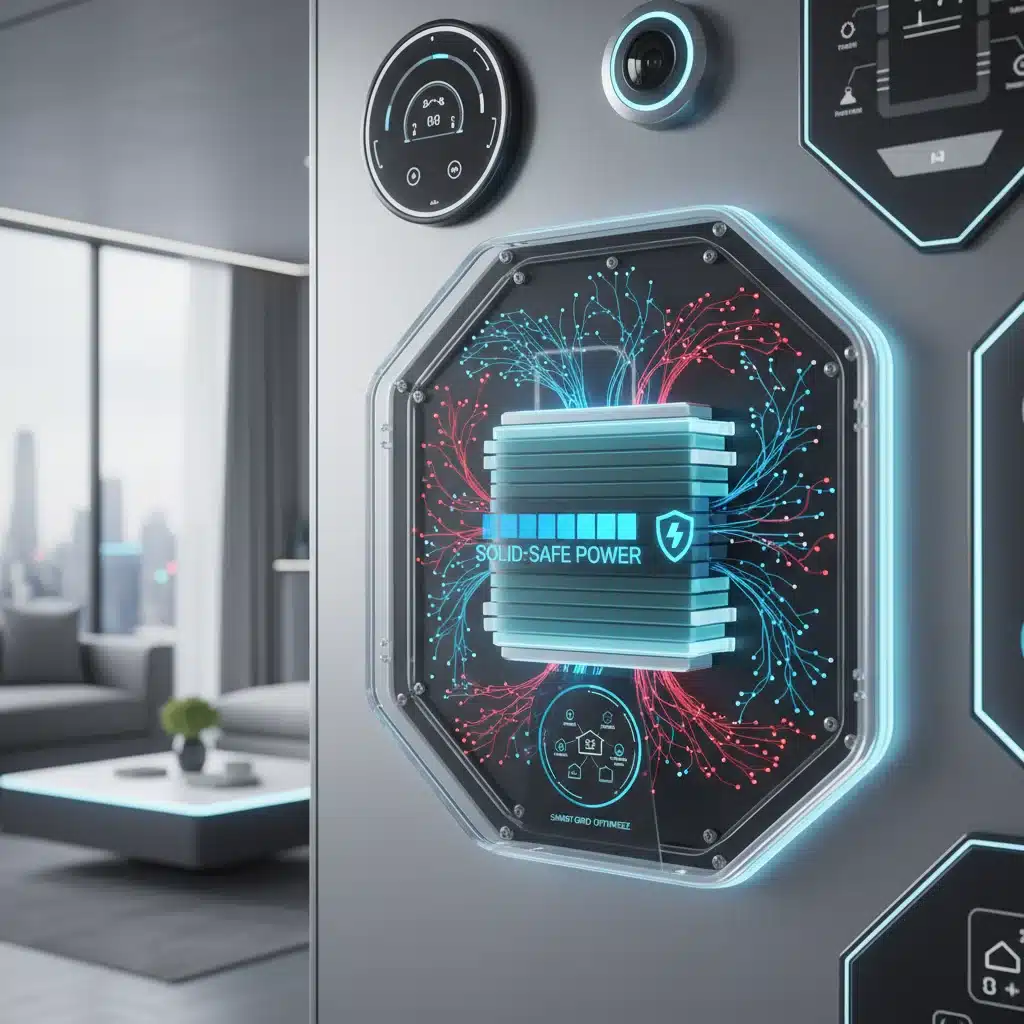
Solid-State Batteries: The Future of Home Battery Storage?
Perhaps the most anticipated breakthrough in battery technology for both electric vehicles and home battery storage is the solid-state battery. Unlike traditional Li-ion batteries that use liquid or gel electrolytes, solid-state batteries replace these with a solid electrolyte material. This fundamental change promises to revolutionize battery performance and safety.
How Solid-State Batteries Work
In a solid-state battery, ions move through a solid material (e.g., ceramic, glass, or polymer) instead of a liquid. This eliminates the flammable liquid electrolyte, which is a primary safety concern for conventional Li-ion batteries. The solid electrolyte also allows for the use of lithium metal anodes, which can dramatically increase energy density.
Advantages of Solid-State Batteries for Home Battery Storage
- Significantly Enhanced Safety: The elimination of flammable liquid electrolytes drastically reduces the risk of thermal runaway, making them inherently safer for residential applications.
- Higher Energy Density: Potential for much greater energy storage in a smaller, lighter package. This means more kWh per cubic foot, a crucial factor for home battery storage where space is often limited.
- Longer Cycle Life: Expected to offer exceptional cycle life due to the stability of solid electrolytes and reduced degradation mechanisms.
- Wider Operating Temperature Range: Solid electrolytes are generally more stable across a broader range of temperatures, potentially reducing the need for complex thermal management systems.
- Faster Charging: Some solid-state designs promise ultra-fast charging capabilities.
Disadvantages and Challenges
- High Manufacturing Cost (currently): The primary hurdle is bringing down the cost of manufacturing these complex devices at scale.
- Technical Hurdles: Challenges remain in ensuring good contact between the solid electrodes and electrolyte, managing volumetric changes during cycling, and achieving high ionic conductivity at room temperature.
- Limited Commercial Availability (for residential): While prototypes and small-scale production exist for specialized applications, widespread commercial availability for home battery storage is still a few years away, though 2026 could see early adopters.
- Dendrite Formation: A persistent challenge, especially with lithium metal anodes, where lithium dendrites can grow and short-circuit the battery, though solid electrolytes are designed to mitigate this.
By 2026, we anticipate solid-state batteries to be on the cusp of significant commercialization for home battery storage, possibly appearing in premium or niche markets first. Their safety and energy density advantages are so compelling that they are likely to become a dominant force in the long term, eventually surpassing traditional Li-ion for many applications.
Comparing the Top 3 Home Battery Storage Technologies for 2026
To help you make an informed decision, let’s directly compare Li-ion (specifically LFP), Flow, and Solid-State batteries across key metrics relevant to home battery storage in 2026:
1. Performance and Efficiency
- Lithium-Ion (LFP): Excellent round-trip efficiency (90%+) and high power output for quick energy delivery. Proven performance for daily cycling.
- Flow Batteries: Lower efficiency (70-85%) but exceptional for long-duration storage. Power and energy are independent, allowing for flexible design.
- Solid-State: Expected to match or exceed Li-ion efficiency with potentially higher power density. Performance will be a key selling point.
2. Safety
- Lithium-Ion (LFP): Very safe compared to other Li-ion chemistries, with significantly reduced risk of thermal runaway. Still requires robust BMS.
- Flow Batteries: Inherently safe due to non-flammable liquid electrolytes stored externally. Minimal thermal runaway risk.
- Solid-State: The safest option, as the solid electrolyte eliminates the primary cause of fire in traditional Li-ion batteries.
3. Longevity and Cycle Life
- Lithium-Ion (LFP): Good cycle life (3,000-6,000 cycles), typically warrantied for 10-15 years.
- Flow Batteries: Exceptional cycle life (10,000-20,000+ cycles), often warrantied for 20+ years, making them ideal for continuous, deep cycling.
- Solid-State: Anticipated to have very long cycle life, potentially surpassing current Li-ion, contributing to a longer overall system lifespan for home battery storage.
4. Cost (Upfront Investment)
- Lithium-Ion (LFP): Currently the most cost-effective option for typical residential energy storage, with prices continuing to decline.
- Flow Batteries: Higher upfront cost per kWh currently, but their extreme longevity might offer a lower total cost of ownership over a very long period.
- Solid-State: Likely to be the most expensive initially due to new manufacturing processes, but costs are expected to decrease rapidly post-commercialization.
5. Size and Space Requirements
- Lithium-Ion (LFP): Compact and relatively small, suitable for wall mounting or discreet installation.
- Flow Batteries: Significantly larger and heavier, requiring more dedicated space, often in a utility room or outside.
- Solid-State: Expected to be even more compact than Li-ion, maximizing energy density in a smaller footprint.
6. Environmental Impact & Sustainability
- Lithium-Ion (LFP): Concerns about raw material mining and recycling, though efforts are improving. LFP is generally considered more sustainable than NMC/NCA.
- Flow Batteries: Often use more abundant materials (e.g., vanadium). Electrolytes can potentially be reused or recycled more easily, offering a better environmental profile in some aspects.
- Solid-State: Promises a more sustainable future by potentially using safer, more abundant materials and having a longer lifespan, reducing waste.
Choosing the Right Home Battery Storage System for Your Needs in 2026
The best home battery storage solution for you in 2026 will depend entirely on your specific priorities, budget, and energy consumption patterns. Here’s a breakdown to help you decide:
Consider Lithium-Ion (LFP) if:
- You prioritize a balance of cost, performance, and compactness.
- You need reliable daily cycling for solar self-consumption and backup power.
- You have limited space for installation.
- You want a proven technology with extensive market support.
Consider Flow Batteries if:
- Extreme longevity (20+ years) and deep discharge capabilities are your top priorities.
- Safety is paramount, and you want an inherently non-flammable solution.
- You have ample space for a larger system.
- You envision needing very long-duration storage (e.g., multiple days of backup).
- You are an early adopter willing to invest in a potentially higher upfront cost for long-term benefits.
Keep an Eye on Solid-State Batteries if:
- You are willing to wait a bit longer for potentially groundbreaking technology.
- You seek the ultimate in safety, energy density, and future-proof performance.
- Budget is less of a constraint, and you want the most advanced solution available.
- You have minimal space but require maximum energy storage.
The Future Outlook for Home Battery Storage Beyond 2026
The innovation in home battery storage is relentless. Beyond 2026, we can expect continued advancements across all these technologies, alongside the emergence of new contenders. Research into alternative chemistries, such as sodium-ion batteries, is gaining momentum. Sodium is far more abundant and cheaper than lithium, potentially offering ultra-low-cost alternatives, though their energy density and cycle life are still being optimized for residential applications.
Furthermore, the integration of artificial intelligence (AI) and machine learning (ML) into battery management systems will become even more sophisticated. These smart systems will learn your energy consumption patterns, forecast solar generation, and optimize battery charging and discharging cycles to maximize savings and efficiency automatically. They will also facilitate easier participation in virtual power plants (VPPs), allowing homeowners to sell stored energy back to the grid during peak demand and earn revenue.
Standardization of battery interfaces and communication protocols will also simplify installation and ensure greater compatibility between different components of a home energy system. The focus will not just be on the battery itself but on the entire ecosystem that enables a truly smart, resilient, and independent home energy experience. The journey towards complete energy independence for homeowners is well underway, with home battery storage at its very heart.
Conclusion
By 2026, homeowners will have an increasingly sophisticated array of home battery storage options to choose from. Lithium-ion, particularly the LFP variant, will continue to be a robust and reliable workhorse, offering an excellent balance of cost and performance. Flow batteries will carve out a niche for those prioritizing extreme longevity, safety, and scalability for long-duration storage, despite their larger footprint.
Meanwhile, solid-state batteries, while perhaps still in early adoption phases for residential use by 2026, represent the most exciting long-term prospect, promising unparalleled safety, energy density, and performance. The decision ultimately hinges on a careful evaluation of your specific needs, budget, and long-term energy goals. Consulting with a qualified solar and energy storage professional is always recommended to tailor the best solution for your home.
Investing in home battery storage is more than just buying a device; it’s investing in energy security, financial savings, and a more sustainable lifestyle. As these technologies mature and become more accessible, the dream of a truly energy-independent home moves closer to reality, transforming how we power our lives.