Grid-Scale Storage 2026: Flow vs. Solid-State Batteries for 100MW Projects

Anúncios
The Future of Grid-Scale Energy Storage: Flow Batteries vs. Solid-State for 100MW Projects in 2026
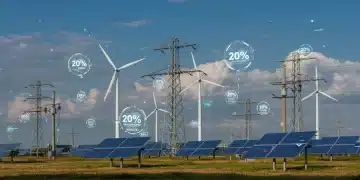
The global energy landscape is undergoing a monumental transformation, driven by an urgent need for decarbonization, energy independence, and grid stability. At the heart of this revolution lies grid-scale energy storage, a technology critical for integrating intermittent renewable energy sources like solar and wind into national grids. As we look towards 2026, the demand for robust, efficient, and economically viable storage solutions for projects exceeding 100MW is escalating. This article delves into a critical comparison of two prominent contenders in this arena: flow batteries and solid-state batteries, evaluating their potential, challenges, and suitability for large-scale applications.
The imperative for advanced energy storage is clear. Renewable energy sources, while environmentally friendly, suffer from variability. Solar panels only generate power when the sun shines, and wind turbines require wind. This intermittency creates significant challenges for grid operators who must maintain a constant balance between electricity supply and demand. Without effective storage, large-scale integration of renewables can lead to grid instability, curtailment of renewable generation, and reliance on fossil fuel peaker plants. Therefore, the evolution of grid-scale energy storage technologies is not merely an incremental improvement but a foundational shift enabling a sustainable energy future.
In 2026, the criteria for selecting an optimal grid-scale energy storage solution are multifaceted. Beyond raw capacity, factors such as cycle life, safety, footprint, environmental impact, and, crucially, cost-effectiveness will dictate adoption. Developers of 100MW projects face immense pressure to choose technologies that offer long-term reliability and a strong return on investment. This detailed analysis aims to provide clarity on how flow batteries and solid-state batteries measure up against these stringent requirements, offering insights into their respective strengths and weaknesses.
Understanding Flow Batteries: The Long-Duration Contender for Grid-Scale Energy Storage
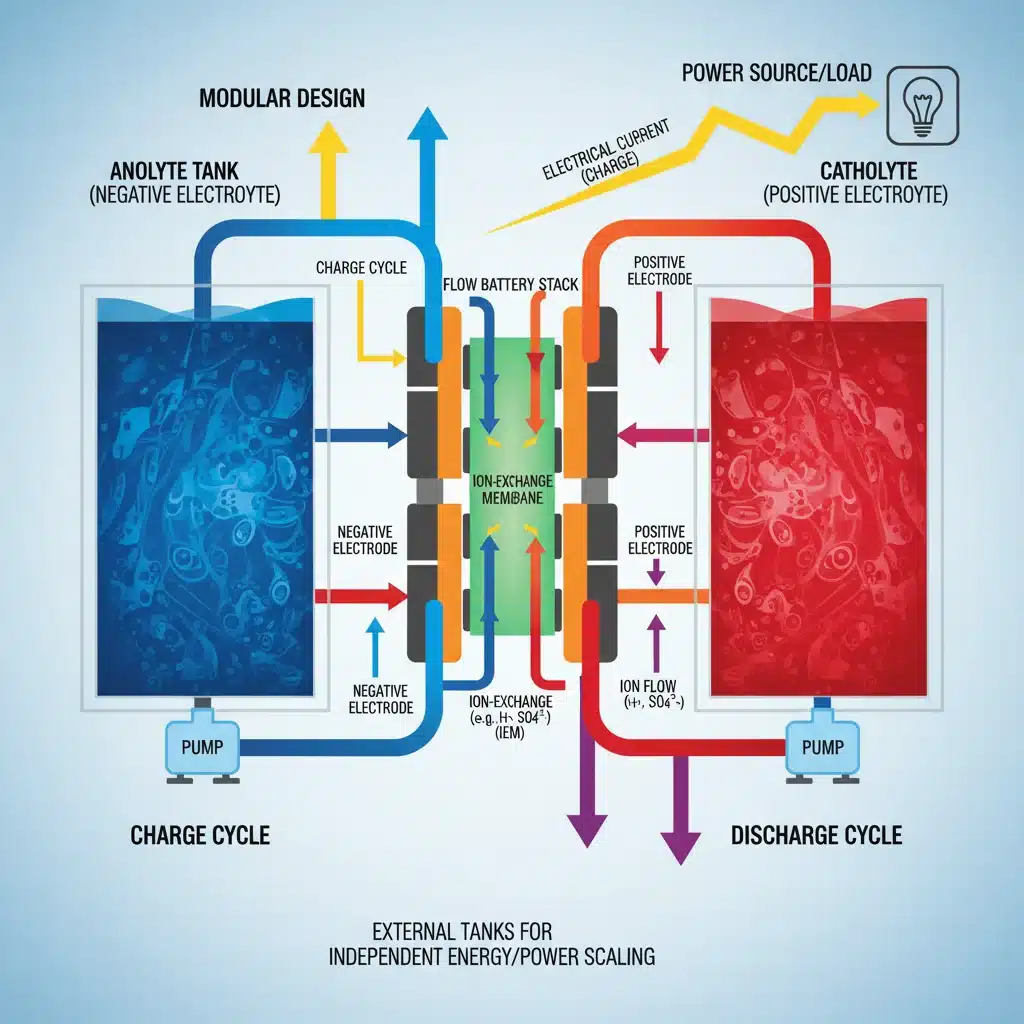
Flow batteries represent a unique paradigm in energy storage. Unlike conventional batteries that store energy within their electrode materials, flow batteries store energy in liquid electrolyte solutions contained in external tanks. These electrolytes are pumped through an electrochemical cell, where chemical reactions occur to charge or discharge the battery. The key advantage of this architecture is the decoupling of power (determined by the cell stack size) and energy (determined by the electrolyte volume). This inherent flexibility makes flow batteries particularly attractive for long-duration grid-scale energy storage applications.
There are several types of flow batteries, with vanadium redox flow batteries (VRFBs) being the most mature and widely deployed. Other chemistries, such as zinc-bromine and all-iron flow batteries, are also under development or in early commercialization. For 100MW projects requiring several hours of discharge (e.g., 4-10 hours), flow batteries offer a compelling solution due to their scalability and long cycle life. They can endure tens of thousands of charge-discharge cycles with minimal degradation, a crucial factor for assets expected to operate for decades on the grid.
Advantages of Flow Batteries for 100MW Projects:
- Scalability of Energy and Power: The ability to scale energy capacity independently by simply increasing the size of electrolyte tanks is a significant advantage. This makes them ideal for projects requiring very long discharge durations, which is often the case for grid-scale energy storage supporting renewable integration.
- Long Cycle Life and Durability: Flow batteries can typically undergo 10,000 to 20,000 cycles or more without significant capacity fade, far exceeding many conventional battery types. This translates to lower lifetime costs and greater reliability for large-scale installations.
- Safety: The electrolytes are often water-based and non-flammable, significantly reducing fire risk compared to lithium-ion batteries. This inherent safety characteristic is a major consideration for large-scale installations located near populated areas or critical infrastructure.
- Depth of Discharge (DoD): Flow batteries can be discharged to 100% DoD without detrimental effects on their lifespan, providing full utilization of their stored energy.
- Minimal Self-Discharge: Since the electrolytes are stored externally, the self-discharge rate is very low, making them suitable for long-term energy storage without significant losses.
- Resource Availability: While vanadium can be a concern, efforts are underway to develop more abundant and cheaper chemistries, or to ensure sustainable sourcing.
Challenges and Considerations for Flow Batteries:
- Lower Energy Density: Compared to solid-state batteries, flow batteries generally have lower energy density, leading to a larger physical footprint for a given energy capacity. This can be a limiting factor in land-constrained environments.
- Complex Systems: They involve pumps, tanks, and plumbing, which adds to system complexity and maintenance requirements compared to solid-state or lithium-ion systems.
- Capital Costs: While operational costs can be low due to long cycle life, the initial capital expenditure for flow battery systems can still be higher than some alternative technologies, especially for shorter duration applications.
- Temperature Sensitivity: Some flow battery chemistries are sensitive to extreme temperatures, requiring thermal management systems that add to auxiliary power consumption.
Despite these challenges, ongoing research and development are addressing these limitations, with advancements in electrolyte chemistry, membrane technology, and system design promising to enhance performance and reduce costs. For 100MW projects demanding sustained power delivery over many hours, flow batteries are poised to play a crucial role in strengthening grid-scale energy storage infrastructure by 2026.
Solid-State Batteries: The High-Density, Evolving Option for Grid-Scale Energy Storage
Solid-state batteries (SSBs) represent a revolutionary advancement, primarily known for their potential in electric vehicles and portable electronics. However, their unique characteristics are increasingly positioning them as a strong contender for grid-scale energy storage. Unlike traditional lithium-ion batteries that use liquid or gel electrolytes, SSBs employ a solid electrolyte, offering several distinct advantages.
The primary solid-state battery chemistries under development include those using ceramic, polymer, or sulfide-based electrolytes. While still largely in the research and development phase for large-scale grid applications, significant progress is being made. By 2026, we anticipate the emergence of more commercially viable solid-state solutions tailored for stationary storage, especially for applications where high energy density, compact footprint, and enhanced safety are paramount.
Advantages of Solid-State Batteries for 100MW Projects:
- High Energy Density: SSBs inherently offer significantly higher energy density than liquid electrolyte batteries. This means a smaller physical footprint for a given energy capacity, which is a major advantage for land-constrained grid-scale energy storage sites.
- Enhanced Safety: The solid electrolyte eliminates the flammability risks associated with liquid organic electrolytes in conventional lithium-ion batteries. This dramatically improves safety, making them ideal for urban installations or sensitive environments.
- Longer Cycle Life (Potential): While still being proven at grid scale, theoretical models and lab tests suggest SSBs could achieve very long cycle lives due to the stability of the solid electrolyte and reduced degradation mechanisms.
- Wider Temperature Range: Some solid electrolytes are expected to operate efficiently across a broader temperature range, potentially reducing the need for complex thermal management systems.
- Fast Charging Capabilities: Certain solid-state chemistries demonstrate potential for extremely fast charging rates, which could be beneficial for ancillary services on the grid requiring rapid response.
- Simplified Packaging: The absence of liquid components can lead to simpler and more compact battery module designs.
Challenges and Considerations for Solid-State Batteries:
- Maturity and Cost: SSBs are less mature than flow batteries or conventional lithium-ion batteries for grid-scale energy storage. Manufacturing processes are still evolving, and current costs are significantly higher, limiting their widespread adoption for 100MW projects in the immediate future.
- Scalability: Scaling up production and deployment for multi-megawatt projects presents engineering and manufacturing challenges that are still being overcome.
- Interfacial Resistance: Achieving low interfacial resistance between the solid electrolyte and electrodes remains a technical hurdle, impacting power output and overall efficiency.
- Dendrite Formation: While less prone than liquid electrolytes, lithium dendrite formation can still be an issue with some solid electrolyte types, leading to short circuits and reduced lifespan.
- Limited Commercial Track Record: There is limited long-term performance data for SSBs in large-scale, real-world grid-scale energy storage applications, making investors and developers cautious.
Despite these challenges, the promises of solid-state technology – particularly in terms of safety and energy density – are too significant to ignore. As manufacturing scales and research continues to optimize performance and reduce costs, SSBs are expected to carve out a niche in grid-scale energy storage, especially for applications prioritizing compact design and ultra-high safety standards.
Comparative Analysis for 100MW Grid-Scale Energy Storage Projects in 2026
When evaluating flow batteries and solid-state batteries for 100MW grid-scale energy storage projects in 2026, a direct comparison across key metrics reveals their distinct value propositions.
Performance Metrics:
- Energy Density and Footprint: Solid-state batteries will likely win on energy density, requiring a smaller land footprint for the same energy capacity. This is a critical factor for urban or land-constrained areas. Flow batteries, with their external tanks, will demand more space.
- Cycle Life and Longevity: Both technologies offer impressive cycle life. Flow batteries have a proven track record of thousands of cycles with minimal degradation, making them excellent for very long-term assets. Solid-state batteries show theoretical potential for similar or even superior cycle life, but this is yet to be fully demonstrated at grid scale.
- Efficiency: Round-trip efficiency for both technologies is a key performance indicator. Current flow batteries typically range from 65-85% depending on chemistry, while solid-state batteries are projected to achieve similar or higher efficiencies, potentially reaching 90%+.
- Response Time: Both can offer rapid response times suitable for grid services, though solid-state batteries might have an edge in ultra-fast response for certain ancillary services due to their internal architecture.
Economic Considerations:
- Capital Expenditure (CAPEX): In 2026, flow batteries are expected to have a more competitive CAPEX for long-duration (4+ hours) 100MW projects due to their greater manufacturing maturity and economies of scale. Solid-state batteries, while rapidly decreasing in cost, will likely still carry a premium, especially for nascent grid-scale designs.
- Operational Expenditure (OPEX): Flow batteries generally have lower OPEX due to their long cycle life, minimal degradation, and often simpler end-of-life considerations (electrolytes can be reused or recycled). Solid-state batteries are expected to have low maintenance, but long-term degradation and replacement costs are still being established.
- Levelized Cost of Storage (LCOS): For long-duration grid-scale energy storage, flow batteries currently offer a more favorable LCOS due to their durability and scalability of energy. As solid-state costs decline and cycle life improves, their LCOS will become more competitive, particularly for shorter-duration, high-power applications.
Safety and Environmental Impact:
- Safety: Both technologies offer significant safety advantages over traditional lithium-ion batteries. Flow batteries are inherently non-flammable, and solid-state batteries eliminate the flammable liquid electrolyte. This makes both highly desirable for large-scale deployments.
- Environmental Footprint: Flow batteries often use abundant materials (e.g., vanadium, iron) and their electrolytes can be reused for decades, offering a strong environmental profile. Solid-state batteries, while potentially using less critical materials than some lithium-ion variants, still rely on lithium and other materials whose extraction and recycling processes are under scrutiny. However, their compact size reduces material usage per unit of energy storage.
- Recyclability: The recyclability of both technologies is a growing area of focus. Flow battery electrolytes are generally recoverable. Solid-state battery recycling infrastructure is still nascent but developing.
Applications and Market Niche in 2026 for Grid-Scale Energy Storage
Given their distinct characteristics, flow batteries and solid-state batteries are likely to find different sweet spots within the 100MW grid-scale energy storage market in 2026.
Flow Batteries: The Backbone of Long-Duration Storage
Flow batteries are ideally suited for applications requiring long-duration discharge (typically 4-12+ hours) and frequent cycling over many years. These include:
- Renewable Energy Firming: Storing excess solar and wind power for release during periods of low generation, ensuring a consistent supply to the grid. For 100MW solar farms, a 4-hour or 6-hour flow battery system could provide critical dispatchability.
- Peak Shaving and Load Shifting: Storing energy during off-peak hours when electricity is cheap and abundant, and discharging it during peak demand periods to reduce strain on the grid and avoid high electricity prices.
- Transmission and Distribution (T&D) Deferral: Providing localized energy storage to defer costly upgrades to T&D infrastructure.
- Microgrids and Remote Area Power Supply: Enhancing the resilience and independence of microgrids, especially those heavily reliant on renewables.
Their robustness, safety, and ability to scale energy independently make them a prime candidate for foundational, long-term grid-scale energy storage assets.
Solid-State Batteries: The Compact, High-Performance Niche
While still maturing for grid-scale energy storage, solid-state batteries are likely to excel in applications where their high energy density, compact footprint, and enhanced safety provide a critical advantage, even if at a higher initial cost. These could include:
- Urban Grid Support: Deploying energy storage in densely populated urban areas where land is expensive and space is limited, and where safety regulations are stringent.
- Ancillary Services with High Power Demands: Providing frequency regulation, voltage support, and other grid services that require rapid, high-power bursts over shorter durations, where their fast-charging capabilities could be advantageous.
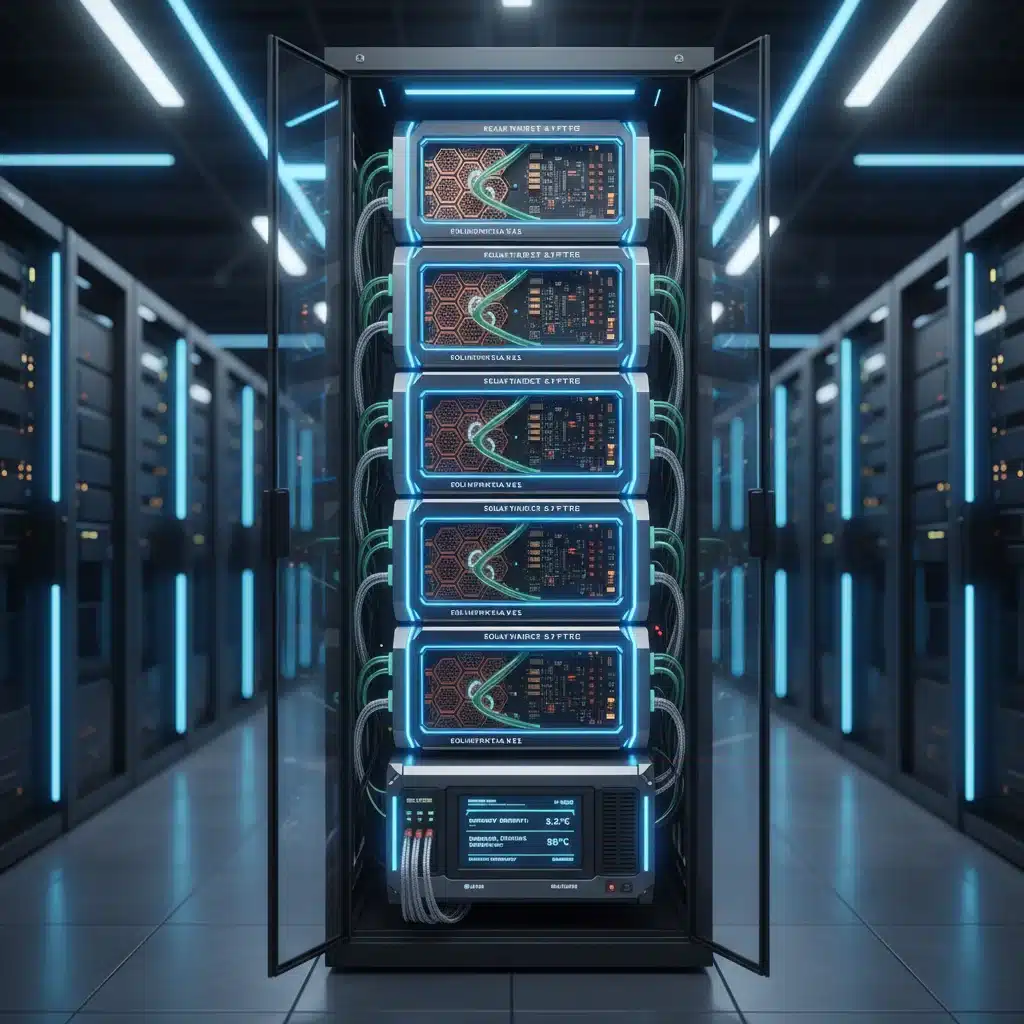
- Co-location with Critical Infrastructure: Deploying alongside data centers, hospitals, or other critical facilities where space is at a premium and absolute safety is paramount.
- Specialized Industrial Applications: Powering specific industrial processes that require highly reliable, compact energy storage solutions.
As manufacturing processes mature and costs decline, the versatility of solid-state batteries will expand their reach within the grid-scale energy storage market.
The Road Ahead: Integration and Policy for Grid-Scale Energy Storage
The successful deployment of both flow batteries and solid-state batteries for 100MW grid-scale energy storage projects will not only depend on technological advancements but also on supportive policy frameworks, market mechanisms, and grid integration strategies.
Governments worldwide are increasingly recognizing the vital role of energy storage in achieving climate goals and enhancing grid resilience. Policies such as tax incentives, grants, and favorable regulatory environments are crucial for de-risking investments in novel storage technologies. Market design also plays a significant role; creating clear revenue streams for capacity, energy arbitrage, and ancillary services will accelerate deployment.
Furthermore, seamless integration with existing grid infrastructure and advanced energy management systems (EMS) is paramount. Smart grid technologies, artificial intelligence, and machine learning will optimize the charging and discharging of these large-scale battery systems, maximizing their value and ensuring grid stability. Standardized interconnection procedures and streamlined permitting processes will also be essential to reduce project timelines and costs.
Collaboration between technology developers, utilities, project developers, and policymakers will be key to overcoming remaining hurdles. Pilot projects and demonstration sites for 100MW scale deployments will provide invaluable data on real-world performance, reliability, and economic viability, paving the way for broader adoption.
Conclusion: A Diverse Future for Grid-Scale Energy Storage
As we approach 2026, the landscape for grid-scale energy storage is dynamic and promising. Both flow batteries and solid-state batteries offer compelling solutions for 100MW projects, each with distinct advantages and challenges. Flow batteries are poised to dominate the long-duration storage market, providing robust, safe, and cost-effective solutions for renewable energy firming and load shifting over many hours. Their proven longevity and decoupled power/energy characteristics make them a reliable workhorse for grid modernization.
Solid-state batteries, while still on a steeper development curve for grid applications, hold immense potential due to their high energy density, enhanced safety, and compact footprint. They are likely to capture segments of the market where space is a premium and ultra-safe, high-performance solutions are required, such as urban deployments or critical infrastructure support.
Ultimately, the future of grid-scale energy storage in 2026 and beyond will not be defined by a single winning technology but by a portfolio of diverse solutions. The optimal choice for a 100MW project will depend on specific site requirements, duration needs, economic parameters, and regulatory considerations. The continued innovation in both flow and solid-state battery technologies, coupled with supportive market and policy frameworks, will be instrumental in building a more resilient, sustainable, and decarbonized energy grid for the future.
Investors, developers, and policymakers must remain informed of these evolving technologies to make strategic decisions that propel the energy transition forward. The race to achieve reliable and affordable grid-scale energy storage is on, and both flow and solid-state batteries are strong contenders in shaping the energy future.