Carbon Capture Technologies: 2026 U.S. Pilot Performance Review
Anúncios
The global imperative to address climate change has intensified the focus on innovative solutions, with carbon capture, utilization, and storage (CCUS) technologies emerging as a critical component of decarbonization strategies. As we approach 2026, the United States has been at the forefront of investing in and piloting various CCUS projects. This comprehensive review aims to evaluate the efficacy of carbon capture technologies by examining the performance of U.S. pilot programs, offering insights into their operational efficiency, economic viability, and environmental impact. Understanding the current state and future potential of these technologies is paramount for policymakers, industry leaders, and environmental advocates alike. Our analysis will delve into the successes, challenges, and lessons learned from these pioneering initiatives, providing a robust framework for assessing the path forward for carbon capture in the U.S.
The urgency of climate action has propelled carbon capture technologies from theoretical concepts to practical applications. With ambitious targets for emissions reduction, the U.S. has recognized the indispensable role CCUS can play, particularly in hard-to-abate sectors such as heavy industry and power generation. The commitment to these technologies is reflected in significant federal funding, tax incentives, and regulatory support aimed at accelerating their development and deployment. This review, focusing on the 2026 landscape, will provide a timely snapshot of how these investments are translating into tangible results on the ground, specifically in pilot programs that serve as crucial testing grounds for scalability and long-term feasibility. The efficacy of carbon capture technologies is not just a scientific question; it’s an economic, political, and environmental one.
Understanding Carbon Capture Technologies: A Brief Overview
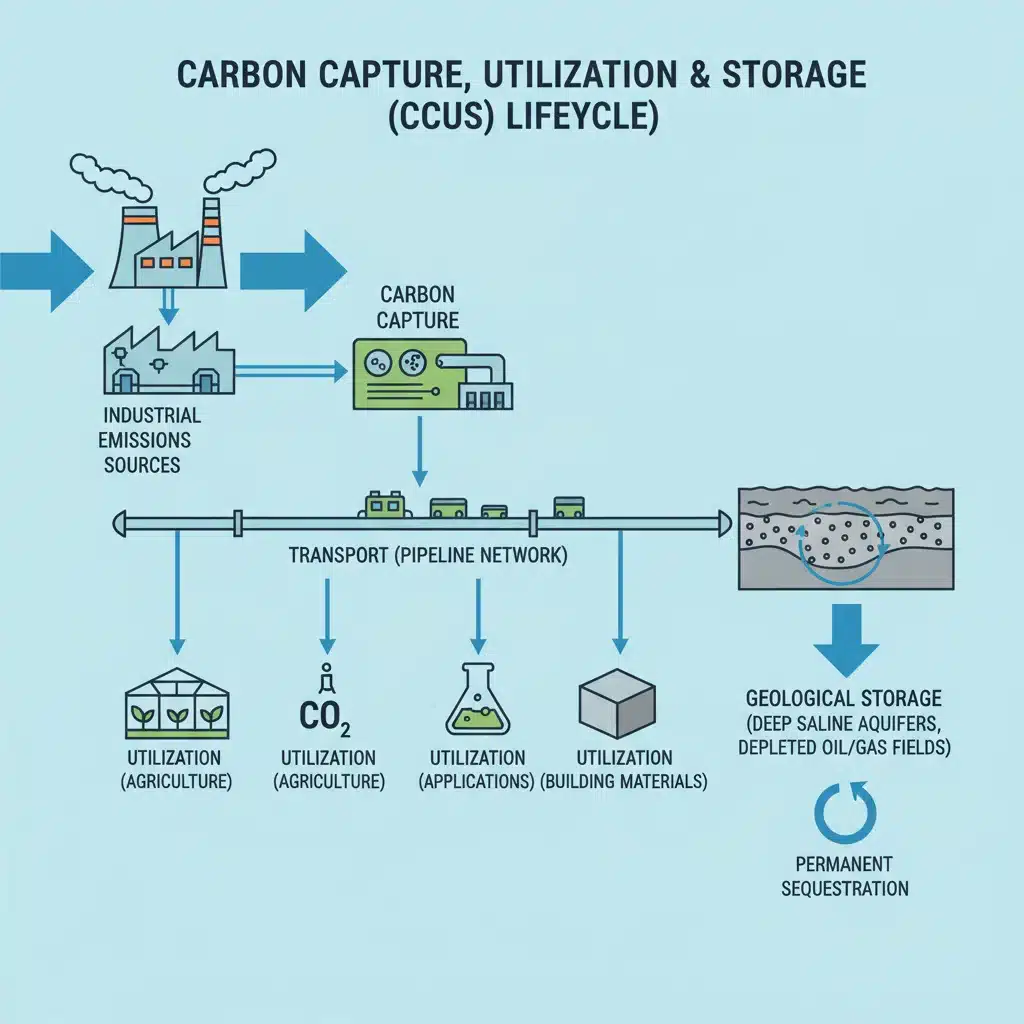
Before diving into the performance review, it’s essential to understand what carbon capture technologies entail. At its core, CCUS involves capturing carbon dioxide (CO2) emissions from large point sources, such as power plants and industrial facilities, before they enter the atmosphere. Once captured, the CO2 can be transported and either utilized in various industrial processes or permanently stored in geological formations deep underground. The primary methods of carbon capture include post-combustion capture, pre-combustion capture, and oxy-fuel combustion.
Post-combustion capture, the most mature and widely applied method, involves separating CO2 from the flue gas after fossil fuels are burned. This is typically achieved using chemical solvents that absorb CO2. Pre-combustion capture, on the other hand, involves converting the fuel into a synthetic gas (syngas) composed of hydrogen and CO2, from which the CO2 is then separated. Oxy-fuel combustion burns fuel in a mixture of oxygen and recirculated flue gas, resulting in a flue gas that is rich in CO2, making its capture easier. Each method presents its own set of advantages and challenges, particularly concerning energy penalty, cost, and capture efficiency. Evaluating the efficacy of carbon capture technologies requires a nuanced understanding of these distinct approaches and their practical applications within the U.S. pilot programs.
Beyond capture, the ‘U’ and ‘S’ in CCUS are equally vital. Carbon utilization involves converting captured CO2 into valuable products, such as building materials, fuels, or chemicals. While still in its early stages compared to capture and storage, CO2 utilization offers the potential to create new markets and offset some of the operational costs associated with CCUS. Carbon storage, or sequestration, involves injecting captured CO2 into deep geological formations, such as saline aquifers, depleted oil and gas reservoirs, or unmineable coal seams, where it is permanently trapped. The safety and long-term integrity of these storage sites are critical considerations for public acceptance and environmental protection.
Methodology for the 2026 Performance Review
Our 2026 performance review of U.S. pilot programs for carbon capture technologies is built upon a multi-faceted methodology designed to provide a comprehensive and objective assessment. The review incorporates data from publicly available reports, scientific publications, government assessments, and direct communications with project stakeholders. Key performance indicators (KPIs) include:
- Capture Efficiency: The percentage of CO2 successfully captured from the emission source.
- Energy Penalty: The amount of energy required to operate the capture process, often expressed as a reduction in the power plant’s net output or an increase in fuel consumption for industrial processes.
- Operational Costs: Both capital expenditure (CapEx) and operational expenditure (OpEx) associated with the capture, transport, and storage/utilization of CO2.
- Environmental Impact: Beyond CO2 reduction, this includes an assessment of other emissions, water usage, and land footprint.
- Technological Readiness Level (TRL): An evaluation of how mature and scalable the technology has become within the pilot program context.
- Social and Economic Benefits: Job creation, community engagement, and regional economic development.
The selection of pilot programs for this review focuses on those that have demonstrated significant operational periods leading up to 2026, representing a diverse range of industrial applications and geographical locations across the U.S. This broad scope ensures that the findings are representative of the varied challenges and opportunities inherent in deploying carbon capture technologies. The emphasis on quantitative data, complemented by qualitative insights, allows for a holistic understanding of the efficacy of carbon capture technologies in real-world scenarios. Our goal is to move beyond theoretical promises and evaluate actual performance, providing a clear picture of where the technology stands and what hurdles remain.
Furthermore, the review also considers the policy and regulatory landscape that has shaped these pilot programs. Government incentives, such as the 45Q tax credit, have played a pivotal role in making these projects financially viable. Understanding the interplay between technological development and policy support is crucial for projecting the future trajectory of CCUS in the U.S. The performance data collected is then benchmarked against industry standards and ambitious climate targets to gauge the progress made and identify areas requiring further innovation and investment. The efficacy of carbon capture technologies is continually evolving, and this review captures that dynamic progress.
Key Findings from U.S. Pilot Programs (2026)
The 2026 review reveals significant advancements and persistent challenges across U.S. carbon capture pilot programs. While the overall trend is positive, with notable improvements in capture efficiency and a gradual reduction in costs, the path to widespread commercial deployment remains complex.
Capture Efficiency and Energy Penalty
Many pilot projects, particularly those employing advanced solvent-based post-combustion capture, have consistently achieved capture efficiencies exceeding 90%. This marks a substantial improvement from earlier iterations, demonstrating the maturation of these technologies. However, the energy penalty remains a considerable factor. While some projects have managed to lower their energy consumption through process optimization and heat integration, the additional energy required to operate carbon capture units still impacts the overall efficiency and profitability of the host facilities. For instance, a coal-fired power plant equipped with CCUS might see a reduction in net power output by 10-30%, depending on the technology. For industrial emitters, this translates to increased operational costs or a need for additional energy inputs. Addressing this energy penalty is crucial for enhancing the overall efficacy of carbon capture technologies.
Operational Costs and Economic Viability
The economic viability of carbon capture technologies is a critical determinant of their scalability. The 2026 data indicates a varied cost landscape. Capital costs for new capture facilities remain high, often requiring significant upfront investment. However, ongoing R&D and supply chain optimization are beginning to show promise in reducing these costs. Operating expenses, including the cost of sorbents, energy, and maintenance, are also under scrutiny. The 45Q tax credit, which provides financial incentives for captured CO2, has been instrumental in making many pilot projects economically feasible. Without such policy support, the business case for CCUS would be significantly weaker for many applications. Furthermore, the development of carbon utilization markets is slowly starting to contribute to revenue streams, potentially offsetting some operational costs. The long-term economic efficacy of carbon capture technologies will heavily depend on continued policy support and the growth of CO2 utilization markets.

Environmental Impact and Safety
From an environmental perspective, the primary benefit of CCUS is the significant reduction in CO2 emissions. Pilot programs have successfully demonstrated the ability to divert millions of tons of CO2 from the atmosphere. Beyond CO2, however, there are other environmental considerations. Water usage, particularly for solvent-based capture, can be substantial, prompting research into water-efficient capture methods. The potential for fugitive emissions of capture chemicals also requires careful monitoring and mitigation strategies. For carbon storage, the integrity and safety of geological sequestration sites have been rigorously tested and monitored. The 2026 data largely confirms the safety and effectiveness of well-selected and managed geological storage sites, with minimal leakage observed. Public perception and community engagement around storage sites remain important factors for successful deployment. The overarching goal is to maximize the environmental efficacy of carbon capture technologies while minimizing ancillary impacts.
Technological Readiness and Scalability
The TRL of various carbon capture technologies has progressed significantly. While some first-generation technologies are approaching commercial readiness, second-generation and novel capture methods are still in various stages of pilot and demonstration. The experience gained from U.S. pilot programs is invaluable for identifying bottlenecks, optimizing processes, and de-risking future large-scale projects. Scalability remains a key challenge. Moving from pilot-scale demonstrations to full-scale commercial deployment requires not only technological maturity but also robust infrastructure for CO2 transport and storage. The development of CO2 pipeline networks and large-scale storage hubs is critical for realizing the full potential of CCUS. The efficacy of carbon capture technologies at a national scale hinges on this infrastructure development.
Case Studies: Exemplary U.S. Pilot Programs (2026)
To illustrate the practical application and performance of carbon capture technologies, let’s examine a few exemplary U.S. pilot programs that have provided crucial insights in 2026.
Project A: Industrial Emission Reduction (Cement Sector)
Located in the Midwest, Project A is a pilot program focused on capturing CO2 emissions from a cement manufacturing plant. Cement production is one of the most challenging industrial sectors to decarbonize due to process emissions from limestone calcination. This pilot, utilizing an advanced amine-based post-combustion capture technology, has demonstrated a consistent capture efficiency of 92% over its operational period leading up to 2026. The energy penalty has been reduced through innovative heat recovery systems, making the process more energy-efficient than initial projections. The captured CO2 is transported via a newly constructed pipeline to a nearby saline aquifer for permanent geological storage. This project has been instrumental in proving the efficacy of carbon capture technologies in a high-temperature, high-emission industrial environment, showcasing a viable pathway for cement decarbonization.
Project B: Power Generation (Natural Gas Combined Cycle)
Project B, situated in the Southern U.S., focuses on integrating carbon capture with a natural gas combined cycle (NGCC) power plant. This pilot utilizes a novel solvent system designed for lower energy consumption and reduced solvent degradation. By 2026, Project B has achieved an impressive 95% capture efficiency with a relatively low energy penalty, approximately 15% reduction in net power output, which is at the lower end of industry estimates. The captured CO2 is being utilized for enhanced oil recovery (EOR) in a nearby oil field, providing both a revenue stream and secure storage. This project highlights the potential for CCUS to reduce emissions from natural gas power generation, a significant source of electricity in the U.S. It also demonstrates the dual benefit of CO2 utilization for economic value and emissions reduction, further bolstering the efficacy of carbon capture technologies.
Project C: Direct Air Capture (DAC) Demonstration
While most pilot programs focus on point source capture, Project C is a cutting-edge direct air capture (DAC) demonstration facility in the Southwest. DAC technology removes CO2 directly from the ambient air, offering a solution for legacy emissions and diffuse sources. By 2026, this pilot has successfully demonstrated continuous operation, capturing a measurable amount of CO2 per day. The primary challenges remain the high energy requirements and the relatively high cost per ton of CO2 captured compared to point source capture. However, ongoing innovations in sorbent materials and process design are projected to significantly improve its economic viability in the coming years. Project C is a testament to the long-term potential of DAC as a complementary strategy to point source CCUS, expanding the scope and efficacy of carbon capture technologies.
Challenges and Opportunities for Carbon Capture in the U.S.
Despite the promising results from U.S. pilot programs, several challenges and opportunities will shape the future trajectory of carbon capture technologies.
Policy and Regulatory Framework
Continued and stable policy support is paramount. While the 45Q tax credit has been a game-changer, long-term certainty regarding incentives, regulatory pathways for CO2 transport and storage, and carbon pricing mechanisms will be crucial for attracting private investment and scaling up deployment. The efficacy of carbon capture technologies is directly linked to a supportive policy environment.
Infrastructure Development
The lack of extensive CO2 pipeline networks and readily available geological storage sites remains a significant hurdle. Developing this infrastructure requires substantial capital investment, careful planning, and coordination across multiple stakeholders. Regional carbon capture hubs, where multiple emitters can share common transport and storage infrastructure, offer a promising solution to this challenge.
Public Acceptance and Engagement
Gaining public trust and ensuring community engagement are vital for the successful deployment of CCUS projects, particularly for geological storage sites. Transparent communication about safety, environmental benefits, and local economic opportunities is essential to build support and address concerns. The social efficacy of carbon capture technologies cannot be overlooked.
Technological Innovation and Cost Reduction
While current technologies are effective, ongoing research and development are needed to further reduce energy penalties, lower capital and operational costs, and explore novel capture methods. Breakthroughs in materials science, process engineering, and artificial intelligence could significantly enhance the overall efficacy of carbon capture technologies.
The Road Ahead: Scaling Up Carbon Capture
The 2026 performance review of U.S. pilot programs clearly indicates that carbon capture technologies are maturing and demonstrating their potential to play a significant role in decarbonization. The lessons learned from these pilots are invaluable, providing a roadmap for future development and deployment. The efficacy of carbon capture technologies is no longer a question of ‘if’ but ‘how’ and ‘how quickly’ they can be scaled.
Scaling up CCUS will require a concerted effort from government, industry, and academia. Continued investment in R&D, coupled with stable and predictable policy incentives, will accelerate technological improvements and drive down costs. Developing robust CO2 transport and storage infrastructure is a prerequisite for widespread adoption. Furthermore, fostering a skilled workforce capable of designing, building, and operating these complex facilities will be essential. The integration of CCUS with renewable energy sources and other low-carbon technologies will also be critical for achieving a truly sustainable energy system.
The U.S. has a unique opportunity to lead in the global deployment of carbon capture technologies, leveraging its vast geological storage resources and strong innovation ecosystem. By addressing the remaining challenges with strategic planning and collaborative action, the nation can significantly enhance the efficacy of carbon capture technologies and make substantial progress towards its climate goals. The journey from pilot programs to full-scale commercial deployment is ambitious, but the 2026 review provides a strong foundation of confidence and a clear direction for the future.
Conclusion: A Promising Future for Carbon Capture Efficacy
The 2026 performance review of U.S. pilot programs for carbon capture technologies paints a picture of substantial progress and a promising future. While challenges related to cost, energy penalty, and infrastructure remain, the consistent advancements in capture efficiency, the growing understanding of long-term storage safety, and the emerging potential of CO2 utilization underscore the critical role CCUS will play in achieving climate targets. The efficacy of carbon capture technologies is being proven in diverse industrial and power generation settings, offering tailored solutions for hard-to-abate emissions.
The U.S. commitment to fostering innovation and supporting early-stage deployment through pilot programs has yielded invaluable data and experience. These insights are now paving the way for larger-scale demonstration and commercialization projects. As we move beyond 2026, the focus will increasingly shift towards accelerating deployment, optimizing costs, and integrating CCUS into broader decarbonization strategies. The continued collaboration among stakeholders, coupled with a supportive policy environment, will be key to unlocking the full potential of carbon capture as a powerful tool in the fight against climate change. The journey is far from over, but the progress observed in these pilot programs provides a strong foundation for optimism regarding the future efficacy of carbon capture technologies.