Carbon Capture Technology: Impact on 2026 U.S. Energy Mix & Key Projects
Anúncios
Understanding the Impact of Carbon Capture Technology on the 2026 U.S. Energy Mix: An Expert Analysis of 5 Major Projects
The global imperative to combat climate change has placed a spotlight on innovative solutions for reducing greenhouse gas emissions. Among these, carbon capture technology stands out as a critical tool, offering a pathway to decarbonize hard-to-abate sectors and mitigate emissions from existing fossil fuel infrastructure. As the United States accelerates its transition to a cleaner energy future, understanding the profound impact of carbon capture technology on the 2026 U.S. energy mix becomes paramount. This comprehensive analysis delves into the mechanisms, challenges, opportunities, and the specific influence of carbon capture on the nation’s energy landscape, highlighting five pivotal projects that are shaping this trajectory.
The Urgency of Decarbonization and the Role of Carbon Capture
The scientific consensus is unequivocal: urgent action is needed to limit global warming and prevent its most catastrophic effects. While renewable energy sources like solar and wind are rapidly expanding, they alone cannot address the full spectrum of emissions, particularly from industrial processes such as cement, steel, and chemical production, or from natural gas power plants that will remain part of the energy mix for the foreseeable future. This is where carbon capture solutions become indispensable.
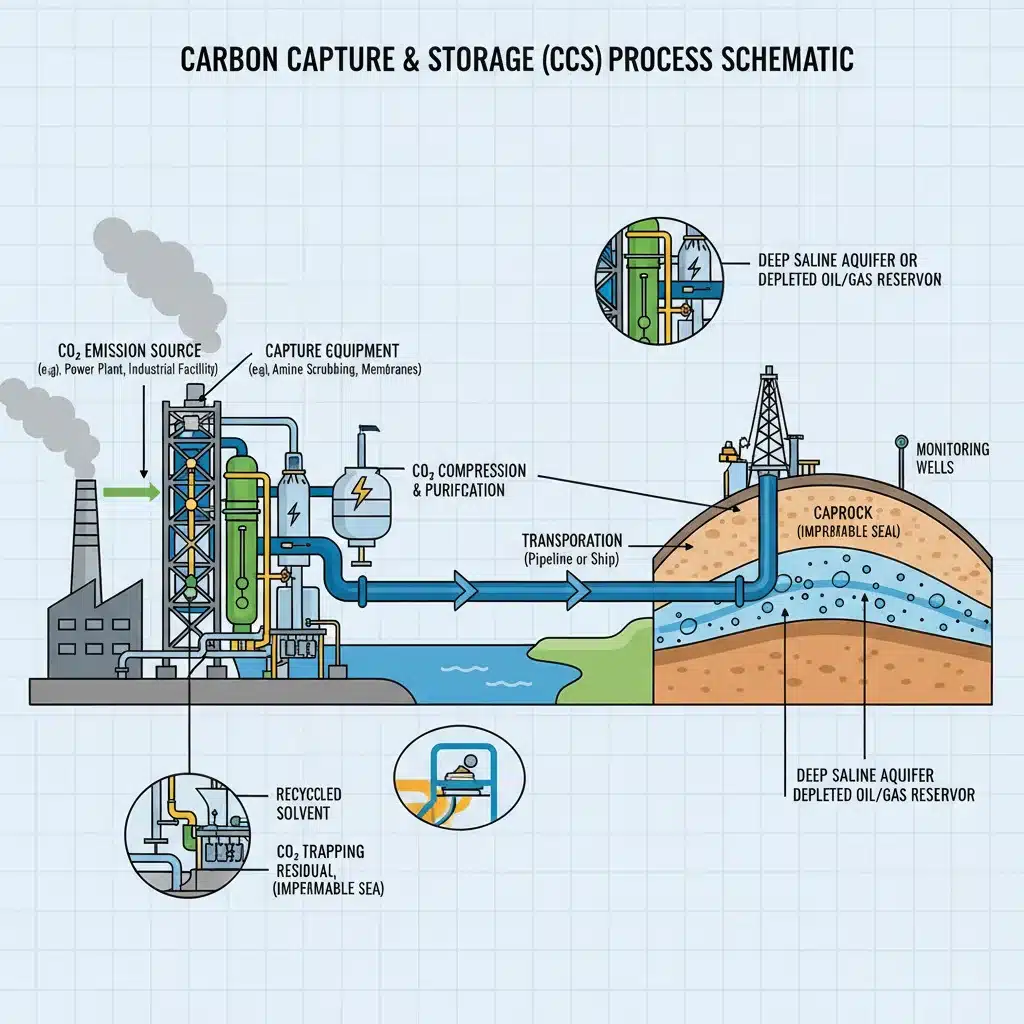
Carbon Capture, Utilization, and Storage (CCUS) technologies work by capturing carbon dioxide (CO2) emissions from large point sources, preventing their release into the atmosphere. Once captured, the CO2 can either be utilized in various industrial processes (e.g., enhanced oil recovery, concrete curing, synthetic fuels) or permanently stored in deep geological formations. The integration of carbon capture systems into existing and new energy infrastructure is not merely an option but a strategic necessity for achieving ambitious climate goals. The impact of carbon capture on reducing the carbon footprint of these industries is substantial, offering a bridge to a net-zero economy.
The U.S. government, through significant policy initiatives like the Inflation Reduction Act (IRA), has recognized the vital role of CCUS, offering substantial tax credits and funding to incentivize its deployment. This policy support is a game-changer, significantly improving the economic viability of carbon capture projects and accelerating their development. The 2026 U.S. energy mix will undoubtedly reflect these investments, with a noticeable increase in projects incorporating advanced carbon capture capabilities.
Understanding Carbon Capture Technology: Mechanisms and Types
At its core, carbon capture involves separating CO2 from other gases. Several technologies are employed for this purpose:
- Pre-combustion Capture: This method involves converting a fuel (like coal or natural gas) into a gaseous mixture of hydrogen and CO2 before combustion. The CO2 is then separated, and the hydrogen is used as a clean fuel. This is particularly relevant for integrated gasification combined cycle (IGCC) power plants.
- Post-combustion Capture: The most mature and widely applicable technology, post-combustion capture involves removing CO2 from the flue gas after the fuel has been burned. This is typically done using chemical solvents (e.g., amines) that selectively absorb CO2. This method is highly adaptable to existing power plants and industrial facilities, making it a key component of the future energy mix decarbonization efforts.
- Oxy-fuel Combustion: In this process, fuel is burned in pure oxygen instead of air, producing a flue gas that is primarily CO2 and water vapor, which are then easily separated. This results in a highly concentrated CO2 stream, simplifying the capture process.
- Direct Air Capture (DAC): While not directly tied to a specific point source, DAC technologies extract CO2 directly from the ambient air. These technologies are crucial for addressing legacy emissions and achieving negative emissions, though they are currently more energy-intensive and less mature than point-source capture. Their potential impact on the distant future U.S. energy outlook is significant.
Each method presents unique challenges and benefits in terms of cost, energy penalty, and applicability to different industrial settings. The choice of technology often depends on the specific emission source, its concentration of CO2, and the overall economic and environmental goals of the project. The widespread adoption of these technologies will have a tangible impact on the 2026 U.S. energy mix, shifting it towards lower carbon intensity.
The Current Landscape of U.S. Energy and Projected Changes by 2026
The U.S. energy landscape is dynamic, characterized by a mix of fossil fuels (natural gas, coal, petroleum), nuclear power, and a rapidly growing share of renewables. While natural gas has largely displaced coal in electricity generation due to its lower cost and emissions, it still contributes significantly to CO2 output. The push for electrification of transportation and industries further stresses the need for clean electricity generation.
By 2026, several key trends are expected to continue and accelerate:
- Continued Growth of Renewables: Solar and wind power will expand their footprint, driven by decreasing costs and supportive policies.
- Natural Gas as a Transition Fuel: Natural gas will likely remain a significant component of the energy mix, serving as a flexible backup for intermittent renewables. This makes it a prime candidate for carbon capture integration.
- Reduced Coal Dependence: Coal’s share will continue to decline, but some existing coal plants may be retrofitted with CCUS to extend their operational life while reducing emissions.
- Emergence of Green Hydrogen: Production of hydrogen from renewable electricity (green hydrogen) will gain traction, offering a clean fuel for various applications, potentially impacting the demand for natural gas and associated carbon capture.
- Increased Focus on Industrial Decarbonization: Beyond power generation, heavy industries will face increasing pressure to reduce emissions, making industrial carbon capture a critical area of growth.
The carbon capture impact on this evolving landscape will be transformative. By 2026, we anticipate seeing a greater number of operational CCUS facilities, particularly in regions with high industrial emissions and suitable geological storage sites. This will not only reduce direct CO2 emissions but also create new economic opportunities and strengthen energy security. The integration of these technologies represents a significant step towards a more sustainable and resilient U.S. energy future.
Expert Analysis: 5 Major Carbon Capture Projects Shaping the 2026 U.S. Energy Mix
Several high-profile carbon capture projects are currently underway or in advanced stages of development across the United States. These projects are crucial in demonstrating the scalability and economic viability of the technology, and their success will significantly influence the 2026 U.S. energy mix. Here’s an expert analysis of five key initiatives:
1. Project Tundra, North Dakota: Decarbonizing Coal Power
Overview: Project Tundra aims to capture CO2 emissions from the Milton R. Young Station, a coal-fired power plant in North Dakota. This ambitious project plans to capture 4 million tons of CO2 annually, making it one of the largest carbon capture projects globally. The captured CO2 will be stored permanently in deep saline aquifers beneath the plant.
Impact on 2026 U.S. Energy Mix: Project Tundra is a prime example of how coal power decarbonization can be achieved. If successful, it will demonstrate the continued relevance of existing coal infrastructure in a low-carbon economy, albeit with significant emissions reductions. By 2026, its progress will provide valuable data on the operational effectiveness and cost efficiency of large-scale post-combustion capture on coal plants, potentially paving the way for similar retrofits across the nation. This project directly addresses the challenge of reducing emissions from a historically carbon-intensive energy source, showcasing a viable path for the carbon capture impact on traditional power generation.
2. Louisiana Green Fuels (LGF) Project, Louisiana: Sustainable Aviation Fuel with CCS
Overview: The LGF project, developed by Strategic Biofuels, plans to produce sustainable aviation fuel (SAF) from forestry waste while integrating carbon capture and storage. The facility aims to capture approximately 1.36 million tons of CO2 annually, which will then be sequestered underground. This project represents a groundbreaking approach to producing biofuels with a negative carbon footprint.
Impact on 2026 U.S. Energy Mix: This project highlights the versatility of carbon capture for biofuels and its role in decarbonizing the transportation sector. By 2026, the LGF project is expected to be operational, demonstrating a commercially viable pathway for producing carbon-negative fuels. This will significantly impact the U.S. energy mix by offering a clean alternative to conventional jet fuel, supporting the aviation industry’s sustainability goals, and proving the economic benefits of combining biomass utilization with CCUS. The project’s success will underscore the diverse applications of carbon capture technology applications beyond traditional power generation.
3. Summit Carbon Solutions, Midwest: Agricultural Decarbonization and Pipeline Infrastructure
Overview: Summit Carbon Solutions is developing a vast carbon capture and pipeline network across five Midwestern states. This project aims to capture CO2 from dozens of ethanol plants, transporting it via pipeline to North Dakota for permanent geological storage. The projected capture capacity is over 18 million tons of CO2 per year.
Impact on 2026 U.S. Energy Mix: This project is monumental for two reasons: its scale and its focus on agricultural decarbonization. Ethanol production, while offering a renewable fuel, is a significant source of CO2 emissions. By 2026, the progress of this pipeline network will demonstrate the critical role of shared infrastructure in enabling widespread carbon capture from distributed sources. It will profoundly affect the U.S. energy mix by reducing the carbon intensity of biofuels, making them a truly sustainable option, and showcasing the economic benefits for rural communities. The carbon capture impact here is not just about emissions reduction but also about creating a robust carbon management infrastructure.
4. Lake Charles Methanol, Louisiana: Industrial Emissions Reduction
Overview: The Lake Charles Methanol project involves building a new facility that will produce low-carbon methanol from natural gas, incorporating carbon capture technology. This project plans to capture a substantial amount of CO2, which will then be sequestered in a dedicated geological storage site. Methanol is a critical feedstock for various chemical industries and can also be used as a fuel.
Impact on 2026 U.S. Energy Mix: This project is a testament to the potential of industrial decarbonization solutions. By 2026, Lake Charles Methanol is expected to be a leader in producing low-carbon chemicals, proving that essential industrial processes can significantly reduce their environmental footprint. Its success will encourage other chemical and manufacturing facilities to adopt carbon capture, diversifying the U.S. energy mix with cleaner industrial products and processes. The project illustrates how carbon capture can transform not just power generation but the entire industrial value chain, furthering the positive carbon capture impact on the broader economy.
5. Project Cypress, Louisiana: Direct Air Capture Hub
Overview: Project Cypress is one of two direct air capture (DAC) hubs selected for significant federal funding. Led by Battelle, Climeworks, and Heirloom, this project aims to deploy large-scale DAC technology to remove legacy CO2 directly from the atmosphere. While DAC is distinct from point-source capture, its integration into the broader carbon management strategy is crucial.
Impact on 2026 U.S. Energy Mix: While DAC’s primary role is not in preventing immediate emissions from the energy sector, its development by 2026 will lay the groundwork for future negative emissions capabilities. Project Cypress will advance the maturity and cost-effectiveness of DAC, which can complement point-source capture by addressing hard-to-capture emissions and historical CO2. Its success will indirectly influence the U.S. energy mix by providing a long-term solution for atmospheric CO2 removal, thereby enhancing the overall climate resilience of the nation’s energy strategy. This project signifies an investment in the future of carbon removal technologies, extending the reach of the carbon capture impact.
Challenges and Opportunities for Carbon Capture in the U.S.
Despite the promising outlook, the widespread deployment of carbon capture technology faces several challenges:
- High Capital Costs: Installing CCUS equipment can be expensive, although government incentives are helping to mitigate this.
- Energy Penalty: The capture process itself requires energy, which can reduce the overall efficiency of power plants.
- Transportation and Storage Infrastructure: Building pipelines and developing adequate geological storage sites requires significant investment and public acceptance.
- Regulatory Frameworks: Clear and consistent regulatory frameworks are essential for permitting, monitoring, and long-term liability of CO2 storage.
- Public Perception: Addressing public concerns about safety and efficacy is crucial for gaining social license to operate.
However, these challenges are met with significant opportunities:
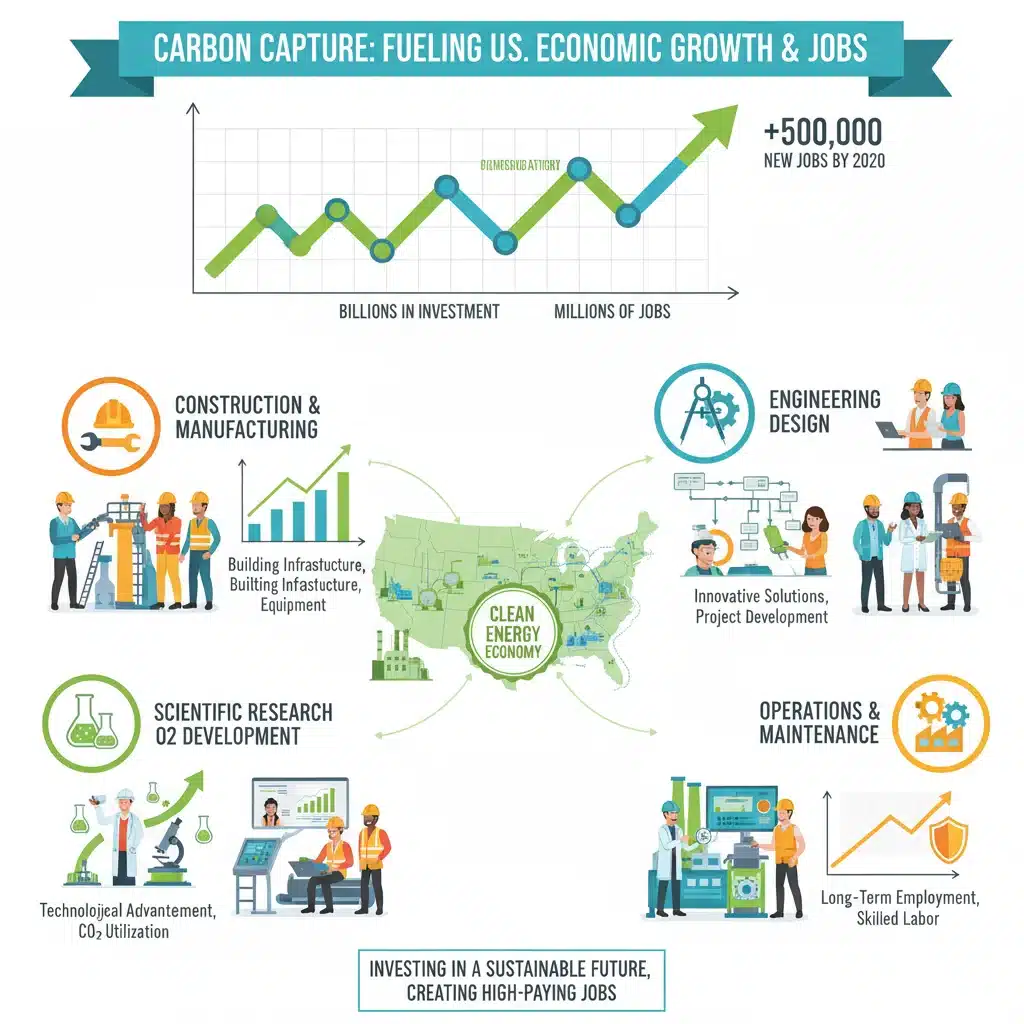
- Job Creation: The development and deployment of CCUS projects will create thousands of jobs in engineering, construction, and operations.
- Economic Growth: New industries and supply chains will emerge around carbon capture and utilization.
- Enhanced Energy Security: Maintaining a diverse energy mix while achieving decarbonization goals can enhance energy security.
- Technological Innovation: Ongoing research and development will lead to more efficient and cost-effective capture technologies.
- Global Leadership: The U.S. can solidify its position as a leader in climate technology.
The carbon capture impact extends beyond emissions reduction, fostering economic development and technological advancement.
The Policy Landscape: Driving Carbon Capture Forward
The U.S. government has significantly bolstered its support for carbon capture through landmark legislation. The Inflation Reduction Act (IRA), enacted in 2022, is a pivotal piece of legislation that has dramatically improved the economics of CCUS projects. Key provisions include:
- 45Q Tax Credit Enhancement: The IRA increased the value of the 45Q tax credit for captured CO2, making it more attractive for companies to invest in CCUS. For CO2 permanently stored in geological formations, the credit increased from $50 per metric ton to $85 per metric ton. For CO2 utilized in enhanced oil recovery or other industrial uses, it increased from $35 to $60 per metric ton.
- Direct Air Capture (DAC) Incentives: DAC projects received an even higher credit, up to $180 per metric ton for storage and $130 per metric ton for utilization, reflecting their higher costs and future climate potential.
- Project Threshold Reductions: The IRA lowered the annual CO2 capture thresholds required to qualify for the credit, making smaller projects viable. For power plants, the threshold dropped from 100,000 to 18,750 metric tons, and for industrial facilities from 100,000 to 12,500 metric tons.
- Direct Pay Option: For the first five years, companies can elect to receive the 45Q credit as a direct payment, providing immediate financial relief and reducing reliance on tax equity markets.
These policy changes have created an unprecedented surge in interest and investment in carbon capture projects across the U.S. By 2026, the full effects of these incentives will be increasingly evident, with a pipeline of projects moving from planning to construction and operation. This robust policy support is a primary driver of the anticipated positive carbon capture impact on the U.S. energy mix.
Future Outlook: Beyond 2026 and Towards Net-Zero
While 2026 marks a significant milestone, the journey towards a net-zero economy extends far beyond. The continued development and deployment of carbon capture technology will be essential for achieving long-term climate goals. Future innovations are expected to focus on:
- Cost Reductions: Ongoing R&D will aim to lower the capital and operational costs of capture technologies, making them even more competitive.
- Improved Efficiency: Developing capture processes with lower energy penalties will enhance the overall sustainability of CCUS.
- Novel Applications for Captured CO2: Expanding the utilization markets for CO2, turning it from a waste product into a valuable resource, will add economic incentives. This includes advanced materials, chemicals, and fuels.
- Integrated Energy Systems: Carbon capture will increasingly be integrated into broader energy systems, including hydrogen production, industrial clusters, and renewable energy hubs.
- Global Collaboration: International cooperation will be vital for sharing best practices, accelerating technology transfer, and developing global carbon management solutions.
The carbon capture impact by 2026 will be a strong indicator of the U.S.’s commitment and capability to lead in climate innovation. As these projects mature and new ones emerge, the U.S. energy mix will become progressively cleaner and more resilient, paving the way for a sustainable future for generations to come. The transformative potential of carbon capture’s future is immense, offering a realistic path to addressing some of the most challenging aspects of climate change mitigation.
Conclusion
The role of carbon capture technology in shaping the 2026 U.S. energy mix is undeniable and increasingly critical. As demonstrated by projects like Tundra, LGF, Summit Carbon Solutions, Lake Charles Methanol, and Project Cypress, CCUS is moving beyond pilot stages to large-scale deployment across diverse sectors. These initiatives are not only reducing emissions but also fostering economic growth, creating jobs, and driving technological innovation.
While challenges remain, the robust policy support from the U.S. government, particularly through the Inflation Reduction Act, has significantly de-risked investments and accelerated development. By 2026, we anticipate a tangible shift in the U.S. energy landscape, with carbon capture playing a more prominent role in decarbonizing power generation, industrial processes, and even enabling carbon-negative fuels.
The carbon capture impact will be multifaceted, contributing to a cleaner, more sustainable, and resilient energy future for the United States. It is a crucial component in the nation’s strategy to meet its climate goals and maintain its economic competitiveness in a rapidly evolving global energy paradigm. The journey to net-zero is complex, but with continued innovation and strategic deployment of carbon capture technologies, the U.S. is well-positioned to lead the way.