U.S. Industrial Decarbonization: 2026 Pathways for Heavy Industry
Anúncios
U.S. Industrial Decarbonization: 2026 Pathways for Heavy Industry Electrification and Alternative Fuels
The imperative to address climate change has placed a spotlight on industrial decarbonization pathways, particularly within the heavy industry sector. As the United States strives towards ambitious climate goals, understanding the trajectory of carbon emission reductions in industries like steel, cement, chemicals, and refining is crucial. This comprehensive analysis, focusing on the year 2026, delves into the critical strategies of electrification and alternative fuels as primary drivers for U.S. industrial decarbonization. We will explore the current landscape, emerging technologies, policy implications, economic considerations, and the challenges and opportunities that lie ahead for heavy industry in its journey towards a sustainable future.
The industrial sector is a significant contributor to global greenhouse gas emissions, accounting for roughly one-third of total U.S. energy consumption and a substantial portion of its CO2 emissions. Heavy industries, characterized by high-temperature processes and material transformations, face unique challenges in decarbonizing their operations. Unlike other sectors where electrification is more straightforward, the sheer scale of energy demand and the specific process requirements in heavy industry necessitate innovative and often capital-intensive solutions. The year 2026 serves as a critical near-term benchmark, allowing us to assess the progress, immediate hurdles, and the foundational steps being laid for more profound transformations in the coming decades.
The Urgency of Industrial Decarbonization Pathways in Heavy Industry
The urgency for industrial decarbonization pathways stems from both environmental necessity and increasing regulatory and investor pressure. Heavy industries are energy-intensive and often rely on fossil fuels for process heat, power generation, and as feedstocks. This reliance results in significant direct (Scope 1) and indirect (Scope 2) emissions. Achieving net-zero emissions by mid-century, a target many nations and corporations have embraced, requires a radical overhaul of industrial processes.
In the U.S., heavy industry plays a foundational role in the economy, producing essential materials for infrastructure, manufacturing, and consumer goods. Decarbonizing these sectors without compromising economic competitiveness or supply chain resilience is a complex balancing act. The 2026 outlook emphasizes the need for accelerated deployment of existing low-carbon technologies and robust investment in research and development for future breakthroughs. The choices made in the next few years will largely dictate the pace and feasibility of long-term industrial decarbonization.
Furthermore, the global competitive landscape is shifting. Countries and regions with stricter carbon regulations or advanced low-carbon industrial capabilities may gain a competitive edge. U.S. heavy industry must adapt to these evolving dynamics to remain globally competitive, making proactive engagement with industrial decarbonization pathways not just an environmental imperative but an economic one.
Electrification as a Key Industrial Decarbonization Pathway
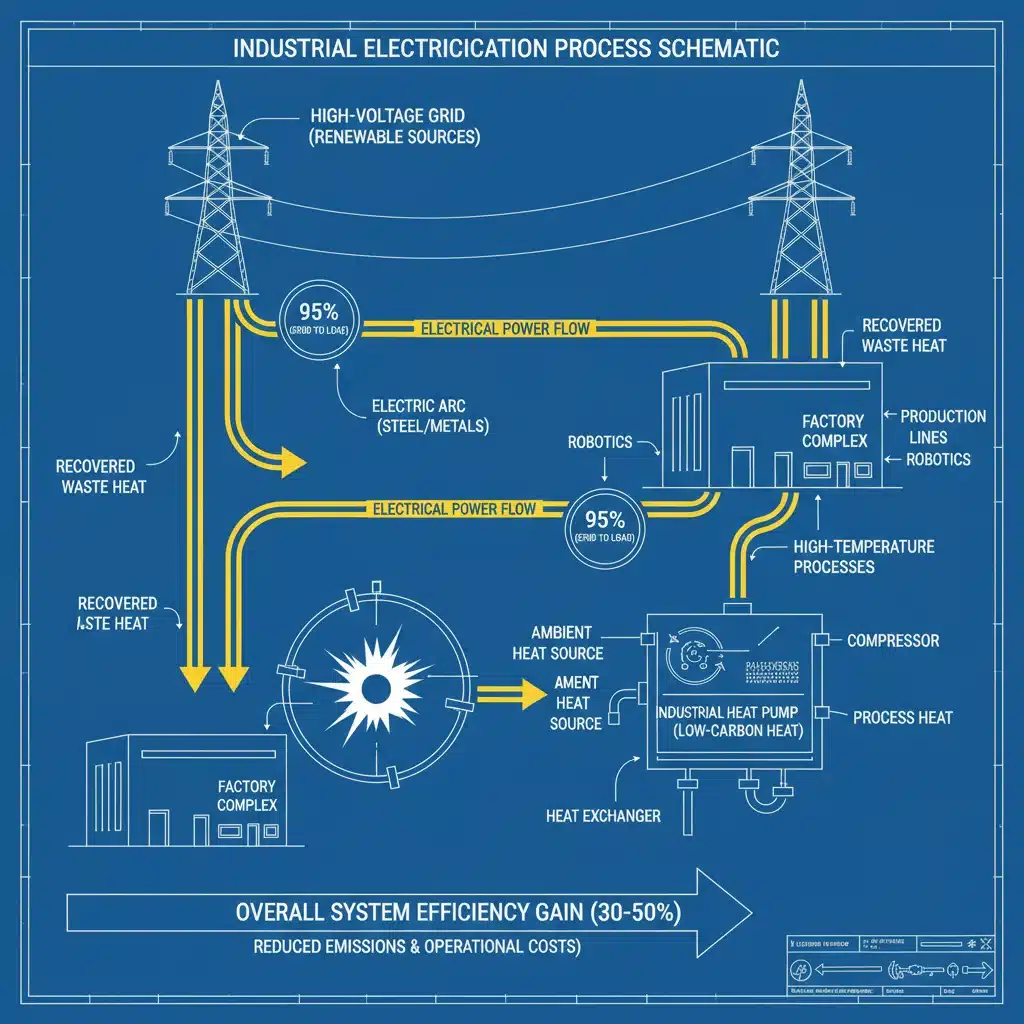
Electrification stands out as a powerful industrial decarbonization pathway. The concept is straightforward: replace fossil-fuel-fired equipment with electric alternatives. However, its implementation in heavy industry is far from simple due to the high temperatures required in many processes and the need for a reliable, affordable, and clean electricity supply.
Technological Advancements in Industrial Electrification
By 2026, several electrification technologies are expected to gain significant traction within U.S. heavy industry:
- Electric Arc Furnaces (EAFs): Already prevalent in steel recycling, EAFs are becoming more efficient and are being explored for primary steel production when coupled with direct reduced iron (DRI) produced with green hydrogen.
- Industrial Heat Pumps: For lower to medium-temperature process heat requirements (up to around 200°C), advanced industrial heat pumps offer significant energy efficiency gains and can be powered by renewable electricity. Their adoption is expanding in sectors like food and beverage, pulp and paper, and some chemical processes.
- Electric Boilers: While less efficient than heat pumps, electric boilers can provide steam for various industrial applications, especially when excess renewable electricity is available.
- Microwave and Induction Heating: These technologies offer precise and efficient heating for specific applications, reducing energy waste and carbon emissions.
- Electric Vehicles and Equipment: Within industrial facilities, the transition from fossil-fueled forklifts, trucks, and other mobile equipment to electric alternatives is a relatively straightforward electrification step already underway.
The success of these electrification efforts is intrinsically linked to the decarbonization of the electricity grid itself. As the U.S. continues to expand its renewable energy capacity (solar, wind, geothermal), the carbon intensity of grid electricity decreases, making industrial electrification a truly impactful industrial decarbonization pathway.
Challenges and Opportunities in Industrial Electrification by 2026
Despite the promise, several challenges impede widespread industrial electrification:
- High-Temperature Processes: Many heavy industrial processes, such as cement clinker production or certain chemical reactions, require extremely high temperatures (over 1000°C) that are difficult and expensive to achieve solely with electricity at current technological readiness levels.
- Grid Infrastructure: The existing electricity grid may not be robust enough to handle the significant increase in demand from widespread industrial electrification. Upgrades to transmission and distribution infrastructure are essential.
- Cost and Investment: The capital expenditure required to replace existing fossil-fuel-fired equipment with electric alternatives can be substantial, requiring strong economic incentives and supportive policies.
- Reliability and Resilience: Industrial operations demand highly reliable power. Ensuring grid stability and resilience with a higher penetration of intermittent renewable energy sources is paramount.
Opportunities, however, abound. Advancements in energy storage technologies (e.g., batteries, thermal storage) can help manage intermittent renewable supply. Demand-side management programs can incentivize industries to shift electricity consumption to off-peak hours. Furthermore, the integration of smart grid technologies can optimize energy use and reduce costs, making electrification a more attractive industrial decarbonization pathway.
Alternative Fuels: A Complementary Industrial Decarbonization Pathway
For processes where direct electrification is not yet feasible or cost-effective, alternative fuels offer a vital industrial decarbonization pathway. These fuels aim to replace fossil fuels while significantly reducing or eliminating carbon emissions.
Emerging Alternative Fuels for Heavy Industry
By 2026, the focus on alternative fuels in U.S. heavy industry will primarily revolve around:
- Green Hydrogen: Produced through electrolysis powered by renewable electricity, green hydrogen is a zero-carbon fuel that can be used for high-temperature process heat, as a chemical feedstock (e.g., in ammonia production), or as a reducing agent (e.g., in direct reduced iron for steelmaking). The development of hydrogen hubs across the U.S. is a significant step towards scaling up its production and infrastructure.
- Sustainable Biofuels/Biomass: Biomass, derived from agricultural waste, forest residues, or dedicated energy crops, can be combusted for heat or converted into liquid or gaseous biofuels. When sustainably sourced, biomass can be considered carbon-neutral or low-carbon. Its application is particularly relevant in industries with existing biomass infrastructure, like pulp and paper, or those requiring liquid fuels.
- Synthetic Fuels (e-fuels): These fuels are produced by combining green hydrogen with captured CO2. While still in early stages of commercialization for heavy industry, e-fuels offer a path to create drop-in replacements for fossil-based liquid fuels and chemicals, particularly for applications where hydrogen is difficult to store or transport.
- Ammonia: Green ammonia, produced from green hydrogen, is gaining attention as a potential carbon-free fuel, especially for shipping, and could also find niche applications in industrial heat generation.
The development of infrastructure for the production, storage, and distribution of these alternative fuels is critical. The U.S. government’s investments in hydrogen hubs and carbon capture and storage (CCS) are foundational to accelerating the adoption of these industrial decarbonization pathways.
Challenges and Opportunities for Alternative Fuels by 2026
The journey towards widespread adoption of alternative fuels is not without its obstacles:
- Cost: Green hydrogen and synthetic fuels are currently significantly more expensive than their fossil fuel counterparts. Cost reductions through technological advancements, economies of scale, and supportive policies are essential.
- Infrastructure: A dedicated infrastructure for hydrogen and other alternative fuels (pipelines, storage, refueling stations) is largely non-existent or nascent, requiring massive investment and coordinated planning.
- Supply Chain: Ensuring a reliable and sustainable supply of biomass feedstocks or sufficient renewable electricity for green hydrogen production can be complex.
- Energy Efficiency: While carbon-free, the production of some alternative fuels (like green hydrogen) can be energy-intensive, meaning overall system efficiency must be considered.
On the opportunity side, the development of these alternative fuel value chains creates new economic opportunities and jobs. Furthermore, these fuels offer a pathway to decarbonize hard-to-abate sectors, providing flexible energy solutions and reducing reliance on volatile fossil fuel markets. By 2026, we expect to see pilot and demonstration projects scaling up, providing valuable data and experience for broader deployment of these industrial decarbonization pathways.
The Role of Carbon Capture, Utilization, and Storage (CCUS)
While not an alternative fuel or direct electrification, Carbon Capture, Utilization, and Storage (CCUS) plays a complementary and crucial role in industrial decarbonization pathways, especially for sectors with unavoidable process emissions or where other solutions are not yet mature. By 2026, CCUS technologies are expected to see increased deployment, particularly in cement, steel, and chemical plants.
CCUS involves capturing CO2 emissions from industrial sources, transporting it, and then either utilizing it (e.g., for synthetic fuels, building materials) or permanently storing it in geological formations. The Inflation Reduction Act (IRA) in the U.S. provides significant tax credits for CCUS, making these projects more economically viable and accelerating their adoption as a critical industrial decarbonization pathway.
Challenges and Opportunities in CCUS by 2026
Challenges for CCUS include the high capital and operating costs, the energy penalty associated with capture, and public perception issues regarding storage. However, opportunities lie in the potential for CO2 utilization to create new industries and products, and in the ability of CCUS to act as a bridge technology while other decarbonization solutions mature. The increased focus on regional carbon capture hubs and CO2 pipeline infrastructure development is a positive sign for its future role in industrial decarbonization pathways.

Policy and Economic Landscape for U.S. Industrial Decarbonization in 2026
The policy and economic landscape in the U.S. is increasingly supportive of industrial decarbonization pathways. The Inflation Reduction Act (IRA) is a game-changer, offering unprecedented incentives for clean energy and industrial decarbonization. Key provisions impacting heavy industry include:
- Tax Credits for Clean Hydrogen: Production tax credits for clean hydrogen significantly reduce its cost, making it more competitive with fossil fuels and accelerating its adoption as an industrial decarbonization pathway.
- Tax Credits for Carbon Capture: Enhanced 45Q tax credits for carbon capture projects improve their economic viability.
- Advanced Industrial Facilities Program: Grants and loans for projects that reduce greenhouse gas emissions from industrial facilities.
- Clean Energy Manufacturing Tax Credits: Incentives for manufacturing components of renewable energy technologies, which indirectly supports a cleaner grid for industrial electrification.
Beyond federal policy, state-level initiatives, such as renewable portfolio standards, clean energy mandates, and direct funding for industrial efficiency and decarbonization projects, further bolster these efforts. These policies create a more favorable investment climate for companies pursuing industrial decarbonization pathways.
Economic Considerations and Investment Trends
The economic considerations for industrial decarbonization are complex. While initial capital costs can be high, the long-term benefits include reduced exposure to volatile fossil fuel prices, enhanced energy security, and improved corporate reputation. By 2026, we anticipate:
- Increased Private Investment: Driven by policy incentives and growing ESG (Environmental, Social, and Governance) pressures, private capital will increasingly flow into low-carbon industrial projects.
- Green Premium Reduction: As technologies scale, the “green premium” (the additional cost of low-carbon products) for materials like green steel or cement is expected to decrease, making them more competitive.
- Job Creation: The transition to a low-carbon industrial economy is expected to create new jobs in renewable energy manufacturing, clean technology deployment, and alternative fuel production.
However, careful planning is needed to ensure that the economic transition is equitable, supporting workers and communities currently dependent on fossil fuel industries. This involves retraining programs and investment in new economic opportunities in these regions.
Sector-Specific Decarbonization Focus by 2026
While the principles of industrial decarbonization pathways apply broadly, specific heavy industries will prioritize different approaches by 2026:
Steel Industry
The steel industry, a major emitter, is focusing on transitioning from traditional blast furnaces to Electric Arc Furnaces (EAFs) using scrap steel. For primary steel production, the key industrial decarbonization pathway involves Direct Reduced Iron (DRI) processes fueled by green hydrogen, coupled with EAFs. Several pilot projects and feasibility studies for green steel are expected to advance significantly by 2026.
Cement Industry
Cement production involves both energy-related emissions and process emissions from limestone calcination. By 2026, the cement industry will increasingly explore CCUS for capturing process emissions, alongside optimizing clinker-to-cement ratios and using alternative raw materials. Electrification of some grinding and drying processes will also contribute to industrial decarbonization.
Chemicals and Petrochemicals
This diverse sector utilizes fossil fuels as both energy sources and feedstocks. Industrial decarbonization pathways here include electrification of steam cracking and other heat-intensive processes, the use of green hydrogen as a feedstock, and the development of bio-based or recycled feedstocks. CCUS will also be crucial for facilities with unavoidable process emissions.
Refining Industry
The refining sector faces challenges due to its complex processes and high energy demand. Decarbonization efforts by 2026 will likely involve increased energy efficiency, electrification of auxiliary processes, and the exploration of green hydrogen for hydrotreating and other chemical reactions. The production of sustainable aviation fuels (SAFs) and other biofuels within refineries will also contribute to overall carbon reduction.
Challenges and Roadblocks for Industrial Decarbonization Pathways
Despite the momentum, significant challenges remain for U.S. industrial decarbonization pathways by 2026:
- Technological Readiness and Scale: While many solutions exist, bringing them to commercial scale across entire industries requires substantial investment and de-risking.
- Capital Intensity: The upfront costs for new equipment and infrastructure are immense, and financial mechanisms must be robust enough to support these transitions.
- Supply Chain Constraints: The rapid scale-up of renewable energy and alternative fuel production may face supply chain bottlenecks for critical minerals and manufacturing capacity.
- Skilled Workforce: A skilled workforce is needed to design, build, operate, and maintain new low-carbon industrial facilities and infrastructure. Workforce development programs are crucial.
- Regulatory and Permitting Hurdles: Streamlining permitting processes for new clean energy and industrial projects is essential to accelerate deployment.
- Intermittency of Renewables: Integrating high percentages of intermittent renewable energy into industrial operations requires sophisticated energy management systems and storage solutions.
Addressing these roadblocks requires sustained collaboration between government, industry, academia, and civil society. A holistic approach that considers technological, economic, social, and policy dimensions is vital for successful industrial decarbonization.
The Path Forward: Opportunities and Future Outlook Beyond 2026
Looking beyond 2026, the foundational work laid in the near term will pave the way for more radical transformations in industrial decarbonization pathways. Continued investment in research and development will be paramount for breakthroughs in areas like advanced materials, high-temperature heat pumps, and novel catalytic processes.
The integration of digital technologies, such as AI and machine learning, will play an increasing role in optimizing industrial processes, enhancing energy efficiency, and managing complex energy systems. Circular economy principles, focusing on resource efficiency, waste reduction, and material recycling, will also become more central to industrial decarbonization efforts.
The U.S. has a unique opportunity to lead in the development and deployment of clean industrial technologies, creating a competitive advantage in a global economy that is rapidly shifting towards sustainability. By embracing aggressive industrial decarbonization pathways through electrification and alternative fuels, supported by robust policy and strategic investments, heavy industry can not only meet its climate obligations but also emerge stronger, more resilient, and more innovative.
The journey to decarbonize U.S. heavy industry is a marathon, not a sprint. However, the period leading up to 2026 represents a critical acceleration phase. The decisions made and technologies deployed in these years will set the stage for profound and lasting change, moving the nation closer to a net-zero industrial future. The commitment to these industrial decarbonization pathways is not just about reducing emissions; it is about reimagining the future of industry itself.
Conclusion
The analysis of U.S. industrial decarbonization pathways for heavy industry in 2026 reveals a dynamic and challenging, yet promising, landscape. Electrification, powered by an increasingly clean grid, and the adoption of alternative fuels like green hydrogen and sustainable biofuels, are the twin pillars of this transition. Complementary technologies such as CCUS provide essential solutions for hard-to-abate emissions.
The robust policy support from initiatives like the Inflation Reduction Act is catalyzing investment and accelerating deployment. While significant technological, economic, and infrastructural hurdles remain, the opportunities for innovation, economic growth, and global leadership in clean industrial technologies are substantial. The commitment and concerted efforts of all stakeholders – government, industry, researchers, and communities – will be crucial in navigating these industrial decarbonization pathways successfully, ensuring a sustainable and prosperous future for U.S. heavy industry.