2026 Battery Technologies: Revolutionizing Grid-Scale Storage in the US
Anúncios
2026 Battery Technologies: Revolutionizing Grid-Scale Storage in the US
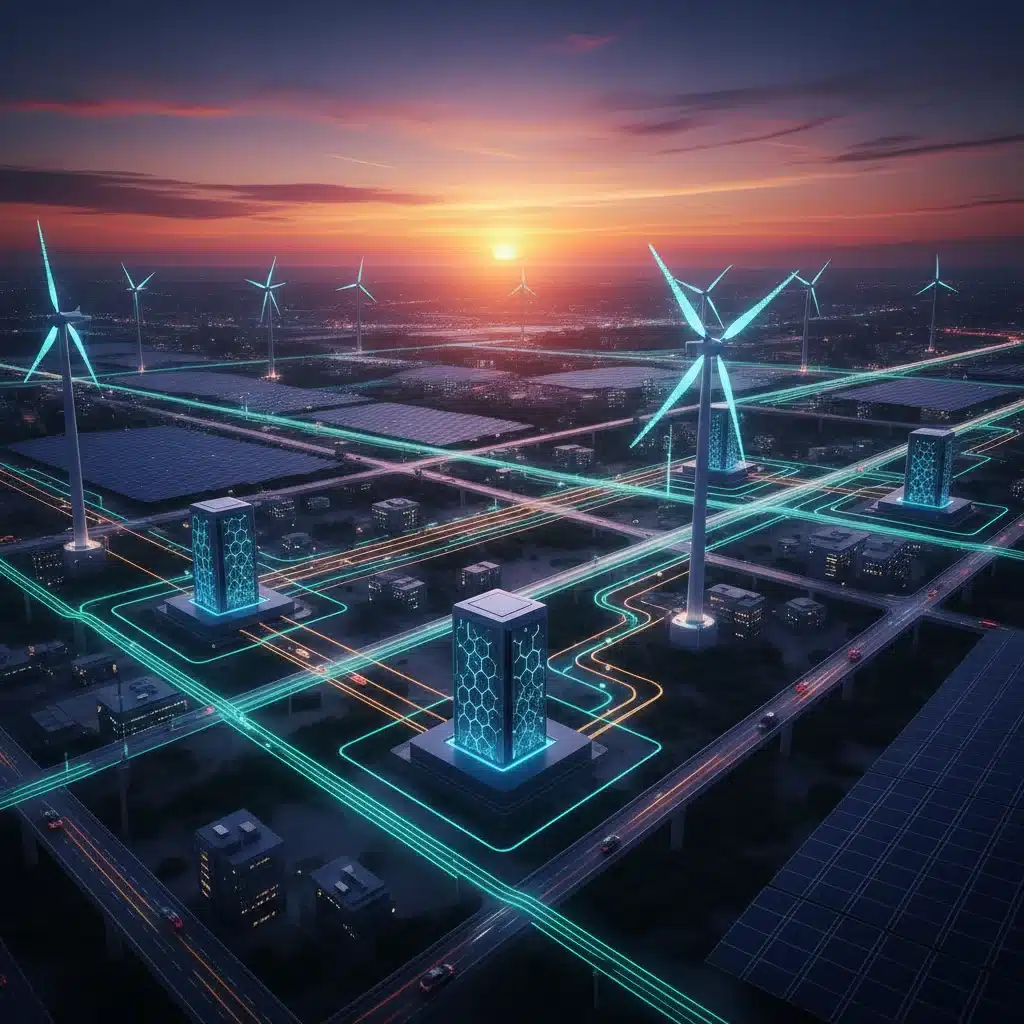
The global energy landscape is undergoing a monumental transformation, driven by an urgent need for sustainable and reliable power solutions. At the forefront of this revolution are advancements in energy storage, particularly 2026 battery technologies that promise to redefine grid-scale applications in the United States. As renewable energy sources like solar and wind become increasingly prevalent, the challenge of intermittency – their inability to provide consistent power – has become a critical bottleneck. This is where advanced battery storage steps in, acting as the crucial bridge between intermittent generation and constant demand. The innovations emerging in 2026 battery technologies are not just incremental improvements; they represent fundamental shifts that are enhancing efficiency, extending lifespans, improving safety, and significantly reducing costs, making grid-scale storage a viable and indispensable component of the modern energy infrastructure.
The US, with its vast geographical diversity and ambitious clean energy targets, is a prime arena for these advancements. From balancing supply and demand to providing ancillary services like frequency regulation and voltage support, grid-scale batteries are becoming the backbone of a resilient and decarbonized grid. This article delves into three pivotal innovations in 2026 battery technologies that are set to revolutionize grid-scale energy storage in the US, exploring their underlying principles, advantages, challenges, and projected impact on the energy sector.
The Imperative for Advanced Grid-Scale Storage
Before diving into the specifics of 2026 battery technologies, it’s essential to understand the driving forces behind the urgent need for advanced grid-scale storage. The rapid expansion of renewable energy capacity, while vital for climate action, introduces significant operational complexities for grid operators. Solar power is abundant during the day but disappears at night; wind power is intermittent and unpredictable. Without robust storage solutions, this variability can lead to grid instability, curtailment of renewable energy (where clean power is wasted because it cannot be stored or transmitted), and a continued reliance on fossil fuel peaker plants to meet demand fluctuations.
Grid-scale energy storage systems provide a multitude of benefits:
- Grid Stabilization: They can rapidly inject or absorb power, helping to maintain grid frequency and voltage within acceptable limits.
- Peak Shaving: Storing excess energy during low-demand periods and discharging it during peak demand reduces stress on the grid and can defer costly infrastructure upgrades.
- Energy Arbitrage: Buying electricity when prices are low and selling when prices are high, optimizing economic value.
- Enhanced Renewable Integration: Allowing a higher penetration of intermittent renewables by smoothing out their output and shifting energy to when it’s most needed.
- Backup Power and Blackout Prevention: Providing resilience against outages and ensuring continuous power supply to critical infrastructure.
Traditional battery technologies, primarily lithium-ion, have made significant strides, but they face limitations in terms of cost, safety, resource availability, and long-duration discharge capabilities for truly grid-scale applications. This has spurred intense research and development into next-generation 2026 battery technologies, aiming to overcome these hurdles and unlock the full potential of a renewable energy future.
Innovation 1: Solid-State Batteries for Enhanced Safety and Energy Density
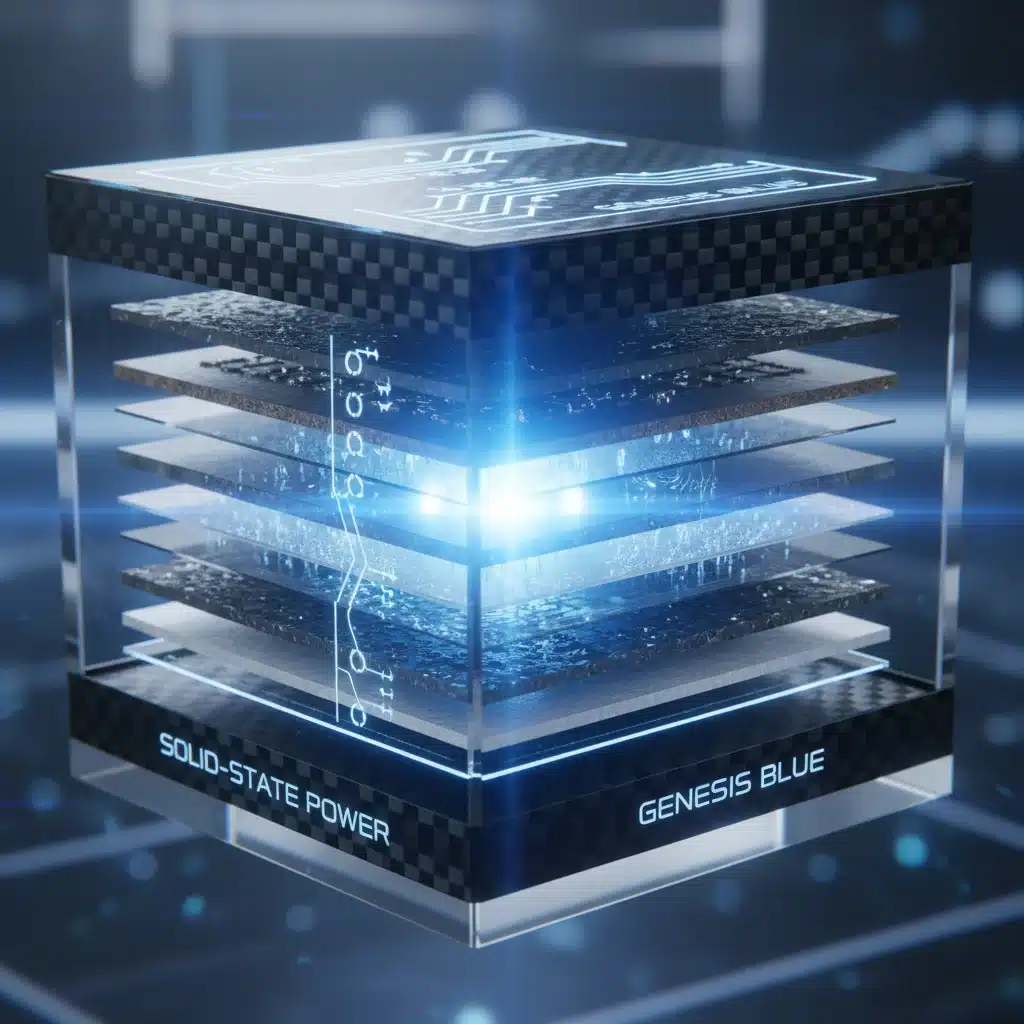
One of the most anticipated breakthroughs in 2026 battery technologies is the commercialization and scaling of solid-state batteries (SSBs). While often discussed in the context of electric vehicles, SSBs hold immense promise for grid-scale applications due to their inherent safety advantages and potential for higher energy density. Traditional lithium-ion batteries rely on flammable liquid electrolytes, which pose risks of thermal runaway and fires, a significant concern for large-scale installations near populated areas.
How Solid-State Batteries Work
Solid-state batteries replace the liquid or gel electrolyte with a solid conductive material. This solid electrolyte can be a ceramic, glass, or solid polymer. The basic principle remains the same – lithium ions move between the anode and cathode – but the solid medium offers several key advantages:
- Elimination of Flammable Electrolytes: This is the most significant safety improvement, drastically reducing the risk of fire and explosion.
- Higher Energy Density: Solid electrolytes can enable the use of lithium metal anodes, which have a much higher theoretical energy capacity than the graphite anodes used in conventional Li-ion batteries. This translates to more energy stored in a smaller, lighter package.
- Longer Lifespan: The stable nature of solid electrolytes can lead to fewer degradation mechanisms, potentially resulting in longer cycle life and calendar life.
- Wider Operating Temperature Range: Some solid electrolytes perform better at extreme temperatures compared to liquid electrolytes.
Impact on Grid-Scale Storage
For grid applications, the safety aspect of SSBs is paramount. Large battery installations require stringent safety protocols and robust fire suppression systems, which add to the overall cost and complexity. By minimizing fire risks, SSBs can simplify deployment, reduce insurance premiums, and allow for more flexible siting options. Furthermore, their high energy density could lead to more compact storage facilities, reducing land footprint – a valuable consideration in urban or densely populated areas.
While still facing manufacturing challenges related to cost, scalability, and maintaining good interfacial contact between solid layers, significant progress is being made. Companies are rapidly developing pilot production lines, and by 2026 battery technologies in the solid-state realm are expected to see initial large-scale deployments, especially in niche applications where safety and compactness are critical.
Innovation 2: Advanced Flow Batteries for Long-Duration Storage
While solid-state batteries excel in energy density and safety, another category of 2026 battery technologies is making significant inroads for long-duration grid storage: advanced flow batteries. Unlike traditional batteries that store energy within their electrode materials, flow batteries store energy in liquid electrolyte solutions contained in external tanks. This fundamental design difference offers unique advantages for applications requiring many hours, or even days, of discharge.
How Flow Batteries Work
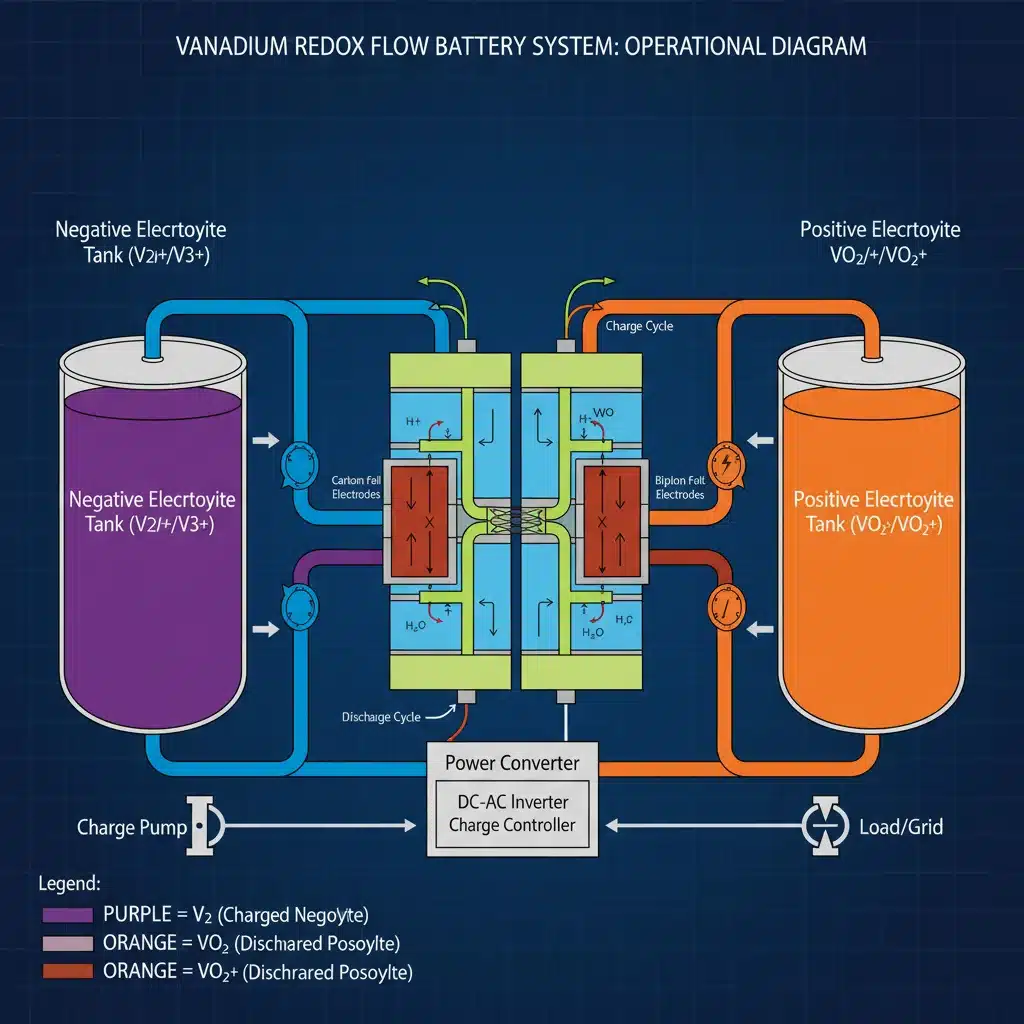
A typical flow battery consists of two tanks containing liquid electrolytes (anolyte and catholyte) separated by a membrane within a power stack. During charging, electricity causes ions to move across the membrane, changing the oxidation states of the active materials in the electrolytes. During discharge, the reverse process occurs, generating electricity. The key characteristic is that the energy capacity is decoupled from the power output: the amount of energy stored depends on the size of the electrolyte tanks, while the power output depends on the size of the power stack.
Several chemistries are being developed, with vanadium redox flow batteries (VRFBs) being the most mature. Other emerging chemistries include zinc-bromine, iron-chromium, and organic flow batteries, each offering a unique balance of cost, performance, and environmental impact.
Impact on Grid-Scale Storage
The primary advantage of flow batteries for grid-scale applications is their ability to provide long-duration storage at a potentially lower cost than lithium-ion batteries. This is crucial for integrating high percentages of renewables, as it allows for storing solar power generated in the day for use late into the night, or wind power generated over several days to cover periods of calm. Key benefits include:
- Scalable Energy Capacity: Simply increasing the size of the electrolyte tanks increases storage capacity without affecting power output.
- Long Lifespan: The active materials are not stored on the electrodes, reducing degradation and allowing for tens of thousands of cycles over decades.
- Non-Flammable Electrolytes: Most flow battery chemistries use aqueous (water-based) electrolytes, making them inherently safer and non-flammable.
- Deep Discharge Capability: Can be fully discharged without significant damage, unlike some other battery types.
By 2026 battery technologies in the flow battery space are expected to see significant cost reductions through manufacturing improvements and economies of scale. This will enable them to compete effectively for multi-hour to multi-day storage projects, filling a critical gap in the grid’s energy storage needs and paving the way for a truly 24/7 renewable energy system in the US.
Innovation 3: Advanced Lithium-Ion Chemistries and Recycling for Sustainability
While solid-state and flow batteries represent significant departures from current norms, the evolution of existing lithium-ion (Li-ion) technology also forms a crucial part of 2026 battery technologies. Researchers and manufacturers are relentlessly pushing the boundaries of Li-ion to improve its performance, cost-effectiveness, and environmental footprint, ensuring it remains a dominant force in the energy storage market.
Next-Generation Li-ion Chemistries
The focus here is on developing new cathode and anode materials that enhance energy density, power density, safety, and cycle life, while reducing reliance on critical raw materials like cobalt. Key advancements include:
- Nickel-Rich Cathodes (NMC 811, 9½½): Increasing nickel content reduces the need for cobalt and boosts energy density.
- Lithium Iron Phosphate (LFP) Batteries: Gaining traction for grid-scale applications due to their excellent safety, longer cycle life, and lower cost, despite having a lower energy density than NMC chemistries. They are also cobalt-free.
- Silicon Anodes: Replacing or augmenting graphite anodes with silicon can dramatically increase energy density, as silicon can store significantly more lithium ions.
- Lithium-Sulfur and Lithium-Air: These are longer-term prospects, but research continues to explore their ultra-high theoretical energy densities, which could eventually revolutionize energy storage.
Closed-Loop Recycling and Sustainable Sourcing
Beyond performance, the sustainability of 2026 battery technologies is a major concern. The environmental impact of mining raw materials and the disposal of spent batteries are significant challenges. Therefore, advancements in closed-loop recycling processes are critical. These processes aim to recover valuable materials like lithium, cobalt, nickel, and manganese from end-of-life batteries with high efficiency and purity, minimizing waste and reducing the need for virgin material extraction.
Furthermore, efforts are intensifying to establish ethical and sustainable sourcing practices for raw materials, ensuring that the supply chain for 2026 battery technologies is responsible and minimizes social and environmental harm.
Impact on Grid-Scale Storage
Improved Li-ion chemistries mean more efficient, safer, and cheaper batteries for various grid services, especially those requiring high power output and moderate duration. LFP, in particular, is becoming a workhorse for grid-scale applications in the US due to its safety and longevity. The emphasis on recycling and sustainable sourcing ensures that the expansion of battery storage aligns with broader environmental goals, creating a truly circular economy for energy storage.
Challenges and Opportunities for 2026 Battery Technologies in the US
While the outlook for 2026 battery technologies is incredibly promising, several challenges need to be addressed for their widespread adoption in the US grid:
- Cost Reduction: Despite significant progress, the upfront capital cost of large-scale battery systems remains a barrier. Continued innovation in materials, manufacturing processes, and economies of scale are essential.
- Supply Chain Resilience: Ensuring a stable and ethical supply chain for critical raw materials, many of which are geographically concentrated, is vital. Domestic manufacturing and recycling capabilities are being built up to mitigate geopolitical risks.
- Regulatory and Market Structures: Existing electricity markets and regulations were not designed with grid-scale storage in mind. Adapting these frameworks to properly value and incentivize battery services is crucial.
- Interconnection and Permitting: The process of connecting large battery projects to the grid can be lengthy and complex, requiring streamlined procedures.
- Long-Duration Performance: While advancements are being made, achieving cost-effective storage for multiple days remains a significant technical hurdle for all battery types.
Despite these challenges, the opportunities presented by 2026 battery technologies are immense. The US government, through initiatives like the Bipartisan Infrastructure Law and the Inflation Reduction Act, is providing substantial incentives for domestic battery manufacturing and deployment, accelerating the pace of innovation and adoption. This policy support, coupled with relentless technological advancement, positions the US to lead in the energy storage revolution.
The Future of Grid-Scale Energy Storage in the US with 2026 Battery Technologies
The year 2026 battery technologies will mark a pivotal moment in the evolution of grid-scale energy storage in the US. The confluence of solid-state advancements offering unprecedented safety and energy density, advanced flow batteries providing cost-effective long-duration solutions, and the continuous improvement and sustainable practices within the lithium-ion ecosystem will create a diverse and robust toolkit for grid operators and developers.
Imagine a future where:
- Renewable energy sources provide the vast majority of our electricity, seamlessly integrated by intelligent battery systems.
- The grid is more resilient, less prone to outages, and capable of recovering quickly from disruptions.
- Energy costs are stabilized, and consumers benefit from cleaner, more affordable power.
- The environmental footprint of energy production and storage is minimized through advanced recycling and sustainable practices.
These 2026 battery technologies are not just about storing electricity; they are about enabling a fundamental paradigm shift towards a cleaner, more reliable, and more sustainable energy future. The innovations discussed here are laying the groundwork for a grid that is not only smart but also inherently green, ensuring energy security and environmental stewardship for generations to come. The US is at the cusp of this transformation, and the widespread adoption of these advanced battery solutions will be a testament to human ingenuity and our collective commitment to a sustainable planet.
The journey to a fully decarbonized grid is complex, but with the rapid evolution of 2026 battery technologies, we are closer than ever to achieving this ambitious goal. Continued investment in research, supportive policy frameworks, and collaborative efforts across industry and academia will be crucial in unlocking the full potential of these groundbreaking innovations and cementing the US’s leadership in the global clean energy transition.