U.S. Hydrogen Economy 2026: Production & Infrastructure Deep Dive

Anúncios
The U.S. Hydrogen Economy in 2026: A Comprehensive Analysis of Production Pathways and Infrastructure Development
The global pursuit of decarbonization has propelled hydrogen to the forefront of clean energy discussions, and the US Hydrogen Economy is rapidly emerging as a critical player in this transformative shift. As we look towards 2026, the landscape of hydrogen production, distribution, and utilization in the United States is undergoing a profound evolution. This detailed analysis will explore the multifaceted aspects of the US Hydrogen Economy, examining the diverse production pathways, the crucial infrastructure development required to support its growth, the policy frameworks shaping its trajectory, and the economic and environmental implications.
Hydrogen, often dubbed the “fuel of the future,” offers unparalleled versatility as an energy carrier. It can be produced from a variety of domestic resources, stored, and converted into electricity or heat, or used directly as a fuel or industrial feedstock. Its potential to decarbonize hard-to-abate sectors like heavy industry, long-haul transportation, and aviation makes it indispensable in achieving ambitious climate goals. The Biden administration has set aggressive targets for clean hydrogen production, aiming to reduce its cost to $1 per kilogram by 2030, a goal that is significantly influencing investments and innovation within the US Hydrogen Economy.
Understanding the Diverse Hydrogen Production Pathways
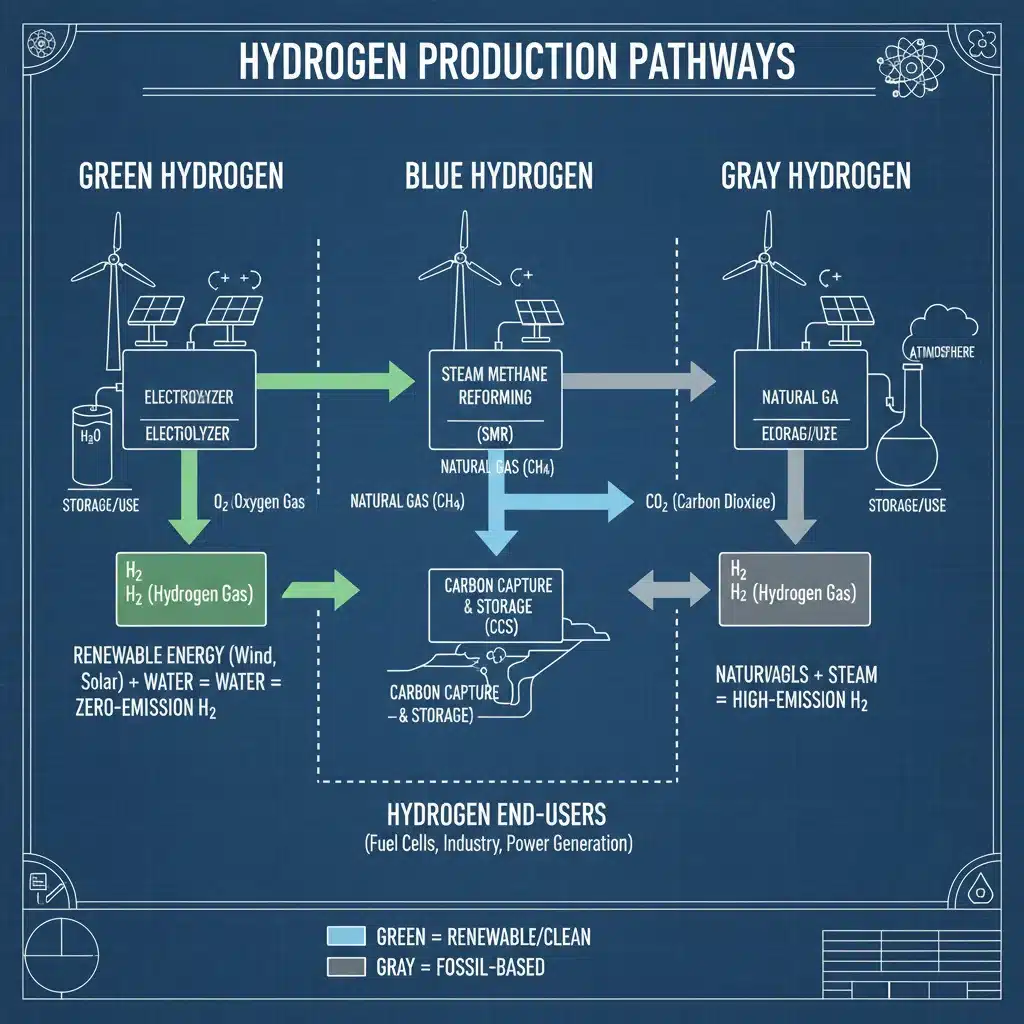
The journey of hydrogen from source to application is complex, involving various production methods, each with its own advantages, challenges, and environmental footprint. By 2026, several key pathways will dominate the US Hydrogen Economy:
Green Hydrogen: The Renewable Frontier
Green hydrogen, produced through the electrolysis of water using renewable electricity (solar, wind, hydro), is considered the gold standard for decarbonization. This method yields hydrogen with near-zero greenhouse gas emissions. The intermittency of renewable energy sources, however, poses challenges for consistent production. Significant investments are being channeled into improving electrolyzer efficiency and scalability, as well as integrating these systems with renewable energy grids. The Inflation Reduction Act (IRA) offers substantial tax credits ($3/kg for clean hydrogen), making green hydrogen increasingly economically viable. By 2026, we anticipate a notable increase in operational green hydrogen projects, particularly in regions rich in renewable energy resources like the sun-drenched Southwest and the wind-swept Great Plains.
Blue Hydrogen: Bridging the Gap with Carbon Capture
Blue hydrogen is produced from natural gas through steam methane reforming (SMR) or autothermal reforming (ATR), with the crucial addition of carbon capture, utilization, and storage (CCUS) technologies. While not entirely emission-free, blue hydrogen offers a lower-carbon alternative to traditional gray hydrogen and can leverage existing natural gas infrastructure. This pathway is particularly attractive for industrial regions with access to abundant natural gas reserves and geological formations suitable for carbon sequestration. The IRA also provides tax credits for carbon capture, further incentivizing blue hydrogen production. The role of blue hydrogen in the US Hydrogen Economy for 2026 is seen as a vital transitional step, allowing for rapid scaling of hydrogen supply while renewable energy infrastructure for green hydrogen continues to mature.
Other Emerging Production Methods
- Pink Hydrogen: Produced via electrolysis powered by nuclear energy. Nuclear power offers a consistent, carbon-free energy source for hydrogen production, making pink hydrogen an attractive option for regions with existing nuclear fleets.
- Turquoise Hydrogen: Derived from methane pyrolysis, which produces solid carbon as a byproduct instead of CO2. This method is still in early stages of commercialization but holds promise for its unique carbon output.
- Yellow Hydrogen: A broader term for hydrogen produced via electrolysis using electricity from a mixed grid, where the electricity source isn’t exclusively renewable. Its carbon intensity depends on the grid’s overall mix.
The choice of production pathway within the US Hydrogen Economy by 2026 will largely depend on regional resource availability, existing infrastructure, and evolving policy incentives. A diversified approach, leveraging multiple pathways, is expected to be crucial for meeting the escalating demand for hydrogen.
Infrastructure Development: The Backbone of the Hydrogen Economy
The successful scaling of the US Hydrogen Economy hinges on the rapid development of robust and extensive infrastructure for production, storage, and distribution. This includes pipelines, refueling stations, and storage facilities, all of which present significant engineering and financial challenges.
Hydrogen Pipelines: The Artery System
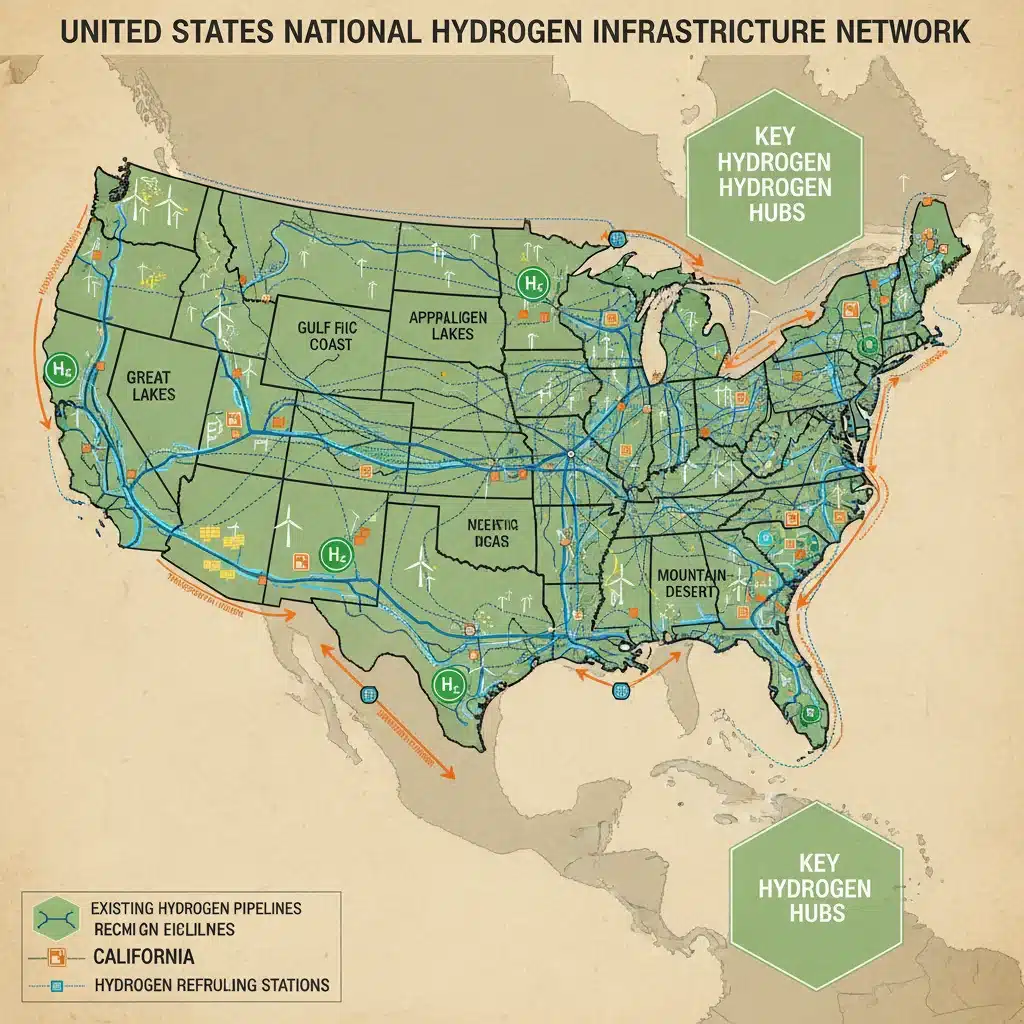
Dedicated hydrogen pipelines are the most efficient way to transport large volumes of hydrogen over long distances. While a limited network of hydrogen pipelines already exists in industrial clusters (primarily Gulf Coast), a nationwide expansion is necessary to connect production hubs with demand centers. This involves not only building new pipelines but also exploring the repurposing of existing natural gas pipelines, a more cost-effective but technically complex endeavor. Challenges include material compatibility, embrittlement, and leakage concerns. By 2026, we anticipate several pilot projects and initial phases of pipeline expansion, particularly within the designated hydrogen hubs, aiming to establish foundational transport corridors for the US Hydrogen Economy.
Storage Solutions: Ensuring Supply Stability
Hydrogen storage is critical for balancing supply and demand, especially for intermittent renewable-based production. Various storage methods are under development and deployment:
- Gaseous Storage: High-pressure tanks (up to 700 bar) are common for smaller-scale applications and refueling stations.
- Liquid Hydrogen Storage: Requires cryogenic temperatures (-253°C), making it energy-intensive but ideal for long-distance transport and large-scale applications.
- Underground Storage: Salt caverns, depleted oil and gas reservoirs, and aquifers offer large-scale, cost-effective storage options. The geological suitability of various U.S. regions for such storage is being actively assessed, with several projects expected to be underway by 2026 to support the growing US Hydrogen Economy.
- Material-based Storage: Research into solid-state materials that can absorb and release hydrogen is ongoing, promising safer and more compact storage solutions in the long term.
Refueling and Distribution Networks
For hydrogen to become a viable fuel for transportation, a comprehensive network of refueling stations is essential. This includes stations for heavy-duty trucks, buses, and potentially passenger vehicles. The initial focus is on developing corridors for heavy-duty transport, connecting major logistics hubs. Similarly, for industrial applications, localized distribution networks will be crucial to deliver hydrogen from production sites to end-users. The development of these networks will be a key indicator of the maturity of the US Hydrogen Economy in the coming years.
Policy Landscape and Financial Incentives Driving Growth
Government policies and financial incentives are playing an indispensable role in accelerating the development of the US Hydrogen Economy. The United States has enacted several landmark pieces of legislation and initiatives:
The Inflation Reduction Act (IRA)
The IRA, signed into law in 2022, is a game-changer for clean hydrogen. Its production tax credit (45V) provides up to $3 per kilogram for clean hydrogen, based on its lifecycle greenhouse gas emissions. This credit significantly lowers the cost of green and blue hydrogen, making them competitive with traditional fossil fuels and stimulating massive private sector investment. The clarity and long-term nature of these incentives are crucial for de-risking projects and encouraging innovation across the US Hydrogen Economy.
Department of Energy (DOE) Hydrogen Hubs
The DOE’s Regional Clean Hydrogen Hubs (H2Hubs) program, funded by the Bipartisan Infrastructure Law, allocates $7 billion to establish 6-10 regional clean hydrogen hubs across the country. These hubs are designed to create networks of hydrogen producers, consumers, and infrastructure, fostering regional ecosystems for hydrogen deployment. The selection of these hubs, announced in late 2023, marks a significant milestone, with several large-scale projects now moving forward. These hubs are expected to be the epicenters of growth for the US Hydrogen Economy, demonstrating integrated production, storage, and end-use applications.
Loan Programs and Research & Development
Beyond direct tax credits, the DOE also offers loan programs for clean energy projects, including hydrogen. Furthermore, significant federal funding is directed towards research and development to improve hydrogen production technologies, reduce costs, and enhance safety across the entire value chain. These initiatives collectively create a supportive environment for the nascent US Hydrogen Economy to flourish.
Key Applications and Market Segments for Hydrogen in 2026
The versatility of hydrogen means it can serve a multitude of sectors, each contributing to the overall growth and diversification of the US Hydrogen Economy.
Industrial Feedstock and Fuel
Currently, the largest use of hydrogen is as an industrial feedstock, primarily in ammonia production (for fertilizers) and petroleum refining. Shifting this existing demand to clean hydrogen (green or blue) represents a significant decarbonization opportunity. Furthermore, hydrogen can be used as a high-temperature fuel in heavy industries like steel, cement, and glass manufacturing, replacing fossil fuels and drastically reducing emissions. By 2026, we will see initial conversions and pilot projects demonstrating hydrogen’s viability in these sectors, particularly within the H2Hubs, laying the groundwork for broader adoption in the US Hydrogen Economy.
Transportation Sector Decarbonization
Hydrogen fuel cell electric vehicles (FCEVs) offer a compelling zero-emission solution for heavy-duty transportation (trucks, buses, trains, maritime vessels) and potentially aviation. While passenger FCEVs face competition from battery electric vehicles, hydrogen’s energy density and fast refueling times make it ideal for applications requiring long ranges and heavy payloads. The development of hydrogen refueling infrastructure will be key to unlocking this market segment. By 2026, a growing number of hydrogen-powered heavy-duty vehicles are expected to be on U.S. roads, signaling a concrete step towards decarbonizing logistics within the US Hydrogen Economy.
Power Generation and Grid Stability
Hydrogen can be used to generate electricity through fuel cells or by blending it with natural gas in turbines. It also offers a crucial solution for long-duration energy storage, addressing the intermittency of renewable energy. Excess renewable electricity can be used to produce hydrogen, which can then be stored and converted back into electricity when needed. This capability positions hydrogen as a vital component for grid stability and resilience, especially as the share of renewables in the U.S. power mix increases. Several pilot projects integrating hydrogen into power generation are expected to be operational by 2026, demonstrating its potential for grid balancing in the US Hydrogen Economy.
Building Heat and Other Applications
While still in earlier stages of development, hydrogen blending into natural gas pipelines for heating buildings is another potential application. However, safety concerns, material compatibility, and efficiency losses need to be carefully addressed. Other niche applications include hydrogen as a backup power source for critical infrastructure and its use in niche chemical processes. The overall expansion of these diverse applications will solidify the foundation of the US Hydrogen Economy.
Challenges and Opportunities for the U.S. Hydrogen Economy
Despite the immense potential, the US Hydrogen Economy faces several significant challenges that must be overcome for widespread adoption.
Cost Reduction
While the IRA has made significant strides in reducing the cost of clean hydrogen, further reductions are needed to make it fully competitive across all applications without subsidies. This requires continued innovation in electrolyzer technology, economies of scale in production, and efficient infrastructure deployment. Achieving the $1/kg target by 2030 is paramount.
Infrastructure Build-out
The sheer scale of infrastructure required – pipelines, storage, and refueling stations – demands massive capital investment and coordinated planning. Permitting processes, community engagement, and ensuring safety standards will be critical. The pace of this build-out will be a key determinant of the US Hydrogen Economy‘s growth.
Safety Concerns and Public Perception
Hydrogen, being a highly flammable gas, necessitates stringent safety protocols in its production, storage, and handling. Addressing public perception and ensuring high safety standards will be crucial for public acceptance and widespread deployment. Education and transparent communication are vital.
Supply Chain Development
The rapid expansion of electrolyzer manufacturing, fuel cell production, and other hydrogen-related technologies requires robust domestic supply chains. Ensuring access to critical minerals and manufacturing capabilities will be essential to avoid bottlenecks and foster economic growth within the US Hydrogen Economy.
Policy Stability and Long-Term Vision
While current policies are supportive, long-term policy stability is crucial for attracting sustained investment. A clear, consistent regulatory framework and a long-term strategic vision are necessary to guide the evolution of the US Hydrogen Economy beyond 2026.
Economic and Environmental Impact
The growth of the US Hydrogen Economy promises substantial economic and environmental benefits.
Job Creation
Investment in hydrogen production, infrastructure, manufacturing, and R&D is expected to create hundreds of thousands of new jobs across various sectors, from engineering and construction to operations and maintenance. This will provide a significant boost to local and national economies.
Energy Security and Independence
By leveraging diverse domestic resources (renewable energy, natural gas with CCUS, nuclear), hydrogen can enhance U.S. energy security and reduce reliance on imported fossil fuels. This diversification strengthens the national energy portfolio.
Decarbonization and Climate Change Mitigation
The primary environmental benefit of the US Hydrogen Economy is its potential to significantly reduce greenhouse gas emissions, particularly in hard-to-decarbonize sectors. By replacing fossil fuels, hydrogen contributes directly to achieving climate targets and improving air quality.
Innovation and Technological Leadership
The drive to develop and deploy hydrogen technologies fosters innovation across various scientific and engineering disciplines, positioning the U.S. as a leader in clean energy technology and creating export opportunities.
Conclusion: A Transformative Path Ahead for the U.S. Hydrogen Economy
By 2026, the US Hydrogen Economy will be well on its way to becoming a foundational pillar of the nation’s clean energy transition. The combination of strong policy support, significant private sector investment, and technological advancements is creating an unprecedented momentum. While challenges related to cost, infrastructure, and public perception remain, the opportunities for decarbonization, economic growth, and energy security are immense.
The strategic development of diverse production pathways, the methodical build-out of infrastructure, and sustained commitment to research and development will be crucial in realizing hydrogen’s full potential. As we move closer to 2026, the progress made in establishing hydrogen hubs, expanding pipeline networks, and deploying cleaner production methods will serve as a testament to the nation’s commitment to a sustainable and prosperous energy future. The US Hydrogen Economy is not just an aspiration; it is a tangible, evolving reality that holds the key to a cleaner, more resilient America.