Unlocking Grid Stability: 5 Innovations in Battery Storage for US Clean Energy by 2026
Anúncios
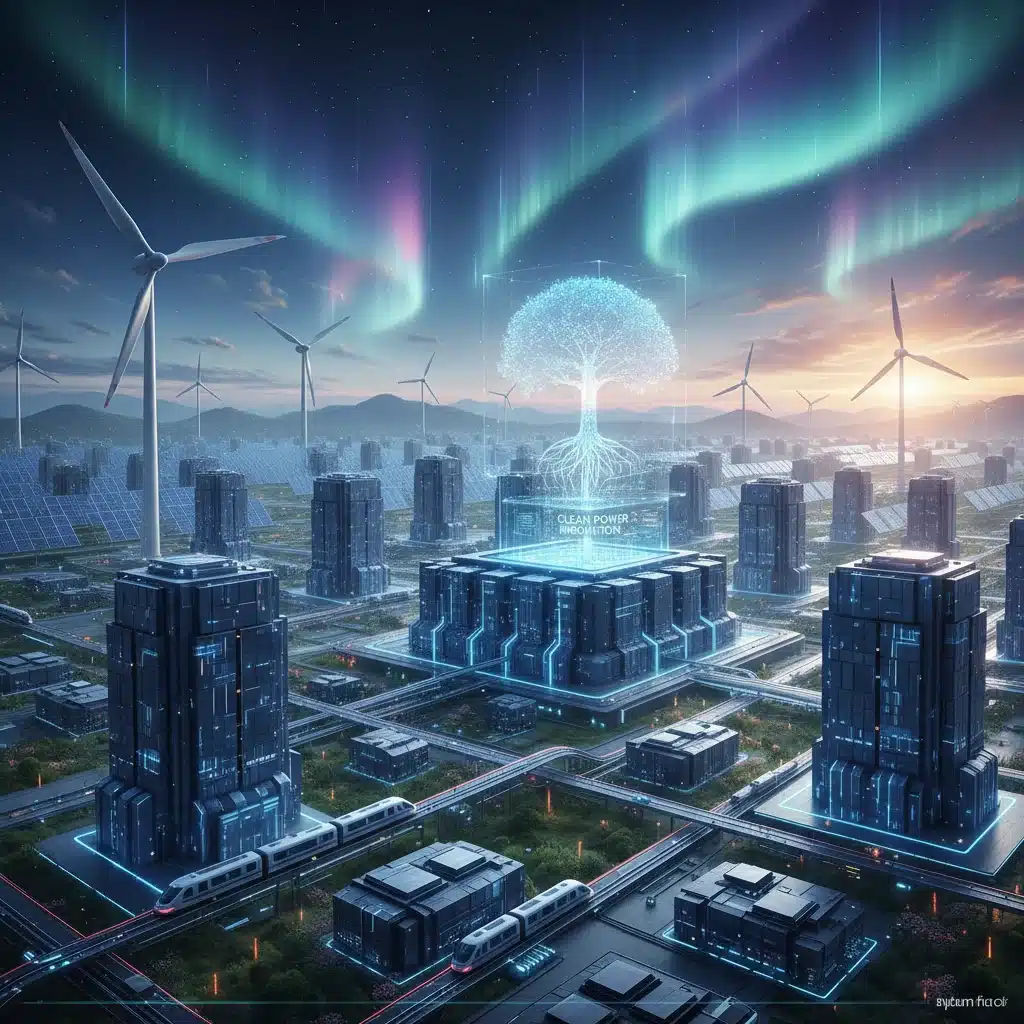
The United States is on the cusp of a clean energy revolution, driven by ambitious decarbonization goals and a growing commitment to renewable sources. However, the intermittent nature of solar and wind power presents a significant challenge to grid stability. This is where advanced battery storage solutions step in, acting as the critical backbone for a reliable, resilient, and sustainable energy future. By 2026, we anticipate a transformative leap in Battery Storage Innovations US, fundamentally reshaping how we generate, distribute, and consume power.
The imperative for robust energy storage is clear. As renewable energy penetration increases, the grid requires sophisticated mechanisms to balance supply and demand, manage peak loads, and provide essential ancillary services. Traditional grid infrastructure, designed for centralized fossil fuel generation, struggles with the variability of renewables. Battery storage offers the flexibility and responsiveness needed to bridge this gap, ensuring that clean energy is always available when needed. This article delves into five pivotal innovations in battery storage that are set to redefine the US clean energy landscape by 2026, offering a glimpse into a more stable and sustainable tomorrow.
The Critical Role of Battery Storage in US Clean Energy Transition
The journey towards a fully decarbonized energy system in the US is intrinsically linked to the evolution of battery storage technology. Without efficient and cost-effective ways to store excess renewable energy, the full potential of solar and wind power remains untapped. Imagine a scenario where solar farms generate abundant electricity during midday peaks, but that energy cannot be stored for use during evening demand. Or wind farms producing power during off-peak hours that goes to waste because there’s no immediate need. Battery storage solves these inefficiencies, enabling a continuous and reliable supply of clean energy.
Beyond simply storing energy, advanced battery systems provide a multitude of services crucial for grid modernization. They offer frequency regulation, helping to maintain the grid’s operational stability by quickly absorbing or injecting power. They can defer costly transmission and distribution upgrades by providing localized energy support. Furthermore, battery storage enhances grid resilience, acting as a buffer against disruptions and supporting microgrids that can operate independently during outages. The economic benefits are also substantial, including reduced curtailment of renewable energy, lower wholesale electricity prices during peak demand, and new revenue streams for energy storage operators through participation in electricity markets. The focus on Battery Storage Innovations US is thus not just about technology; it’s about building a more secure, efficient, and environmentally friendly energy economy.
Innovation 1: Solid-State Batteries – The Next Generation of Energy Density
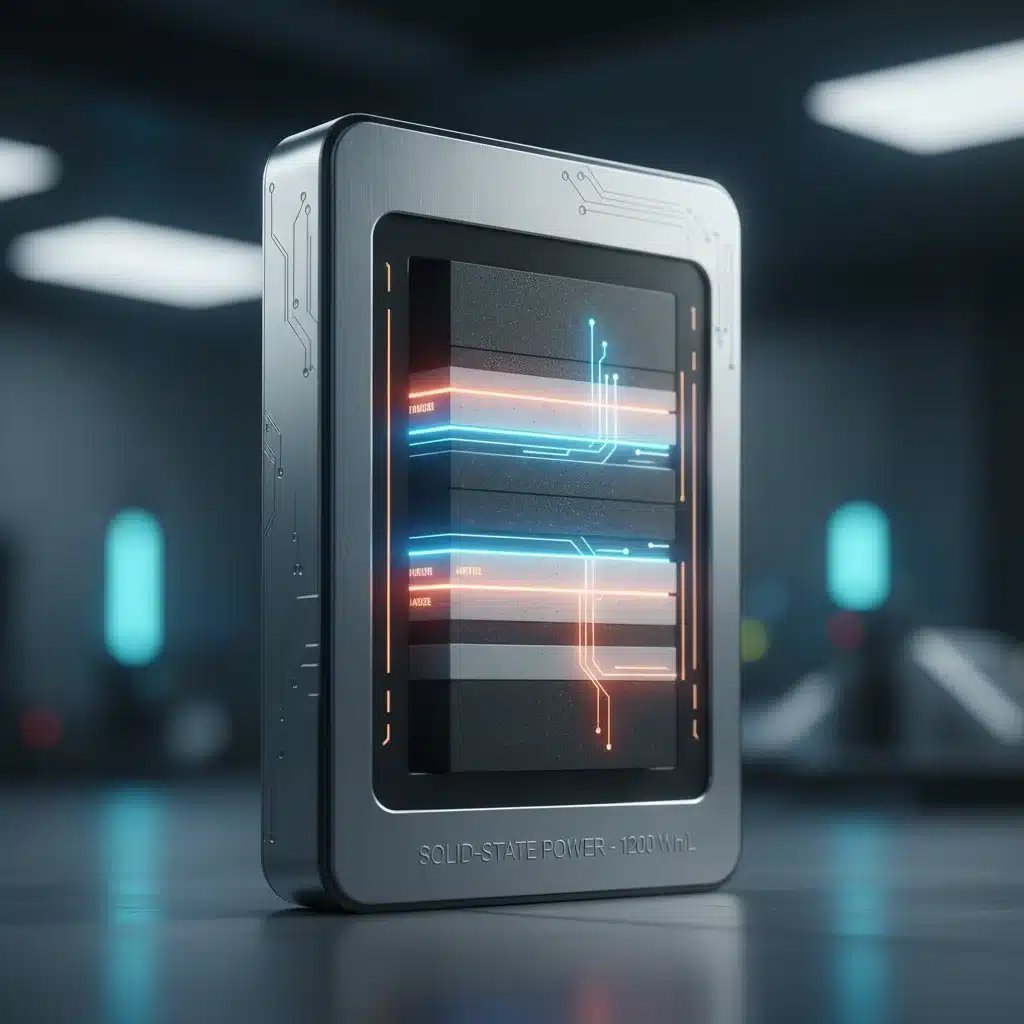
While lithium-ion batteries have dominated the energy storage market, their limitations in terms of energy density, safety, and cycle life are becoming increasingly apparent, especially for large-scale grid applications. Enter solid-state batteries (SSBs), hailed as the holy grail of battery technology. SSBs replace the flammable liquid electrolyte found in traditional lithium-ion batteries with a solid material, offering a host of advantages that are poised to revolutionize energy storage by 2026.
The primary benefit of SSBs is their significantly higher energy density. This means they can store more energy in a smaller, lighter package, making them ideal for space-constrained applications and potentially reducing the overall footprint of grid-scale storage facilities. More importantly, the use of a solid electrolyte inherently improves safety by eliminating the risk of thermal runaway and fires associated with liquid electrolytes. This enhanced safety profile is critical for large-scale deployments near communities and infrastructure.
Beyond density and safety, SSBs promise longer cycle life, allowing them to endure more charge and discharge cycles before degradation, translating to a longer operational lifespan and lower lifetime costs. They also exhibit better performance at extreme temperatures and faster charging capabilities. While still largely in the research and development phase for large-scale applications, significant progress is being made in scaling up production and reducing manufacturing costs. Several US-based companies and research institutions are at the forefront of SSB development, aiming to bring these game-changing batteries to market within the next few years. The impact of these Battery Storage Innovations US on grid stability and renewable energy integration will be profound, offering a more compact, safer, and longer-lasting storage solution.
Innovation 2: Advanced Flow Batteries – Scalability and Long-Duration Storage
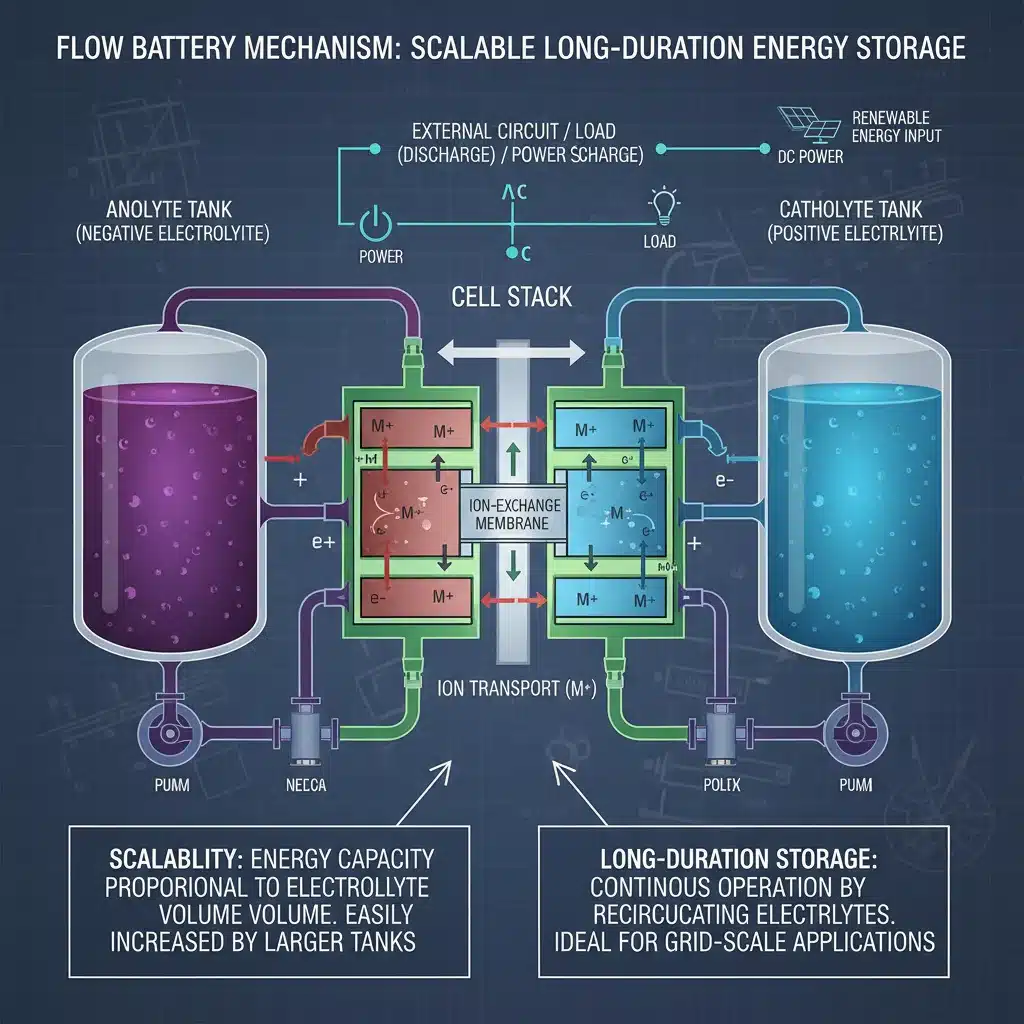
For applications requiring very long-duration energy storage – think days, not just hours – traditional lithium-ion batteries often fall short due to cost and self-discharge rates. This is where advanced flow batteries are emerging as a compelling solution. Unlike conventional batteries that store energy in solid electrode materials, flow batteries store energy in liquid electrolyte solutions contained in external tanks. This fundamental design difference offers unparalleled scalability and flexibility, making them a crucial innovation for the US clean energy grid by 2026.
The key advantage of flow batteries is the decoupling of power and energy capacity. The power output is determined by the size of the reaction stack, while the energy capacity is determined by the volume of the electrolyte tanks. This modularity allows for highly customized systems that can be scaled to meet specific long-duration storage needs, from a few hours to several days or even weeks.
Furthermore, flow batteries generally boast an extremely long cycle life, often tens of thousands of cycles, and can maintain their capacity over many years with minimal degradation. They are also inherently safer than lithium-ion batteries, as their electrolytes are typically non-flammable and less toxic. While various chemistries are being explored, including vanadium redox, zinc-bromine, and iron-chromium systems, significant advancements are being made in improving their energy density, efficiency, and reducing their overall cost. The development of next-generation flow battery chemistries that utilize abundant and inexpensive materials is particularly promising. These Battery Storage Innovations US are vital for balancing seasonal variations in renewable energy generation and providing reliable backup during extended periods of low renewable output, cementing their role in future grid designs.
Innovation 3: AI-Powered Battery Management Systems – Optimizing Performance and Longevity
The physical battery hardware is only one part of the equation; how these batteries are managed and integrated into the grid is equally critical. Artificial Intelligence (AI) and machine learning (ML) are rapidly transforming Battery Management Systems (BMS), leading to unprecedented levels of optimization in performance, longevity, and economic value. By 2026, AI-powered BMS will be a standard feature in most large-scale battery storage deployments in the US.
Traditional BMS focus on basic functions like voltage and temperature monitoring, cell balancing, and safety cut-offs. AI-powered systems go far beyond this. They leverage vast amounts of data – historical usage patterns, real-time grid conditions, weather forecasts, electricity market prices, and even individual cell characteristics – to make intelligent, predictive decisions. This allows for dynamic optimization of charging and discharging cycles, ensuring batteries operate within their optimal performance windows, thereby extending their lifespan and maximizing their efficiency.
For example, AI can predict future energy demand and supply, instructing the battery system to charge when electricity prices are low (e.g., during periods of high solar generation) and discharge when prices are high, generating significant revenue for operators. It can also anticipate potential faults or degradation patterns, enabling proactive maintenance and preventing costly failures. Furthermore, AI-driven BMS can seamlessly integrate battery storage with other grid assets, such as solar farms, wind turbines, and even electric vehicle charging infrastructure, creating a highly coordinated and resilient energy ecosystem. These sophisticated Battery Storage Innovations US are not just about hardware; they represent a paradigm shift in how we manage and extract value from our energy storage assets, making the entire clean energy system smarter and more responsive.
Innovation 4: Hybrid Storage Solutions – Synergizing Diverse Technologies
No single battery technology is a silver bullet for all energy storage needs. Each has its strengths and weaknesses. Recognizing this, a significant innovation gaining traction is the development and deployment of hybrid storage solutions, which combine two or more distinct storage technologies to leverage their complementary benefits. By 2026, we expect to see a proliferation of these intelligent hybrid systems designed to meet complex grid requirements in the US.
A common hybrid configuration involves pairing fast-responding, high-power batteries (like specific lithium-ion chemistries or even supercapacitors) with longer-duration, lower-cost storage technologies (such as flow batteries or even pumped hydro). The fast-response component can handle short-term fluctuations, frequency regulation, and power quality issues, while the long-duration component provides bulk energy shifting and capacity firming. This allows the system to deliver a broader range of grid services more efficiently and cost-effectively than any single technology could achieve alone.
For instance, a solar farm might be coupled with a hybrid system consisting of a small, fast-acting lithium-ion battery for smoothing out immediate solar variability and a larger, slower-responding flow battery for storing excess daytime generation to be dispatched during the evening peak. This approach optimizes the strengths of each technology, leading to improved overall system efficiency, reduced capital expenditure, and enhanced grid reliability. The integration challenges are being addressed through advanced control algorithms and sophisticated power electronics, enabling seamless operation between the different storage components. These Battery Storage Innovations US represent a pragmatic and highly effective strategy for building a resilient and adaptable clean energy grid.
Innovation 5: Sustainable and Abundant Material Batteries – Beyond Lithium
The dominance of lithium-ion batteries has raised concerns about the supply chain, environmental impact of mining, and geopolitical dependencies associated with lithium, cobalt, and nickel. This has spurred intense research and development into alternative battery chemistries that rely on more sustainable, abundant, and geographically diverse materials. By 2026, several of these ‘beyond lithium’ battery technologies are expected to reach commercial viability for grid-scale applications in the US.
One promising area is sodium-ion batteries. Sodium is far more abundant and cheaper than lithium, and sodium-ion batteries can utilize existing lithium-ion manufacturing infrastructure with minimal modifications. While they typically have a lower energy density than lithium-ion, their cost-effectiveness, safety, and performance characteristics make them highly attractive for stationary grid storage where weight and size are less critical. Research is rapidly improving their energy density and cycle life, positioning them as a strong contender for future grid deployments.
Another area of focus is zinc-based batteries, including zinc-air and zinc-ion systems. Zinc is inexpensive, abundant, and has a well-established industrial supply chain. These batteries offer high theoretical energy densities and improved safety characteristics. Similarly, iron-air batteries, which use iron as the anode and oxygen from the air as the cathode, are being developed for ultra-long duration storage at very low costs, leveraging extremely abundant materials. Significant investment is also going into organic battery chemistries and even earth-abundant material solid-state batteries.
The shift towards these sustainable and abundant material batteries addresses critical environmental and economic concerns. It reduces reliance on volatile global supply chains, lowers the overall cost of energy storage, and minimizes the ecological footprint of battery production. These Battery Storage Innovations US are not just about technological advancement; they are about building a truly sustainable and equitable clean energy future that is less susceptible to resource constraints and market fluctuations.
Challenges and the Path Forward for US Battery Storage
While the innovations discussed paint a promising picture, the path to widespread adoption of advanced battery storage in the US is not without its challenges. Cost remains a significant factor, although prices are continually decreasing. Permitting and interconnection processes can be complex and time-consuming, slowing down deployment. Regulatory frameworks also need to evolve to fully recognize and remunerate the diverse value streams that battery storage provides to the grid.
Supply chain resilience is another critical consideration. As demand for batteries skyrockets, ensuring a stable and ethical supply of raw materials, as well as domestic manufacturing capabilities, becomes paramount. The US government, through initiatives like the Bipartisan Infrastructure Law and the Inflation Reduction Act, is actively addressing these challenges by providing incentives for domestic manufacturing, supporting research and development, and streamlining regulatory processes. Investment in workforce development is also crucial to ensure a skilled labor force capable of deploying and maintaining these advanced systems.
Standardization and interoperability across different battery technologies and grid components will also be key to seamless integration and optimal performance. Furthermore, continued research into fundamental battery science is essential to unlock even greater breakthroughs in energy density, efficiency, safety, and longevity. The collaboration between academia, industry, and government will be vital in overcoming these hurdles and accelerating the deployment of these critical Battery Storage Innovations US.
Conclusion: A Brighter, More Stable Energy Future
The evolution of battery storage technology is not merely an incremental improvement; it is a foundational shift that underpins the entire clean energy transition in the United States. By 2026, the five innovations discussed – solid-state batteries, advanced flow batteries, AI-powered battery management systems, hybrid storage solutions, and sustainable material batteries – will collectively drive unprecedented levels of grid stability, resilience, and sustainability.
These breakthroughs will enable the US to more effectively integrate vast amounts of renewable energy, reduce reliance on fossil fuels, and deliver clean, reliable power to homes and businesses across the nation. The journey is ongoing, but with continued investment, innovation, and strategic policy support, the vision of a fully decarbonized and robust energy grid powered by advanced battery storage is rapidly becoming a reality. The continued focus on Battery Storage Innovations US will be the engine driving this transformative change.